- Automation & ControlView all 3,044 products
- Automation Accessories
- AC Drives
- PLC & I/O Cards
- Industrial Communications
- Vibration Monitoring
- Isolator & Barrier
- Controllers & Data Acquisition
- Safety Switches & Guard Locking
- Motor Soft Starters
- Encoders
- CCTV & Security
- Pneumatic Cylinders
- HMI Displays
- Servo Drives
- Industrial Computers
- Machine Vision
- Automation Software
- Robotics
Brand: Endress+Hauser (E & H)
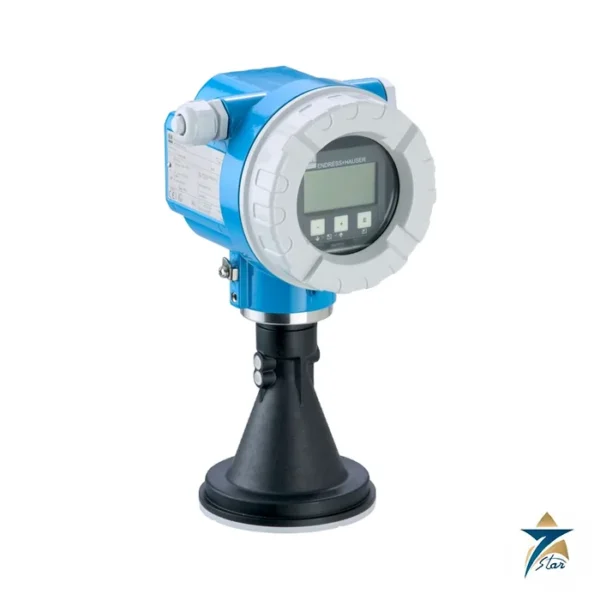
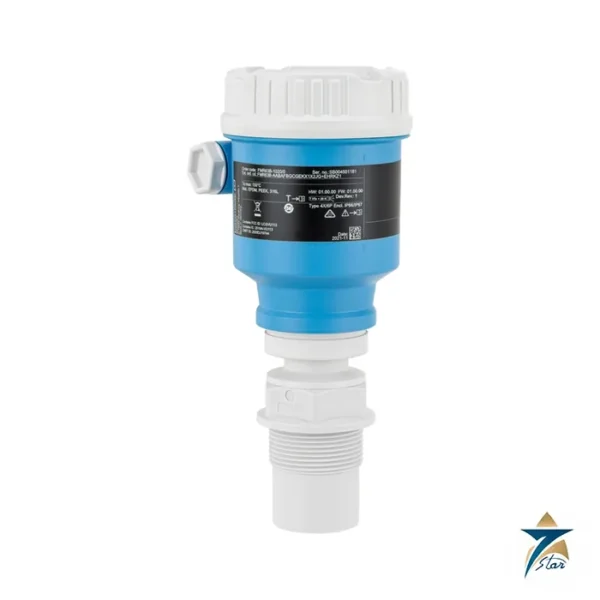
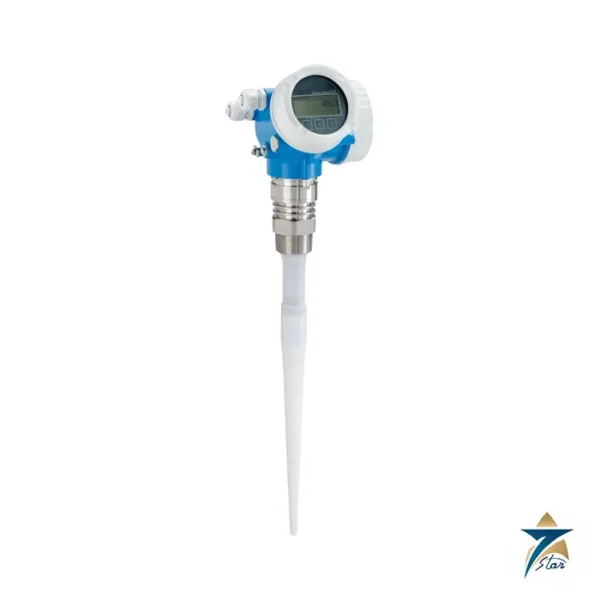
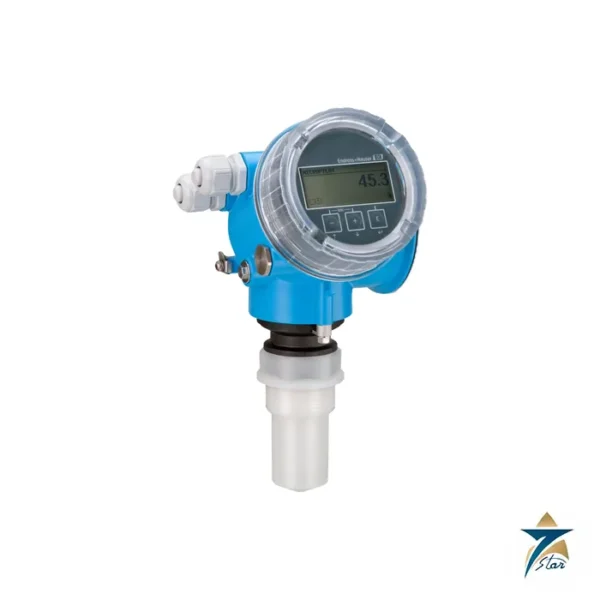
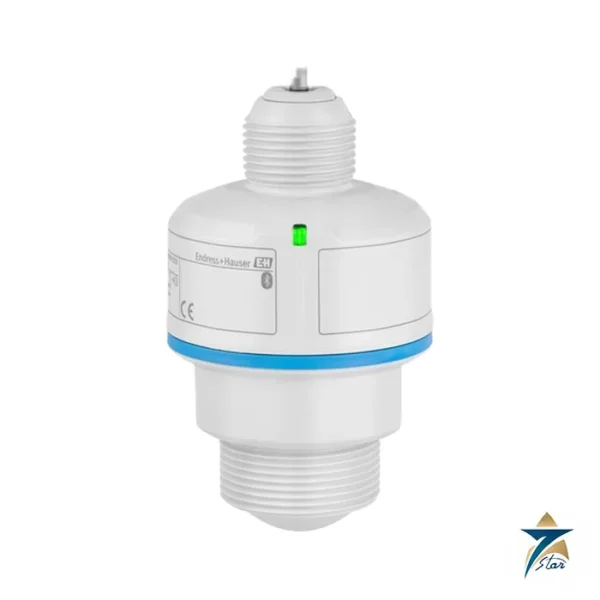
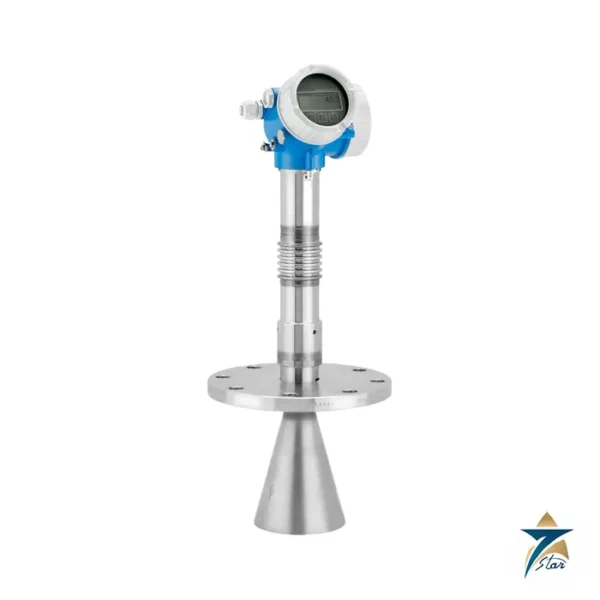
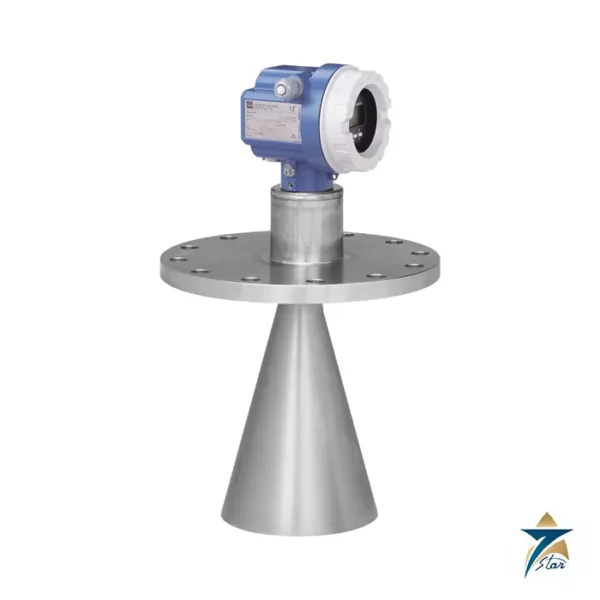
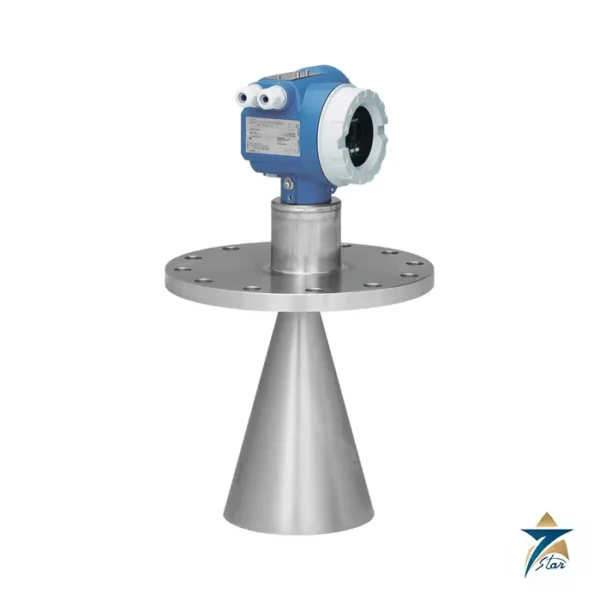
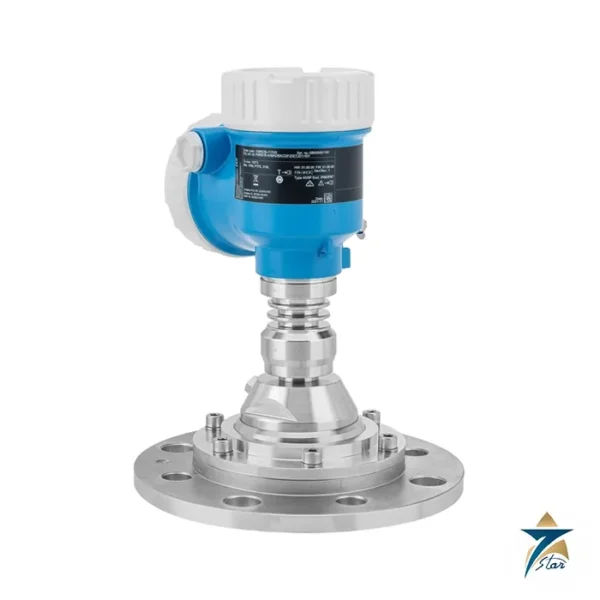
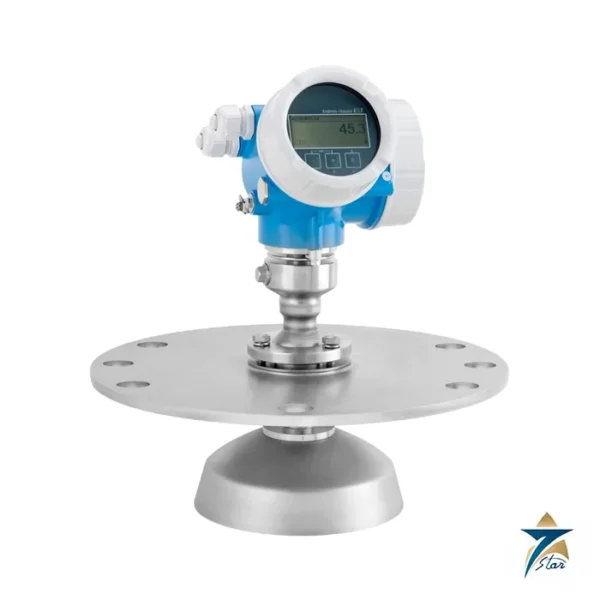
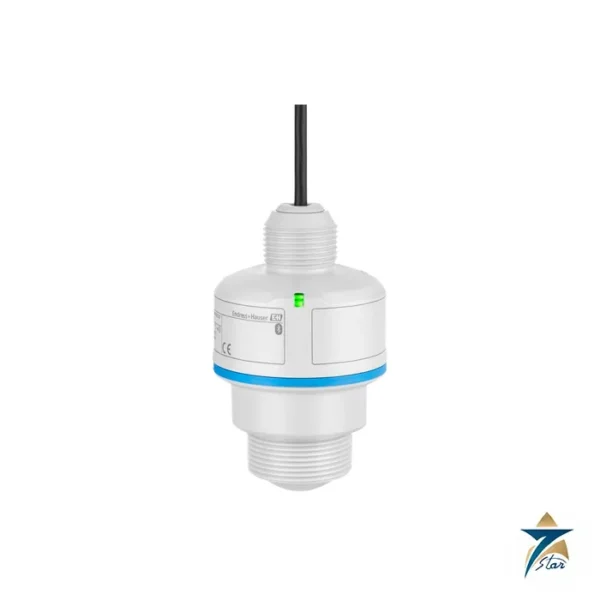
Endress+Hauser FMR250 Micropilot M Radar for Bulk Solids
Description
Endress+Hauser FMR250 for dusty silos and hot bulk solids
Endress+Hauser FMR250 is the solids-only Micropilot M, described in its own datasheet TI00390F. The document names the typical areas: tall silos with extremely dusty bulk solids such as cement, raw meal or animal feed; applications up to 200 degrees Celsius such as clinker or fly ash; and highly abrasive solids such as ferrite. It works in the K-band, reads the distance by time of flight and delivers 4 to 20 mA with HART, PROFIBUS PA or FOUNDATION Fieldbus.
The maximum measuring range is 70 m, and an integrated air purge connection keeps the antenna free in very dusty conditions or with media that tend to build up.
Antenna options for FMR250
| Parameter | Value |
|---|---|
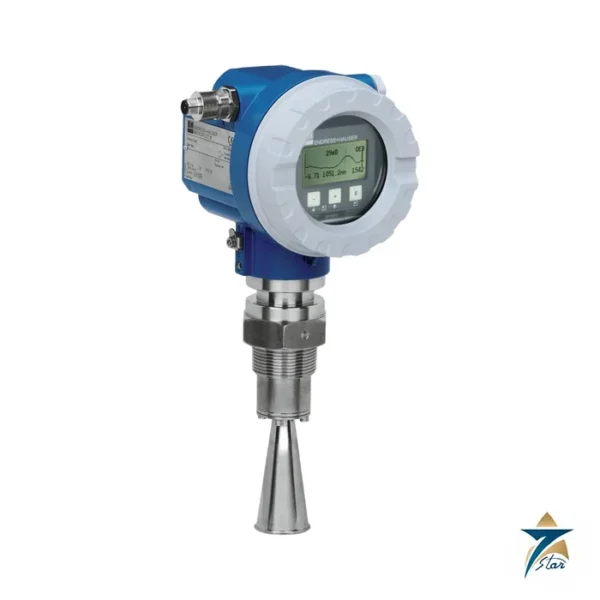
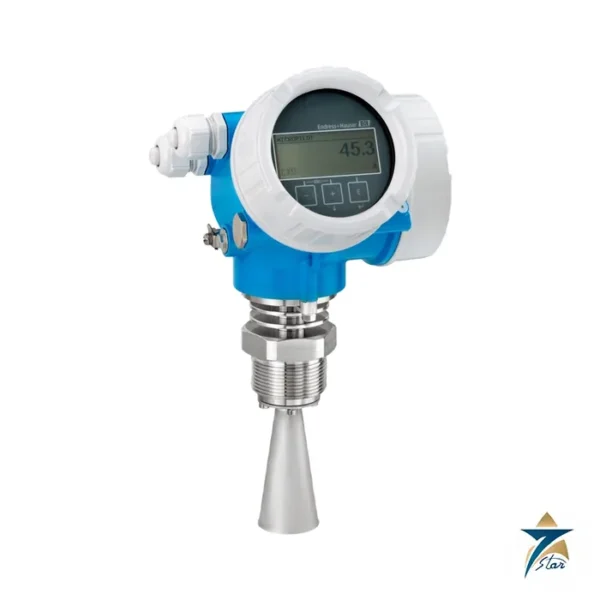
| FMR250-*D* | Horn antenna DN 80 |
| FMR250-*E* | Horn antenna DN 100 |
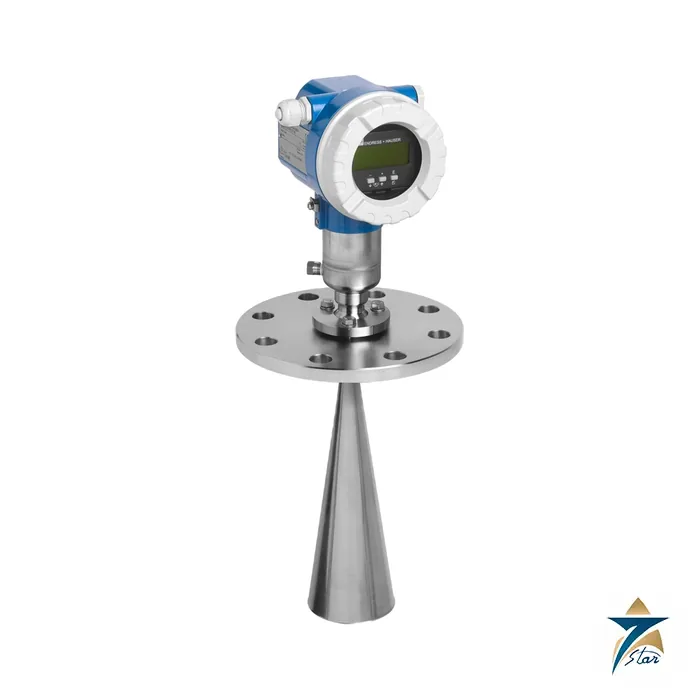
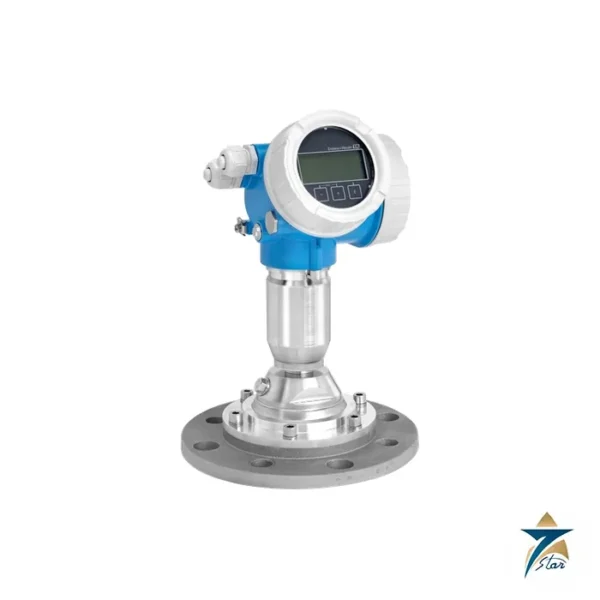
| FMR250-*6* | Parabolic antenna DN 200, beam focusing 4 degrees |
| FMR250-*G* | Parabolic antenna DN 200 (second variant) |
| FMR250-*H* | Parabolic antenna DN 250, beam focusing 3.5 degrees |
| Frequency band | K-band |
| Maximum range | 70 m |
| Process temperature | Up to 200 degrees Celsius |
| Output | 4 to 20 mA with HART 5.0, load at least 250 ohm; PROFIBUS PA; FOUNDATION Fieldbus |
| Supply, HART | 4 mA: 16 to 36 V; Ex ia at 11 mA: 10 to 30 V |
| Supply, bus versions | 9 to 30 V (Ex) |
| Current consumption | 3.6 to 22 mA; 11 mA start-up in HART multidrop |
| Remote display | Optional |
Horn or parabolic on FMR250
The DN 80 and DN 100 horns are intended for all standard applications and especially small nozzle sizes. The parabolic DN 200 and DN 250 antennas focus the beam to 4 degrees and 3.5 degrees, which is ideal where many installations hang inside the silo. The chosen antenna also fixes the nozzle size, so the supplier needs the nozzle dimensions at the time of enquiry.
Why does beam angle matter? A silo is full of structure: ladders, struts, cable runs and the weld seams of the roof. Any metallic object inside the cone of the beam returns an echo, and the radar must decide which echo is the product. A 3.5 degree beam from the DN 250 parabola illuminates a spot only about 0.6 m wide at 10 m distance, so internals just outside the spot are ignored. A DN 80 horn has a much wider cone and therefore suits plain, uncluttered silos or small nozzles.
The datasheet also lists that, with solids, the measuring range falls with a low dielectric constant of the product, with a steep angle of repose, with very loose or fluidised material and with moist build-up. Use the maximum 70 m only as the upper bound for easy products in tall, clean silos.
Silo applications of FMR250 in Oman and the GCC
Cement plants at Sohar and Salalah, animal-feed mills, clinker coolers, fly-ash silos at power stations, and ferrite or mineral bins fit the description. In such plants dust deposits quickly cover contact probes and attenuate ultrasound; a K-band radar with an air purge continues to see the surface.
Note the high ambient and process temperature in Gulf cement and power plants. The sheet allows process temperatures up to 200 degrees Celsius; for clinker coolers the actual conditions at the nozzle must be checked, and the housing should be shielded from radiant heat. Two-wire loop power at 16 to 36 V for the HART version at 4 mA, or 10 to 30 V in Ex ia loops at 11 mA, leaves enough headroom for long cable runs in big plants provided the load resistor is at least 250 ohm for HART communication.
How FMR250 differs from FMR57, FMR67 and FMR56
| Model | Dedicated to | Max range | Generation |
|---|---|---|---|
| FMR250 | Solids (liquids possible) | 70 m | Micropilot M, HART 5.0 |
| FMR56 | Solids | 30 m | Micropilot FMR5x |
| FMR57 | Solids | 70 m | Micropilot FMR5x, HART 7 |
| FMR67 | Solids | 125 m | 80 GHz |
Mounting FMR250 on a silo
Keep the beam free of struts, ladders and filling streams; the sheet says that the larger the antenna, the smaller the beam angle and the fewer the interference echoes. Make sure nothing metallic lies outside the signal beam but close to it, because it can still reflect. Check the angle of repose, since a steep cone reflects the signal away from the antenna, and give the horn a clear view of the heap centre rather than the silo wall. Where the nozzle is tall, use a version whose antenna extends beyond it.
Commissioning and service of FMR250
Wire the loop, enter empty and full calibration using the display, and map interference echoes while material is present. Connect the air purge with dry, filtered air if the silo is dusty. Clean the antenna when the amplitude drops and record the echo curve at each service. Never supply the purge from an unfiltered compressed-air line, because oil and water droplets deposit on the antenna and cause the very fouling the purge is meant to prevent.
The device reports its status via the display and the fieldbus or HART tool, and FieldCare can be used to document parameters and diagnose problems from the control room. For remote operation, the sheet lists an optional remote display and operating module, which is useful where the antenna sits on a hot or high roof and the operator would rather read the level at ground level.
Spares and order notes for FMR250
The product belongs to an older design generation, so the exact order code on the nameplate is the safest basis for replacement. Add the antenna DN, process connection, protocol and the material being stored to your RFQ, and photograph the nameplate if a unit is being replaced.
Documents and quotation
Datasheet: Technical Information TI00390F. Send the part number, order code and quantity through the RFQ form. Seven Star LLC is an independent supplier serving Oman and the GCC and is not affiliated with the manufacturer.
Other Models in the Micropilot M Range
Seven Star LLC supplies models from the Micropilot M range in Oman and the GCC. Compare the related models below and request a quote for the one that matches your application.
| Model | Category | |
|---|---|---|
| Endress+Hauser FMR230 Micropilot M C-band Radar | Radar & Guided Wave Radar Level | View details |
| Endress+Hauser FMR240 Micropilot M K-band Horn Radar | Radar & Guided Wave Radar Level | View details |
| Endress+Hauser FMR244 Micropilot M PTFE Horn Radar | Radar & Guided Wave Radar Level | View details |
| Endress+Hauser FMR245 Micropilot M Flush PTFE Radar | Radar & Guided Wave Radar Level | View details |
| Endress+Hauser FMR250 Micropilot M Radar for Bulk Solids | Radar & Guided Wave Radar Level | You are viewing this model |
Datasheets & Documents
- Datasheet Endress+Hauser FMR250 Micropilot M Radar for Bulk Solids Datasheet Download
Reviews (0)
How would you rate this product? Cancel reply
About brand
Endress+Hauser makes process measurement instruments for flow, level, pressure, temperature and liquid analysis. Georg H. Endress and Ludwig Hauser started the business in Lörrach, Germany, on 1 February 1953, first selling level meters, and the Endress+Hauser name has been used since 1957. The group is headquartered in Reinach, Switzerland, and has been wholly owned by the Endress family since 1975.
Seven Star LLC is an independent supplier listing Endress+Hauser flowmeters, level and pressure transmitters, temperature assemblies and liquid analysis products for buyers in Oman and the GCC. Instruments are matched from the full order code on the nameplate.
Endress+Hauser company profile
| Origin | Founded in Lörrach, Germany, on 1 February 1953 by the Swiss engineer Georg H. Endress and Ludwig Hauser |
|---|---|
| Headquarters | Endress+Hauser AG, Reinach (Basel-Landschaft), Switzerland |
| Ownership | Family owned; the Endress family has been the sole shareholder since 1975, and a family charter commits the company to stay family owned |
| Size | About 16,500 employees and sales of about EUR 3.7 billion (2023, as reported by the company) |
| Product families | Proline flowmeters, Micropilot and Levelflex radar, Liquiphant switches, Cerabar and Deltabar pressure, iTEMP and iTHERM temperature, Liquiline and Memosens liquid analysis |
Milestones
- 1953: Georg H. Endress and Ludwig Hauser start the business in Lörrach on 1 February, first selling level meters.
- 1957: The Endress+Hauser name comes into use.
- 1975: The Endress family becomes sole shareholder.
- 2023: About 16,500 employees and sales of about EUR 3.7 billion, as reported by the company.
Endress+Hauser product lines
| Line | Measuring principle | Typical use |
|---|---|---|
| Promass F 300, Promass 80F, 83F/84F | Coriolis mass flow | Direct mass flow and density of liquids and gases, hydrocarbon transfer and chemical dosing |
| Promag P 300, P 500, H 300, W 400, W 10, 50P | Electromagnetic flow | Water, wastewater, slurries and other conductive liquids |
| Prowirl F 200, 72F | Vortex flow | Steam, gas and low-viscosity liquids |
| Prosonic Flow 92F, t-mass 65F | Ultrasonic and thermal mass flow | Water lines; compressed air and industrial gases |
| Micropilot FMR62, FMR67, FMR60, FMR10B, FMR20, FMR50, FMR52 | Free-space radar level, 80 GHz and 26 GHz | Tanks, process vessels, silos and open water channels |
| Levelflex FMP51, FMP50, FMP54, FMP55 | Guided wave radar level | Level and interface in vessels, separators and bypass chambers |
| Liquiphant FTL51, Prosonic S FMU90 | Vibronic point level; ultrasonic level | High and low level alarms, pump protection, open channel flow |
| Cerabar PMC71B, PMP51B, PMP71, Deltabar PMD78B, PMD75 | Pressure and differential pressure | Process pressure, hydrostatic level and DP flow |
| iTEMP TMT82, TMT162, iTHERM TM101, TR66, TR10 | Temperature transmitters and thermometers | RTD and thermocouple points with thermowells |
| Liquiline CM444, CM442, Memosens CPS11E, Stamolys reagents | Liquid analysis | pH, ORP, conductivity, dissolved oxygen and nutrient analysis in water treatment and process |
Where Endress+Hauser instruments are used
In Oman and the GCC, Endress+Hauser instruments are common in oil and gas production and processing, refineries and petrochemicals, desalination and water networks, wastewater treatment, power plants and food and beverage plants. Coriolis meters measure hydrocarbon and chemical flows, electromagnetic meters cover water and wastewater, radar transmitters handle tank and silo level, and Liquiline analysers monitor water quality. Proline 300 and 500 flowmeters include Heartbeat Technology for in-situ verification, which reduces the need to remove a meter for checks.
Ordering Endress+Hauser instruments: what we need
The order code on the nameplate (for example PMP71-1QA1S11RDADU) defines every option: measuring range, process connection, materials, output, approvals and display. Send it with the serial number; Endress+Hauser can retrieve the original configuration from the serial number. For a new instrument add the medium, operating and design pressure and temperature, range, line size or tank geometry, process connection, wetted materials, output or protocol (4-20 mA HART, PROFIBUS, FOUNDATION Fieldbus, Modbus) and the hazardous-area approval required. Older models such as Promass 80/83 or Micropilot M are replaced by current Proline or 80 GHz Micropilot devices.
Facts checked against Endress+Hauser company history and product information, October 2026.
Browse Endress+Hauser products by category: Flowmeters, Level Transmitter, Pressure Instrumentation, Temperature, Liquid Analysis Sensors, Liquid Analytical Systems.
FAQ
Questions about the Endress+Hauser FMR250 Micropilot M Radar for Bulk
Answers from our engineering team on installation, compatibility and integration.
01What range does Endress+Hauser FMR250 reach?
The datasheet states a maximum measuring range of 70 m (230 ft) for powdery to granular bulk solids.
02What antennas does FMR250 offer?
DN 80 and DN 100 horn antennas and DN 200 or DN 250 parabolic antennas with beam focusing of 4 and 3.5 degrees.
03What process temperature does FMR250 handle?
Up to 200 degrees Celsius, for applications like clinker or fly ash.
04Does FMR250 have an air purge?
Yes, an integrated air purge connection for extremely dusty conditions or media that tend to build up.
05Which communication does FMR250 support?
4 to 20 mA with HART, PROFIBUS PA and FOUNDATION Fieldbus, with optional remote display and operation.


Reviews
There are no reviews yet.