- Automation & ControlView all 3,044 products
- Automation Accessories
- AC Drives
- PLC & I/O Cards
- Industrial Communications
- Vibration Monitoring
- Isolator & Barrier
- Controllers & Data Acquisition
- Safety Switches & Guard Locking
- Motor Soft Starters
- Encoders
- CCTV & Security
- Pneumatic Cylinders
- HMI Displays
- Servo Drives
- Industrial Computers
- Machine Vision
- Automation Software
- Robotics
Brand: Endress+Hauser (E & H)
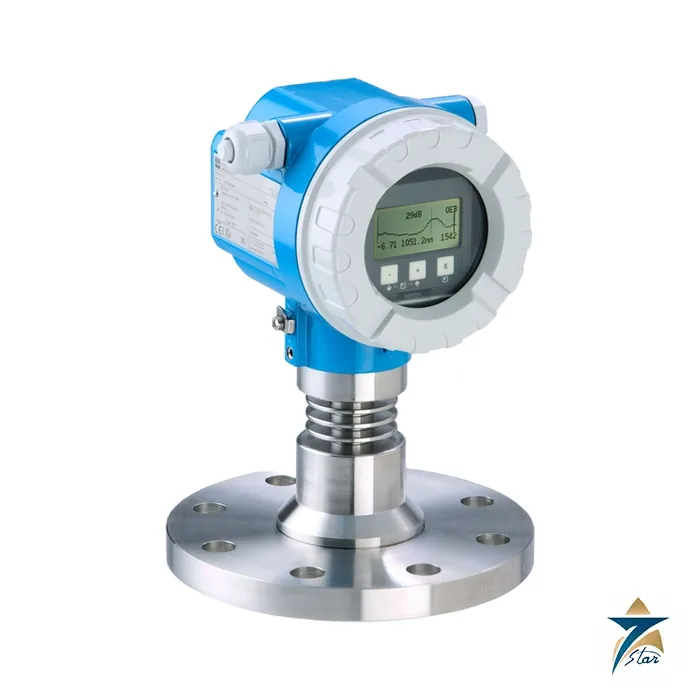
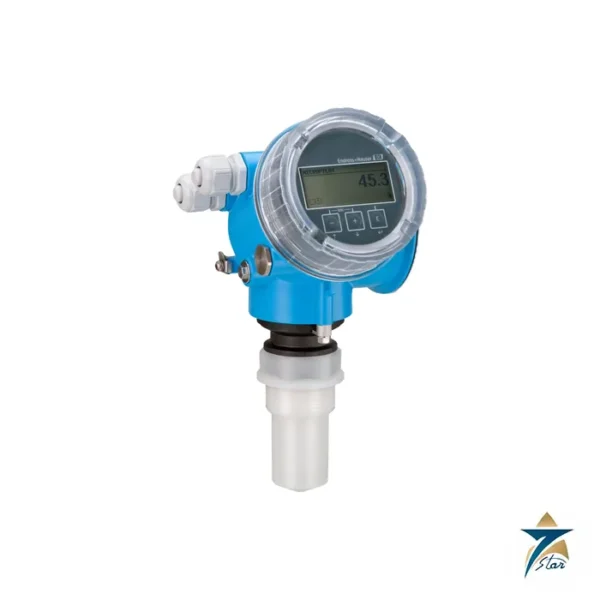
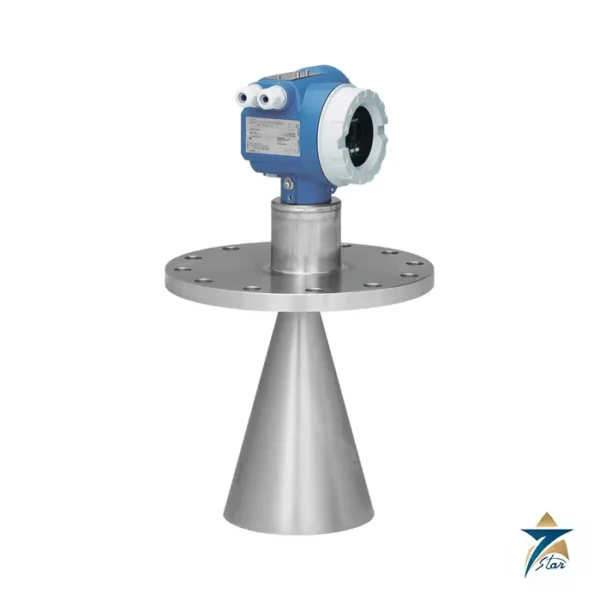
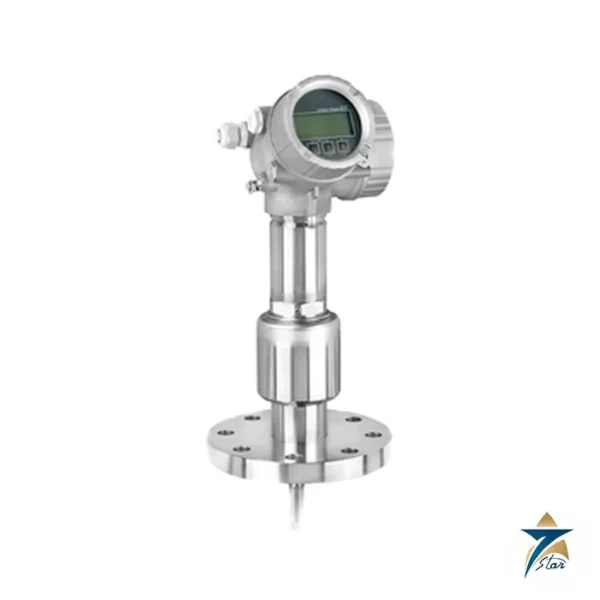
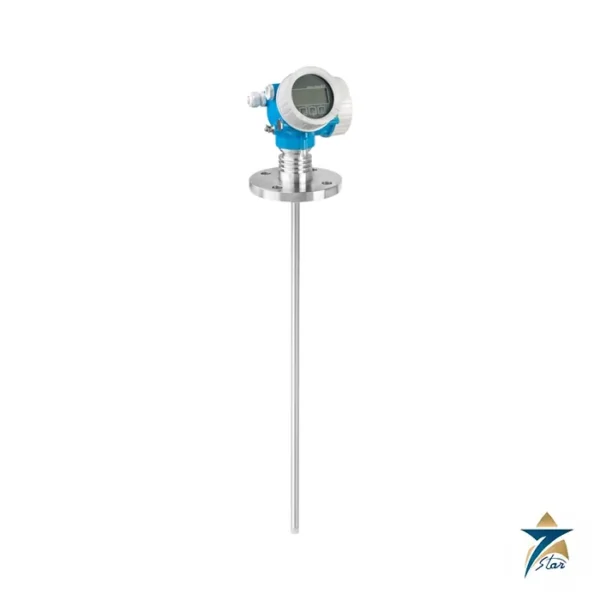
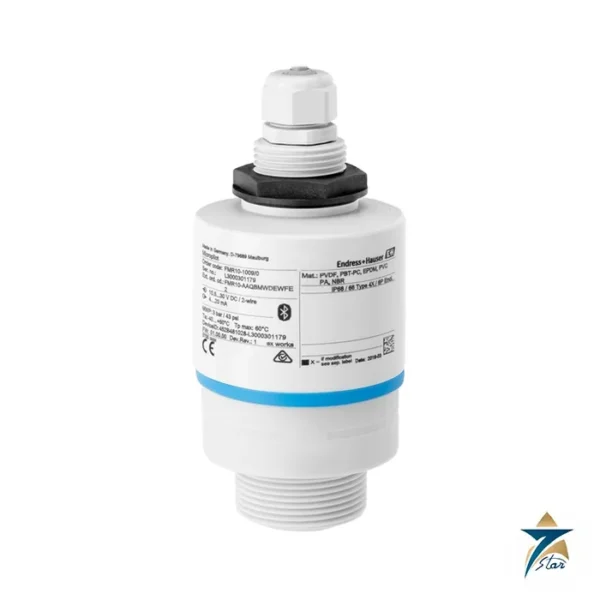
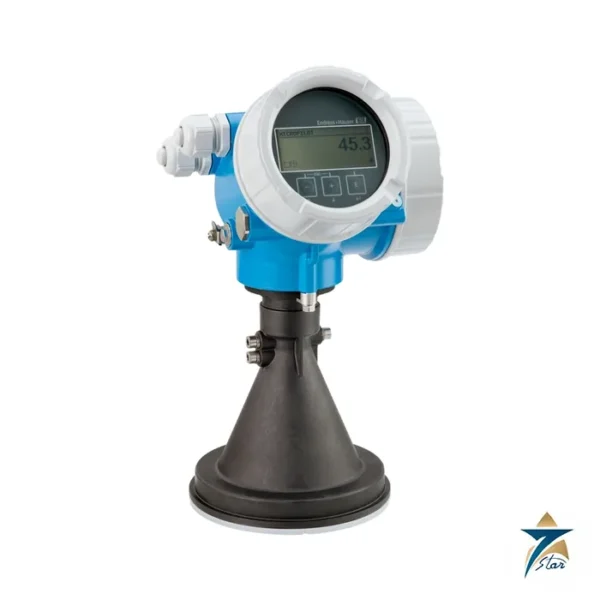
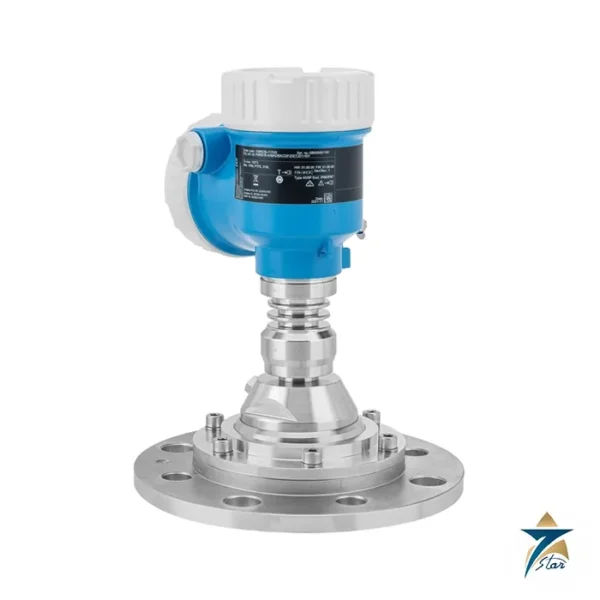
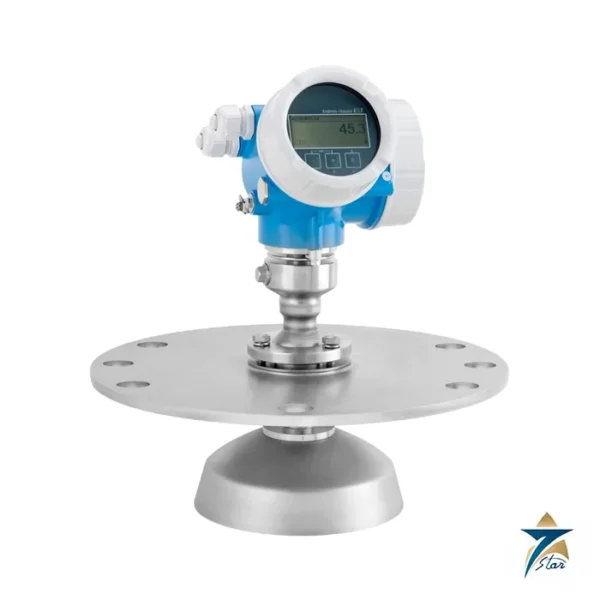
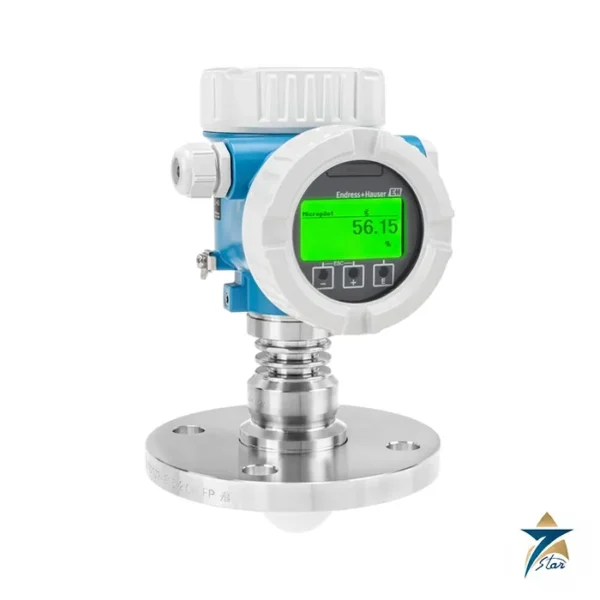
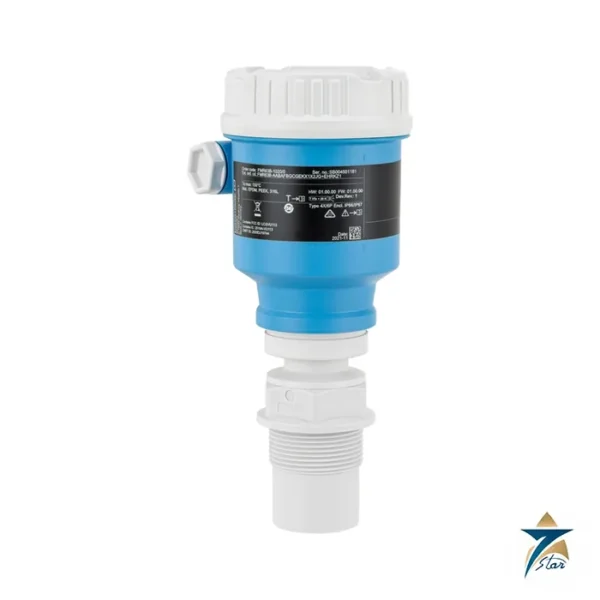
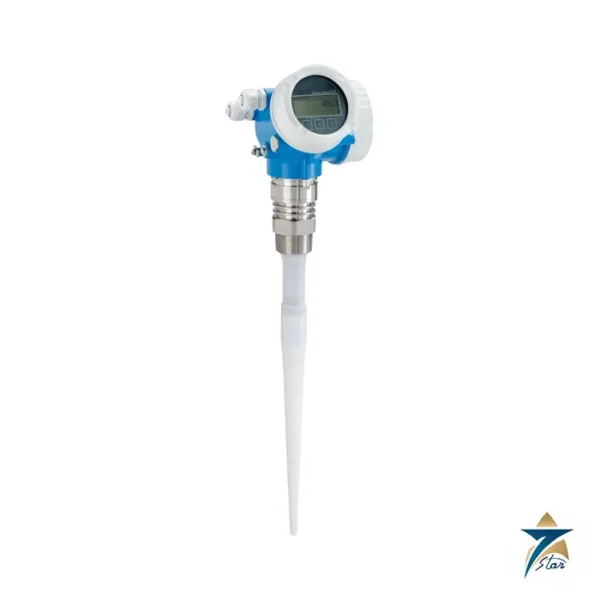
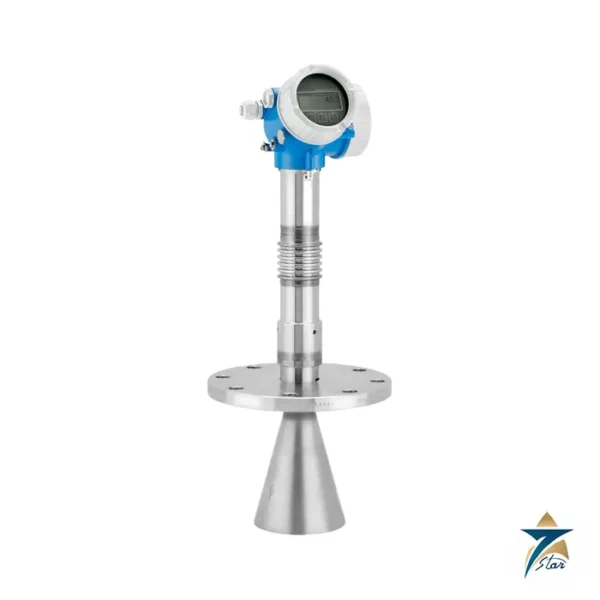
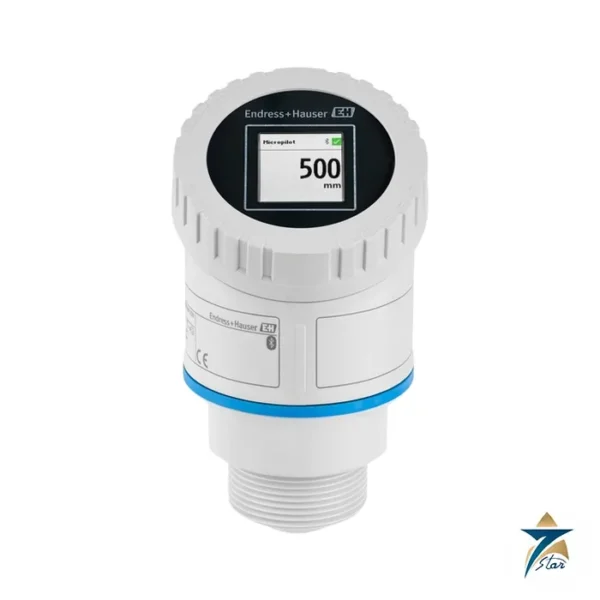
Endress+Hauser FMR245 Micropilot M Flush PTFE Radar
Description
Endress+Hauser FMR245: flush PTFE-plated Micropilot M for hot and hygienic liquids
Endress+Hauser FMR245 offers a smooth, flush PTFE-plated horn that the sheet calls highly resistant up to 200 degrees Celsius. The plating is also the seal to the process, so the datasheet notes that usually no other sealing is necessary, and the same PTFE conforms to FDA 21 CFR 177.1550 and USP Class VI. Tri-Clamp versions carry 3A and EHEDG approval.
Specification of FMR245
| Parameter | Value |
|---|---|
| Frequency band | K-band |
| Antenna | PTFE-plated flush horn, 50 mm (2 in) or 80 mm (3 in) |
| Process temperature | Minus 40 to plus 200 degrees Celsius |
| Process pressure | Minus 1 to 16 bar |
| Wetted material | PTFE (FDA 21 CFR 177.1550, USP Class VI) |
| Hygienic approvals | 3A and EHEDG for Tri-Clamp connections |
| Accuracy | Plus or minus 3 mm for 40 m range |
| Weight | About 4 kg plus flange (F12 or T12); about 7.4 kg plus flange (F23) |
| Minimum distance to antenna tip | Beam must not be evaluated closer than the sheet minimum (200 mm in the example table) |
| Output | HART, PROFIBUS PA or FOUNDATION Fieldbus |
Why flush mounting matters on FMR245
A flush face has no cavity where product can collect, ferment or crystallize. In sanitary tanks this is a cleaning-validation requirement; in corrosive service it removes a place for deposits to grow. The same smooth face also helps with sticky media. The datasheet adds that the PTFE flange cladding, where fitted, acts as the seal between the nozzle and the sensor, which reduces the parts count and the number of leak paths.
The upper temperature of 200 degrees Celsius is the highest in the PTFE-faced group of the Micropilot M family. That makes FMR245 suitable for hot condensate vessels, thermal-oil expansion tanks with plastic-compatible media, hot wash liquors and sterilizing cycles in food plants. Pressure is limited to 16 bar, which is enough for most atmospheric and low-pressure vessels.
Applications of FMR245 in Oman and the GCC
In the food and beverage sector, fast-growing pharmaceutical and personal-care plants and utilities for desalination, the instrument is used for dairy, juice and beverage tanks, pharmaceutical and cosmetic utilities, hot chemical storage, vessels with heating up to 200 degrees Celsius and wash-down areas. The Tri-Clamp options suit small sanitary tanks, while flanges suit chemical plants. High ambient temperature is not a problem in itself, but process vapor and cleaning steam should be kept off the electronics side with the housing mounted well above the tank roof where the layout allows.
How FMR245 differs from FMR244 and FMR231
| Item | FMR245 | FMR244 | FMR231 |
|---|---|---|---|
| Band | K | K | C |
| Antenna | Flush PTFE-plated | PTFE-encapsulated horn | Rod |
| Temperature | To 200 degrees Celsius | To 130 degrees Celsius | To 150 degrees Celsius |
| Pressure | 16 bar | 3 bar | Up to 40 bar |
| Hygienic | 3A, EHEDG clamp | FDA-conform PTFE | FDA-conform PTFE |
Installing FMR245
With flange cladding, observe the instructions for cladded flanges: PTFE creeps under load, so re-torque after the first thermal cycle, and let the nozzle cool before the second tightening to avoid cold-flow leaks. Align the face with the nozzle end and keep the measuring range clear of the minimum distance to the face; the datasheet says the end of the range should not be closer than 200 mm (7.87 in) to the antenna tip for the FMR245. In clamp versions, use the recommended gasket and clamp for the connection. Position the instrument so that cleaning spray does not hit the antenna face directly for long periods, and slope the nozzle, if possible, so liquid drains away.
On commissioning, enter the empty distance from the face of the PTFE plating, select the medium group for your liquid, and compare the displayed level with a dipstick reading. Save the envelope curve at a typical level as the reference and attach the printout to the maintenance record together with the order code, since hygienic plants must show traceability for each instrument.
Service of FMR245
Inspect the plating for scratches, check the gasket at each cleaning cycle, and log loop current and echo amplitude for the file. The envelope curve helps to detect gradual film or scale formation on the face.
In sanitary plants, the cleaning-in-place cycle is the biggest stress on the instrument. Hot caustic and acid rinses, steam and rapid temperature changes act on the face and the clamp gasket. Replace the gasket on a fixed schedule, check the clamp for tightness after each thermal cycle and keep records of the sensor serial number and gasket batch if your audit regime demands them. Calibrate the 4 to 20 mA output yearly or at the interval your quality system prescribes.
Process engineers should also understand the dielectric limits. The sheet gives a minimum permittivity of 1.4 in a stilling well and 1.9 in free space; liquids below these values, such as some light gases in liquid form, are out of range for this radar and need a stilling well or a different technology.
Because this design is documented in TI00345F as part of an older range, keep the exact order code and replacement parts information for like-for-like swaps, and note the plating condition and gasket type at each inspection so a trend can be seen over the years.
Ordering information for FMR245
State antenna size (50 or 80 mm), process connection (flange or Tri-Clamp, including the size and standard), approvals, housing and protocol with the quantity. For hygienic use mention whether 3A or EHEDG documentation is required, since the approval depends on the connection chosen.
Documents and quotation
Datasheet: Technical Information TI00345F. Send the part number, the connection type (flange or Tri-Clamp), the approvals needed and the quantity through the RFQ form. Seven Star LLC is an independent supplier serving Oman and the GCC and is not affiliated with the manufacturer.
Other Models in the Micropilot M Range
Seven Star LLC supplies models from the Micropilot M range in Oman and the GCC. Compare the related models below and request a quote for the one that matches your application.
| Model | Category | |
|---|---|---|
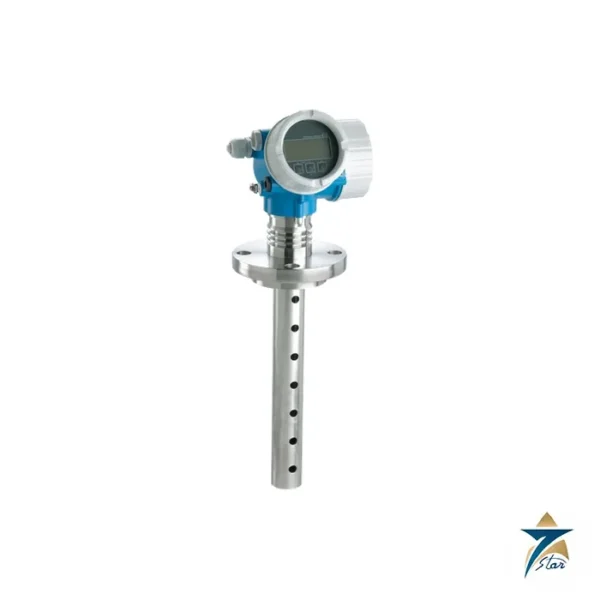
| Endress+Hauser FMR230 Micropilot M C-band Radar | Radar & Guided Wave Radar Level | View details |
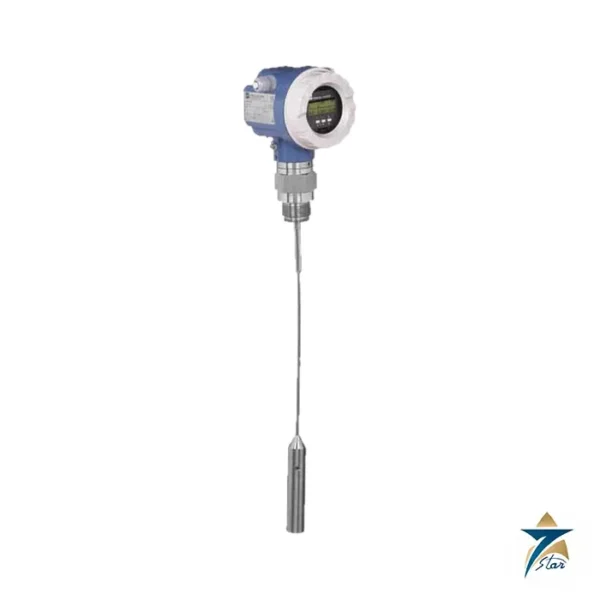
| Endress+Hauser FMR240 Micropilot M K-band Horn Radar | Radar & Guided Wave Radar Level | View details |
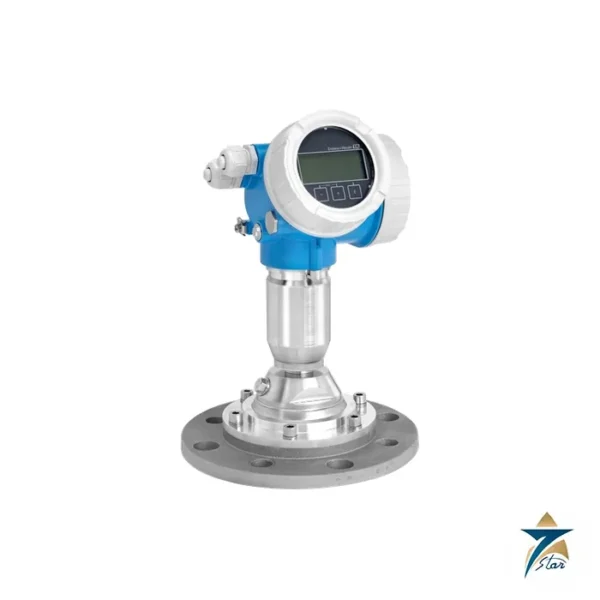
| Endress+Hauser FMR244 Micropilot M PTFE Horn Radar | Radar & Guided Wave Radar Level | View details |
| Endress+Hauser FMR245 Micropilot M Flush PTFE Radar | Radar & Guided Wave Radar Level | You are viewing this model |
| Endress+Hauser FMR250 Micropilot M Radar for Bulk Solids | Radar & Guided Wave Radar Level | View details |
Datasheets & Documents
- Datasheet Endress+Hauser FMR245 Micropilot M Flush PTFE Radar Datasheet Download
Reviews (0)
How would you rate this product? Cancel reply
About brand
Endress+Hauser makes process measurement instruments for flow, level, pressure, temperature and liquid analysis. Georg H. Endress and Ludwig Hauser started the business in Lörrach, Germany, on 1 February 1953, first selling level meters, and the Endress+Hauser name has been used since 1957. The group is headquartered in Reinach, Switzerland, and has been wholly owned by the Endress family since 1975.
Seven Star LLC is an independent supplier listing Endress+Hauser flowmeters, level and pressure transmitters, temperature assemblies and liquid analysis products for buyers in Oman and the GCC. Instruments are matched from the full order code on the nameplate.
Endress+Hauser company profile
| Origin | Founded in Lörrach, Germany, on 1 February 1953 by the Swiss engineer Georg H. Endress and Ludwig Hauser |
|---|---|
| Headquarters | Endress+Hauser AG, Reinach (Basel-Landschaft), Switzerland |
| Ownership | Family owned; the Endress family has been the sole shareholder since 1975, and a family charter commits the company to stay family owned |
| Size | About 16,500 employees and sales of about EUR 3.7 billion (2023, as reported by the company) |
| Product families | Proline flowmeters, Micropilot and Levelflex radar, Liquiphant switches, Cerabar and Deltabar pressure, iTEMP and iTHERM temperature, Liquiline and Memosens liquid analysis |
Milestones
- 1953: Georg H. Endress and Ludwig Hauser start the business in Lörrach on 1 February, first selling level meters.
- 1957: The Endress+Hauser name comes into use.
- 1975: The Endress family becomes sole shareholder.
- 2023: About 16,500 employees and sales of about EUR 3.7 billion, as reported by the company.
Endress+Hauser product lines
| Line | Measuring principle | Typical use |
|---|---|---|
| Promass F 300, Promass 80F, 83F/84F | Coriolis mass flow | Direct mass flow and density of liquids and gases, hydrocarbon transfer and chemical dosing |
| Promag P 300, P 500, H 300, W 400, W 10, 50P | Electromagnetic flow | Water, wastewater, slurries and other conductive liquids |
| Prowirl F 200, 72F | Vortex flow | Steam, gas and low-viscosity liquids |
| Prosonic Flow 92F, t-mass 65F | Ultrasonic and thermal mass flow | Water lines; compressed air and industrial gases |
| Micropilot FMR62, FMR67, FMR60, FMR10B, FMR20, FMR50, FMR52 | Free-space radar level, 80 GHz and 26 GHz | Tanks, process vessels, silos and open water channels |
| Levelflex FMP51, FMP50, FMP54, FMP55 | Guided wave radar level | Level and interface in vessels, separators and bypass chambers |
| Liquiphant FTL51, Prosonic S FMU90 | Vibronic point level; ultrasonic level | High and low level alarms, pump protection, open channel flow |
| Cerabar PMC71B, PMP51B, PMP71, Deltabar PMD78B, PMD75 | Pressure and differential pressure | Process pressure, hydrostatic level and DP flow |
| iTEMP TMT82, TMT162, iTHERM TM101, TR66, TR10 | Temperature transmitters and thermometers | RTD and thermocouple points with thermowells |
| Liquiline CM444, CM442, Memosens CPS11E, Stamolys reagents | Liquid analysis | pH, ORP, conductivity, dissolved oxygen and nutrient analysis in water treatment and process |
Where Endress+Hauser instruments are used
In Oman and the GCC, Endress+Hauser instruments are common in oil and gas production and processing, refineries and petrochemicals, desalination and water networks, wastewater treatment, power plants and food and beverage plants. Coriolis meters measure hydrocarbon and chemical flows, electromagnetic meters cover water and wastewater, radar transmitters handle tank and silo level, and Liquiline analysers monitor water quality. Proline 300 and 500 flowmeters include Heartbeat Technology for in-situ verification, which reduces the need to remove a meter for checks.
Ordering Endress+Hauser instruments: what we need
The order code on the nameplate (for example PMP71-1QA1S11RDADU) defines every option: measuring range, process connection, materials, output, approvals and display. Send it with the serial number; Endress+Hauser can retrieve the original configuration from the serial number. For a new instrument add the medium, operating and design pressure and temperature, range, line size or tank geometry, process connection, wetted materials, output or protocol (4-20 mA HART, PROFIBUS, FOUNDATION Fieldbus, Modbus) and the hazardous-area approval required. Older models such as Promass 80/83 or Micropilot M are replaced by current Proline or 80 GHz Micropilot devices.
Facts checked against Endress+Hauser company history and product information, October 2026.
Browse Endress+Hauser products by category: Flowmeters, Level Transmitter, Pressure Instrumentation, Temperature, Liquid Analysis Sensors, Liquid Analytical Systems.
FAQ
Questions about the Endress+Hauser FMR245 Micropilot M Flush PTFE Radar
Answers from our engineering team on installation, compatibility and integration.
01What is the antenna of Endress+Hauser FMR245?
A flush-mounted PTFE-plated horn of 50 or 80 mm whose plating also seals the connection to the process.
02What are the process limits of FMR245?
Minus 40 to plus 200 degrees Celsius and minus 1 to 16 bar.
03Does FMR245 have hygienic approvals?
PTFE conforms to FDA 21 CFR 177.1550 and USP Class VI, and Tri-Clamp versions carry 3A and EHEDG approval.
04How heavy is FMR245?
Around 4 kg plus flange with F12 or T12 housing, and 7.4 kg plus flange with F23 housing.
05What accuracy does FMR245 reach?
Plus or minus 3 mm for the 40 m maximum range version of the K-band units.


Reviews
There are no reviews yet.