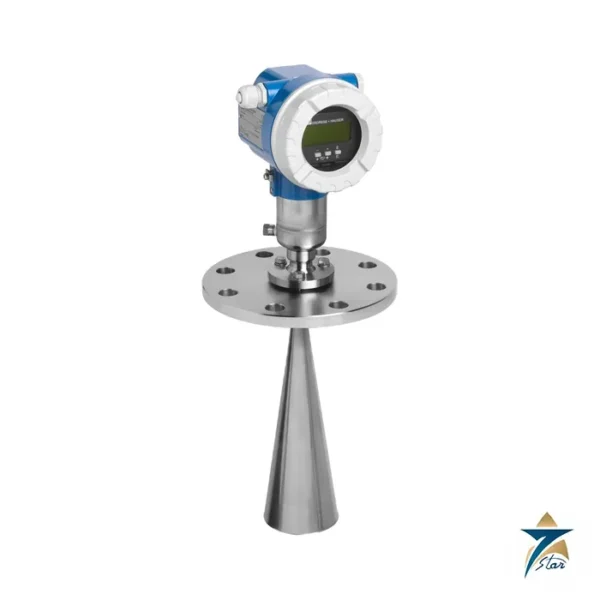
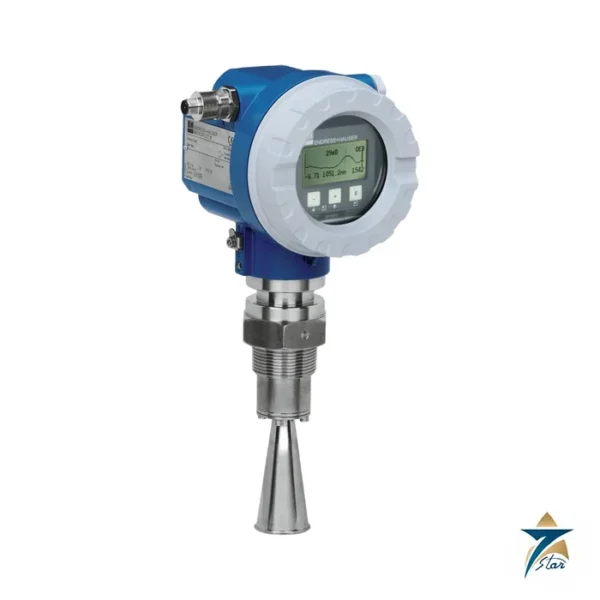
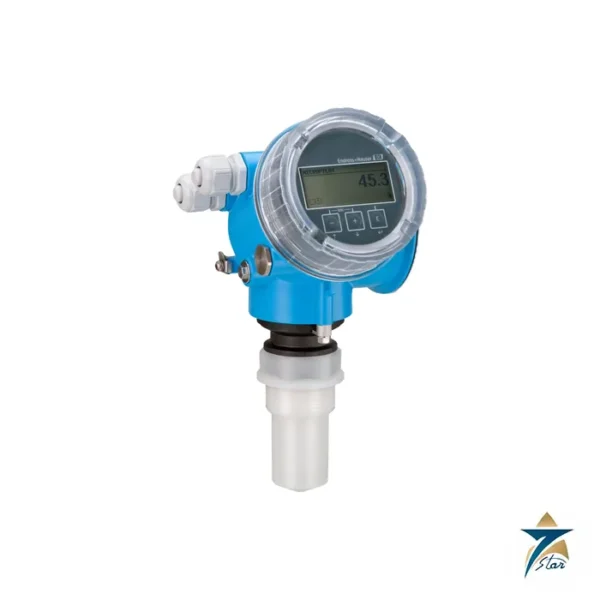
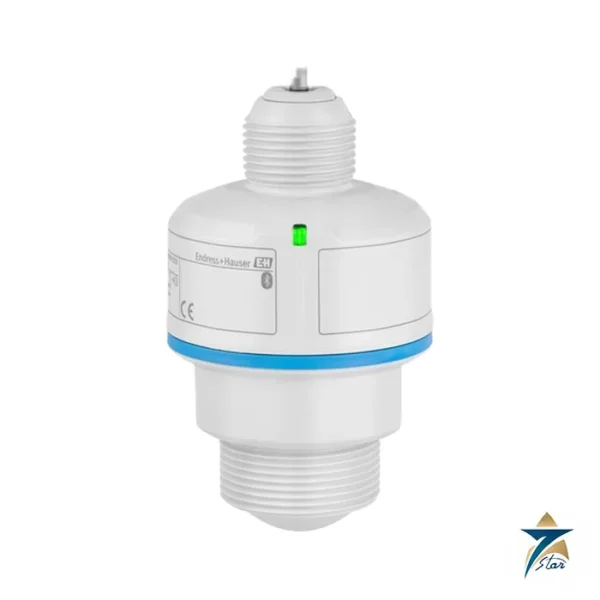
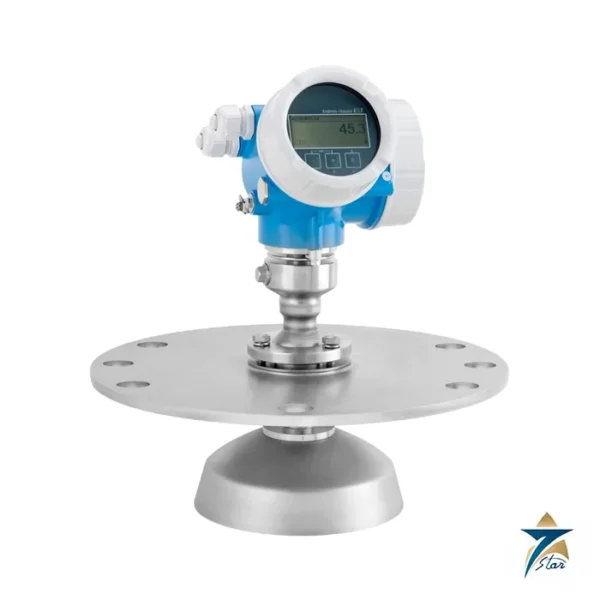
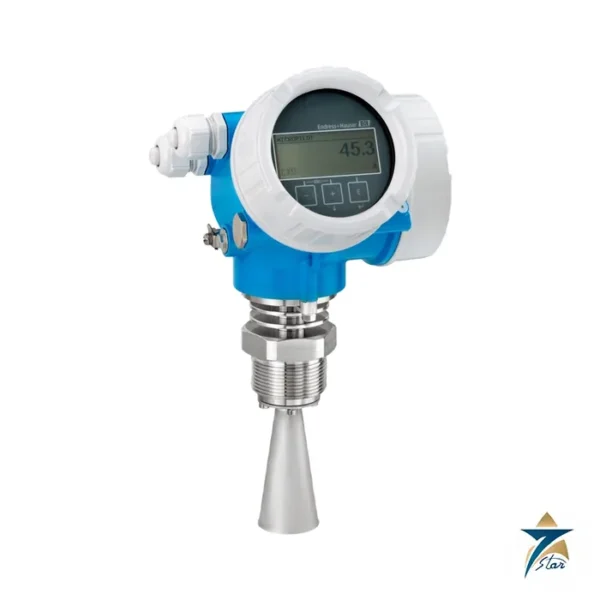
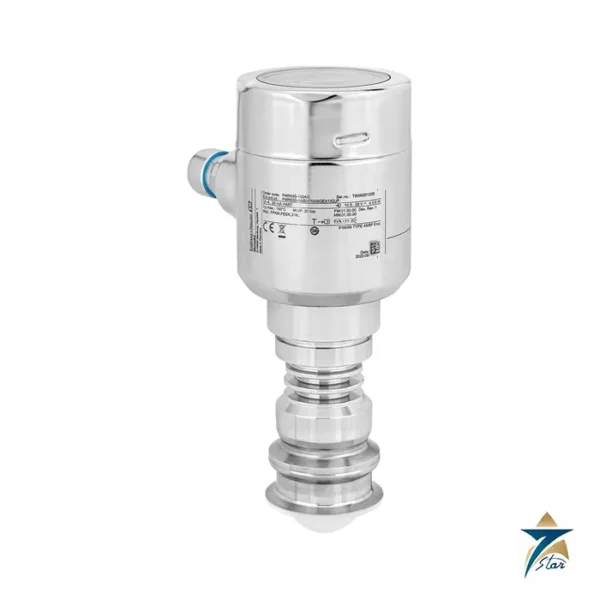
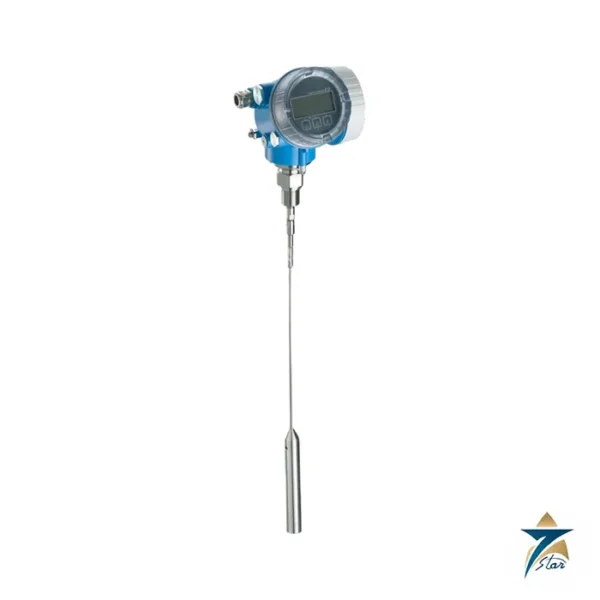
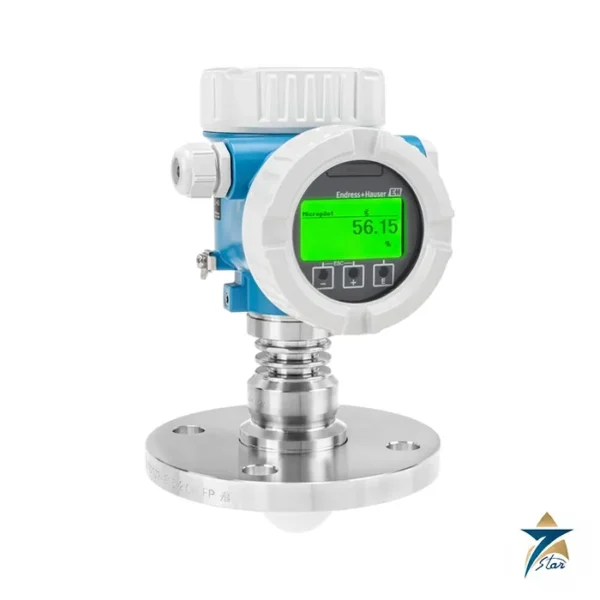
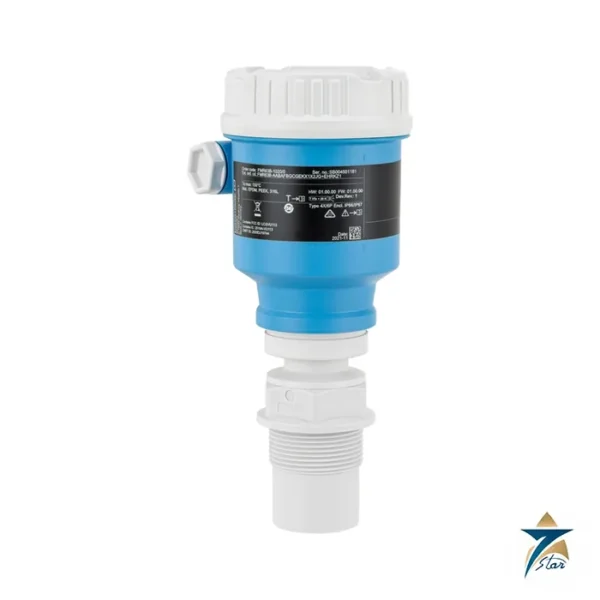
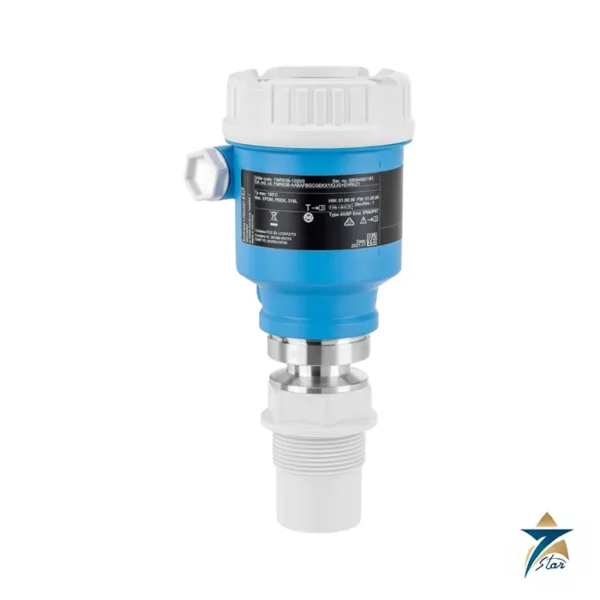
Endress+Hauser FMR230 Micropilot M C-band Radar

Description

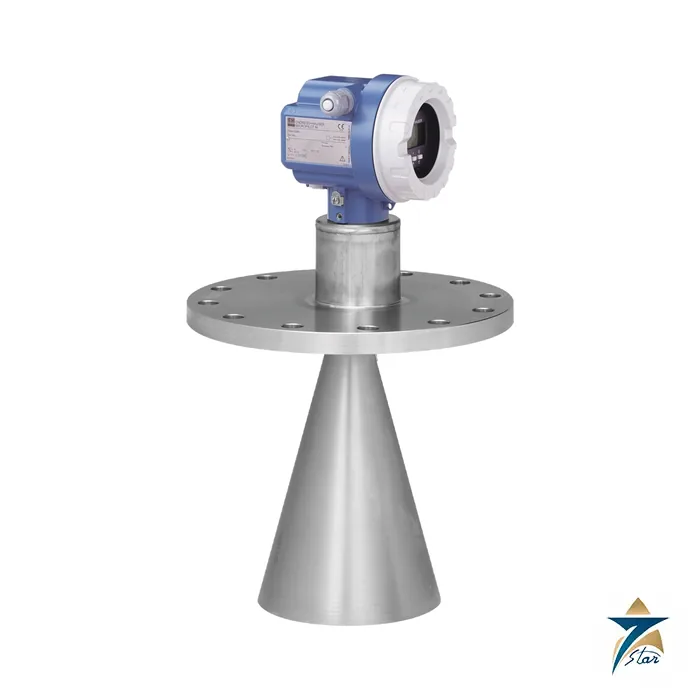
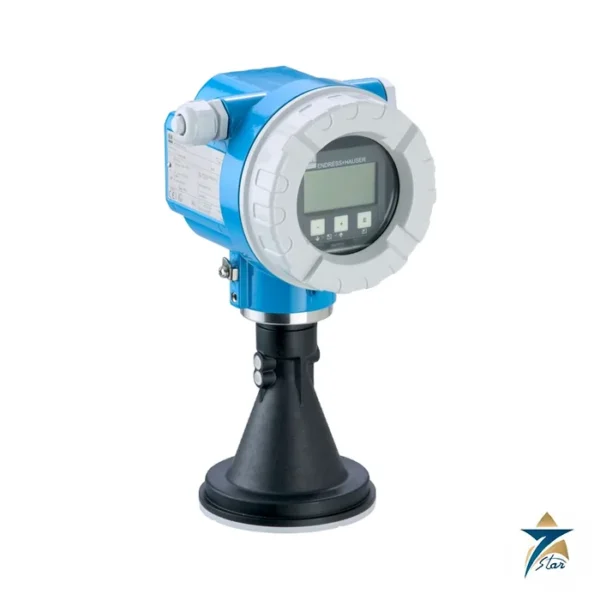
Endress+Hauser FMR230, the C-band Micropilot M for restless liquids

Endress+Hauser FMR230 is part of the older Micropilot M generation described in Technical Information TI00345F. It works in the C-band, and in this family the datasheet recommends it where a stable echo matters more than a narrow beam: buffer and process tanks, boiling or bubbling surfaces and foam. Its long-wave signal copes with turbulence better than the K-band devices in the same document.

The unit is a two-wire transmitter with a 4 to 20 mA output and HART, or with PROFIBUS PA or FOUNDATION Fieldbus. A menu-driven alphanumeric display allows on-site set-up, and FieldCare supports commissioning and documentation.

Specification of FMR230

Parameter Value
Frequency band C-band
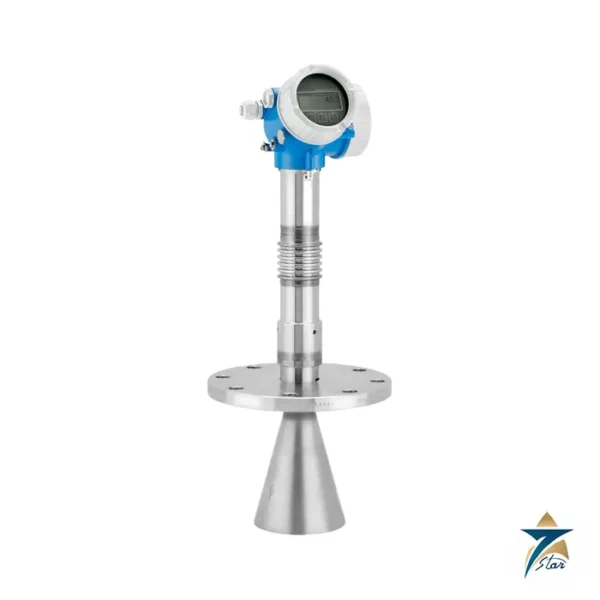
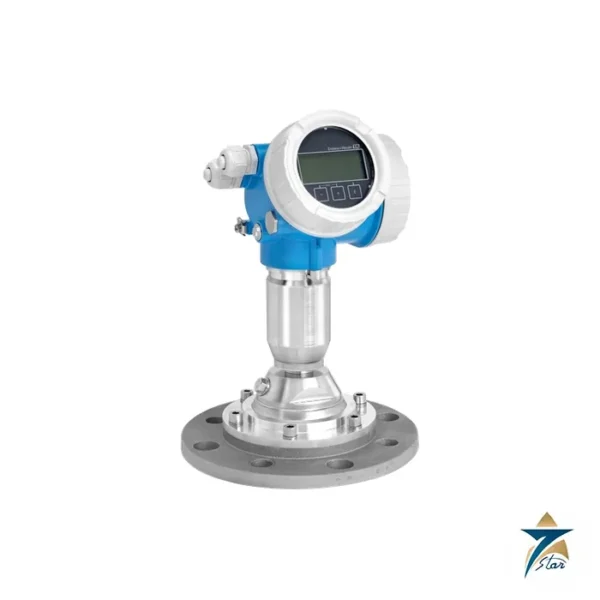
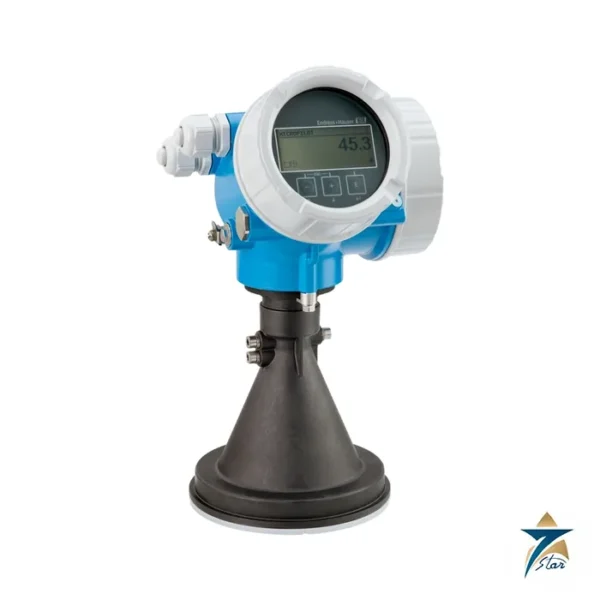
Antenna Horn, 150 mm (6 in) in the range tables
Accuracy Plus or minus 10 mm up to 10 m; plus or minus 0.1 percent of range beyond 10 m
Resolution 1 mm digital; 0.03 percent of range on 4 to 20 mA
Reaction time Minimum 1 s, depends on parameters
Seal option V, FKM Viton GLT Minus 40 to plus 200 degrees Celsius, minus 1 to 64 bar
Seal option E, EPDM Minus 40 to plus 150 degrees Celsius
Seal option K, Kalrez 6375 Minus 20 to plus 200 degrees Celsius
Seal option L, graphite, ceramic Minus 60 to plus 280 degrees Celsius, minus 1 to 100 bar
Seal option M, graphite, high temperature Minus 60 to plus 400 degrees Celsius, minus 1 to 160 bar
Weight with F12 or T12 housing About 6 kg plus flange weight; F23 housing about 9.4 kg plus flange
Dielectric constant At least 1.4 in a stilling well; at least 1.9 in free space

Choosing FMR230 over FMR240

The sheet is explicit: if the tank has boiling surfaces, bubbling or foaming, or heavy steam or condensate, use FMR230 or its rod-antenna cousin FMR231. The K-band FMR240 with its small horn can lose range under heavy steam. The trade-off is accuracy, since FMR230 gives plus or minus 10 mm instead of plus or minus 3 mm, and it needs a larger flange because of the 6 inch horn.

Typical uses of FMR230 in Oman and the GCC

Think of hydrocarbon buffer tanks, slop vessels, wastewater equalisation tanks with foam, fuel-oil day tanks that are heated, and reactors where vapor is dense. For ammonia, the datasheet instructs that it be treated as a group A medium and measured in a stilling well. Seawater-resistant versions are available on request, with the housing in 316L, which is relevant for coastal installations.

The C-band has a longer wavelength than the K-band, and that is the root of its robustness. A long wavelength is less scattered by foam bubbles, droplets and rough surfaces, so the echo from a churning liquid remains strong. The same property explains why FMR230 needs a bigger antenna to achieve a given beam angle, and why it is not the first choice in a small vessel with many internals.

Both HART and fieldbus versions are available. On PROFIBUS PA or FOUNDATION Fieldbus segments up to 32 transmitters can be connected under standard conditions, fewer in an intrinsically safe FISCO segment, which affects the planning of an existing loop when a replacement is ordered.

How FMR230 differs from the other Micropilot M versions

Model Band Antenna Strength
FMR230 C Horn 150 mm Foam, turbulence, high temperature options
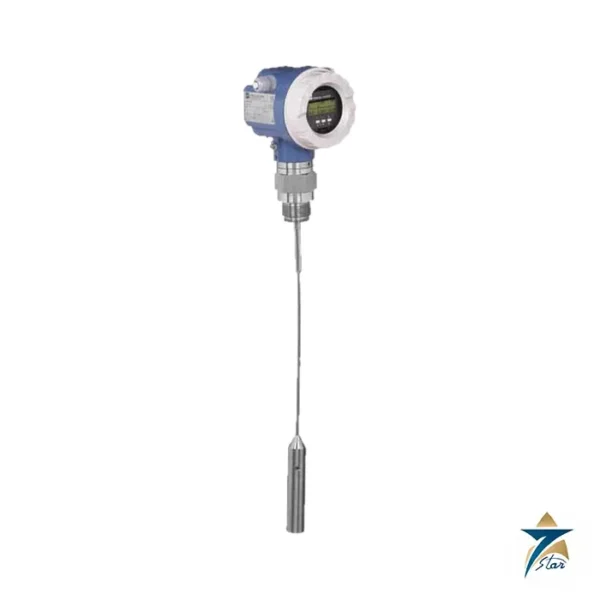
FMR231 C Rod, PTFE or PPS Chemical compatibility
FMR240 K Horn 40 to 100 mm Small vessels, 3 mm accuracy
FMR244 K PTFE-encapsulated horn Chemical resistance
FMR245 K PTFE-plated flush Hygienic, 200 degrees Celsius

Installation of FMR230

Leave at least 0.5 m of clearance from the tank wall in free-space mounting and keep the horn out of the filling stream. The measuring range begins where the beam hits the tank bottom, so for dished or conical bottoms the accuracy is reduced at low levels. A gas-tight feedthrough is optional and improves process safety at higher pressure. If the tank has a stilling well, mount the horn at the top of the well and match the well diameter to the horn, because a mismatch creates reflections at the transition. Record the dimension on the commissioning sheet with the order code.

Care and service of FMR230

Check the display for diagnostic messages, clean the horn from condensate or build-up and verify the empty distance against a dip. Seals depend on the process: swap Viton, EPDM, Kalrez or graphite seals at the interval your plant sets, and always replace them with the same type recorded on the nameplate. Plan shutdown work so that the tank is isolated, depressurised and gas-freed before the flange is opened, and torque the bolts crosswise to the value in the plant standard.

Because the family is older, spare availability and documentation history matter. Keep the commissioning printout, the parameter list and the echo curve in the maintenance file; they make replacement with an identical unit a short job even years later.

Weather protection is advisable outdoors. The display is rated within a narrower temperature span than the electronics, and below minus 20 or above plus 60 degrees Celsius its readability can be limited, so a cover in the Gulf sun avoids a blank screen in summer.

Ordering and legacy notes for FMR230

This product belongs to the Micropilot M family documented in TI00345F, so it is typically sought as a like-for-like spare. Quote the full order code from the nameplate, including antenna, seal, flange and housing.

Documents and quotation

The datasheet for FMR230 is Technical Information TI00345F. Send the part number, quantity and the order code on the nameplate through the RFQ form. Seven Star LLC is an independent supplier serving Oman and the GCC and is not affiliated with the manufacturer.

Spares and Lifecycle Considerations

For critical service, many plants hold one Endress+Hauser FMR230 as an operational spare rather than waiting for a failure. When you plan spares, look at how many identical radar & guided wave radar level units are installed, how long a replacement would take to arrive, and the cost of an unplanned stop. Store spare units in their original packaging in a dry, temperature-controlled area and record the part number and serial number in your maintenance system. We can quote single units or a small spares package and confirm the lead time for each item in writing.

Other Models in the Micropilot M Range

Seven Star LLC supplies models from the Micropilot M range in Oman and the GCC. Compare the related models below and request a quote for the one that matches your application.

ModelCategory
Endress+Hauser FMR230 Micropilot M C-band RadarRadar & Guided Wave Radar LevelYou are viewing this model
Endress+Hauser FMR240 Micropilot M K-band Horn RadarRadar & Guided Wave Radar LevelView details
Endress+Hauser FMR244 Micropilot M PTFE Horn RadarRadar & Guided Wave Radar LevelView details
Endress+Hauser FMR245 Micropilot M Flush PTFE RadarRadar & Guided Wave Radar LevelView details
Endress+Hauser FMR250 Micropilot M Radar for Bulk SolidsRadar & Guided Wave Radar LevelView details
Datasheets & Documents
  • PDF Datasheet Endress+Hauser FMR230 Micropilot M C-band Radar Datasheet Download
Reviews (0)

Reviews

There are no reviews yet.

How would you rate this product?

It takes about 10 seconds — just tap a star. Your email is never published.

About brand

Endress+Hauser makes process measurement instruments for flow, level, pressure, temperature and liquid analysis. Georg H. Endress and Ludwig Hauser started the business in Lörrach, Germany, on 1 February 1953, first selling level meters, and the Endress+Hauser name has been used since 1957. The group is headquartered in Reinach, Switzerland, and has been wholly owned by the Endress family since 1975.

Seven Star LLC is an independent supplier listing Endress+Hauser flowmeters, level and pressure transmitters, temperature assemblies and liquid analysis products for buyers in Oman and the GCC. Instruments are matched from the full order code on the nameplate.

Endress+Hauser company profile

Origin Founded in Lörrach, Germany, on 1 February 1953 by the Swiss engineer Georg H. Endress and Ludwig Hauser
Headquarters Endress+Hauser AG, Reinach (Basel-Landschaft), Switzerland
Ownership Family owned; the Endress family has been the sole shareholder since 1975, and a family charter commits the company to stay family owned
Size About 16,500 employees and sales of about EUR 3.7 billion (2023, as reported by the company)
Product families Proline flowmeters, Micropilot and Levelflex radar, Liquiphant switches, Cerabar and Deltabar pressure, iTEMP and iTHERM temperature, Liquiline and Memosens liquid analysis

Milestones

  • 1953: Georg H. Endress and Ludwig Hauser start the business in Lörrach on 1 February, first selling level meters.
  • 1957: The Endress+Hauser name comes into use.
  • 1975: The Endress family becomes sole shareholder.
  • 2023: About 16,500 employees and sales of about EUR 3.7 billion, as reported by the company.

Endress+Hauser product lines

Line Measuring principle Typical use
Promass F 300, Promass 80F, 83F/84F Coriolis mass flow Direct mass flow and density of liquids and gases, hydrocarbon transfer and chemical dosing
Promag P 300, P 500, H 300, W 400, W 10, 50P Electromagnetic flow Water, wastewater, slurries and other conductive liquids
Prowirl F 200, 72F Vortex flow Steam, gas and low-viscosity liquids
Prosonic Flow 92F, t-mass 65F Ultrasonic and thermal mass flow Water lines; compressed air and industrial gases
Micropilot FMR62, FMR67, FMR60, FMR10B, FMR20, FMR50, FMR52 Free-space radar level, 80 GHz and 26 GHz Tanks, process vessels, silos and open water channels
Levelflex FMP51, FMP50, FMP54, FMP55 Guided wave radar level Level and interface in vessels, separators and bypass chambers
Liquiphant FTL51, Prosonic S FMU90 Vibronic point level; ultrasonic level High and low level alarms, pump protection, open channel flow
Cerabar PMC71B, PMP51B, PMP71, Deltabar PMD78B, PMD75 Pressure and differential pressure Process pressure, hydrostatic level and DP flow
iTEMP TMT82, TMT162, iTHERM TM101, TR66, TR10 Temperature transmitters and thermometers RTD and thermocouple points with thermowells
Liquiline CM444, CM442, Memosens CPS11E, Stamolys reagents Liquid analysis pH, ORP, conductivity, dissolved oxygen and nutrient analysis in water treatment and process

Where Endress+Hauser instruments are used

In Oman and the GCC, Endress+Hauser instruments are common in oil and gas production and processing, refineries and petrochemicals, desalination and water networks, wastewater treatment, power plants and food and beverage plants. Coriolis meters measure hydrocarbon and chemical flows, electromagnetic meters cover water and wastewater, radar transmitters handle tank and silo level, and Liquiline analysers monitor water quality. Proline 300 and 500 flowmeters include Heartbeat Technology for in-situ verification, which reduces the need to remove a meter for checks.

Ordering Endress+Hauser instruments: what we need

The order code on the nameplate (for example PMP71-1QA1S11RDADU) defines every option: measuring range, process connection, materials, output, approvals and display. Send it with the serial number; Endress+Hauser can retrieve the original configuration from the serial number. For a new instrument add the medium, operating and design pressure and temperature, range, line size or tank geometry, process connection, wetted materials, output or protocol (4-20 mA HART, PROFIBUS, FOUNDATION Fieldbus, Modbus) and the hazardous-area approval required. Older models such as Promass 80/83 or Micropilot M are replaced by current Proline or 80 GHz Micropilot devices.

Facts checked against Endress+Hauser company history and product information, October 2026.

FAQ

Questions about the Endress+Hauser FMR230 Micropilot M C-band Radar

Answers from our engineering team on installation, compatibility and integration.

01What band does Endress+Hauser FMR230 use?
The C-band; FMR230 and FMR231 use C-band while FMR240, FMR244 and FMR245 use K-band.
02When should FMR230 be chosen instead of FMR240?
For boiling surfaces, bubbling, foaming or heavy steam and condensate, where the C-band signal is less affected.
03What accuracy does FMR230 have?
Plus or minus 10 mm up to 10 m, and plus or minus 0.1 percent of the measuring range beyond 10 m.
04What seal and temperature options exist for FMR230?
FKM, EPDM, Kalrez, graphite and high-temperature graphite versions, from minus 60 up to plus 400 degrees Celsius depending on the seal.
05How should ammonia be measured with FMR230?
The datasheet says to treat ammonia as a group A medium and use FMR230 in a stilling well.