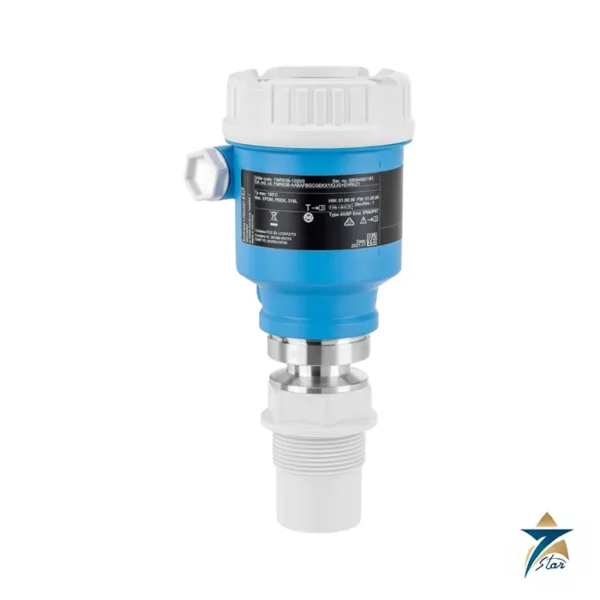
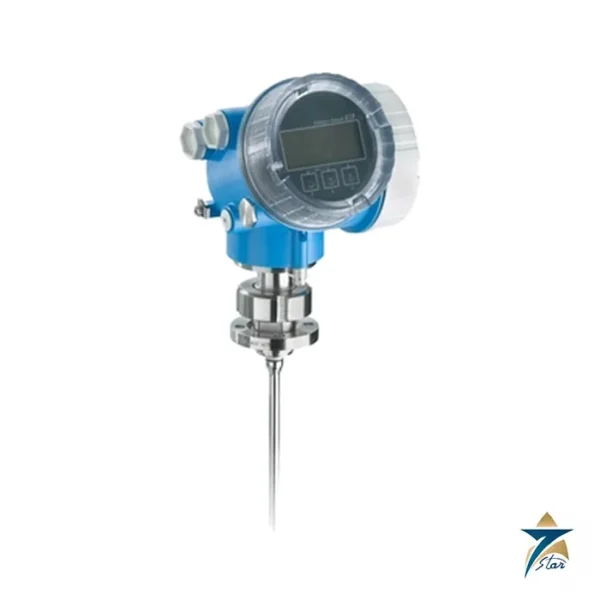
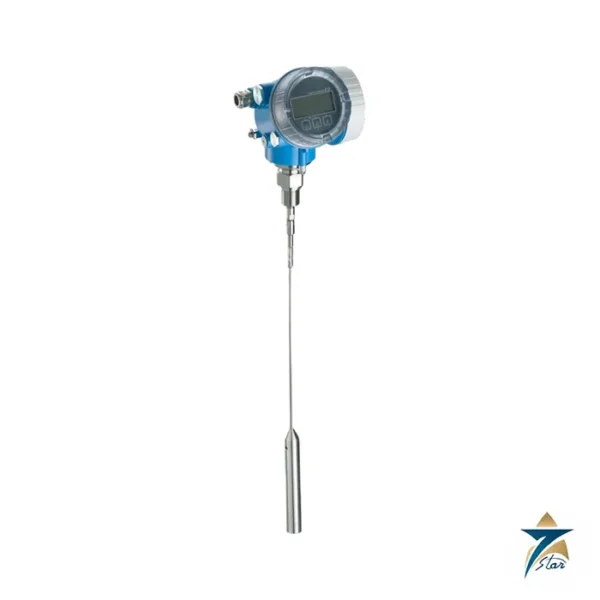
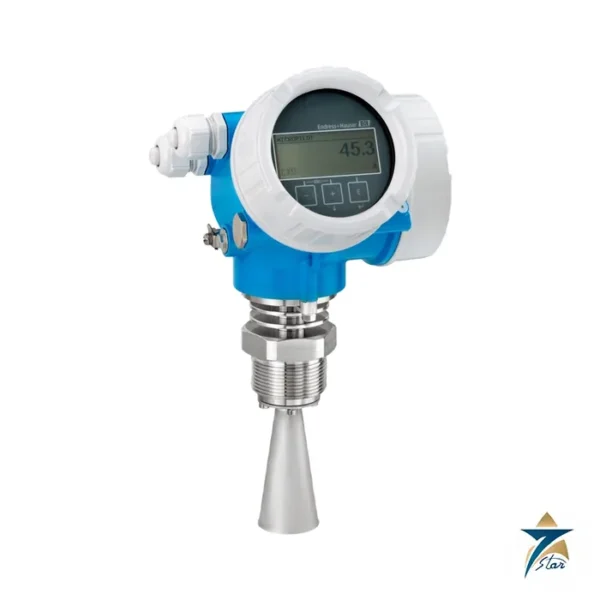
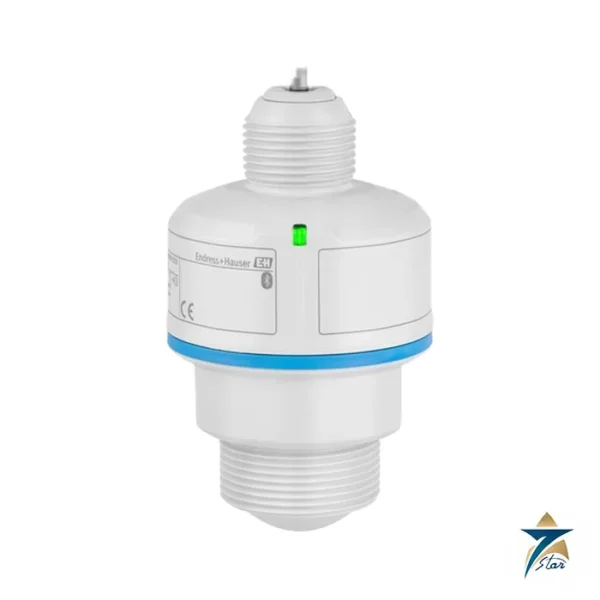
Endress+Hauser FMR57 Micropilot Parabolic Radar for Silos

Description

Endress+Hauser FMR57: long-range radar for tall silos and hot solids

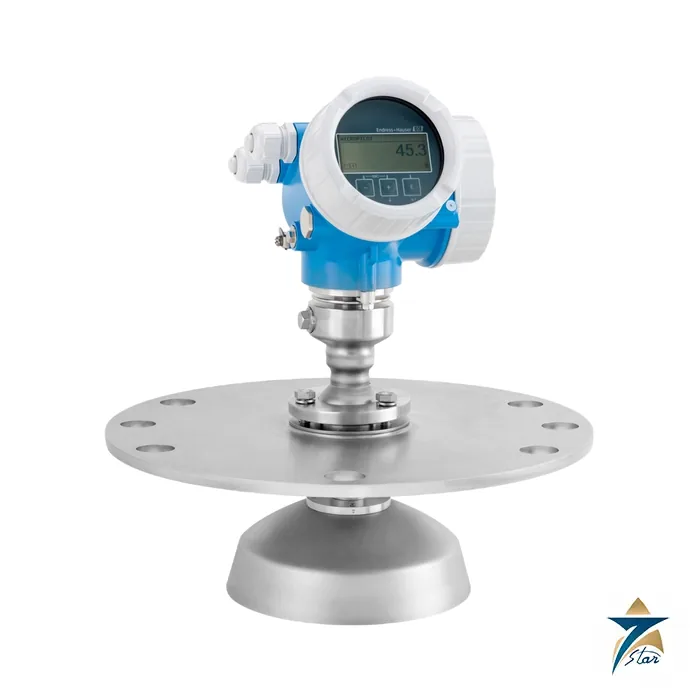
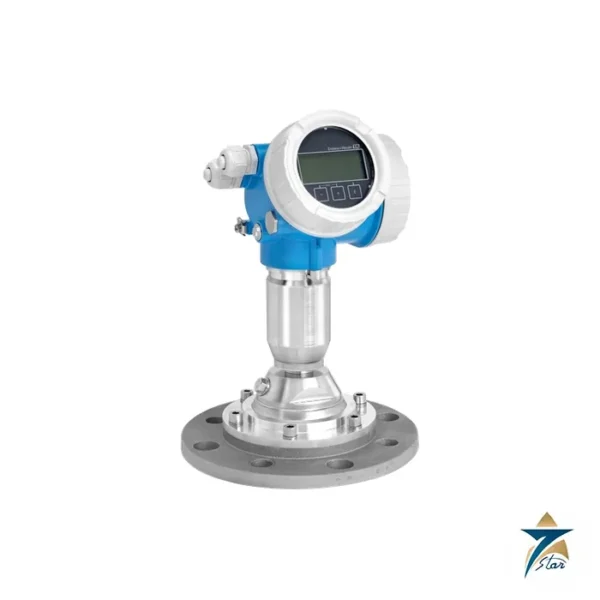
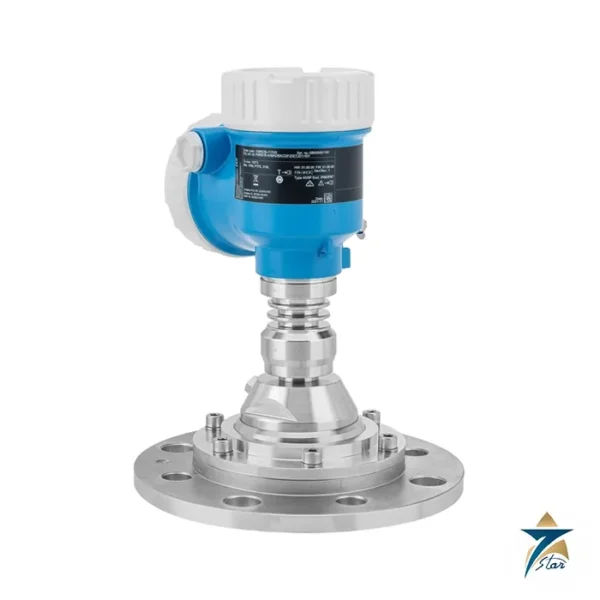
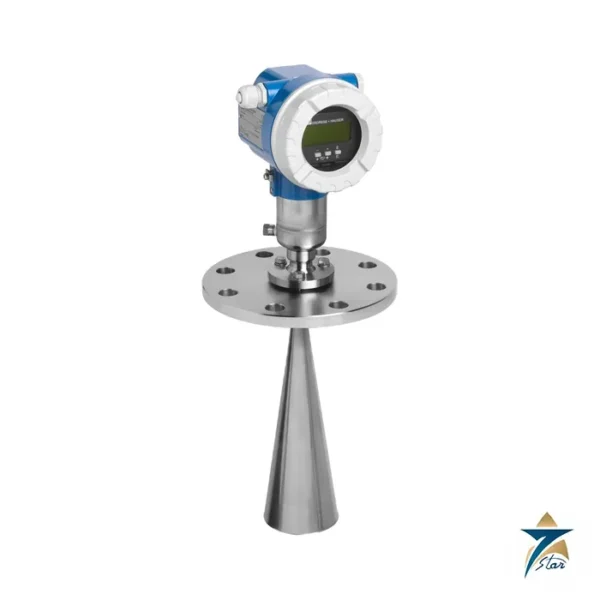
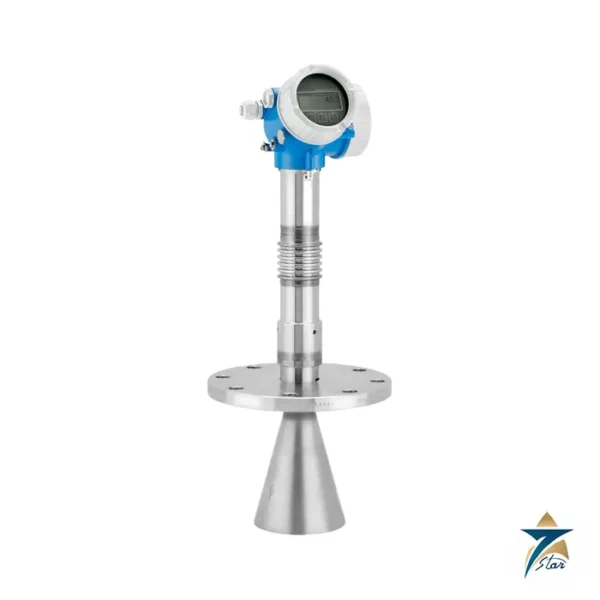
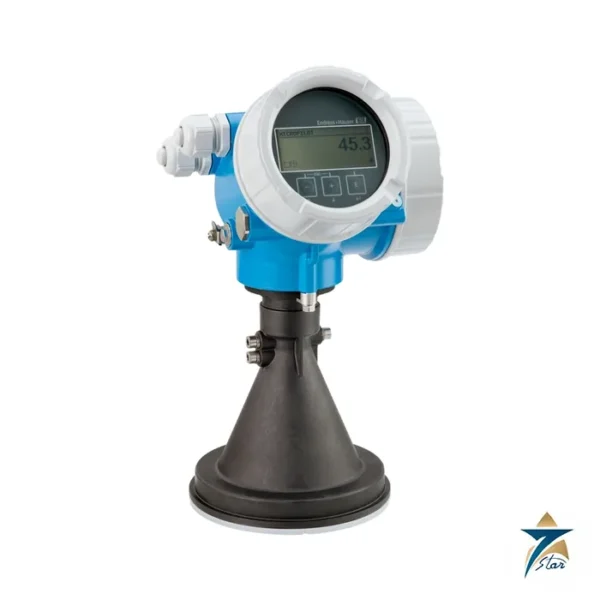
Endress+Hauser FMR57 is the high-range Micropilot for bulk solids. With a maximum of 70 m, horn or parabolic antennas and a graphite seal option rated to 400 degrees Celsius, it covers the tall storage domes, clinker silos and coal bunkers that a smaller radar cannot reach. The parabolic versions concentrate the beam into only 4 or 3.5 degrees, which is the reason they are chosen for silos packed with internal struts and ladders.

Key numbers for FMR57

  • Maximum measuring range 70 m for all versions.
  • Parabolic antenna 200 mm (8 in): beam angle 4 degrees; 250 mm (10 in): 3.5 degrees; horn versions also available.
  • Seal option A6 Viton GLT: minus 40 to plus 200 degrees Celsius, gauge minus 1 to 16 bar.
  • Seal option D4 graphite: minus 40 to plus 400 degrees Celsius, same pressure range.
  • Accuracy plus or minus 3 mm; offset plus or minus 4 mm; resolution 1 mm.
  • Response time below 1 s for tanks up to 70 m at a sampling rate of 2.2 per second or more.
  • Parabolic reflector in 316L with a PTFE feed; versions with alignment unit and UNI flange.

Technical overview of FMR57

Parameter Value
Frequency K-band, about 26 GHz
Output HART 1,200 bit/s, optional 2nd 4 to 20 mA, galvanic isolation
Housing GT18 stainless (about 4.5 kg), GT19 plastic (1.2 kg), GT20 aluminum (1.9 kg)
Protection IP68 / NEMA 6P, IP66 / NEMA 4X
Linearization Up to 32 value pairs for volume or mass
Media groups for solids A 1.6 to 1.9 up to E above 7
Approvals Ex certificates, marine, CRN options
Safety SIL2; SIL3 with redundancy
Interference suppression Echo mapping and Multi-Echo Tracking

Operating features of FMR57 and how to aim the antenna

The electronics are shared with the rest of the FMR5x generation. A passive two-wire loop carries 4 to 20 mA with HART, an optional second current output can be added, and the sensor can be read through a local display, a HART tool or the SmartBlue app over Bluetooth. Linearization with up to 32 value pairs converts distance into tonnes or cubic metres, so the DCS receives inventory directly. Multi-Echo Tracking follows the true level echo even when a passing dust cloud or a filling jet creates short-lived disturbances.

The reflector must be tilted so the beam hits the material cone centre, not the wall. The alignment unit with a UNI flange allows adjustment of the antenna axis and is the recommended option for conical silos or an off-centre nozzle. Make sure the reflector does not touch the nozzle or flange pipe when the unit is tilted.

Application ideas for FMR57

Cement and raw-meal silos, coal bunkers, grain elevators, port bulk terminals and large mineral stockpile bins in Omani industrial zones such as Sohar, Duqm and Salalah all benefit from a non-contact sensor with a 70 m reach. Dust, filling noise and condensation do not change the speed of the 26 GHz signal significantly, and the hot version fits kiln-side equipment.

The long range is only available if the material reflects well. Cement and plaster (groups B and above) give strong echoes, light plastic granulate or sugar are weaker, and for the lowest groups the sheet shows shorter ranges. A silo designer should combine the material group with the antenna size and then check the result in the datasheet tables rather than assuming the headline value.

Radar has another advantage in tall silos: it measures the distance directly, so stratified air, dust clouds and filling noise do not change the reading. Many plants therefore replace plumb-bob or ultrasonic gauges with this type of radar to cut maintenance.

How FMR57 differs from FMR56

Parameter FMR57 FMR56
Range 70 m 30 m
Antenna Horn or parabolic PP-cladded horn
Max temperature 400 degrees Celsius (graphite) 80 degrees Celsius
Pressure 16 bar 3 bar
Beam 3.5 degrees at best 8 degrees at best

Fitting and calibration of FMR57

Mount on a nozzle or flange with the reflector oriented per the drawing. Wire a 4 to 20 mA loop with HART, then use the wizard to set empty and full distances, load the linearization table for the silo geometry and map the interferences. Confirm the result against a manual measurement at two or three levels. Because a 70 m span leaves a lot of room for error in the entered empty distance, measure the silo height carefully from the flange face and write the value on the commissioning sheet next to the tag number and the order code.

On a hot silo, let the instrument reach thermal equilibrium before the final calibration, and record the seal type fitted (Viton or graphite) in the plant register, because a replacement with the wrong seal would silently reduce the temperature capability.

Maintenance of FMR57

Clean the reflector when the signal strength falls, and inspect the PTFE feed for cracks or discolouration. For graphite seals, check flange torque at warm-up. Use Heartbeat verification to document the device. When the reflector is removed for cleaning, mark its orientation first so that the alignment does not need to be redone.

The signal and diagnostic parameters reveal slow changes. A drop in echo amplitude with a steady empty distance almost always means dust on the reflector; a jump in the measured empty distance suggests the instrument has moved or the silo bottom has been changed.

Documents and quotation

Technical Information TI01042F is the datasheet for FMR57. Send the part number, antenna type, seal, flange and quantity through the RFQ form. Seven Star LLC is an independent supplier serving Oman and the GCC and is not affiliated with the manufacturer.

Installation and Commissioning Planning

Planning ahead shortens downtime when a Endress+Hauser FMR57 goes into service. Confirm the available mounting space, cable entry or process connection, and the tools and spare seals needed on the day. Keep the existing configuration or calibration data so the new unit can be set up to match, and check that loop drawings and the asset register are updated after the swap. If the installation has to fit a short shutdown window, tell us the date when you request a quotation so that delivery of the Endress+Hauser (E & H) equipment can be planned around it.

Other Models in the Micropilot Fmr5x Range

Seven Star LLC supplies models from the Micropilot Fmr5x range in Oman and the GCC. Compare the related models below and request a quote for the one that matches your application.

ModelCategory
Endress+Hauser FMR53 Micropilot Rod Antenna RadarRadar & Guided Wave Radar LevelView details
Endress+Hauser FMR54 Micropilot Horn and Planar RadarRadar & Guided Wave Radar LevelView details
Endress+Hauser FMR56 Micropilot Radar for Bulk SolidsRadar & Guided Wave Radar LevelView details
Endress+Hauser FMR57 Micropilot Parabolic Radar for SilosRadar & Guided Wave Radar LevelYou are viewing this model
Datasheets & Documents
  • PDF Datasheet Endress+Hauser FMR57 Micropilot Parabolic Radar for Silos Datasheet Download
Reviews (0)

Reviews

There are no reviews yet.

How would you rate this product?

It takes about 10 seconds — just tap a star. Your email is never published.

About brand

Endress+Hauser makes process measurement instruments for flow, level, pressure, temperature and liquid analysis. Georg H. Endress and Ludwig Hauser started the business in Lörrach, Germany, on 1 February 1953, first selling level meters, and the Endress+Hauser name has been used since 1957. The group is headquartered in Reinach, Switzerland, and has been wholly owned by the Endress family since 1975.

Seven Star LLC is an independent supplier listing Endress+Hauser flowmeters, level and pressure transmitters, temperature assemblies and liquid analysis products for buyers in Oman and the GCC. Instruments are matched from the full order code on the nameplate.

Endress+Hauser company profile

Origin Founded in Lörrach, Germany, on 1 February 1953 by the Swiss engineer Georg H. Endress and Ludwig Hauser
Headquarters Endress+Hauser AG, Reinach (Basel-Landschaft), Switzerland
Ownership Family owned; the Endress family has been the sole shareholder since 1975, and a family charter commits the company to stay family owned
Size About 16,500 employees and sales of about EUR 3.7 billion (2023, as reported by the company)
Product families Proline flowmeters, Micropilot and Levelflex radar, Liquiphant switches, Cerabar and Deltabar pressure, iTEMP and iTHERM temperature, Liquiline and Memosens liquid analysis

Milestones

  • 1953: Georg H. Endress and Ludwig Hauser start the business in Lörrach on 1 February, first selling level meters.
  • 1957: The Endress+Hauser name comes into use.
  • 1975: The Endress family becomes sole shareholder.
  • 2023: About 16,500 employees and sales of about EUR 3.7 billion, as reported by the company.

Endress+Hauser product lines

Line Measuring principle Typical use
Promass F 300, Promass 80F, 83F/84F Coriolis mass flow Direct mass flow and density of liquids and gases, hydrocarbon transfer and chemical dosing
Promag P 300, P 500, H 300, W 400, W 10, 50P Electromagnetic flow Water, wastewater, slurries and other conductive liquids
Prowirl F 200, 72F Vortex flow Steam, gas and low-viscosity liquids
Prosonic Flow 92F, t-mass 65F Ultrasonic and thermal mass flow Water lines; compressed air and industrial gases
Micropilot FMR62, FMR67, FMR60, FMR10B, FMR20, FMR50, FMR52 Free-space radar level, 80 GHz and 26 GHz Tanks, process vessels, silos and open water channels
Levelflex FMP51, FMP50, FMP54, FMP55 Guided wave radar level Level and interface in vessels, separators and bypass chambers
Liquiphant FTL51, Prosonic S FMU90 Vibronic point level; ultrasonic level High and low level alarms, pump protection, open channel flow
Cerabar PMC71B, PMP51B, PMP71, Deltabar PMD78B, PMD75 Pressure and differential pressure Process pressure, hydrostatic level and DP flow
iTEMP TMT82, TMT162, iTHERM TM101, TR66, TR10 Temperature transmitters and thermometers RTD and thermocouple points with thermowells
Liquiline CM444, CM442, Memosens CPS11E, Stamolys reagents Liquid analysis pH, ORP, conductivity, dissolved oxygen and nutrient analysis in water treatment and process

Where Endress+Hauser instruments are used

In Oman and the GCC, Endress+Hauser instruments are common in oil and gas production and processing, refineries and petrochemicals, desalination and water networks, wastewater treatment, power plants and food and beverage plants. Coriolis meters measure hydrocarbon and chemical flows, electromagnetic meters cover water and wastewater, radar transmitters handle tank and silo level, and Liquiline analysers monitor water quality. Proline 300 and 500 flowmeters include Heartbeat Technology for in-situ verification, which reduces the need to remove a meter for checks.

Ordering Endress+Hauser instruments: what we need

The order code on the nameplate (for example PMP71-1QA1S11RDADU) defines every option: measuring range, process connection, materials, output, approvals and display. Send it with the serial number; Endress+Hauser can retrieve the original configuration from the serial number. For a new instrument add the medium, operating and design pressure and temperature, range, line size or tank geometry, process connection, wetted materials, output or protocol (4-20 mA HART, PROFIBUS, FOUNDATION Fieldbus, Modbus) and the hazardous-area approval required. Older models such as Promass 80/83 or Micropilot M are replaced by current Proline or 80 GHz Micropilot devices.

Facts checked against Endress+Hauser company history and product information, October 2026.

FAQ

Questions about the Endress+Hauser FMR57 Micropilot Parabolic Radar for

Answers from our engineering team on installation, compatibility and integration.

01How far can Endress+Hauser FMR57 measure?
Up to 70 m for all versions, as stated in the FMR56/FMR57 datasheet.
02What are the beam angles of FMR57 parabolic antennas?
4 degrees for the 200 mm (8 in) and 3.5 degrees for the 250 mm (10 in) parabolic antenna.
03Which seals and temperatures does FMR57 offer?
Viton GLT from minus 40 to plus 200 degrees Celsius and graphite from minus 40 to plus 400 degrees Celsius, both at minus 1 to 16 bar.
04Does FMR57 support HART?
Yes, HART at 1,200 bit/s with galvanic isolation, and Bluetooth for SmartBlue set-up.
05What is the difference between FMR57 and FMR56?
FMR57 reaches 70 m with horn or parabolic antennas and up to 400 degrees Celsius; FMR56 reaches 30 m with a PP-cladded horn up to 80 degrees Celsius.