WIKA TC80 high-temperature thermocouple per DIN 50446
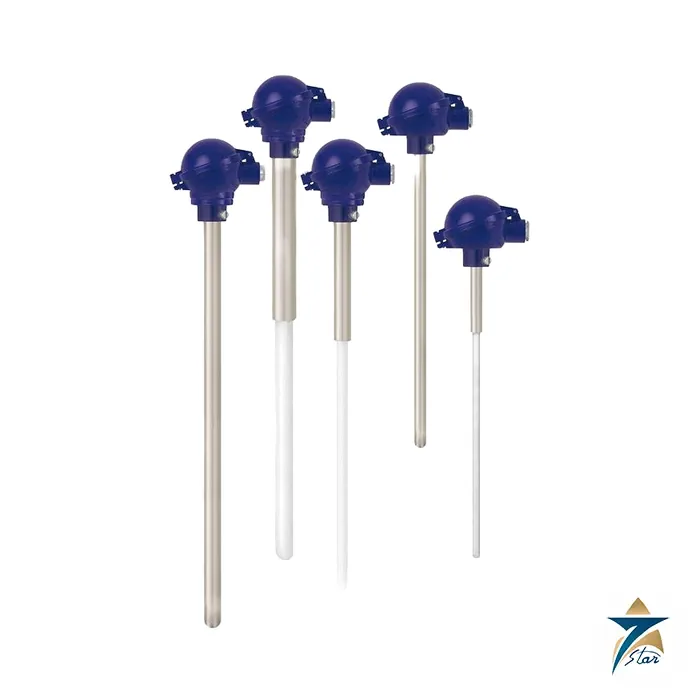
The WIKA TC80 is a straight, high-temperature thermocouple built for furnaces, kilns and incinerators where an ordinary stainless thermowell would fail. It follows DIN EN 50446 and uses a protection tube of heat-resistant steel or ceramic, optionally with an additional ceramic inner tube, carried on a support tube and ending in a connection head. WIKA gives application ranges up to a maximum of 1,700 °C [3,100 °F]. Seven Star LLC supplies the TC80 in Oman and the GCC as an independent supplier in Muscat; this page decodes the model codes so that an RFQ describes the correct build.
Applications the TC80 was developed for
The datasheet lists blast furnaces and hot blast stoves, annealing and heat treatment, waste, biomass and hazardous-waste incineration, large heating plants and power engineering, and the glass, porcelain, ceramic, cement and brick industries. In each of these the thermocouple sees high temperature, thermal cycling and often chemically aggressive gas, so protection tube material is the main selection decision.
TC80 technical specifications
| Parameter |
Specification |
| Manufacturer / part number |
WIKA / TC80 (data sheet TE 65.80) |
| Type |
Thermocouple, straight version per DIN EN 50446 for high-temperature measurement |
| Application range |
Up to 1,700 °C [3,100 °F] maximum |
| Sensor types |
K, J, E, N (base metal); R, S, B (precious metal) |
| Type K ranges |
IEC class 1: -40 … +1,000 °C; ASTM: 0 … 1,260 °C |
| Type R / S ranges |
IEC class 1 and 2: 0 … 1,600 °C; ASTM: 0 … 1,480 °C |
| Type B range |
IEC class 2 and 3: 600 … 1,700 °C; ASTM standard from 870 °C |
| Metal protection tube |
Up to 1,200 °C depending on material |
| Ceramic protection tube |
Up to 1,600 °C, higher on request; gas-tight ceramics recommended above 1,200 °C |
| Thermowire diameter |
1 mm or 3 mm (base metal); 0.35 mm or 0.5 mm (precious metal) |
| Insulation |
Ceramic insulation tubes C 610 or rods C 799 |
| Support tube |
From various steels; standard length 80, 150 or 200 mm depending on tube size |
| Insertion length A |
Standard values of 500, 710, 1,000, 1,400 and 2,000 mm listed |
| Gas-tightness |
Process connection designed gas-tight up to 1 bar |
| Transmitter |
Optional built-in transmitter with integrated cold junction |
Decoding the DIN EN 50446 model letters
The main designs are named AM, AMK, BM, BMK, AK, AKK and BK. The first letter gives the connection head form (A or B), the second the protection tube material (M for metal, K for ceramic, written C in the datasheet legend), and a third letter K, if present, means an additional ceramic inner tube; no third character means no inner tube. An AMK, for example, has a form A head, a metal protection tube and a ceramic inner tube, while a BK has a form B head and a ceramic protection tube.
Choosing the protection tube
| Version |
Protection tube |
Typical use and limit |
| AM / BM |
Metal, heat-resistant steel |
Up to about 1,200 °C depending on the grade; base-metal thermocouple |
| AMK / BMK |
Metal with ceramic inner tube |
Better insulation and protection of the thermocouple wires in the metal tube |
| AK / BK |
Ceramic |
Precious-metal sensors; up to about 1,600 °C |
| AKK |
Ceramic with ceramic inner tube |
Highest-temperature, gas-sensitive installations |
Above 1,200 °C, gas-tight ceramics should be used, and enamelled metal tubes have a dished bottom. The metal tubes are pressed into the connection head, a solid welded flange or a stop flange, which allows a gas-tight process connection to 1 bar. For toxic or safety-critical process gases, WIKA suggests additional measures in case of tube fracture, and designs with inert-gas or compressed-air flushing or pressure-tight sealing are listed.
Mounting and process connection
A wide set of process connections is offered: stop flanges, threaded bushings and solid welded flanges. The stop flange allows variable insertion length by moving along the tube, which is helpful when the lining thickness is not known, but the flange position must be fixed before heating. Standard dimensions from the datasheet include protection tube outer diameters of 10, 15, 16, 22, 24, 26 mm, with matching support tube diameters of 15, 22 and 32 mm and support tube lengths of 80, 150 or 200 mm.
Thermal shock, installation and maintenance
- Pre-heat ceramic tubes slowly and avoid cold air jets on hot tubes
- Mount vertically or support long horizontal tubes, since hot ceramics creep and sag
- Keep the connection head cool enough for its terminals and for any transmitter
- Use matching compensating or extension cable for the thermocouple type, or a head transmitter with copper cable
- Inspect tubes and wire insulation at each shutdown, since contamination and drift develop over time
Applications in Oman and the GCC
High-temperature thermocouples are required in the region by cement and lime kilns, glass and ceramic plants, waste-to-energy and medical-waste incinerators, fired heaters in petrochemical plants and steel heat-treatment shops. Because gas atmospheres, sulphur and dust shorten sensor life, the choice of ceramic or alloy, and of flushing, often has more influence on life than the thermocouple type.
TC80 ordering checklist
- Model code (AM, AMK, BM, BMK, AK, AKK or BK)
- Thermocouple type and class, single or dual
- Operating temperature, peaks and process gas
- Protection tube material, diameter and insertion length A
- Support tube length and process connection (flange, bushing or stop flange)
- Head type, transmitter and flushing or pressure-tight requirement
Information to send with an RFQ
Send the process atmosphere, maximum and normal temperatures, installation drawing or flange standard, insertion length, thermocouple type and quantity.
Site conditions in Oman for the TC80
Field instruments in Oman are exposed to strong sun, high ambient temperature, wind-blown dust and, on coastal plants, salt in the air. When you specify the TC80, check the ambient and process temperature limits, the enclosure rating and the wetted and housing materials against the actual installation point, and consider sunshades for transmitters mounted in direct sunlight. Cable entries should be sealed with suitable glands so that dust and moisture cannot enter the housing.
Calibration and verification planning matters as much as selection. Record the range, configuration and tag data of each TC80 at commissioning, define a check interval that suits the criticality of the loop, and keep the certificates with the plant documentation so that audits and shutdown work can proceed without delay.
Documents and quotation
The WIKA data sheet TE 65.80 for the TC80 is attached on this page. Send us the specification and quantity for a quotation from Muscat as an independent supplier.
Other Models in the Wika Tc8x Range
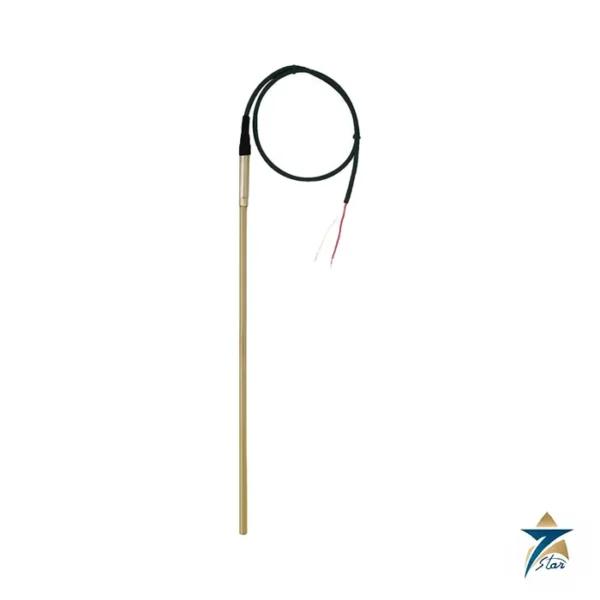
Seven Star LLC supplies models from the Wika Tc8x range in Oman and the GCC. Compare the related models below and request a quote for the one that matches your application.
























Reviews
There are no reviews yet.