Bronze globe valve for accurate flow regulation on small-bore pipework
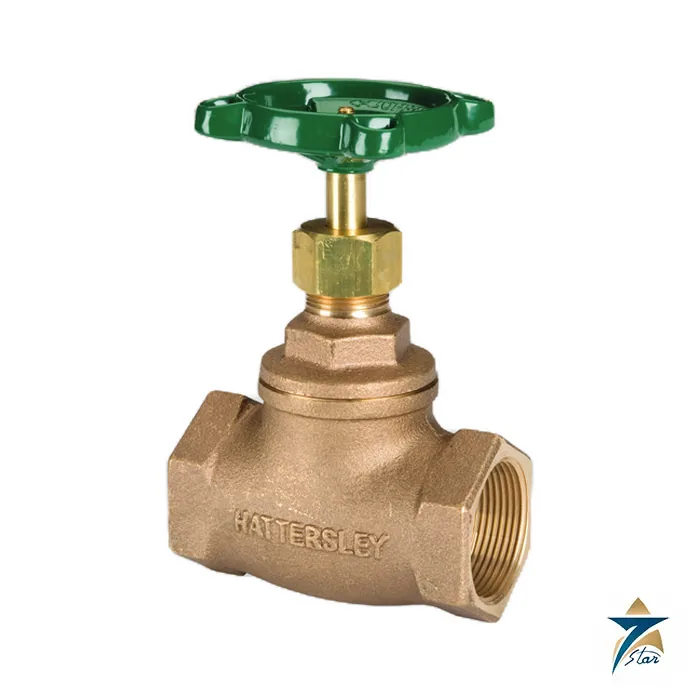
The Hattersley Fig. 13 is a bronze globe valve with a rising stem and screwed bonnet, built to BS 5154:1991 PN32 Series B. The data sheet highlights the robust spherical bronze body, accurate flow regulation and control, and suitability for pressures up to 32 bar. A PTFE replacement disc gives the seating surface, and taper threaded ends to BS EN 10226 (ISO 7-1, formerly BS 21) are standard, with NPT threads to ASTM B1.20.1 available.
A globe valve changes flow by moving a disc towards or away from a seat, so it throttles more predictably than a gate valve. That is the reason the maker stresses regulation and control. It is supplied in eight sizes from 1/4 to 2 inch.
Key features
- High-quality bronze body, robust spherical shape
- Rising stem and screwed bonnet
- PTFE replacement disc
- Brass stem, gland nut and disc holder; aluminium handwheel nut
- Taper threads to BS EN 10226 (ISO 7-1); NPT to ASTM B1.20.1 available
- Suitable for pressures up to 32 bar
Technical specification
| Parameter |
Specification |
| Valve type |
Globe valve, rising stem, screwed bonnet |
| Standard |
BS 5154:1991 PN32 Series B |
| Pressure / temperature |
32 bar from -10 to 100 C; 14 bar at 198 C |
| Test pressure, shell |
6 bar, pneumatic |
| Test pressure, seat |
6 bar, pneumatic |
| End connection |
Taper threaded BS EN 10226 (ISO 7-1, formerly BS 21); NPT to ASTM B1.20.1 available |
| Body and bonnet |
Bronze, BS EN 1982 CC491K, ASTM B62 C83600 |
| Stem |
Brass, BS EN 12165 CW617N, ASTM B455 C38000 |
| Gland nut, disc holder, retaining washer |
Brass, BS EN 12164 CW614N |
| Disc stem nut |
Brass, BS EN 12164 CW603N |
| Packing |
PTFE |
| Handwheel nut |
Aluminium |
Dimensions and weights
| Size (in) |
1/4 |
3/8 |
1/2 |
3/4 |
1 |
1 1/4 |
1 1/2 |
2 |
| A mm |
51 |
51 |
60 |
74 |
86 |
99 |
109 |
130 |
| B open mm |
72 |
72 |
92 |
108 |
118 |
137 |
162 |
166 |
| C mm |
56.5 |
56.5 |
68.3 |
75.1 |
82 |
94 |
100 |
119 |
| Weight kg |
0.3 |
0.3 |
0.5 |
0.6 |
1.1 |
1.6 |
2.2 |
3.7 |
Dimension B is the overall height with the valve fully open, a figure that matters when the valve sits under insulation or in a ceiling void.
Selection and ordering guide
Specify the figure number, size and thread form (BS taper or NPT). The Fig. 13 uses a handwheel on a rising stem; the Fig. 5N described on its own page is a needle-type variant of the same series, for finer control. For tight shut-off on larger sizes a gate valve or ball valve is the usual choice; for flow control a globe valve is better. Check the 100 C limit at the full 32 bar rating when selecting for hot water systems.
Installation and operation
The data sheet carries no installation text. Standard practice for globe valves is to fit them so that pressure acts under the disc where the valve will be opened infrequently, and to mount them with the stem upright or at an angle above horizontal so the packing remains accessible; confirm direction with Hattersley guidance. The rising stem gives visual indication of position. Because the seat test is pneumatic at 6 bar, a hydrostatic proof is not stated on the sheet.
Applications
Globe valves of this class appear in heating, hot and cold water, compressed air and general services in plant rooms. In GCC buildings they are used on chilled water and fan-coil branches, boiler house drains and makeup lines. For potable water, check local approval requirements, since the sheet does not print approvals.
Questions to settle before ordering a Fig. 13
A short checklist avoids the common mistakes with small bronze globe valves. First, confirm the fluid and temperature against the printed curve: the 32 bar rating applies up to 100 C only, and the sheet gives 14 bar at 198 C. Second, confirm the thread: BS EN 10226 taper is standard and NPT to ASTM B1.20.1 is available, and the two are not interchangeable. Third, decide whether regulation is really needed. If the valve is only an isolator, a ball or gate valve is cheaper and has lower pressure drop.
Fourth, think about maintenance. The screwed bonnet and PTFE packing allow repacking in service by a competent fitter, while the replaceable PTFE disc restores the seat without replacing the body, as the sheet describes. Finally, note that the data sheet prints a pneumatic seat test of 6 bar, so a leakage-class requirement should be agreed with the supplier before ordering.
Specification checklist before ordering
Before ordering, confirm the size from 1/4 to 2 inch, the thread type (taper threads to BS EN 10226 as standard, NPT to ASTM B1.20.1 on request), the working pressure up to 32 bar at -10 to 100 C and the fluid. The printed curve gives only 14 bar at 198 C, so steam duty needs a pressure check. As with any globe valve, flow direction matters, so check the arrow cast on the body before installation.
Handling and storage
Keep the valves in their packaging with threads protected, and flush the pipe before fitting so that scale does not damage the PTFE disc. Use a thread sealant that suits the medium and do not over-tighten the body when screwing the valve into fittings.
Information needed for a quotation
Send the figure number, size, thread type, quantity and delivery location in Oman or the GCC, with the pressure, temperature and medium of the service.
Related products
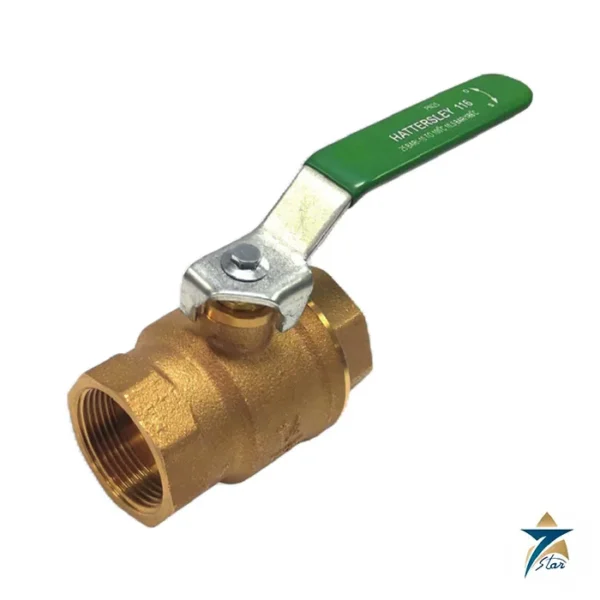
See the Fig. 5N needle globe valve, the Fig. C31 bronze gate valve, the Fig. 116 ball valve and the Globe Valves category.
Frequently asked questions
What is the pressure rating?
32 bar from -10 to 100 C, and 14 bar at 198 C (BS 5154 PN32 Series B).
What sizes are available?
1/4, 3/8, 1/2, 3/4, 1, 1 1/4, 1 1/2 and 2 inch.
Is the disc replaceable?
Yes, the data sheet lists a PTFE replacement disc.
What threads are offered?
Taper threaded to BS EN 10226 (ISO 7-1) as standard, with NPT to ASTM B1.20.1 available.
How heavy is the 2 inch valve?
3.7 kg.
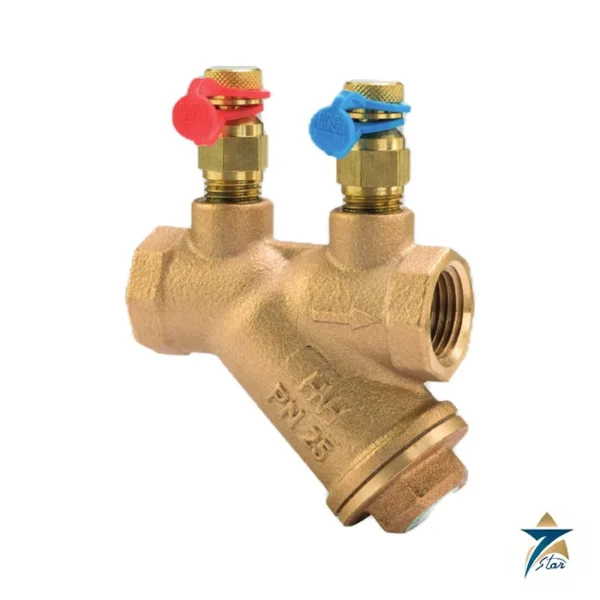
Related Hattersley products: Hattersley Fig. C31 Bronze Gate Valve PN16 Series B, Hattersley Fig. 1013 Bronze Horizontal Lift Check Valve PN32, Hattersley Fig. 5N and 5NLS Bronze Needle Globe Valve, Hattersley Fig. 116 and 116EXT Bronze Full Bore Ball Valve PN25, Hattersley Fig. 907 Bronze Y-Type Strainer PN25 and Hattersley Fig. M511 Cast Iron Flanged Gate Valve PN10.
Documents and quotation
The data sheet is hosted here and all figures come from it. Specify size and thread when requesting a quotation. Seven Star LLC is an independent supplier in Muscat.











Reviews
There are no reviews yet.