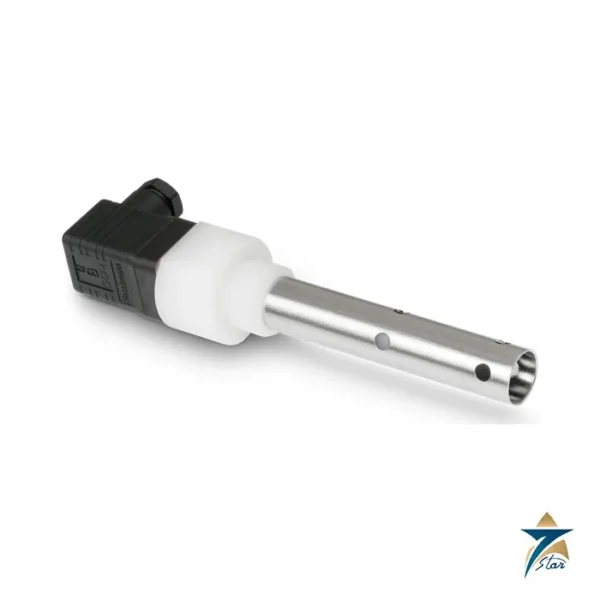
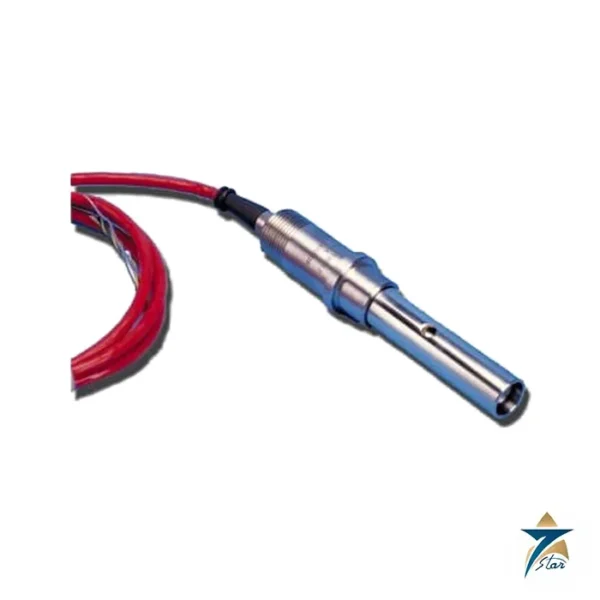
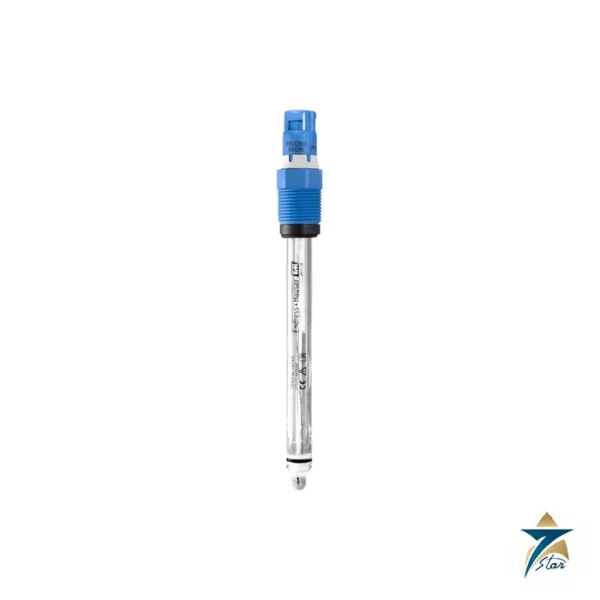
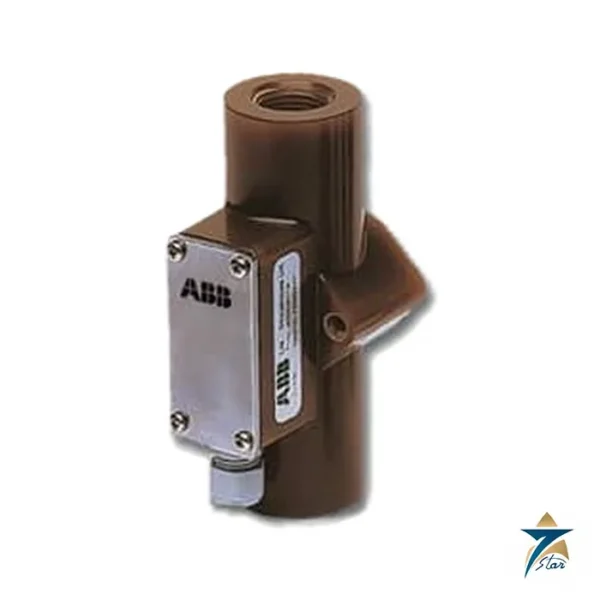
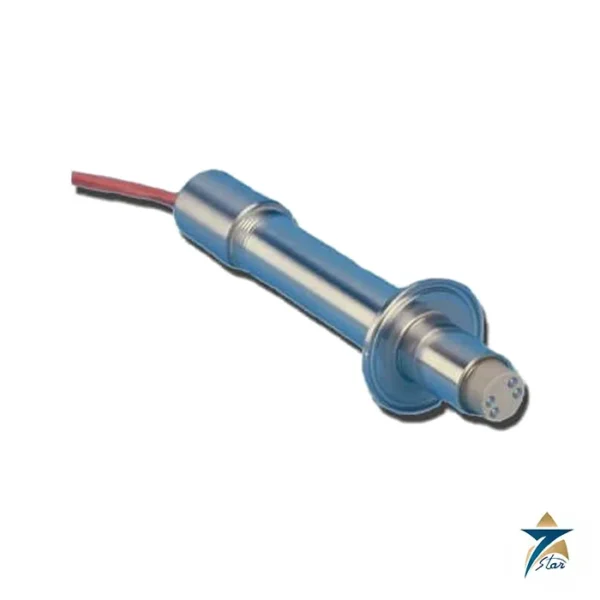
Brand:

KROHNE OPTISENS PH 8100 Potentiometric pH Glass Electrode

Description

pH glass electrode for chemicals and low-conductivity media

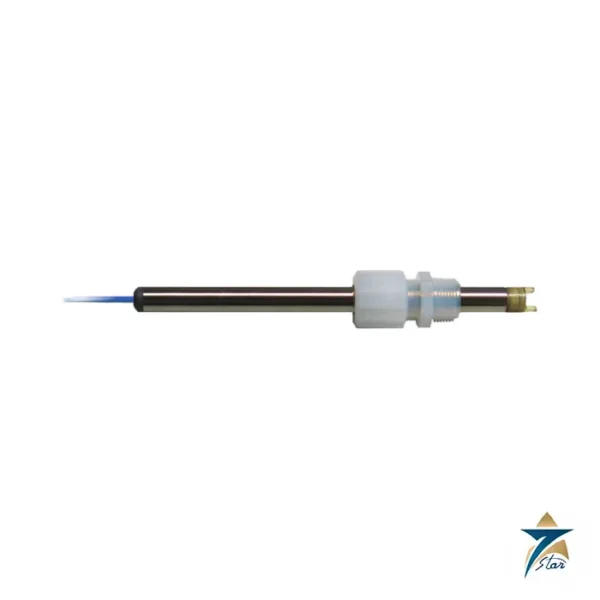
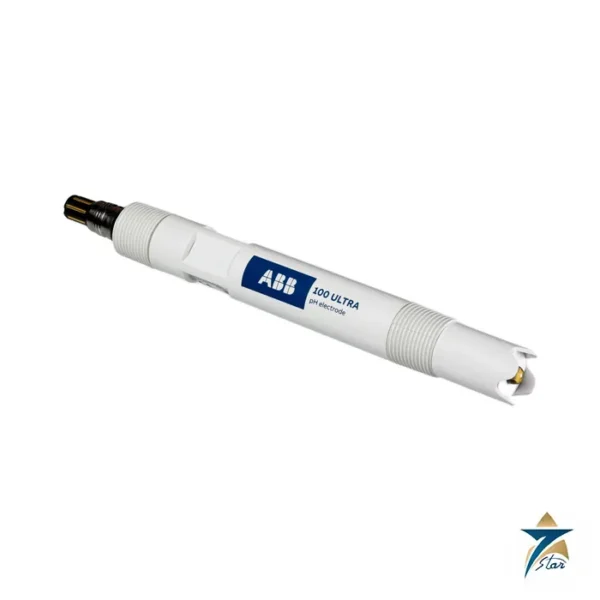
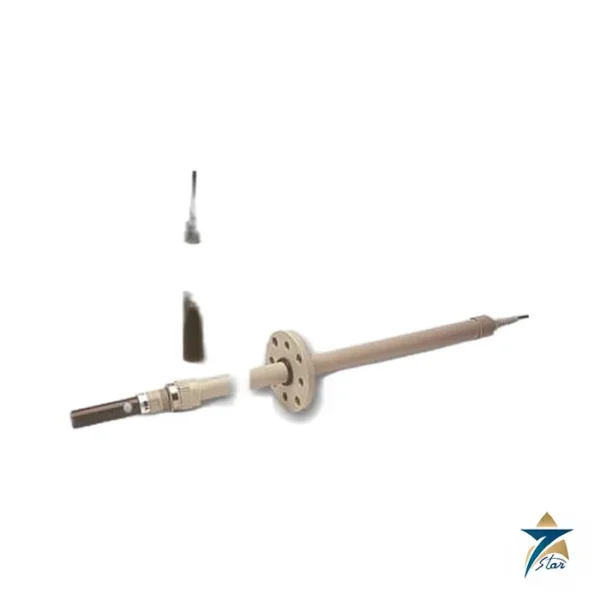
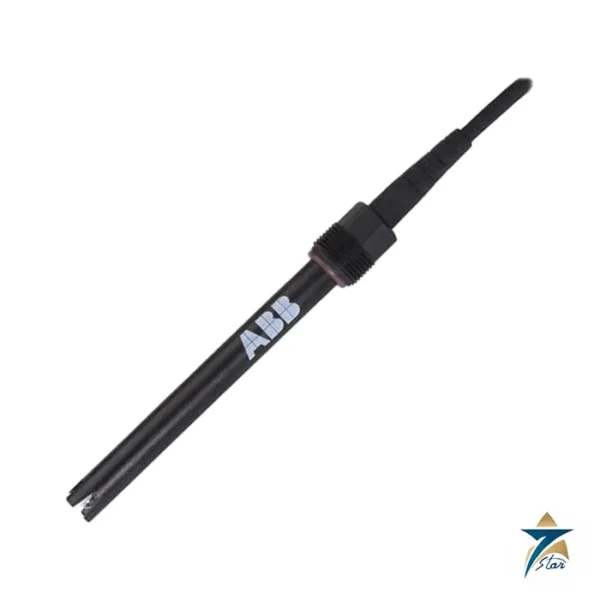
The KROHNE OPTISENS PH 8100 is a potentiometric pH sensor, a combined glass electrode with built-in reference electrode, aimed at chemical and petrochemical plants, process water, industrial wastewater and other aggressive media. The glass is suited to highly alkaline solutions and to low conductivity liquids above 2 uS/cm, and it tolerates temperatures to +130 C (+266 F).

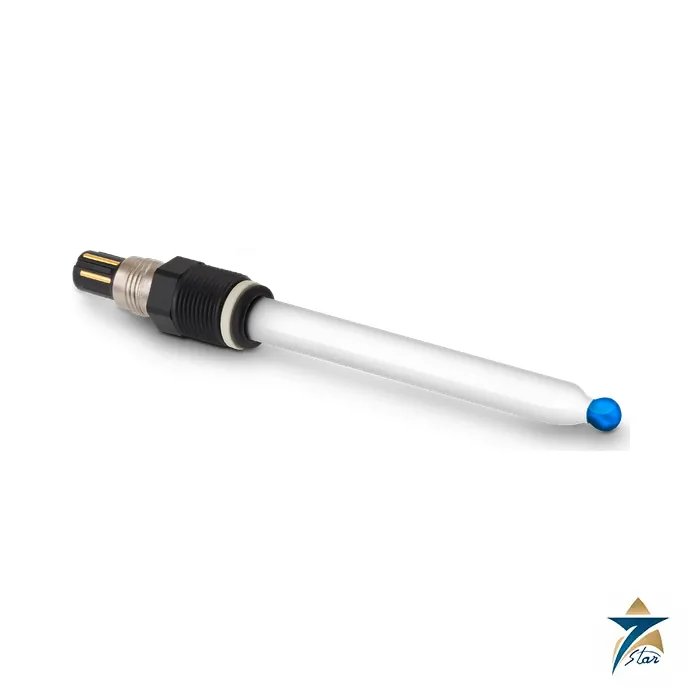
Two open diaphragms formed as glass capillaries resist clogging, giving faster response, and the sensor can be mounted upside down. The data sheet lists a Pt100 for temperature compensation, 12 mm shaft diameter, 120 mm length and a PG 13.5 connection with VP 8.0 sensor cap.

Technical specifications

Parameter Specification
Model OPTISENS PH 8100
Principle Potentiometric, glass electrode with built-in reference
Measuring range 0 to 14 pH
Maximum measuring error 0.2 % of full scale (pH); 1.0 % for temperature
Resolution 0.1 pH (0.01 in extended mode)
Temperature 0 to +130 C / +32 to +266 F
Pressure Max. 6 bar / 87 psi absolute
Minimum conductivity Above 2 uS/cm
Shaft Glass, 12 mm diameter, 120 mm length
Diaphragm 2 x open, glass capillary
Temperature sensor Pt100
Mountings SENSOFIT FLOW 1000, IMM 1000, INS 1000

Where it fits

Named uses include chemicals and petrochemicals with alkaline solutions, industrial wastewater, dyes, pulp and condensate in the sugar industry. Resistance to solvents, strong acids and bases is highlighted, and special reference systems extend life.

It is used with the MAC 100 or another analytical transmitter, and the manufacturer lists flow-through, immersion and insertion holders for installation.

The open glass capillary diaphragm is the key difference from gel-filled junctions, because it cannot be blocked by process film and responds quickly in low-conductivity water. Spare electrodes can be exchanged at the plug connection, which keeps downtime short for operators who run several measuring points.

Ordering and handling

A glass electrode is a consumable, so plan spares and a buffer calibration routine. The data sheet is dated 2012 (R01); confirm current availability, the exact variant and the holder you intend to use before ordering.

Check the media for fluoride, strong alkali at high temperature or solids, which shorten glass life. A derived rule is to keep the electrode wet during storage and to calibrate with fresh buffers.

Commissioning needs a two-point calibration with buffer solutions at process temperature, and the slope should be checked regularly. The sensor can be fitted in a flow-through holder, an immersion holder or an insertion adapter, and the signal cable should be kept dry and short because the glass electrode has a very high impedance.

Keep a record of the calibration date, buffer lot and slope for every electrode, since this history shows when the glass is ageing. Where the process contains solvents or suspended solids, ask for a cleaning routine suited to open glass capillary diaphragms, and plan spare electrodes so that a failure does not stop dosing or effluent control.

Documents and quotation

Seven Star LLC is an independent supplier in Muscat and can quote this item on request. The reference document is KROHNE OPTISENS PH 8100 technical datasheet (EN), attached as a PDF; verify the variant, holder and signal converter against it, then send us the type code for a quotation. Browse Liquid Analysis Sensors for alternatives.

Datasheets & Documents
  • PDF Datasheet KROHNE OPTISENS PH 8100 technical datasheet (EN) Download
Reviews (0)

Reviews

There are no reviews yet.

How would you rate this product?

It takes about 10 seconds — just tap a star. Your email is never published.

About brand

KROHNE is the German flow and level measurement company founded in Duisburg in 1921 as Ludwig Krohne & Sohn. Its first customers were Ruhr steel producers, for whom it built variable area flowmeters. KROHNE dates the first electromagnetic flowmeter for industrial process measurement to 1952. It is still family-owned and headquartered in Duisburg.

Seven Star LLC is an independent supplier in Muscat. We list KROHNE electromagnetic, Coriolis, ultrasonic and variable area flowmeters, radar level transmitters and flow computers, and supply them to water utilities, oil and gas and process plants in Oman and the GCC by order code.

KROHNE company profile

Established 1921, Duisburg, Germany, as Ludwig Krohne & Sohn
Early products Variable area flowmeters for hardening furnaces in the Ruhr steel industry
Milestone 1952: first electromagnetic flowmeter for industrial process measurement, according to KROHNE
Product families Electromagnetic, Coriolis, ultrasonic, vortex and variable area flowmeters, radar and guided radar level, flow computers and metering systems, analysers

Milestones

  • 1921: Ludwig Krohne starts making variable area flowmeters in Duisburg for hardening furnaces in the Ruhr steel industry.
  • 1952: First electromagnetic flowmeter for industrial process measurement, according to KROHNE.
  • 1980: First ultrasonic flowmeter delivered to Shell for crude oil measurement.
  • 1985: Development and production of Coriolis mass flowmeters begins.
  • 1994: First Coriolis mass flowmeter with a single straight measuring tube.
  • 1996: ALTOSONIC V, the first ultrasonic meter for custody transfer of liquids.

KROHNE products we list

Family Models Typical use
Electromagnetic flowmeters OPTIFLUX 2000, 2100, 2300, 4100, 4300, WATERFLUX 3070, 3100, 3300 Water networks, wastewater, seawater intake and conductive process liquids
Coriolis mass flowmeters OPTIMASS 1400, 6400 Direct mass flow and density of hydrocarbons, chemicals and LPG
Ultrasonic flowmeters ALTOSONIC V12, OPTISONIC 3400, 6300 clamp-on, 7300 gas Gas custody transfer, liquid process flow and non-intrusive clamp-on checks
Variable area flowmeters H250 M40, DK800/R Simple, power-free flow indication for purge, sample and utility lines
Level OPTIFLEX 7200 guided radar, OPTIWAVE 5400, 7500, 1540, OPTISWITCH 5300 Level in tanks, separators and chemical storage, and point level switching
Flow computer SUMMIT 8800 Fiscal and custody transfer calculations for gas and liquid metering

The flowmeter principle follows the medium. Electromagnetic meters need a conductive liquid, have no moving parts and no pressure loss, and suit water and slurries. Coriolis meters measure mass flow and density directly, so they work for hydrocarbons and non-conductive liquids. Ultrasonic meters handle gas and large pipes, and multi-path designs such as the ALTOSONIC V12 are used for custody transfer. Variable area meters need no power at all and give a simple local reading.

Where KROHNE instruments are used

In Oman and the GCC, KROHNE flowmeters and level transmitters are used in water transmission and distribution, desalination, wastewater, oil and gas production and fiscal metering, refineries, petrochemical and chemical plants, and power stations.

Ordering KROHNE instruments: what we need

Send the complete KROHNE order code or the nameplate data. For a new meter, send the medium, the flow range, pressure and temperature, the pipe size and flange rating, the liner and electrode materials (for electromagnetic meters), the output and communication, and the hazardous area classification.

Facts checked against KROHNE company history (100th anniversary), October 2026.

Frequently Asked Questions

What pH range does it measure?
0 to 14 pH.
Can it measure low-conductivity water?
The product page states suitability above 2 uS/cm.
What is the temperature limit?
Up to +130 C (+266 F).
Does it have temperature compensation?
Yes, an integrated Pt100 is listed.
Which converter is used?
The MAC 100 or another suitable analytical transmitter.