A two-wire 63 GHz radar level sensor with Bluetooth set-up
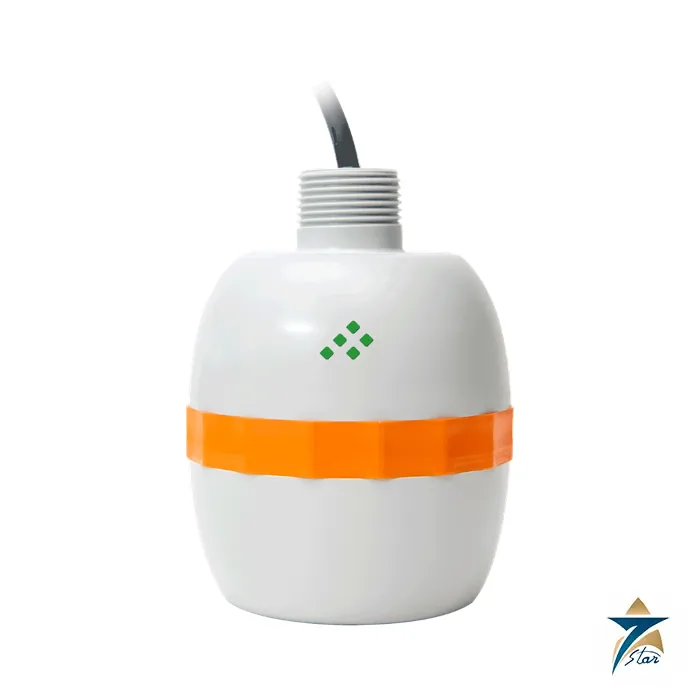
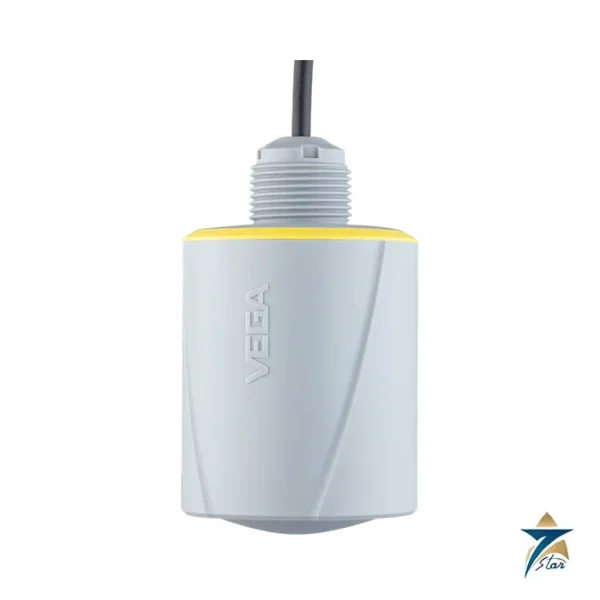
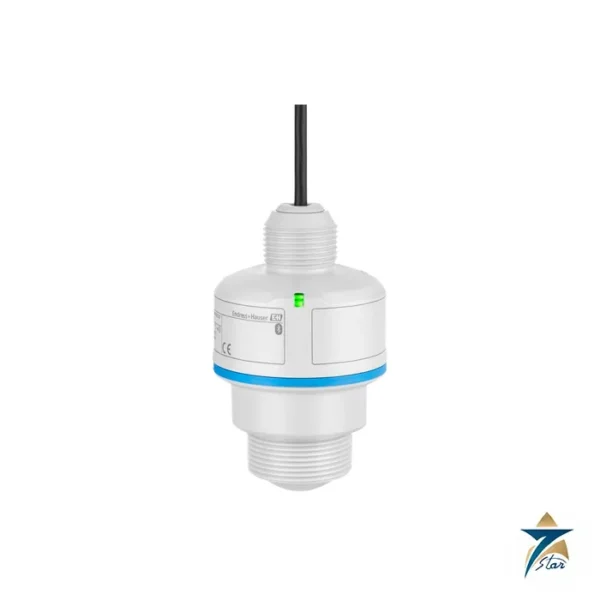
The Pulsar Reflect is a 2-wire, loop-powered radar sensor for level or volume monitoring of liquids and solids in critical applications. It works at V-band (63 GHz) using FMCW technology with a 6 degree beam angle, which Pulsar narrows to an effective 3 degrees with its DATEM echo processing. The sensor body is potted, rated IP68/NEMA 6P and made of Valox, so it can sit in a wet well, sump or tank without a separate electronics housing. A cable of 5 to 30 m carries the 4-20 mA signal.
Set-up is local: an encrypted Bluetooth link to a mobile interface (it can be disabled) and quad-colour status lights with a tilt sensor, plus HART with DTM for plant integration.
Technical specifications
| Parameter |
Specification |
| Manufacturer |
Pulsar Measurement (Pulsar Process Measurement Ltd) |
| Model |
Pulsar Reflect, versions R8, R20 and R36 |
| Measurement parameters |
Level, volume |
| Measurement range |
R8: 8 m (26.2 ft); R20: 20 m (65.6 ft); R36: 36 m (118.1 ft) |
| Technology / frequency |
FMCW radar, V-band 63 GHz |
| Beam angle |
6 degrees; effective 3 degrees using DATEM |
| Accuracy / repeatability / resolution |
2 mm / 1 mm / 1 mm |
| Near blanking |
75 mm (2.95 in) |
| Output |
2-wire loop powered, 4-20 mA; HART with DTM |
| Input voltage / current |
12 to 28 V DC; 3.8 to 22 mA (1 uA resolution); max. start-up current 20 mA |
| First stable measurement |
Cold boot 10 s; warm boot 5 s |
| Local communication |
Encrypted Bluetooth, range 4 to 40 m user configurable; quad-colour lights with tilt sensor |
| Dimensions |
Nominal 135 mm H x 102 mm D (5.3 x 4.0 in) |
| Weight |
Nominal 1.2 kg (2.6 lb) per 5 m cable |
| Enclosure |
IP68 / NEMA 6P, fully potted; body Valox |
| Cable lengths |
Standard 5, 10, 20 or 30 m; optional 50 or 100 m |
| Mounting |
Rear 1 in BSP (ATEX/IECEx) or 1 in NPT (cFMus) with BReez adapter; optional front 1.5 in BSP or NPT adapter, PVDF or PEEK |
| Ambient and process connection temperature |
-40 to +80 C (-40 to +176 F) |
| Process pressure |
-1 to +3 bar |
| Humidity |
0 to 99%, non-condensing |
| Approvals |
FCC, RED, CE, UKCA, IECEx, ATEX, UKEx, cFMus, Giteki |
| Hazardous area |
ATEX/IECEx/UKEx Zones 0, 1, 2: Ex II 1G Ex ia IIC T4 Ga; Zones 20, 21, 22: Ex II 1D Ex ia IIIC T100 C Da; Tamb -40 to +80 C; cFMus IS Class I Div 1 Groups A-D T4 |
Choosing R8, R20 or R36
The range code is the main selection. Add the empty distance from the sensor face to the bottom of the vessel, allow the 75 mm near blanking distance, and pick the smallest range that covers it with margin. The 6 degree beam is narrow, so a clear view of the surface without ladders, pipes or inlet streams in the cone matters more than the tank diameter. Process pressure is limited to -1 to +3 bar, so Reflect suits open or near-atmospheric vessels rather than pressurised separators.
For corrosive or chemical duty Pulsar offers PVDF or PEEK front thread adapters, and one BReez adapter is supplied as standard to ease installation.
What to confirm before ordering
State the range version, cable length, thread type (BSP or NPT, which also follows the approval scheme), hazardous-area approval, and whether the front thread adapter is needed. HART use requires the DTM; the datasheet does not list a display, so local reading uses the Bluetooth interface.
How the Pulsar Reflect works
The Reflect sends a radar signal at 63 GHz down to the surface of the liquid or solid. The signal frequency is swept, a method called FMCW, and the echo returns with a delay that depends on the distance. The sensor measures the delay and turns it into a level, and the level into a volume if a tank shape is set. The beam angle is 6 degrees, and the DATEM echo processing narrows the effective beam to 3 degrees, so the sensor can ignore walls and fittings. It is powered through the same two wires that carry the 4-20 mA signal.
Where the Pulsar Reflect is used
- Wet wells and sumps
- Water and wastewater tanks
- Chemical and process tanks
- Silos with powders and bulk solids
- Narrow vessels with internal fittings
Selection checklist for the Pulsar Reflect
- Version R8, R20 or R36 by measuring range
- Cable length of 5, 10, 20 or 30 m, or 50 or 100 m on request
- Process pressure of -1 to +3 bar
- Temperature of -40 to 80 degrees C
- Hazardous area rating for the zone
- Mounting thread: 1 in BSP or 1 in NPT
- Front adapter in PVDF or PEEK if needed
- HART with DTM for system integration
Installation, commissioning and maintenance notes
Fit the sensor on the mounting thread facing the product with a clear view and no obstruction in the beam. Keep away from the tank wall and the inlet stream. Connect the 12 to 28 V DC loop supply. Set the tank height with the Bluetooth app, or with HART, and check the readings against a dipstick. The sensor is fully potted, so there are no moving parts or covers to open.
Requesting a quotation for the Pulsar Reflect
Please send the version, the cable length, the tank details, the hazardous area class and the quantity. Seven Star LLC serves industrial customers in Oman and the GCC and replies with a quotation based on the information provided.
Reflect measuring ranges
The R8 measures up to 8 m, the R20 up to 20 m and the R36 up to 36 m. The accuracy is 2 mm, the repeatability is 1 mm and the near blanking distance is 75 mm.
Reflect electrical data
The input voltage is 12 to 28 V DC and the loop current is 3.8 to 22 mA. The first stable reading takes 10 s after a cold boot and 5 s after a warm boot.
Reflect Bluetooth and status lights
The encrypted Bluetooth link has a range of 4 to 40 m that the user can set, or it can be switched off. The quad-colour lights and the tilt sensor show the state of the sensor.
Reflect housing
The body is Valox, fully potted, with an IP68 rating. It is 135 mm high, 102 mm deep and weighs 1.2 kg with a 5 m cable.
Level records for Reflect
Keep the tank height setting, the cable length and the commissioning readings with the instrument file.
Choosing the right Reflect range
Choose the range with some margin above the full tank height, and choose the cable to reach the junction box.
Documents and quotation
The attached Pulsar datasheet gives the full Reflect specification and drawing. Send the vessel height, medium and approval requirement for a quotation. See more level instrumentation.
See also: Pulsar IMP+ I.S. Intrinsically Safe Ultrasonic Level Sensor.












Reviews
There are no reviews yet.