- Automation & ControlView all 3,261 products
- Automation Accessories
- AC Drives
- PLC & I/O Cards
- Industrial Communications
- Vibration Monitoring
- Controllers & Data Acquisition
- Isolator & Barrier
- Safety Switches & Guard Locking
- Encoders
- Motor Soft Starters
- CCTV & Security
- Pneumatic Cylinders
- HMI Displays
- Servo Drives
- Industrial Computers
- Machine Vision
- Automation Software
- Robotics
Brand: Elga
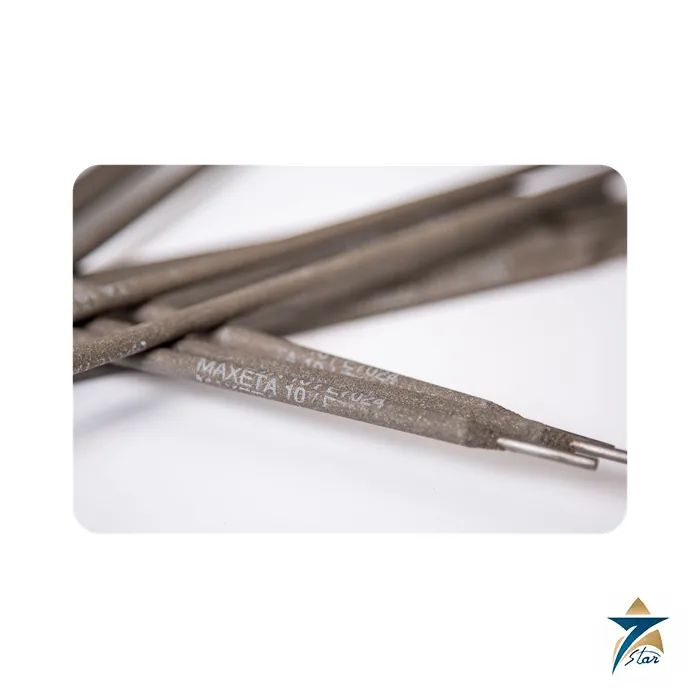
Elga Maxeta 10 E7024 High-Recovery Rutile Electrode
Description
135% recovery electrode for productive fillet welding
The Elga Maxeta 10 is a rutile-coated iron powder electrode with 135% metal recovery, intended for welding medium-thick sections in general construction steels. Elga optimised it to produce fillet welds with a good mitre profile and a throat thickness in the 3.5–4.0 mm range.
According to the data sheet, Maxeta 10 gives a finely rippled bead surface, minimal spatter and a self-detaching slag, so post-weld cleaning time is low. It runs on DC of either polarity or on AC.
Technical specifications
| Parameter | Specification |
|---|---|
| Manufacturer / product | Elga (ITW Welding AB) / Maxeta 10 |
| Process | SMAW (stick, MMA), un-alloyed |
| AWS A5.1 | E7024 |
| EN ISO 2560-A | E 42 0 RR 53 |
| Coating type | Rutile, iron powder |
| Welding current | DC+/- or AC, OCV ≥65 V |
| Metal recovery | 135% |
| Positions | 1, 2, 3, R, T, Y per data sheet (flat and horizontal work) |
| Typical weld metal, % | C 0.07, Si 0.7, Mn 0.6, P 0.02, S 0.01 |
| Yield strength Re | Specified ≥420 MPa; typical 470 MPa |
| Tensile strength Rm | Specified 500–640 MPa; typical 570 MPa |
| Elongation A5 | Specified ≥22%; typical 24% |
| Impact energy | Specified ≥47 J at 0 °C; typical 50 J |
| Sizes and current | 3.2 × 450 mm, 130–160 A; 4.0 × 450 mm, 140–220 A; 5.0 × 450 mm, 190–310 A |
| Deposition | 2.2, 2.6 and 3.7 kg weld metal per arc hour for 3.2, 4.0 and 5.0 mm |
| Redrying | 90 °C, 2 h |
| Approvals listed | CE; ABS 2; BV 2Y; DNV 2Y |
Where a high-recovery rutile electrode pays off
The iron powder in the coating adds to the weld deposit, so each electrode lays down more metal than its core wire alone. That is why the deposition rate reaches 3.7 kg per arc hour in the 5.0 mm size. The 450 mm length further reduces stub losses and electrode changes on long fillet runs, for example on stiffeners, brackets and beam fabrication.
Elga lists 23 electrodes per kilogram of weld metal in 3.2 mm, 17 in 4.0 mm and 11 in 5.0 mm, with burn-off times of 61 to 78 seconds per electrode. These numbers make it simple to estimate electrode consumption and arc time for a given fillet length.
An E7024 coating is not a low-hydrogen type. Rutile electrodes only need gentle redrying (90 °C for 2 hours according to Elga), but they are not the choice for highly restrained joints or steels sensitive to hydrogen cracking, where a basic E7018-type electrode is normally specified. Impact toughness is specified at 0 °C only.
Because the rutile slag is fluid and the pool is large, Maxeta 10 is a flat and horizontal-fillet electrode; positional joints need a different consumable. Use the current window for each diameter given in the table and keep the electrode in light contact or at a very short arc for the best bead profile. Plate edges should be free of heavy mill scale, rust and primer where possible, since contamination affects slag release and bead finish more than electrode choice.
The typical values in the table are example results under EN ISO test conditions and are not guaranteed; the specified minimums apply for qualification and design.
Documents and quotation
The Elga Maxeta 10 product data sheet is attached to this page. Other stick electrodes are listed in our Welding Electrodes category.
For a quotation, give the diameter, quantity and any classification society approval required.
How the Maxeta 10 Works
The Maxeta 10 is a rutile iron-powder electrode with about 135% metal recovery, meaning it deposits more weld metal than the weight of its core wire. This gives high deposition rates in flat fillet and butt welds, with a fillet throat of about 3.5–4.0 mm in a single run. It can be used on DC of either polarity or on AC with an open-circuit voltage of at least 65 V.
Maxeta 10 Classifications & Properties
- EN ISO 2560-A E 42 0 RR 53; AWS A5.1 E7024.
- Yield strength ≥420 MPa (typical 470 MPa); tensile strength 510–610 MPa (typical 570 MPa).
- Impact energy: 47 J specified and 50 J typical at 0 °C.
- Approvals: GL, ABS, BV, DNV and LR.
Selection & Ordering Guide for the Maxeta 10
Elga lists 2.5 mm (90–125 A), 3.2 mm (130–160 A), 4.0 mm (140–220 A), 4.5 × 600 mm (160–230 A) and 5.0 mm (190–310 A). Choose it for flat and horizontal-vertical fillet welds on mild steel where deposition rate and appearance matter; it is not intended for vertical or overhead welding.
Typical Applications in Oman & the GCC
In Oman and the GCC the Maxeta 10 is used in structural steel fabrication, shipbuilding and repair, tanks, beams and general workshop fillet welding.
Installation & Maintenance: Storage, Re-drying and Welding Practice for the Maxeta 10
Store electrodes in their sealed packaging in a dry place and, in the humid coastal conditions common in Oman and the GCC, take out only what is needed for the shift. Elga gives a re-drying temperature of 350 °C for 2 hours for electrodes that have picked up moisture. Clean the joint of oil, paint, oxide and moisture before welding, keep a short arc, and set the current within the range given for the diameter and position. Remove slag fully between passes, control interpass temperature as required by the procedure, and record the batch number for traceability.
Why Source from Seven Star LLC
Seven Star LLC supplies Elga welding consumables across Oman and the GCC. Send the diameter, quantity and any certificate or approval requirements and request a quote; our team can help confirm the correct ordering code and packaging.
Quality Checks When Using the Maxeta 10
Before production, weld a test piece with the planned diameter, current and position, and check bead shape, slag release and fusion at the toes. During welding, watch for porosity, undercut and lack of fusion, which usually point to damp electrodes, excessive arc length, contamination or incorrect current. Grind out and repair any defect before the next pass. Where a code or client specification applies, confirm that the classification, approvals and certificates listed by Elga meet the requirement, and keep inspection records together with the consumable batch number so each weld can be traced.
Datasheets & Documents
- Datasheet Elga Maxeta 10 product data sheet (rev. 23) Download
Reviews (0)
How would you rate this product? Cancel reply
About brand
Elga is a Swedish maker of welding consumables, established in Gothenburg in 1938 by Carl Alfredson as AB El & Gassvetsning, a family company building electric and gas welding equipment for Swedish industry. Coated electrodes followed in the 1940s and stainless steel electrodes and welding wires after the move to Partille in the 1980s. Elga has been part of Illinois Tool Works (ITW) since 2000.
Seven Star LLC is an independent supplier in Muscat. We list Elga electrodes and wires for fabrication shops and maintenance teams in Oman and the GCC.
Elga company profile
| Founded | 1938, Gothenburg, Sweden, by Carl Alfredson |
|---|---|
| Original name | AB El & Gassvetsning |
| Production | Partille, Sweden |
| Ownership | Illinois Tool Works (ITW), since 2000 |
| Product families | P48S and Maxeta mild steel electrodes, Cromarod stainless steel electrodes, Elgacore and Elgacore MATRIX flux-cored wires, Cromacore stainless cored wires, Elgamatic and Cromamig solid wires, TIG rods |
Milestones
- 1938: Carl Alfredson founds the company in Gothenburg.
- 1940s: Elga begins making coated electrodes.
- 1980s: Production starts at Partille, including stainless electrodes.
- 2000: Illinois Tool Works acquires Elga.
Elga product series
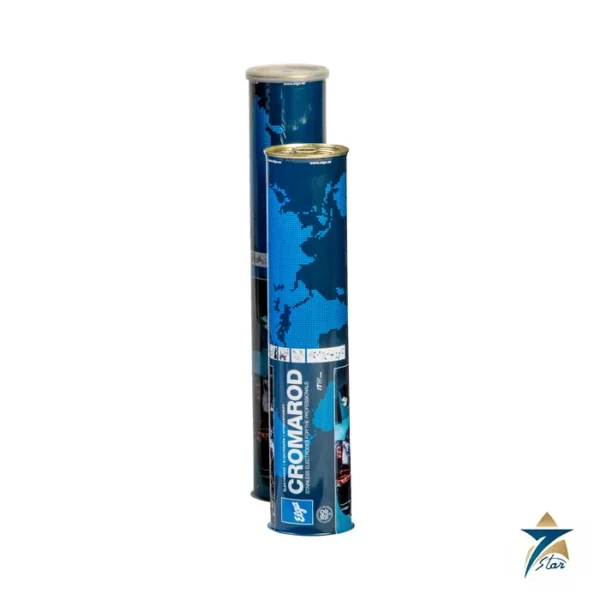
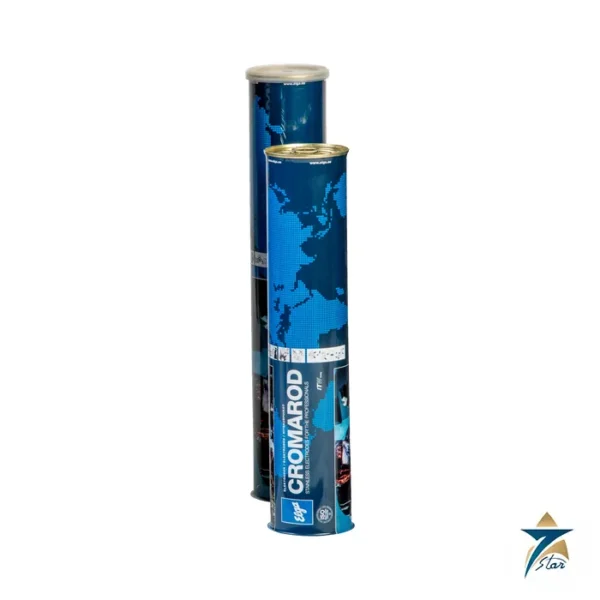
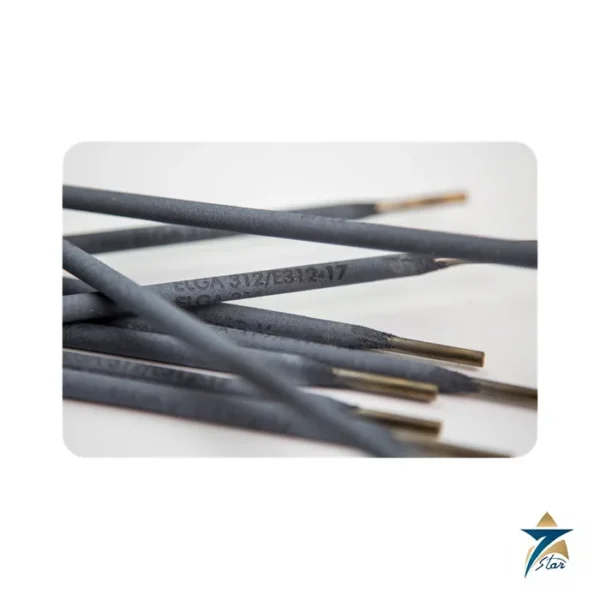
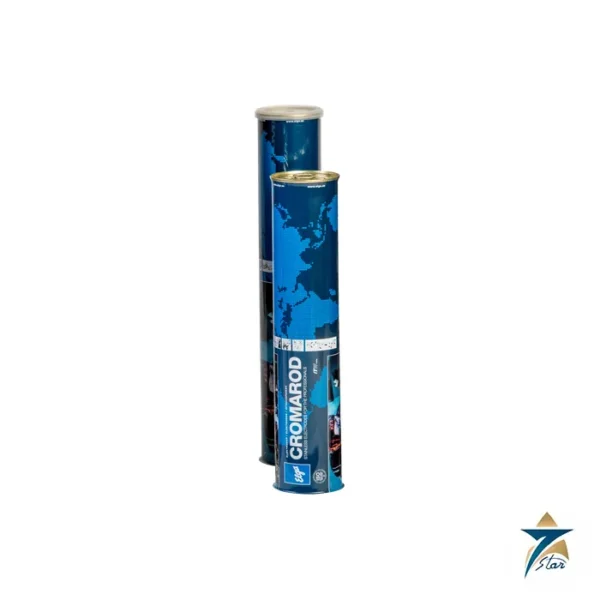
Cromarod stainless electrodes include the Duplex E2209-17, the 316LP E316L-17 pipe electrode, the 312 E312-17 and 309MoL E309MoL-17 dissimilar steel electrodes and the Cromarod 82 ENiCrFe-3 nickel alloy electrode.
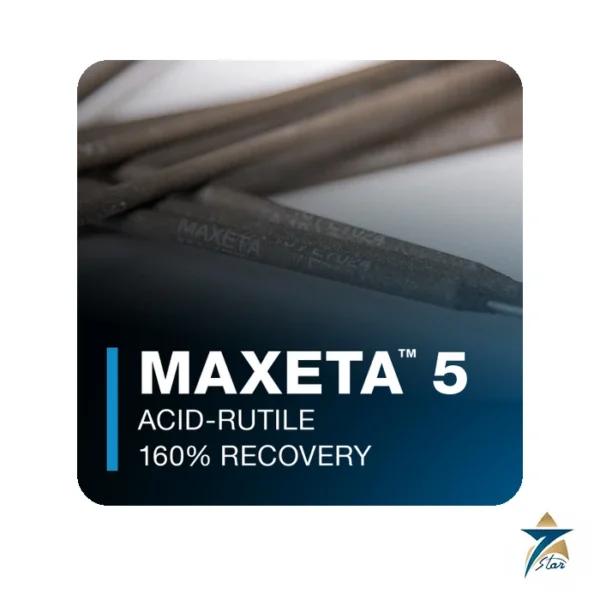
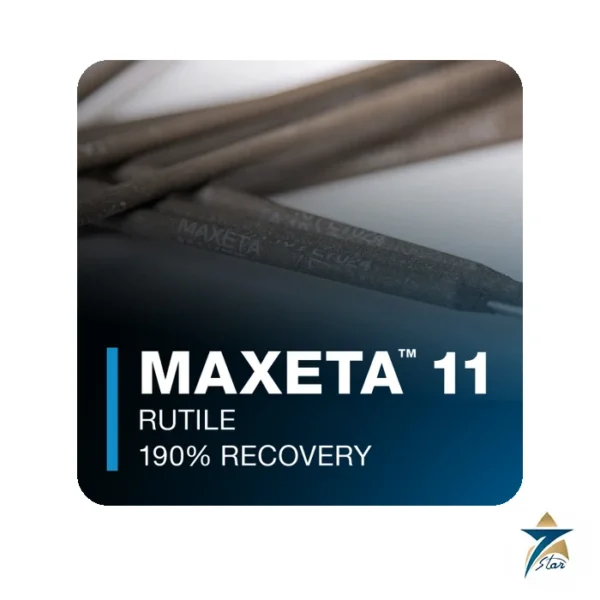
Mild steel electrodes include the Maxeta 10 and Maxeta 11 E7024 high-recovery rutile electrodes and the Maxeta 5 E7027 acid-rutile electrode. The Megafil 710 M is an E70C-6M seamless metal-cored wire.
Electrodes are chosen by base metal and joint: E2209 for duplex stainless, E316L for molybdenum-alloyed stainless pipe, E309MoL and E312 for joining stainless to carbon steel and for buffer layers, and ENiCrFe-3 for nickel alloys and difficult dissimilar joints. E7024 rutile electrodes give high deposition rates in flat and horizontal fillet welds, and E7027 suits deep penetration flat welding.
Where Elga consumables are used
Welding of stainless, duplex and nickel alloy piping and vessels, joining dissimilar steels, repair work, and high-productivity fillet welding on structural steel.
Elga products we list
Ordering Elga consumables: what we need
Send the product name and AWS classification, diameter, package and quantity, plus any certificate required.
Facts checked against Elga's own company history material, October 2026.
Browse Elga products by category: Welding Electrodes, Flux-Cored Welding Wire.
FAQ
Questions about the Elga Maxeta 10 E7024 High-Recovery Rutile Electrode
Answers from our engineering team on installation, compatibility and integration.
01What is the AWS classification of Maxeta 10?
AWS A5.1 E7024, with EN ISO 2560-A E 42 0 RR 53.
02What metal recovery does Maxeta 10 have?
135%, from the iron powder in the rutile coating.
03Can Maxeta 10 be used on AC?
Yes. Elga lists DC+/- or AC with an open-circuit voltage of at least 65 V.
04What is Maxeta 10 designed for?
Fillet welds with a good mitre profile and 3.5–4.0 mm throat thickness in medium-thick general construction steels.
05What redrying does Elga give for Maxeta 10?
90 °C for 2 hours.


Reviews
There are no reviews yet.