A ceiling access point with Wi-Fi 6 and PoE passthrough
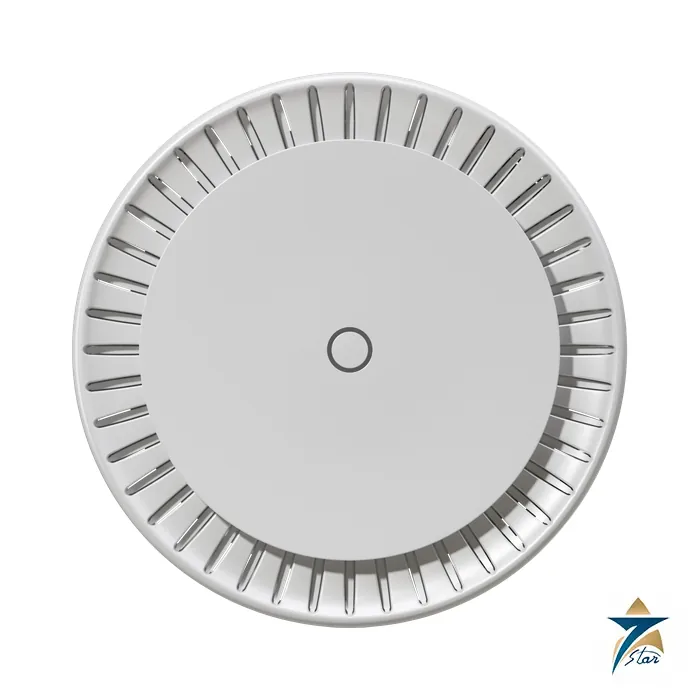
The cAP ax, order code cAPGi-5HaxD2HaxD, is MikroTik’s dual-band 802.11ax ceiling access point for offices, hotels, malls and other crowded areas. It has two gigabit Ethernet ports, takes PoE-in and can supply PoE-out on Ether2 to power another device such as a CCTV camera.
A quad-core IPQ-6010 CPU at up to 1.8 GHz, 1 GB RAM and 128 MB NAND run RouterOS v7. MikroTik says the Generation 6 802.11ax standard brings up to 40 percent higher speed in the 5 GHz band and up to 90 percent in the 2.4 GHz band compared with previous generations. The round body measures 228 x 48 mm.
Technical specifications
The cAPGi-5HaxD2HaxD specification, as printed by MikroTik, with web-only conflicts removed.
| Parameter |
Specification |
| Product code |
cAPGi-5HaxD2HaxD |
| CPU |
IPQ-6010 |
| CPU core count |
4 |
| CPU Threads count |
4 |
| Switch chip model |
IPQ-6010 |
| Operating System |
RouterOS v7 |
| Size of RAM |
1 GB |
| Storage size |
128 MB |
| Storage type |
NAND |
| Tested ambient temperature |
-40°C to 70°C |
| Wireless capabilities |
| Wireless 2.4 GHz Number of chains |
2 |
| Wireless 2.4 GHz standards |
802.11b/g/n/ax |
| Antenna gain dBi for 2.4 GHz |
6 |
| Wireless 2.4 GHz chip model |
QCN-5022 |
| Wireless 2.4 GHz generation |
Wi-Fi 6 |
| Wireless 5 GHz Number of chains |
2 |
| Wireless 5 GHz standards |
802.11a/n/ac/ax |
| Antenna gain dBi for 5 GHz |
5.5 |
| Wireless 5 GHz chip model |
QCN-5052 |
| Wireless 5 GHz generation |
Wi-Fi 6 |
| Ethernet |
| 10/100/1000 Ethernet ports |
2 |
| Number of 1G Ethernet ports with PoE-out |
1 |
| Powering |
| Number of DC inputs |
2 (DC jack, PoE-IN) |
| DC jack input Voltage |
18-57 V |
| Max power consumption |
36 W |
| Max power consumption without attachments |
11 W |
| PoE in |
802.3af/at |
| Cooling type |
Passive |
| PoE in input Voltage |
18-57 V |
| PoE-out |
| PoE-out ports |
Ether2 |
| PoE out |
Passive PoE up to 57V |
| Low voltage PoE-Out current limit |
600 mA |
| High voltage PoE-Out current limit |
400 mA |
| Certification & Approvals |
| Certification |
CE, FCC, IC, EAC, ROHS |
| Other |
| CPU temperature monitor |
Yes |
| Mode button |
Yes |
Published bench results (IPQ-6010 2-port test); RFC2544 on Xena equipment at 0.1% loss:
| Test |
Rules |
Mbps at 1518 B |
Mbps at 512 B |
Mbps at 64 B |
| Bridging |
none (fast path) |
1974 |
1924.8 |
799.7 |
| Routing |
none (fast path) |
1974 |
1924.8 |
697.2 |
| Routing |
25 ip filter rules |
1973.1 |
1092.5 |
146.2 |
Reading the numbers: the two-port test shows 1974 Mbps in the fast path at 1518 bytes, so the wired side is not the limit; the radios are. Per-band chains are 2 x 2 on both bands, and the physical rate ceilings printed on the product page are 574 Mbit/s on 2.4 GHz and 1200 Mbit/s on 5 GHz. Real throughput is lower and shared among all clients. Power matters when Ether2 feeds a camera: the unit uses 11 W alone and up to 36 W with PoE-out, so the PoE switch port or injector feeding Ether1 must carry that total.
Radio, CPU and power details
- Dual-band: 2.4 GHz 802.11b/g/n/ax (2 chains, 6 dBi) and 5 GHz 802.11a/n/ac/ax (2 chains, 5.5 dBi).
- Two 10/100/1000 Ethernet ports; PoE-in 802.3af/at on 18-57 V; Ether2 provides passive PoE-out up to 57 V.
- PoE-out current limits: 600 mA when input is below 30 V and 400 mA above 30 V.
- Power consumption 11 W without attachments and up to 36 W with PoE-out; passive cooling.
- CAPsMAN support for centrally managing hundreds of devices.
Order code and package contents
The code cAPGi-5HaxD2HaxD reads: G = gigabit, i = indoor, 5Hax and 2Hax = 5 GHz and 2.4 GHz 802.11ax radios. The package includes a 48 V 0.95 A power adapter, a gigabit PoE injector, ceiling mount, mounting bracket and fastening set. The page lists a tested ambient range of -40 to 70 degrees C. Check regional frequency rules before deployment.
Mounting and CAPsMAN management
Fix the bracket to the ceiling, attach the AP, and connect either the injector or a PoE switch port to Ether1. If you use the PoE-out port, remember the lower current limit when the input is above 30 V. The first login uses 192.168.88.1 and the credentials on the sticker or the admin user as described in the quick guide for the model. For several APs, set up CAPsMAN on a controller so channel plans and SSIDs are configured once.
Offices, hotels and malls
A ceiling-level access point avoids the obstacles listed by MikroTik, such as mirrors, tinted glass, TVs and metal cabinets. It fits open-plan offices, hotel corridors, retail and airport lounges. For outdoor or dusty shed use choose a weatherproof device instead: this model is indoor.
Information to send with an RFQ for the MikroTik cAP ax Dual-Band Wi-Fi 6 Ceiling AP
Wireless equipment is quoted per site and per coverage area. For the MikroTik cAP ax Dual-Band Wi-Fi 6 Ceiling AP, describe the space to be covered, the number of concurrent users or devices, and the building type, since concrete walls and metal structures reduce range. Note any outdoor areas, yards or warehouses that also need coverage.
- Number of units, and whether a controller or cloud management is already in place.
- Power source: PoE switch, PoE injector or local adapter, with the PoE standard required.
- Mounting: ceiling, wall or pole, and any weather protection for outdoor use.
- Licensing or SIM requirements for LTE models, and the operator band to be used.
A floor plan with the proposed positions lets coverage be estimated before the equipment is ordered.
Related items and documents
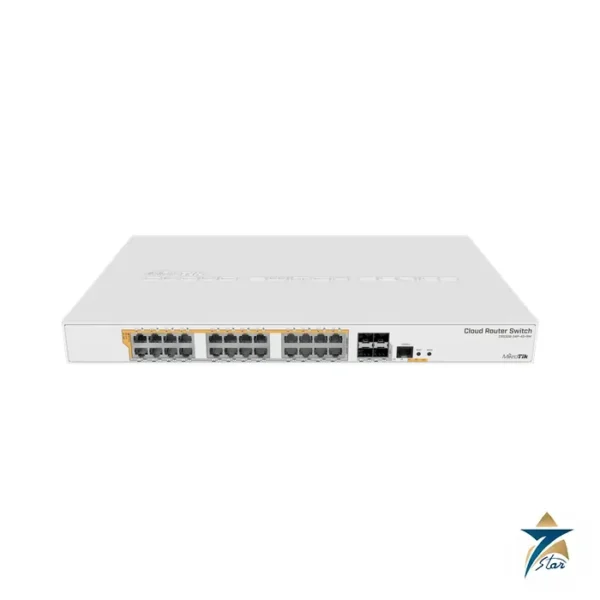
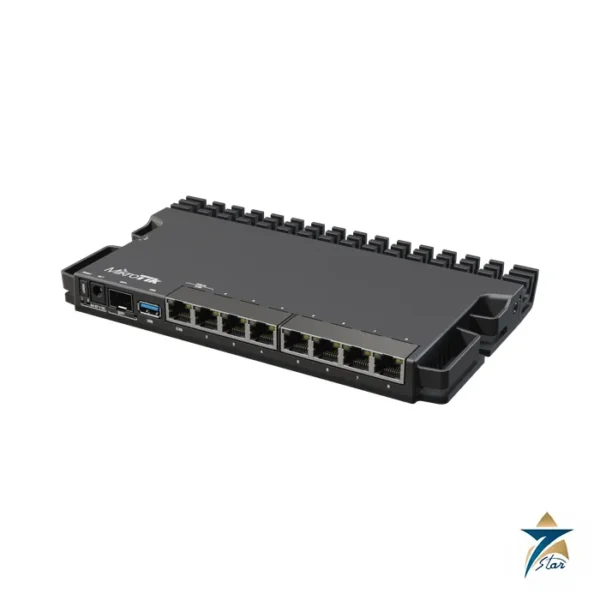
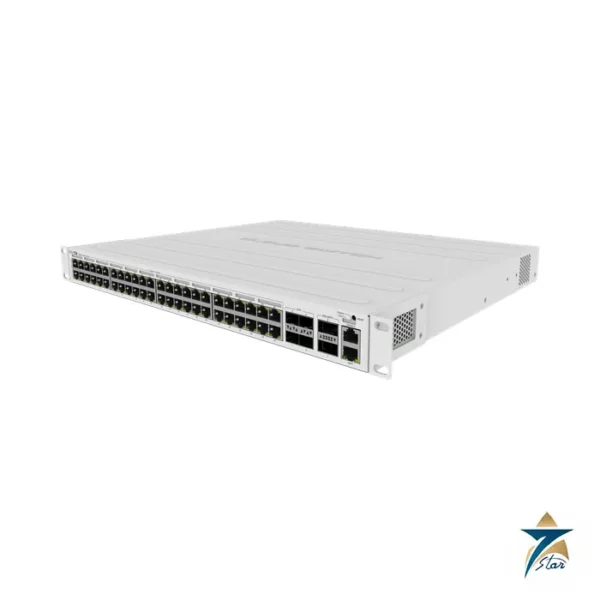
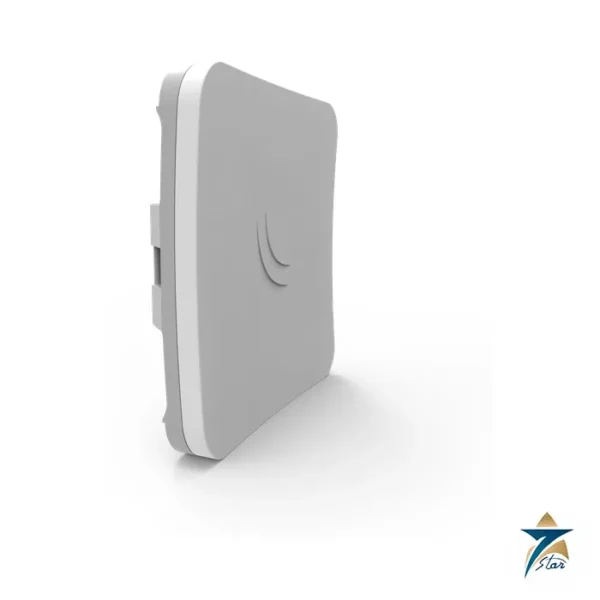
For outdoor links see the SXTsq 5 ac and for PoE switching the CRS328-24P-4S+RM. See the industrial communications category.
Datasheet provided. Seven Star LLC will respond to a request for cAPGi-5HaxD2HaxD once quantity and delivery point are known.
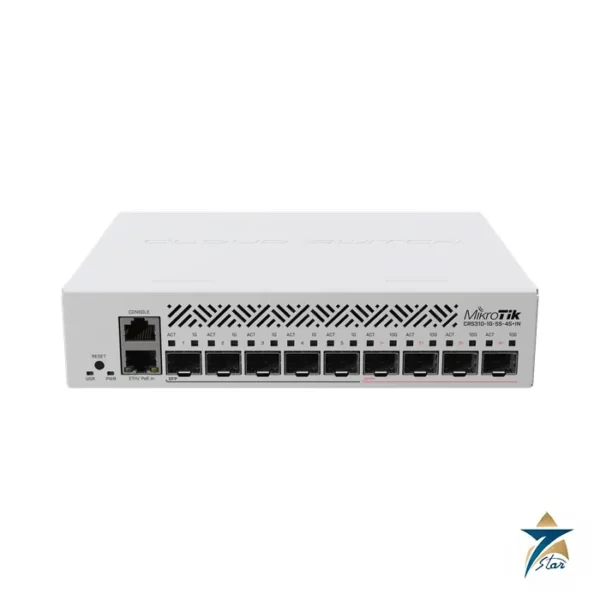
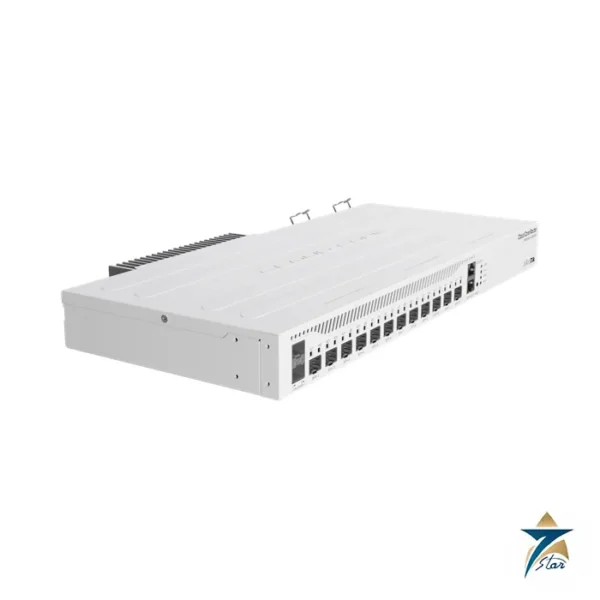
Related MikroTik products: MikroTik SXTsq 5 ac RBSXTsqG-5acD 5 GHz CPE, MikroTik CRS328-24P-4S+RM 24-Port PoE Switch, MikroTik CRS354-48P-4S+2Q+RM 48-Port PoE Switch, MikroTik RB5009UG+S+IN Quad-Core 10G Router, MikroTik CRS310-1G-5S-4S+IN 10G SFP+ Switch and MikroTik CCR2004-1G-12S+2XS 25G SFP28 Router.






















Reviews
There are no reviews yet.