A compact outdoor 5 GHz device with a built-in 16 dBi antenna
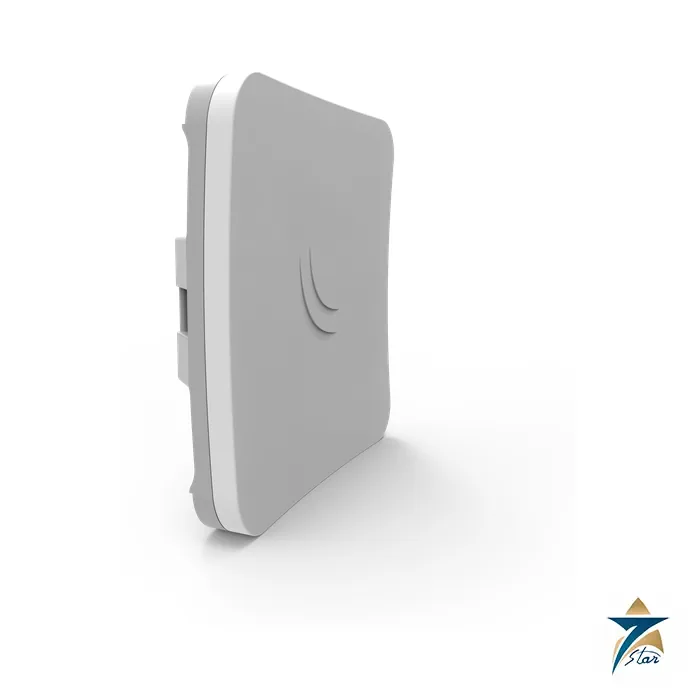
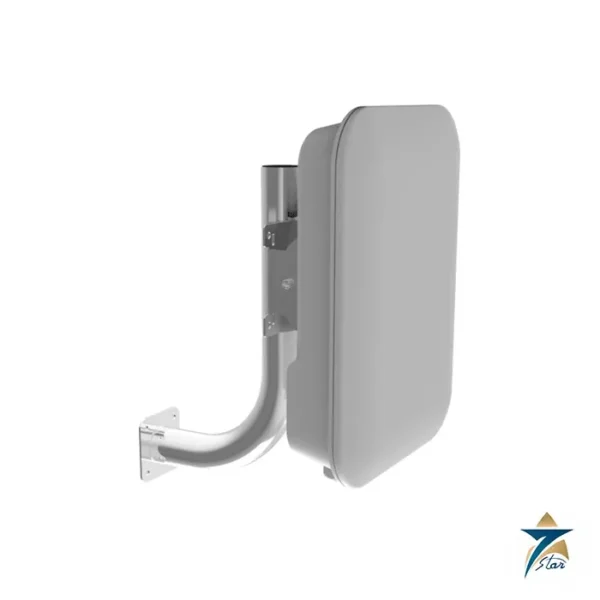
The SXTsq 5 ac, order code RBSXTsqG-5acD, is a compact outdoor 5 GHz 802.11ac wireless device with an integrated antenna. MikroTik recommends it for point-to-point links or as a CPE unit. It keeps the 16 dBi antenna gain of the earlier SXT 5 ac but the design is two times thinner.
An IPQ-4018 quad-core CPU with 256 MB RAM and 16 MB flash runs RouterOS, and one 10/100/1000 Ethernet port carries data and power. The weatherproof body is 129 x 129 x 34 mm; the product page lists IP55 protection and a tested ambient range of -40 to 70 degrees C.
Technical specifications
MikroTik lists the following for RBSXTsqG-5acD; contradictory web-page rows were removed in favour of the datasheet.
| Parameter |
Specification |
| Product code |
RBSXTsqG-5acD |
| CPU |
IPQ-4018 |
| CPU core count |
4 |
| CPU Threads count |
4 |
| Dimensions |
129 x 129 x 34 mm |
| Operating System |
RouterOS |
| Size of RAM |
256 MB |
| Storage size |
16 MB |
| Storage type |
FLASH |
| Tested ambient temperature |
-40°C to 70°C |
| Powering |
| Number of DC inputs |
1 (PoE-IN) |
| Max power consumption |
7 W |
| PoE in |
Passive PoE |
| Cooling type |
Passive |
| Wireless specifications |
| Wireless 5 GHz Number of chains |
2 |
| Wireless 5 GHz standards |
802.11a/n/ac |
| Antenna gain dBi for 5 GHz |
16 |
| Wireless 5 GHz chip model |
IPQ-4018 |
| Wireless 5 GHz generation |
Wi-Fi 5 |
| Ethernet |
| 10/100/1000 Ethernet ports |
1 |
| Certification & Approvals |
| Certification |
CE, FCC, IC, EAC, ROHS |
| IP |
55 |
Lab throughput reported for this model (IPQ-4018 1G one port test), RFC2544 via Xena equipment:
| Test |
Rules |
Mbps at 1518 B |
Mbps at 512 B |
Mbps at 64 B |
| Bridging |
none (fast path) |
998.2 |
999.0 |
760.2 |
| Routing |
none (fast path) |
998.2 |
999.0 |
761.9 |
| Routing |
25 ip filter rules |
998.2 |
986.3 |
124.4 |
Reading the numbers: the one-port test table shows the CPU forwarding close to the 1 Gbps Ethernet limit, 998.2 Mbps at 1518 bytes, and still 760.2 Mbps at 64 bytes in the fast path, so the processor is not the bottleneck of a wireless link. The radio is: the 2 x 2 chain 802.11ac design and a 16 dBi antenna set the real link rate, which depends on distance, channel width and interference. At 7 W maximum consumption the unit suits long PoE cable runs and solar or battery-fed sites, though the injector supplied with the kit sets the cable length limit.
Radio, antenna and mounting details
- 2 x 2 chains, 802.11a/n/ac, 16 dBi built-in antenna; Wi-Fi 5 generation.
- One Gigabit Ethernet port with passive PoE-in; maximum consumption 7 W.
- Hose-clamp mounting slots in three places, with horizontal-railing mounting possible.
- Accessible grounding connection for lightning protection.
- Included accessories listed on the datasheet: 24 V 0.38 A power adapter, metal ring and a Gigabit PoE injector.
Ordering notes: international and US versions
Two regional versions are described: the SXTsq 5 ac (international) supports 5150-5875 MHz subject to country regulations, while the SXTsq 5 ac-US is factory-locked for 5170-5250 MHz and 5725-5835 MHz. The page here refers to code RBSXTsqG-5acD; confirm the regional variant and the frequencies permitted at the installation site before ordering.
Mounting, grounding and powering
Fix the device to a mast with the hose clamp and connect the grounding point before powering up. Power is passive PoE through the gigabit port; use the supplied injector and keep the Ethernet cable within the injector’s rated length. Align the 16 dBi antenna toward the far end, then configure a bridge or station link through WinBox or the web interface at 192.168.88.1.
Point-to-point links and customer premises use
Typical uses include linking two buildings on a plant or farm, backhaul to remote cabins, and CPE for a wireless ISP. Heat and sun load on rooftop mounts is a design factor: the -40 to 70 degrees C tested range covers typical hot-climate conditions, but mount in shade or on a pole where possible. This is general planning advice, not a datasheet rating. A high-gain integrated antenna has a narrow beam, so careful alignment and a clear line of sight between the two ends decide the achievable link rate more than the 867 Mbit/s radio figure on the product page, which is a ceiling and not a typical throughput. A point-to-point link needs two devices, one at each end, set to a matching channel plan.
Information to send with an RFQ for the MikroTik SXTsq 5 ac RBSXTsqG-5acD 5 GHz CPE
Wireless equipment is quoted per site and per coverage area. For the MikroTik SXTsq 5 ac RBSXTsqG-5acD 5 GHz CPE, describe the space to be covered, the number of concurrent users or devices, and the building type, since concrete walls and metal structures reduce range. Note any outdoor areas, yards or warehouses that also need coverage.
- Number of units, and whether a controller or cloud management is already in place.
- Power source: PoE switch, PoE injector or local adapter, with the PoE standard required.
- Mounting: ceiling, wall or pole, and any weather protection for outdoor use.
- Licensing or SIM requirements for LTE models, and the operator band to be used.
A floor plan with the proposed positions lets coverage be estimated before the equipment is ordered.
Related items and documents
For access point coverage indoors see the cAP ax page; for cellular backup see the LtAP LTE6 kit. See the industrial communications category.
Official datasheet included. For RBSXTsqG-5acD, tell Seven Star LLC the number of units and the site location.
Frequently asked questions
What antenna gain does the SXTsq 5 ac have?
The built-in antenna is 16 dBi, the same as the SXT 5 ac it replaces.
Which Wi-Fi standard and band does it use?
5 GHz 802.11a/n/ac with 2 chains; it is a Wi-Fi 5 device.
How is it powered?
By passive PoE through its single gigabit Ethernet port, using the supplied injector; maximum consumption is 7 W.
What is the ingress rating?
The MikroTik product page lists IP55.
Is there a US version?
Yes, SXTsq 5 ac-US is factory-locked to 5170-5250 MHz and 5725-5835 MHz.










Reviews
There are no reviews yet.