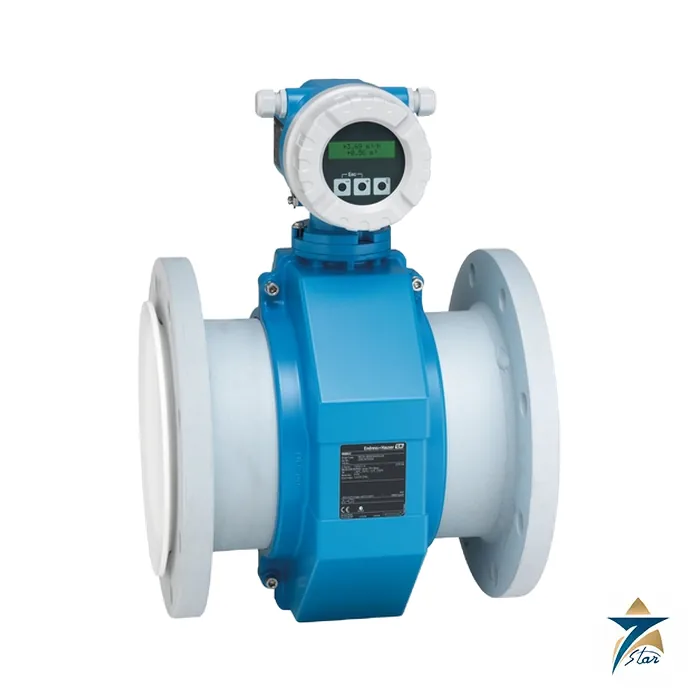
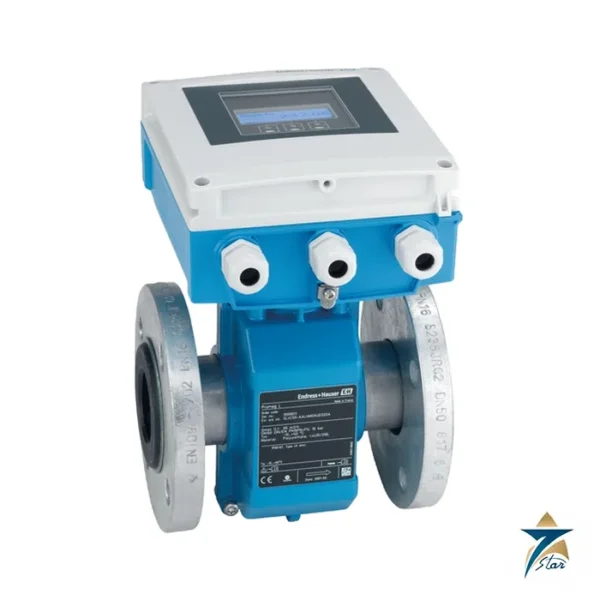
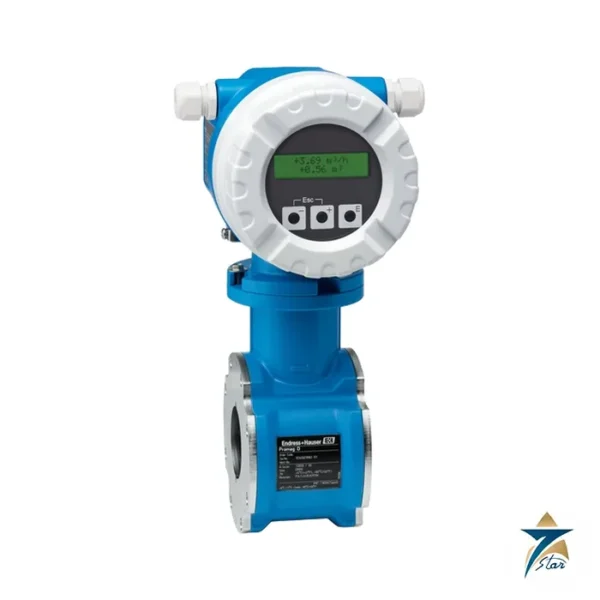
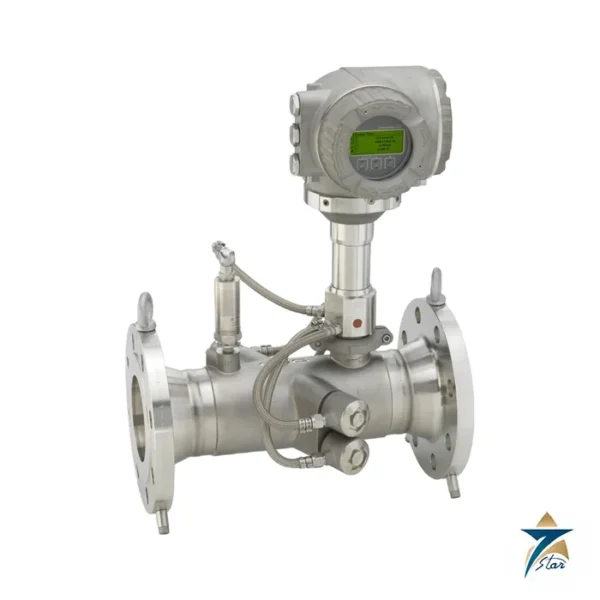
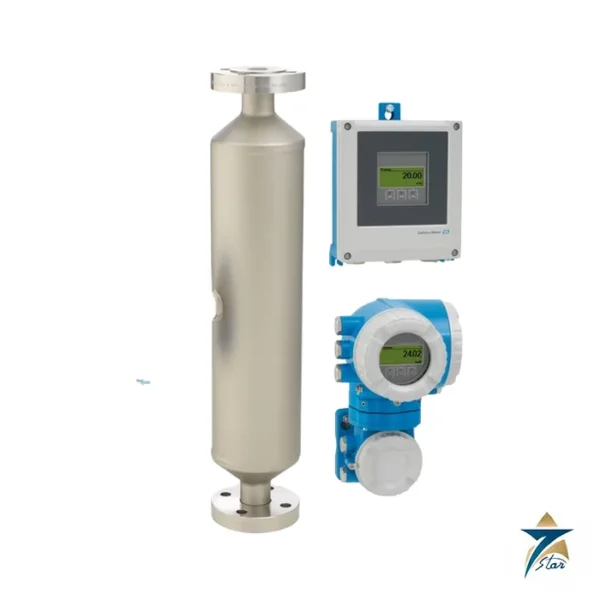
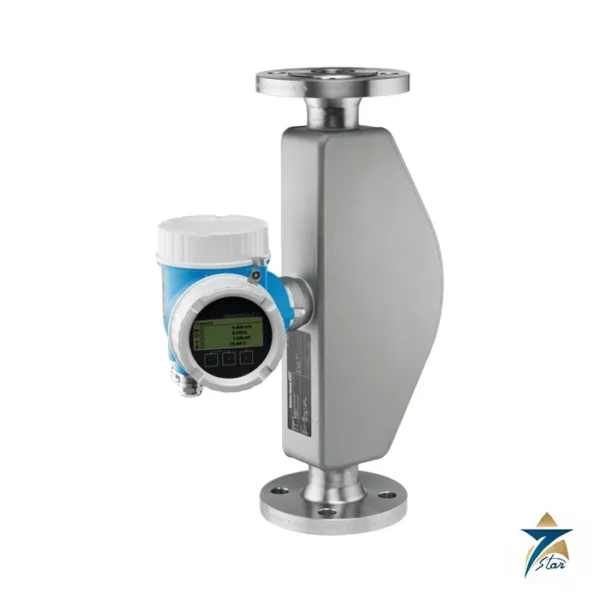
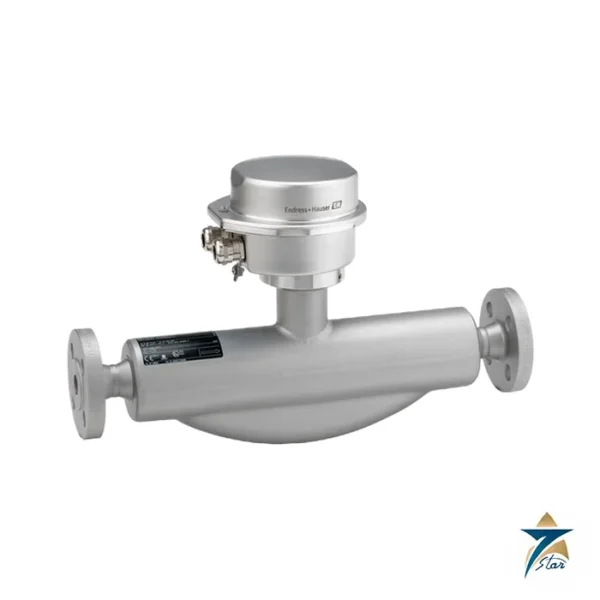
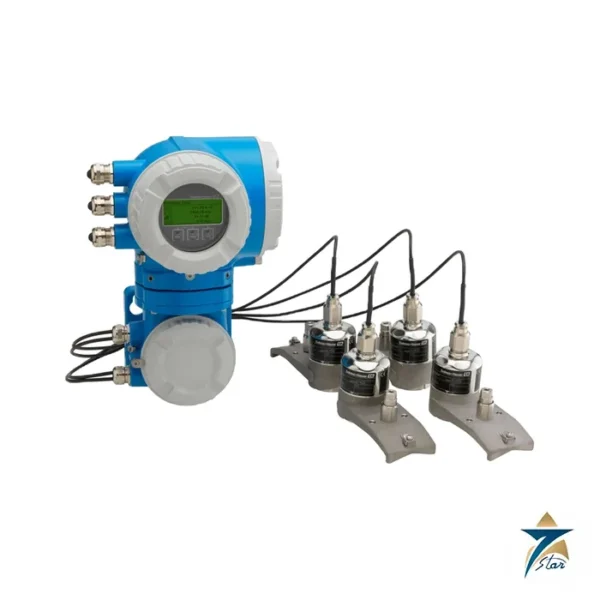
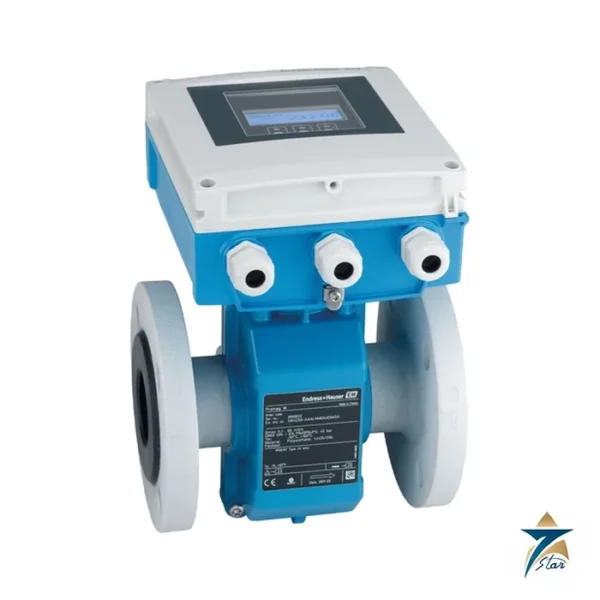
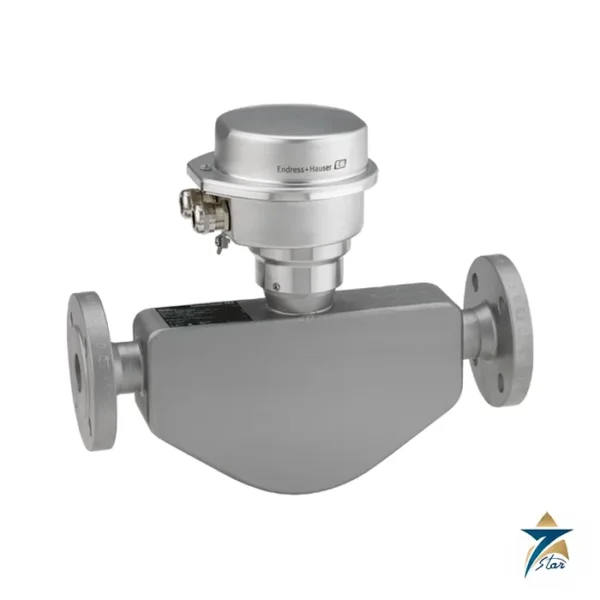
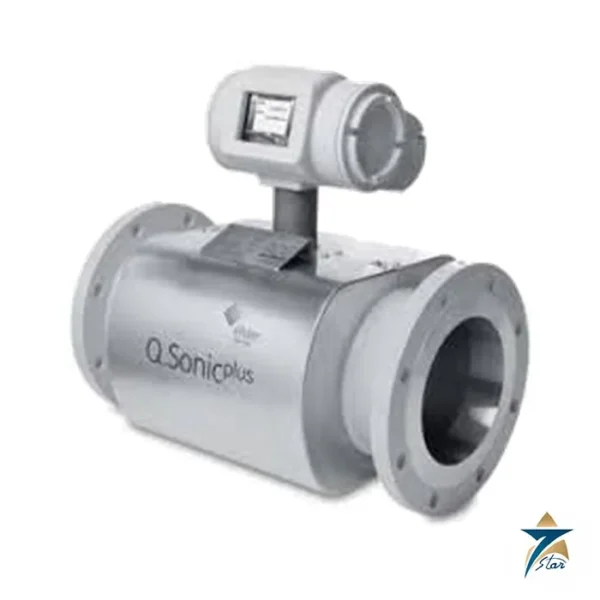
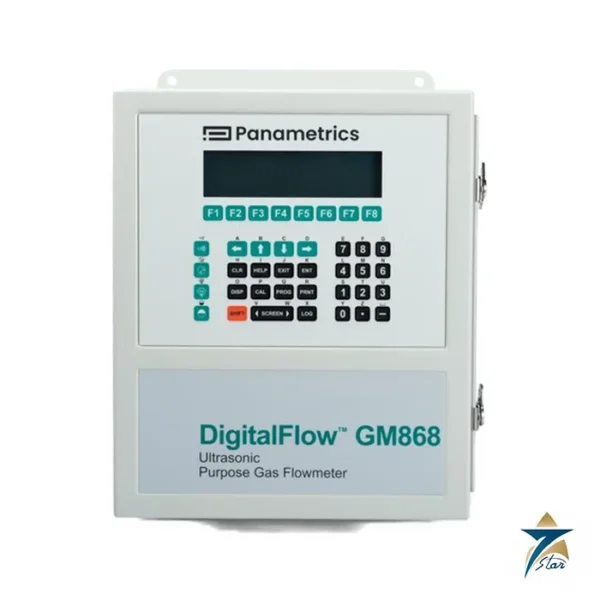
Endress+Hauser 10E Promag 10E Economy PTFE Flowmeter

Description

10E in context: the economy PTFE-lined Promag

TI01160D introduces the Endress+Hauser 10E as the economical flowmeter with a highly cost-effective transmitter, fully suitable for basic applications in the chemical and process industry. Its cover lists a maximum nominal diameter of DN 600, all common process connections and a PTFE liner.

The sensor starts at DN 15, so it also covers mid-size lines, with a medium temperature range of minus 10 to plus 110 degC. Seven Star LLC is an independent supplier serving Oman and the GCC and is not affiliated with the manufacturer; we can match the 10E to the root printed on the nameplate of the installed unit.

10E highlights

  • PTFE liner combined with 316L or Alloy C22 electrodes
  • Diameters from DN 15 to DN 600, with compact versions for the whole range
  • Operable flow range better than 1000 to 1
  • Carbon steel flanges in EN, ASME and JIS standards, with protective lacquering
  • HART output, display with push buttons, compact or remote transmitter

10E values from TI01160D

Parameter Value for 10E
Product root 10E, Proline Promag 10E (TI01160D, edition 02.17)
Positioning Economical flowmeter with cost-effective transmitter for basic chemical and process use
Liner PTFE
Nominal diameters DN 15 to 600 (1/2 to 24 inch)
Medium temperature -10 to +110 degC (+14 to +230 degF)
Operable flow range Over 1000 : 1
Typical velocity range v = 0.01 to 10 m/s
Measuring tube Stainless steel 1.4301 (304) or 1.4306 (304L)
Electrodes 1.4435 (316, 316L) or Alloy C22
Electrode roughness 0.3 to 0.5 micrometer
Sensor housing Die-cast aluminum DN 15 to 300; protective lacquering DN 350 to 600
Flanges Carbon steel with protective lacquering: EN 1092-1, ASME B16.5, JIS B2220; also AS 2129 and AS 4087 connections
Seals DIN EN 1514-1 form IBC
Ground disks DN 15 to 250 usable for all flange standards and pressure ratings
Minimum conductivity 50 microsiemens per cm
Supply 85 to 250 V AC; 20 to 28 V AC; 11 to 40 V DC
Output HART with two-line display and push buttons

How the 10E is applied

The 10E suits utility chemicals and general process fluids where the plant wants conductive-liquid metering without paying for the extended transmitter of the 50 series. Examples are demineralized-water headers, brine, caustic and acid dosing mains, and process water in fertilizer, paper, cement and food plants around the Gulf. Its lower temperature limit of minus 10 degC is acceptable in the region, where freezing conditions do not occur outdoors.

Because the PTFE liner resists most chemicals, the main material decision becomes the electrode: 316L for general use, Alloy C22 where chlorides or oxidizing acids are present.

How 10E differs from other Promag 10 variants

The 10E is the lower-cost sibling of the 10P. Both have PTFE liners, but the 10E starts at DN 15 instead of DN 25, tops out at 110 degC instead of 130 degC, and its cover lists no pressure figure comparable to the 40 bar of the 10P. Compared with 10W and 10L, it is not a drinking-water meter. Compared with Promag 50E, the corresponding root with the more capable transmitter, the 10E keeps the simple two-line display.

Choosing 10E options

Work from the nameplate: diameter, flange standard and rating, electrode grade, supply voltage and compact or remote layout. If the old meter used DN 15 or DN 20 to DN 250 ground disks, the document notes that disks in that range can serve all flange standards and ratings, so one ground disk set covers several flange types. Send the full order code with your RFQ.

Mounting and start-up

Mount with the electrodes horizontal where possible, keep the pipe full, and fit the seals to DIN EN 1514-1 form IBC. Remote-version cables must not exceed the length given in the manual because the necessary minimum conductivity depends on it. After power-up, confirm the current output range and the pulse value.

Upkeep

Compare readings against a known volume at commissioning, retighten flange bolts after thermal cycling, and keep the aluminum housing paint intact in coastal plants. Wiping the electrodes is rarely required for clean liquids but helps with coating media.

Quick answers on 10E

Buyers often ask whether the 10E tolerates vacuum; PTFE liners can be sensitive to it, so check the pressure and temperature diagrams in TI01160D before specifying a vacuum service. They also ask whether the sensor needs straight pipe: the datasheet gives the usual inlet and outlet run guidance for electromagnetic sensors and the sensor imposes no pressure loss when the pipe has the same bore. Another frequent question concerns grounding. The ground disks for DN 15 to 250 can be used with every flange standard and rating, whereas larger sizes use grounding arrangements shown in the document.

The supply is 85 to 250 V AC, 20 to 28 V AC or 11 to 40 V DC, and the output is HART. With this combination the 10E is an easy swap into cabinets that already carry other Proline devices, and the full-scale value, pulse value and low flow cutoff can be set from the front keys without a laptop. Surface finish of the wetted electrodes is stated as 0.3 to 0.5 micrometer, which limits deposits in process water. For large sizes, plan lifting gear early, because a DN 600 sensor is a heavy flanged assembly even in this economy design. The sensor housing is die-cast aluminum for sizes up to DN 300 and protectively lacquered steel for DN 350 to 600.

Documents and quotation

The datasheet is Technical Information TI01160D for the Promag 10E. Send an RFQ to Seven Star LLC with part number 10E, nominal diameter, flange standard and quantity.

Selection Notes for the Endress+Hauser 10E

When comparing the Endress+Hauser 10E with alternatives, start from the duty it must perform: the measured or controlled variable, the range and accuracy you need, the environment at the mounting point and the interface to your control system. Check the electrical and mechanical connections against the installed equipment, and confirm any hazardous-area or ingress-protection requirements for the location. If any point is unclear, send a photo of the nameplate and a short description of the application, and we will compare it with the Endress+Hauser (E & H) ultrasonic flowmeters range and confirm the correct order code before you commit.

Other Models in the Promag 10 Range

Seven Star LLC supplies models from the Promag 10 range in Oman and the GCC. Compare the related models below and request a quote for the one that matches your application.

ModelCategory
Endress+Hauser 10E Promag 10E Economy PTFE FlowmeterUltrasonic FlowmetersYou are viewing this model
Endress+Hauser 10D Promag 10D Compact Wafer FlowmeterUltrasonic FlowmetersView details
Datasheets & Documents
  • PDF Datasheet Endress+Hauser 10E Promag 10E Economy PTFE Flowmeter Datasheet Download
Reviews (0)

Reviews

There are no reviews yet.

How would you rate this product?

It takes about 10 seconds — just tap a star. Your email is never published.

About brand

Endress+Hauser makes process measurement instruments for flow, level, pressure, temperature and liquid analysis. Georg H. Endress and Ludwig Hauser started the business in Lörrach, Germany, on 1 February 1953, first selling level meters, and the Endress+Hauser name has been used since 1957. The group is headquartered in Reinach, Switzerland, and has been wholly owned by the Endress family since 1975.

Seven Star LLC is an independent supplier listing Endress+Hauser flowmeters, level and pressure transmitters, temperature assemblies and liquid analysis products for buyers in Oman and the GCC. Instruments are matched from the full order code on the nameplate.

Endress+Hauser company profile

Origin Founded in Lörrach, Germany, on 1 February 1953 by the Swiss engineer Georg H. Endress and Ludwig Hauser
Headquarters Endress+Hauser AG, Reinach (Basel-Landschaft), Switzerland
Ownership Family owned; the Endress family has been the sole shareholder since 1975, and a family charter commits the company to stay family owned
Size About 16,500 employees and sales of about EUR 3.7 billion (2023, as reported by the company)
Product families Proline flowmeters, Micropilot and Levelflex radar, Liquiphant switches, Cerabar and Deltabar pressure, iTEMP and iTHERM temperature, Liquiline and Memosens liquid analysis

Milestones

  • 1953: Georg H. Endress and Ludwig Hauser start the business in Lörrach on 1 February, first selling level meters.
  • 1957: The Endress+Hauser name comes into use.
  • 1975: The Endress family becomes sole shareholder.
  • 2023: About 16,500 employees and sales of about EUR 3.7 billion, as reported by the company.

Endress+Hauser product lines

Line Measuring principle Typical use
Promass F 300, Promass 80F, 83F/84F Coriolis mass flow Direct mass flow and density of liquids and gases, hydrocarbon transfer and chemical dosing
Promag P 300, P 500, H 300, W 400, W 10, 50P Electromagnetic flow Water, wastewater, slurries and other conductive liquids
Prowirl F 200, 72F Vortex flow Steam, gas and low-viscosity liquids
Prosonic Flow 92F, t-mass 65F Ultrasonic and thermal mass flow Water lines; compressed air and industrial gases
Micropilot FMR62, FMR67, FMR60, FMR10B, FMR20, FMR50, FMR52 Free-space radar level, 80 GHz and 26 GHz Tanks, process vessels, silos and open water channels
Levelflex FMP51, FMP50, FMP54, FMP55 Guided wave radar level Level and interface in vessels, separators and bypass chambers
Liquiphant FTL51, Prosonic S FMU90 Vibronic point level; ultrasonic level High and low level alarms, pump protection, open channel flow
Cerabar PMC71B, PMP51B, PMP71, Deltabar PMD78B, PMD75 Pressure and differential pressure Process pressure, hydrostatic level and DP flow
iTEMP TMT82, TMT162, iTHERM TM101, TR66, TR10 Temperature transmitters and thermometers RTD and thermocouple points with thermowells
Liquiline CM444, CM442, Memosens CPS11E, Stamolys reagents Liquid analysis pH, ORP, conductivity, dissolved oxygen and nutrient analysis in water treatment and process

Where Endress+Hauser instruments are used

In Oman and the GCC, Endress+Hauser instruments are common in oil and gas production and processing, refineries and petrochemicals, desalination and water networks, wastewater treatment, power plants and food and beverage plants. Coriolis meters measure hydrocarbon and chemical flows, electromagnetic meters cover water and wastewater, radar transmitters handle tank and silo level, and Liquiline analysers monitor water quality. Proline 300 and 500 flowmeters include Heartbeat Technology for in-situ verification, which reduces the need to remove a meter for checks.

Ordering Endress+Hauser instruments: what we need

The order code on the nameplate (for example PMP71-1QA1S11RDADU) defines every option: measuring range, process connection, materials, output, approvals and display. Send it with the serial number; Endress+Hauser can retrieve the original configuration from the serial number. For a new instrument add the medium, operating and design pressure and temperature, range, line size or tank geometry, process connection, wetted materials, output or protocol (4-20 mA HART, PROFIBUS, FOUNDATION Fieldbus, Modbus) and the hazardous-area approval required. Older models such as Promass 80/83 or Micropilot M are replaced by current Proline or 80 GHz Micropilot devices.

Facts checked against Endress+Hauser company history and product information, October 2026.

FAQ

Questions about the Endress+Hauser 10E Promag 10E Economy PTFE Flowmeter

Answers from our engineering team on installation, compatibility and integration.

01What is the 10E?
The economical PTFE-lined member of the Promag 10 family, with a cost-effective transmitter for basic chemical and process applications.
02What size range does the 10E cover?
DN 15 to 600 (1/2 to 24 inch), with compact versions for DN 15 to 300 and 350 to 600 dimensions shown separately.
03What is the medium temperature range of the 10E?
Minus 10 to plus 110 degC (14 to 230 degF) with the PTFE liner.
04Which electrodes can the 10E have?
Stainless steel 1.4435 (316 or 316L) or Alloy C22, with a surface roughness of 0.3 to 0.5 micrometer.
05How do I quote the 10E?
Send an RFQ to Seven Star LLC with 10E, nominal diameter, flange standard and quantity.