Brand:

Autonics PR30-10DN M30 Flush Inductive Proximity Sensor NPN

Description

Overview

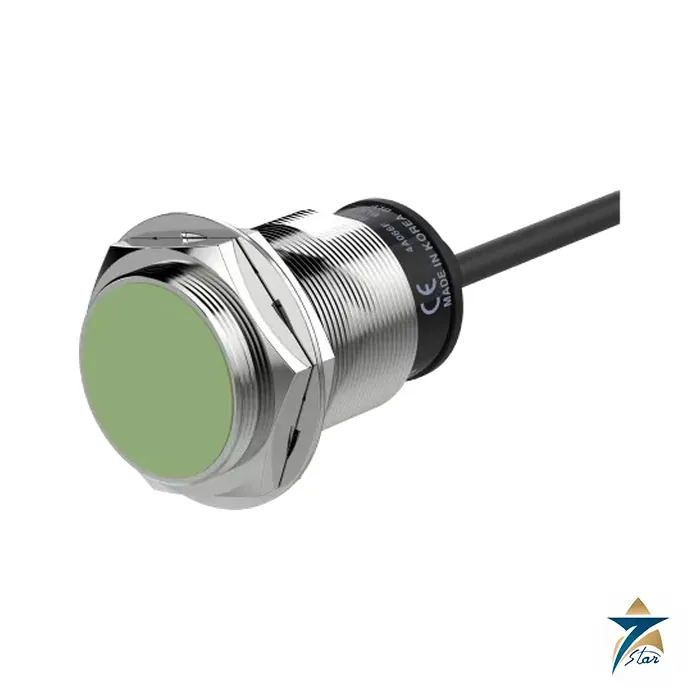
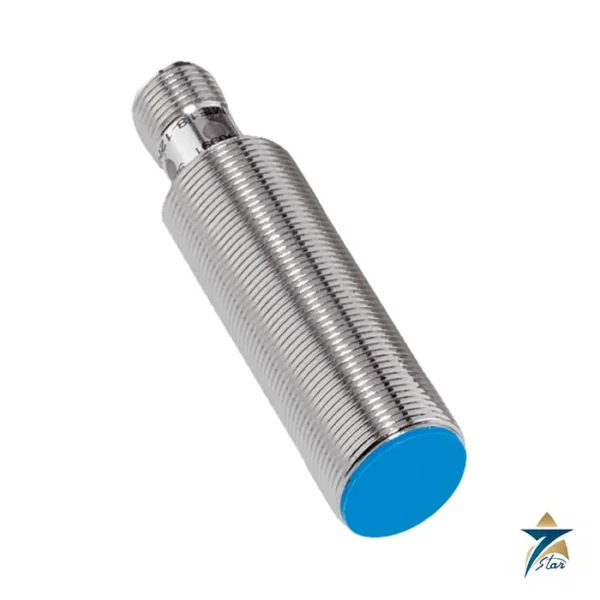
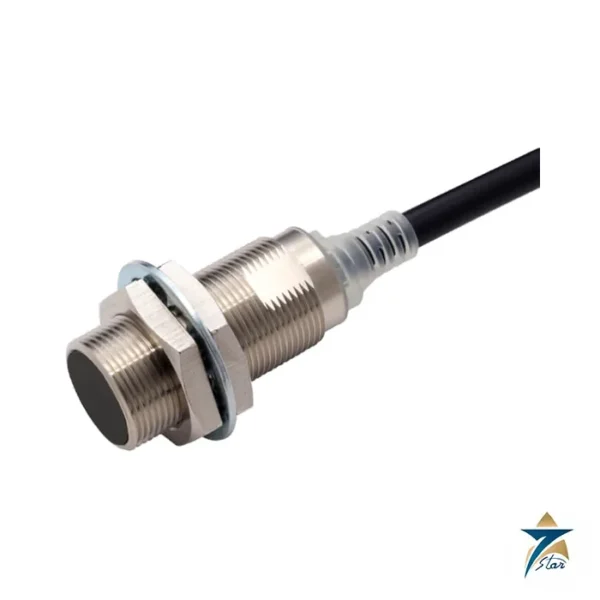
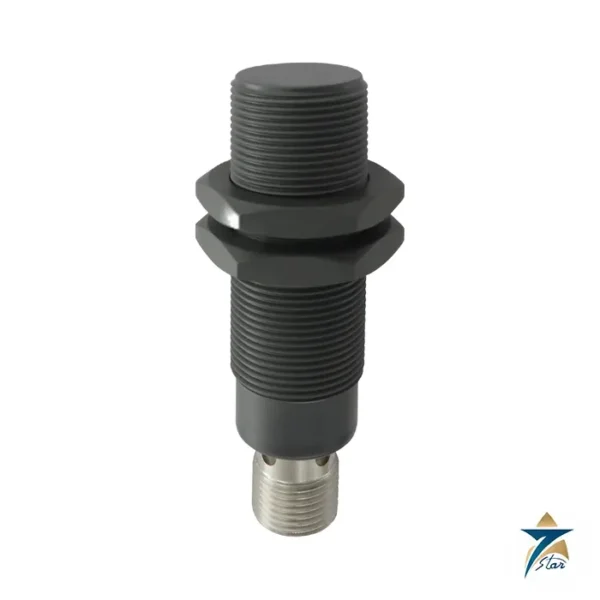
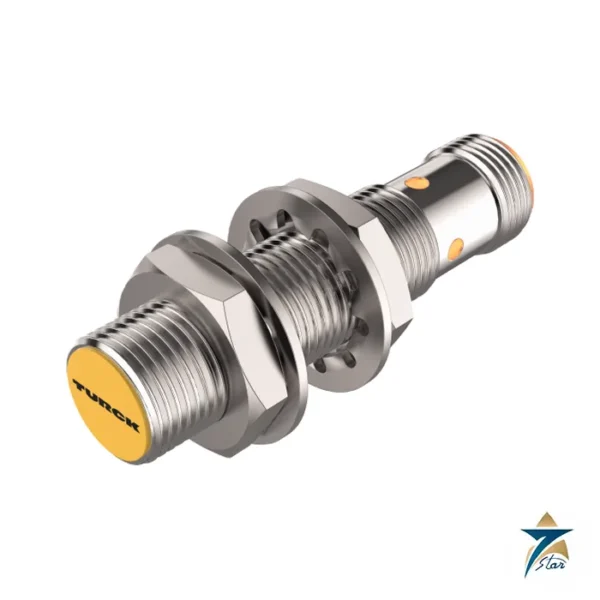
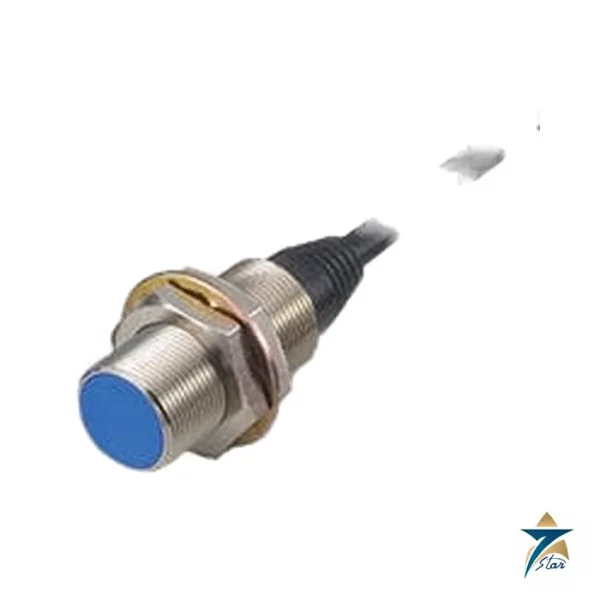
Large steel targets, heavy machinery and rough handling are where the Autonics PR30-10DN earns its place. It is the biggest round body of the PR series: an M30 x 1.5 barrel with a flush sensing face, a rated sensing distance of 10 mm and an NPN normally open output on a 12 to 24 V DC supply. Because the face is flush, the barrel can be sunk into a steel bracket or machine frame so the head sits level with the surface and is shielded from knocks. Seven Star LLC is an independent supplier serving Oman and the GCC.

What Autonics PR30-10DN stands for

PR designates the cylindrical DC three-wire family. The digits 30 give the sensing face diameter in millimetres, and 10 is the nominal distance in millimetres. D stands for the 12 to 24 V DC supply, and N for an NPN normally open output. There is no letter between PR and 30, therefore the body is the normal length, the connection is a fixed cable and the characteristic is the general type, not the spatter-resistant A type. The absence of V at the end indicates the standard black PVC cable.

Data sheet values

Item Specification
Thread M30 x 1.5, mounting hole 30.5 mm
Installation Flush
Sensing distance 10 mm
Setting distance 0 to 7 mm
Standard target Iron, 30 x 30 x 1 mm
Response frequency 400 Hz
Hysteresis 10 percent of sensing distance or less
Supply 12 to 24 V DC, range 10 to 30 V DC
Current draw 10 mA or less
Output NPN normally open, 200 mA or less, residual voltage 1.5 V or less
Ambient minus 25 to plus 70 degrees C, 35 to 95 percent RH
Protection IP67
Cable 5 mm diameter, 3-wire, 2 m, AWG 22
Nut torque 49 N m front, 78.4 N m rear
Weight about 170 g, about 207 g packaged

How the Autonics PR30-10DN differs from other PR30 variants

The neighbouring PR30-15DN is the non-flush version. It reaches 15 mm with a setting distance of 0 to 10.5 mm, but its standard target grows to 45 x 45 x 1 mm and its response falls to 200 Hz. The Autonics PR30-10DN cuts the reach to 10 mm (setting 0 to 7 mm) and doubles the response to 400 Hz, and the standard target is 30 x 30 x 1 mm. The most visible difference is the mounting rule: a non-flush PR30 asks for 15 mm of free space ahead of the face and a 90 mm free diameter, while the flush Autonics PR30-10DN needs none in front and can sit in metal, with only 30 mm of spacing to the next flush sensor in a row on a parallel layout.

Where it is applied

An M30 head with 10 mm of reach is typical for crane and gantry limit positions, steel gates and doors, large cam followers, shaft end detection and rolling stock. In ports and fabrication yards across Oman and the GCC, such sensors prove the position of locking pins and hatches. In pumping stations they watch for the position of large gate valve indicators. The IP67 case copes with dust and wash-down, while the nickel plated brass body tolerates the humid coastal atmosphere better than painted steel.

Installation hints

Use two nuts and the washer included with the sensor. For this 30 mm size the manual gives a front torque of 49 N m when the nut is near the face and 78.4 N m at the rear, so a long wrench is needed and the thread must be clean. Allow at least 60 mm between sensors facing each other and 60 mm side by side. When the sensor is fixed with a clamp instead of threaded holes, the fixing bracket P90-R30 uses an M5 x 50 bolt and holds the 30 mm body at a 45 mm hole spacing. Wire brown to the positive supply, blue to 0 V, and black to the load, and protect the 5 mm cable from pulls above 50 N.

Selection pointers

For stable switching keep the target at 70 percent of the rated distance, which is 7 mm here. Stainless steel, brass, aluminium and copper reduce the reach, so a trial is advisable. For PLC cards with sinking inputs choose a PNP code instead. Where arc welding takes place nearby, the spatter-resistant A type has a coating on the case, and a silicone cover is offered for flush general types.

Routine checks

Look for build-up of swarf around the face, loosened nuts after vibration, and any damage to the cable jacket. The operation indicator in red lights when the target is within range, which gives an immediate visual test during maintenance. There are no setpoints to adjust, and a faulty body is replaced as a unit.

Surroundings and interference around the Autonics PR30-10DN

A flush head concentrates its field forward, which is why it tolerates being enclosed by the mounting metal. The manual still specifies spacing for neighbouring metal: for the M30 flush body the tables list 30 mm for the distance m and 45 mm for n, and a free diameter equal to the 30 mm body, with no required depth in front of the face. In plain terms, keep other steel objects out of the field except the intended target, and do not place two sensors on the same line closer than the spacing values. Where space is tight, alternate NPN and PNP bodies or stagger the heads, because the interference is caused by overlapping fields and not by the electrical output.

Temperature drift is modest. The sensing distance moves within plus or minus 10 percent of its value at 20 degrees C across the whole ambient range, so a gap set at 7 mm will still switch reliably in a warm panel room as well as in a cool morning shed. The response frequency is averaged under a defined test: a standard target twice as wide as normal, passing at half the sensing distance, so real counting rates on irregular parts should be proven in the machine.

Because the PR series uses a three-wire DC circuit, the load current does not flow through the sensing electronics beyond the 10 mA self-consumption. The output transistor can drive relays, small contactors, PLC inputs and counter inputs, and the built-in surge and reverse polarity protection means a wiring slip at commissioning will not usually destroy the sensor. Use a freewheel diode across inductive loads regardless, to protect the output stage from repeated switching spikes.

Handling and storage

Keep spare sensors in their packing until needed, store them within minus 30 to plus 80 degrees C, and avoid places with condensation. Do not use the metal barrel as a hammer stop. When fitting a replacement, copy the wire colours and the position of the nuts from the old unit so that the setting distance is repeated.

Related items you may also need: Autonics E40S6-2500-6-L-5 Rotary Encoder Incremental | ifm O5D150 Photoelectric Distance Sensor, 0.03 to 2 m, IO-Link | SICK IQ40-40NPSKC0S IQG Inductive Proximity Sensor | All Autonics products.

Documents and quotation

The product manual of the PR series that covers the Autonics PR30-10DN is attached, including the order code explanation, spacing tables and wiring. Please send your RFQ with the part number Autonics PR30-10DN, the quantity and the delivery location in Oman or the GCC.

Other Models in the PR Range

Seven Star LLC supplies models from the PR range in Oman and the GCC. Compare the related models below and request a quote for the one that matches your application.

ModelCategory
Autonics PR18-8DN M18 Inductive Proximity Sensor 8 mmInductive Proximity SensorsView details
Autonics PR12-4DN M12 Inductive Proximity Sensor 4 mm NPN NOInductive Proximity SensorsView details
Autonics PR30-10DN M30 Flush Inductive Proximity Sensor NPNInductive Proximity SensorsYou are viewing this model
Autonics PRCM18-5DN M18 Connector Inductive Proximity SensorInductive Proximity SensorsView details
Autonics PRW18-8DN M18 Cable Connector Inductive SensorInductive Proximity SensorsView details
Datasheets & Documents
  • PDF Datasheet Autonics PR30-10DN M30 Flush Inductive Proximity Sensor NPN Datasheet Download
Reviews (0)

Reviews

There are no reviews yet.

How would you rate this product?

It takes about 10 seconds — just tap a star. Your email is never published.

About brand

Autonics is a South Korean maker of sensors and controllers, founded in 1977 as a small engineering business making controllers for looms. It took the Autonics name in 1988 and opened a new corporate headquarters in Busan in 2014. Autonics makes proximity and photoelectric sensors, rotary encoders, temperature controllers, counters, timers and stepper motor systems, with factories in Busan and Yangsan.

Seven Star LLC lists the Autonics E40S6-2500-6-L-5 incremental rotary encoder and supplies Autonics sensors and control devices in Oman and the GCC.

Autonics company profile

Founded 1977, South Korea
Current name Autonics, since 1988
Headquarters Busan, South Korea
Factories Busan and Yangsan
Product families E40 and E50 rotary encoders, PR proximity sensors, BJ photoelectric sensors, TK temperature controllers

Milestones

  • 1977: The company is founded.
  • 1988: Renamed Autonics Corporation.
  • 2014: Opens its Busan headquarters.

Reading the Autonics E40S encoder code

E40S is the 40 mm diameter shaft-type incremental encoder, and the 6 that follows is the 6 mm shaft. 2500 is the resolution in pulses per revolution. The next 6 means six output signals: A, B and Z with their inverted signals. L is a line driver output and the final 5 is a 5 V DC supply. The same 40 mm body is made in hollow shaft form as the E40H and E40HB series.

Where Autonics encoders are used

Servo and spindle feedback, conveyor length measurement, packaging and printing machines.

Ordering Autonics encoders: what we need

Send the complete model string from the label. If it is worn off, give the body and shaft diameter, pulses per revolution, output type, supply voltage and cable or connector style.

Facts checked against Autonics corporate profiles, October 2026.

FAQ

Questions about the Autonics PR30-10DN M30 Flush Inductive Proximity

Answers from our engineering team on installation, compatibility and integration.

01What size is the Autonics PR30-10DN?
It has an M30 x 1.5 threaded barrel with a 30 mm sensing face, so it needs a mounting hole of 30.5 mm and two nuts and a washer.
02Is the Autonics PR30-10DN flush mountable?
Yes, it is a flush type with 10 mm sensing distance, so the barrel can be embedded in metal without a free zone in front of the head.
03What target does the Autonics PR30-10DN detect at 10 mm?
The 10 mm figure is for the standard iron target measuring 30 x 30 x 1 mm, and other metals or smaller targets shorten the reach.
04How fast can the Autonics PR30-10DN switch?
The manual gives an average response frequency of 400 Hz for this code, lower than the smaller diameters in the same series.
05Which supply does the Autonics PR30-10DN need?
It runs on 12 to 24 V DC with a permitted range of 10 to 30 V DC and draws 10 mA or less, with an NPN normally open output.