Brand:

Georg Fischer Type 514 Manual Diaphragm Valve with Unions

Description

Overview

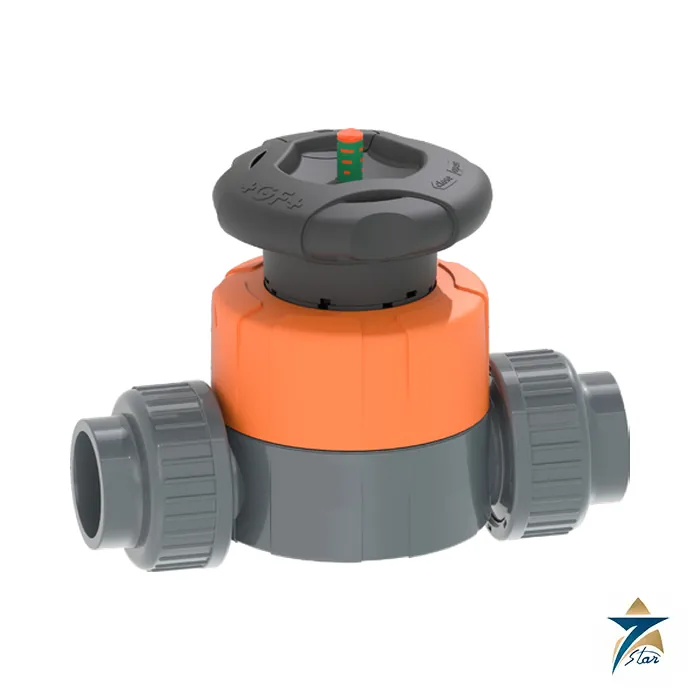
Georg Fischer Type 514 is the union end version of the GF 5-Series manual diaphragm valve. The valve body is thermoplastic, the shut off is made by a flexible diaphragm pressed onto a weir, and the two union nuts let the body be unscrewed and lifted out of the pipe without moving the pipe itself. It spans sizes from d16 (DN10, 3/8 inch) to d63 (DN50, 2 inch), and the datasheet presents it for water treatment, microelectronics and chemical process lines. Seven Star LLC is an independent supplier serving Oman and the GCC.

What the Georg Fischer Type 514 offers

The design is dead space free, fully drainable and free from pressure surges when it closes, because the diaphragm moves gently onto the weir as the handwheel turns. All parts are plastic with no metal screws, so there is nothing to corrode, and the housing nut is orange PPGF 30 as standard. For water applications at the higher PN16 level an optional black housing nut of PPSGF40 is available. A high flow coefficient with a linear control characteristic makes the valve suitable for regulating flow as well as closing it. The same body accepts the pneumatic DIASTAR and electric e-DIASTAR actuators, so a manual valve can be automated later.

Data of Georg Fischer Type 514

Item Datasheet value
Connection Union ends: solvent cement sockets, threaded sockets, fusion sockets, or unions with butt fusion spigots
Sizes d16 to d63, DN10 to DN50, 3/8 to 2 inch
Body materials PN10 PVC-U, PVC-C, ABS, PP-H, PVDF, PVDF-HP
Body materials PN16 PVC-U, PVDF, PVDF-HP
Kv 100, d20 / DN15 125 l/min, 8 cubic metres per hour (Cv 9)
Kv 100, d32 / DN25 481 l/min, 29 cubic metres per hour (Cv 33)
Kv 100, d50 / DN40 1263 l/min, 76 cubic metres per hour (Cv 87)
Kv 100, d63 / DN50 1728 l/min, 104 cubic metres per hour (Cv 119)
Approvals ACS, FDA, DIBt; certification for some temporarily being requalified
Pressure levels PN10 and PN16, depending on body and housing nut material
Housing nut PPGF 30 orange as standard; PPSGF40 black for water applications with PN16
Diaphragm materials NBR, EPDM, PTFE, FKM
Gasket materials EPDM, FKM
Temperature, PVC-U 0 to 60 degrees C
Temperature, PVC-C and PP 0 to 80 degrees C
Temperature, ABS Minus 30 to plus 60 degrees C
Temperature, PVDF and PEEK Minus 20 to plus 140 degrees C
Product standard EN ISO 16138
Test standards ISO 9393-2 and EN 12266-1, leakage rate A

How Georg Fischer Type 514 differs from the other 5-Series valves

The Type 515 has plain spigot ends and the Type 517 flanges, while the Georg Fischer Type 514 is the only one with union connections, which means it is the simplest to remove for maintenance and the only one that lists threaded sockets. It shares the d63 top size with 515 and 517, but its low end begins at d16, a size not offered on the 515 or 517 that start at d20. The Type 519 is a three way branched valve and covers up to d160. Choose the Georg Fischer Type 514 for small and medium lines where regular dismantling is expected.

Where it is used in Oman and the GCC

Typical jobs are seawater desalination chemical dosing, reverse osmosis cleaning skids, acid and caustic lines in water treatment, swimming pool and cooling tower dosing and laboratory pipework. The valve body material is picked by the chemical: PVC-U for general water and many acids, PVC-C for hotter fluids, PP for solvents and some alkalis and PVDF for aggressive media and higher temperatures.

Material and temperature selection

Match the body and the diaphragm to the medium and temperature. The datasheet gives a pressure to temperature diagram for each body material, so the permissible pressure falls as the temperature rises. The diaphragm can be NBR, EPDM, PTFE or FKM, and the gasket EPDM or FKM, and the datasheet refers to the GF chemical resistance tool for the medium in question. ABS is suited to cold use down to minus 30 degrees C, and PVDF handles up to 140 degrees C.

Installation notes for Georg Fischer Type 514

Install the valve with no tension on the pipe and support the pipework on both sides. Slide the union nuts on the pipe before bonding or welding the end connectors, and tighten the nuts by hand without tools. Close the handwheel only by hand; use of levers can damage the diaphragm. After the first temperature cycle, check the nut tightness again, because plastic relaxes under load.

Maintenance and spares

The diaphragm is the wear part. Replace it at intervals set by cycle count, temperature and medium, and inspect the weir for scoring. The datasheet includes spare parts and accessories lists, including limit switches and position indicators. Keep a spare diaphragm and gasket for each size on site.

Ordering the correct code

A complete order needs the type, size, body material, end connection, diaphragm and gasket material and housing nut colour. Provide these in the enquiry together with the pressure level, PN10 or PN16, and the medium so the quote is correct from the first reply.

Flow control with the diaphragm and weir

Because the diaphragm closes against a weir, flow rises almost linearly as the handwheel is opened, which suits manual dosing and trimming of small flows. The visible position indicator on the handwheel shows how far the valve is open, and a lockable setting can be used to repeat a throttled position after maintenance. In ultrapure water and clean chemical lines, the lack of dead space prevents stagnant pockets where bacteria or crystals could form, and full drainability allows the line to be emptied completely before shutdown. These points explain why diaphragm valves are the usual answer where a ball valve would trap liquid in the body cavity.

Related items you may also need: GF Signet 3-2551 Magmeter Insertion Electromagnetic Flow Sensor | GF Type 546 Pro Linear Thermoplastic Ball Valve | GF Type 567 Wafer Thermoplastic Butterfly Valve | All Georg Fischer products.

Documents and quotation

The GF datasheet for the 5-Series, including the Georg Fischer Type 514, is attached to this page with flow data, pressure and temperature diagrams and dimensions. Send your RFQ with the Georg Fischer Type 514 size, body material, quantity and delivery location in Oman or the GCC.

Datasheets & Documents
  • PDF Datasheet Georg Fischer Type 514 Manual Diaphragm Valve with Unions Datasheet Download
Reviews (0)

Reviews

There are no reviews yet.

How would you rate this product?

It takes about 10 seconds — just tap a star. Your email is never published.

About brand

Georg Fischer (GF) is a Swiss industrial group founded in 1802, when Johann Conrad Fischer bought a mill near Schaffhausen and turned it into a foundry. In 1864 his grandson Georg Fischer began making malleable iron fittings, introducing the GF fish trademark, and piping is one of the company's oldest businesses. GF Piping Systems makes plastic and metal piping systems, valves and Signet flow and water quality instruments.

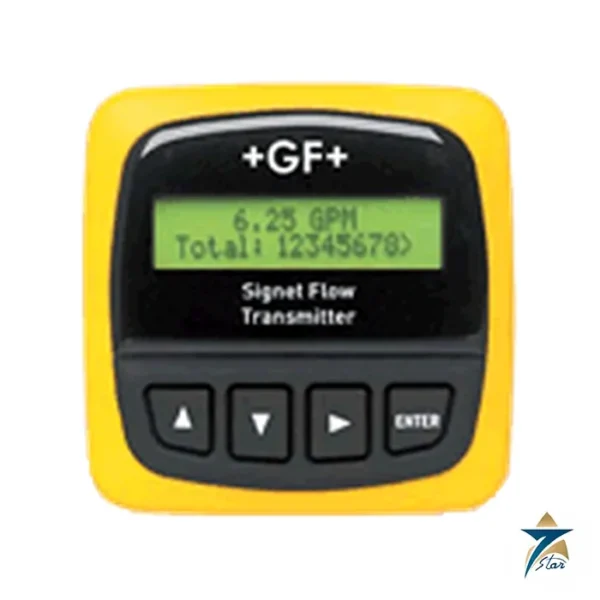
Seven Star LLC, an independent supplier in Oman, lists the GF Signet 3-2551 Magmeter insertion electromagnetic flow sensor and the GF Signet 8550-1 flow transmitter.

Georg Fischer company profile

Founded 1802, Schaffhausen, Switzerland
Founder Johann Conrad Fischer
Headquarters Schaffhausen, Switzerland
Piping business Fittings since 1864
Product families Type 546 ball valves, Type 567 butterfly valves, Signet flow sensors and transmitters, thermoplastic pipes and fittings

Milestones

  • 1802: Johann Conrad Fischer founds the company.
  • 1864: GF begins making malleable iron fittings.

GF Signet instruments listed here

The 3-2551 Magmeter is an insertion flow sensor: it is mounted through a fitting in the pipe wall, has no moving parts and needs a liquid with some electrical conductivity. The 8550-1 is a flow transmitter that takes the signal from a Signet flow sensor and provides a display and outputs for the control system. Sensor, pipe fitting and transmitter are chosen together, because the fitting sets the insertion depth for a given pipe size and material.

Georg Fischer products we list

Family Examples
Flowmeters GF Signet 3-2551 Magmeter Insertion Elec…, GF Signet 8550-1 Flow Transmitter
Ball Valves GF Type 546 Pro Linear Thermoplastic Bal…
Butterfly Valves GF Type 567 Wafer Thermoplastic Butterfl…

Ordering GF Signet parts: what we need

Copy the manufacturer part number from the label, which normally starts with 3- followed by the model and option digits. Add pipe size, pipe material, the fitting you have, the fluid and its conductivity, sensor body material, output required and cable length. Water treatment, desalination and chemical dosing sites in the GCC often have older Signet transmitters; if a model is no longer produced we ask for the manufacturer's current replacement, which for the 8550 is listed by distributors as the Signet 9900.

Facts checked against the Historical Dictionary of Switzerland and GF histories, October 2026.

FAQ

Questions about the Georg Fischer Type 514 Manual Diaphragm Valve with

Answers from our engineering team on installation, compatibility and integration.

01What sizes does Georg Fischer Type 514 cover?
It covers d16 to d63, which is DN10 to DN50 or 3/8 to 2 inch, with union connections.
02What body materials are offered for Georg Fischer Type 514?
PVC-U, PVC-C, ABS, PP-H, PVDF and PVDF-HP at PN10, and PVC-U, PVDF and PVDF-HP at PN16.
03What is the Kv of Georg Fischer Type 514 in 2 inch?
The d63 DN50 valve has a Kv 100 of 104 cubic metres per hour, or 1728 l/min, and a Cv of 119.
04Can Georg Fischer Type 514 be automated?
Yes, it is compatible with the pneumatic DIASTAR and electric e-DIASTAR actuators.
05How does Georg Fischer Type 514 differ from Type 515?
The 514 has union ends and starts at d16, while the 515 has spigot ends and starts at d20.