Alfa Laval Unique SSV Aseptic valve: what it is
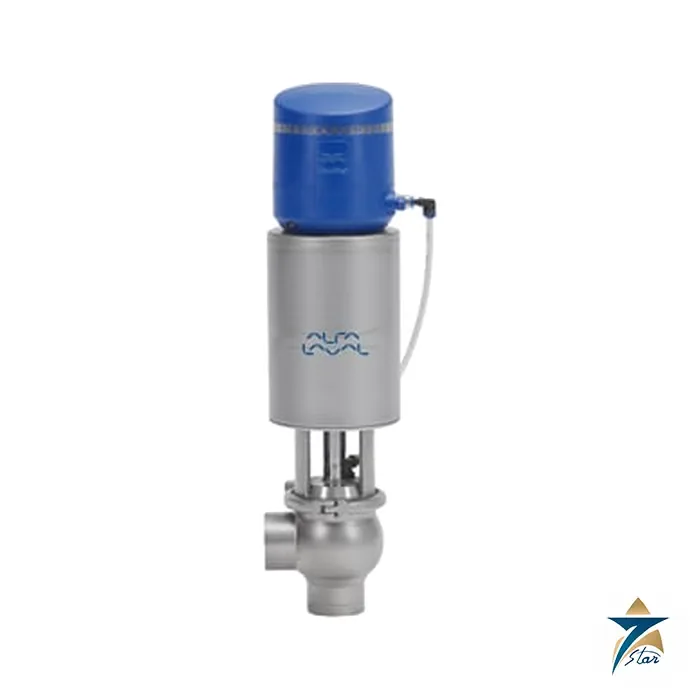
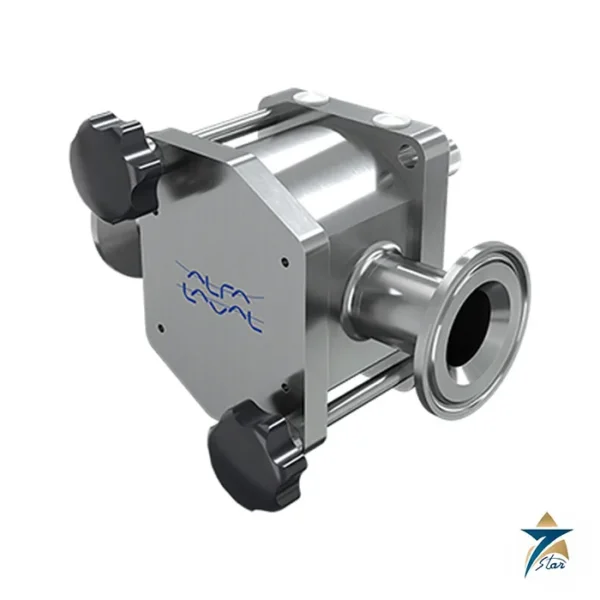
The Alfa Laval Unique SSV Aseptic is a single seat valve for sterile and aseptic process lines. It keeps the modular body, plug and actuator concept of the standard Unique SSV and adds a one-piece diaphragm that seals the valve stem hermetically, so outside air and microorganisms cannot travel into the product path. Seven Star LLC supplies this valve in Oman and the GCC as an independent supplier in Muscat.
Like all valves in this series, it has a single contact surface between plug and seat, which limits the area where contamination could lodge. It is offered in both pneumatic and manual forms, so the same aseptic principle can serve automated lines and hand-operated sampling or isolation points.
Name decoded
“Unique” is the Alfa Laval hygienic valve platform, “SSV” stands for single seat valve, and “Aseptic” denotes the diaphragm-sealed version. No separate ordering string is published on the product page, so the complete valve is defined by body arrangement, actuator and options.
Unique SSV Aseptic specifications and options
| Parameter |
Specification |
| Manufacturer / part number |
Alfa Laval / Unique SSV Aseptic |
| Valve type |
Single seat valve with hermetic diaphragm, shut-off or change-over |
| Operation |
Pneumatic or manual |
| Seal against atmosphere |
One-piece diaphragm |
| Diaphragm construction |
Sandwich of PTFE on the product side, EPDM and an enforcing mesh |
| Diaphragm support |
Mechanically supported by the valve in the open position |
| Contact surface |
Single contact surface between plug and seat |
| Body |
Smooth, crevice-free inner valve body, pressed from a single stainless steel disc on the Unique SSV platform |
| Product-wetted seals |
HNBR or FPM options |
| Leak detection |
Static seal leak detection |
| Control units |
Valve sensing and control devices including ThinkTop and ThinkTop Basic |
| Other options |
Fully maintainable actuator, fittings to the required standard, 3-A bright exterior finish |
| Industries listed |
Dairy, food, beverage, brewery, biotechnology, pharmaceutical |
Pressure and temperature limits depend on the size and the diaphragm and seal selection. State your operating data so we can match the right build.
How the diaphragm creates aseptic conditions
In an ordinary seat valve, a moving stem passes through a seal and the product side is separated from the atmosphere only by dynamic seals. In the aseptic version the stem is enclosed in a diaphragm that flexes instead of sliding, so the product zone stays closed to the outside during every stroke. The manufacturer describes this as a hermetic seal that protects against intrusion of microorganisms from the atmosphere.
The diaphragm is a sandwich: PTFE faces the product, EPDM gives elasticity, and an enforcing mesh adds strength. Because the part flexes with each operation, support matters. In the open position the valve body mechanically supports the one-piece diaphragm to reduce wear, which is how the design aims for a long lifetime.
Elsewhere the valve works like its standard sibling. Compressed air drives the actuator, the plug seats against a defined O-ring compression with static seal leak detection, and a change-over valve needs a third air port in addition to the two used for supply and process air.
Where the Unique SSV Aseptic fits
Choose this version where a product is sterile or must stay protected after heat treatment, for example aseptic filling feeds, heat-treated product lines, sterile water, sterile liquid pharmaceuticals and biotechnology process lines. The diaphragm can also be fitted to other Unique SSV types, namely Standard, Tangential, Two Step, Manual and Tank Outlet, which means one platform covers many positions in a sterile system.
For plain hygienic duty where sterility is not the goal, the standard Unique SSV is simpler. When two fluids must pass one junction without cross-contamination, the Unique Mixproof valve family is the alternative. ThinkTop and ThinkTop Basic can be added for position feedback and control.
Selecting a Unique SSV Aseptic configuration
- Operation: pneumatic or manual, and shut-off or change-over.
- Position: standard, tangential, two-step, tank outlet or manual layout.
- Process: sterilization method (steam, hot water or chemical), temperature and pressure.
- Seals: HNBR or FPM for product-wetted seals; check chemical compatibility.
- Actuator: semi-maintainable standard or fully maintainable option.
- Controls: ThinkTop, ThinkTop Basic or a customer-supplied limit switch.
- Fittings and finish: connection standard and 3-A bright if requested.
Installation, commissioning and care
Fit the valve in a way that allows the line to drain and the diaphragm area to be inspected. Make sure the sterilization procedure is validated with the valve in operation, and cycle it during steam or hot-water sterilization if your procedure demands it. Supply clean, dry air at the pressure the actuator requires and test the leak detection path after assembly.
The diaphragm is a wear part and should be on your spares list. Plan replacement at a set interval based on stroke count, temperature and cleaning chemistry, rather than waiting for failure, because a damaged diaphragm compromises the aseptic barrier. Keep spare product-wetted seals as well, and record each replacement in the batch documentation.
Aseptic valves in Oman and GCC plants
Aseptic processing is growing in the Gulf region, with long-life dairy and juice, bottled beverages and a developing pharmaceutical sector. These plants often run with high ambient temperature, so heat load on actuators and air lines should be considered during design. Where beverages are produced, brewery-style non-alcoholic lines also benefit from sterile sampling and transfer points with manual versions of the valve.
Standard SSV against Aseptic version
| Feature |
Standard Unique SSV |
Aseptic version |
| Stem protection |
Double lip seal |
One-piece hermetic diaphragm |
| Typical use |
General hygienic processing |
Sterile and aseptic lines |
| Operation |
Pneumatic |
Pneumatic or manual |
| Wear item to plan |
Product-wetted seals |
Diaphragm and seals |
Information to send with a Unique SSV Aseptic RFQ
- Quantity, tube size and fitting standard.
- Shut-off or change-over; pneumatic or manual.
- Sterilization method, temperature and pressure.
- Product and CIP chemistry.
- Seal and control-unit preferences.
- Nameplate data of any valve being replaced.
Documents and quotation
Documents depend on the configuration chosen. Send the model name and your options and we will confirm which documents are available.
Seven Star LLC is an independent supplier in Muscat serving Oman and the GCC. Send your requirement for availability and lead time.
Other Models in the Al Seat Valves Range
Seven Star LLC supplies models from the Al Seat Valves range in Oman and the GCC. Compare the related models below and request a quote for the one that matches your application.
























Reviews
There are no reviews yet.