- Automation & ControlView all 3,044 products
- Automation Accessories
- AC Drives
- PLC & I/O Cards
- Industrial Communications
- Vibration Monitoring
- Isolator & Barrier
- Controllers & Data Acquisition
- Safety Switches & Guard Locking
- Motor Soft Starters
- Encoders
- CCTV & Security
- Pneumatic Cylinders
- HMI Displays
- Servo Drives
- Industrial Computers
- Machine Vision
- Automation Software
- Robotics
Brand: Endress+Hauser (E & H)
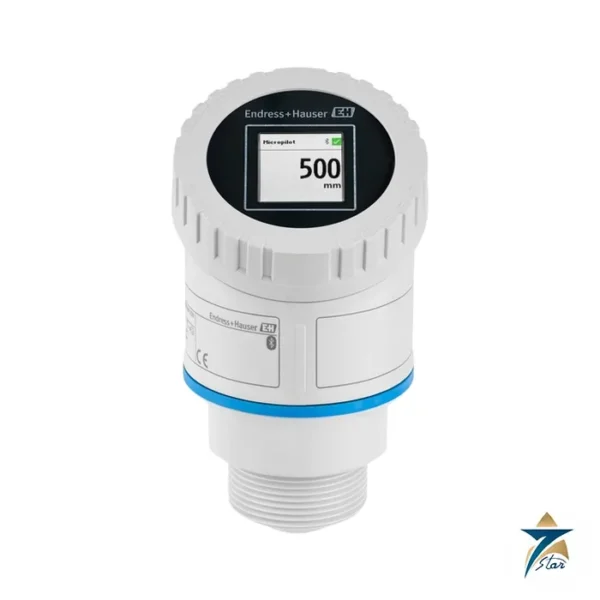
Endress+Hauser FMR56 Micropilot Radar for Bulk Solids
Description
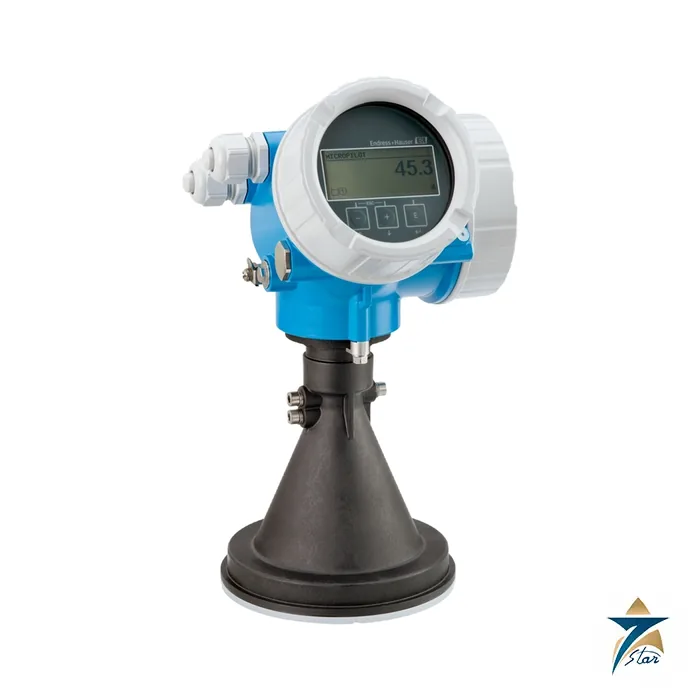
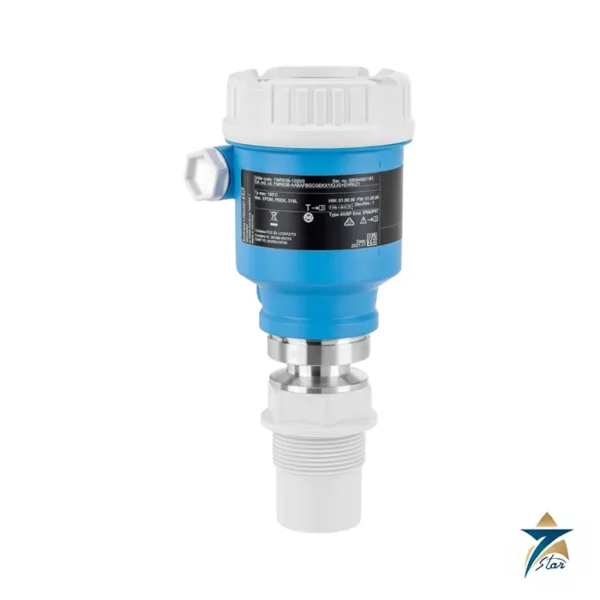
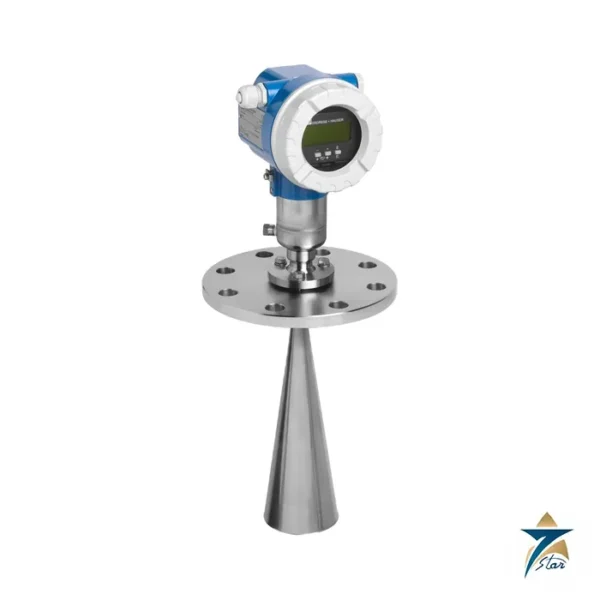
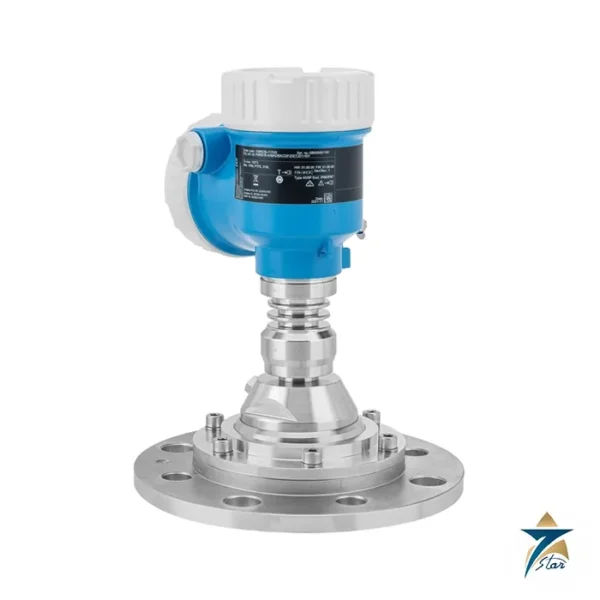
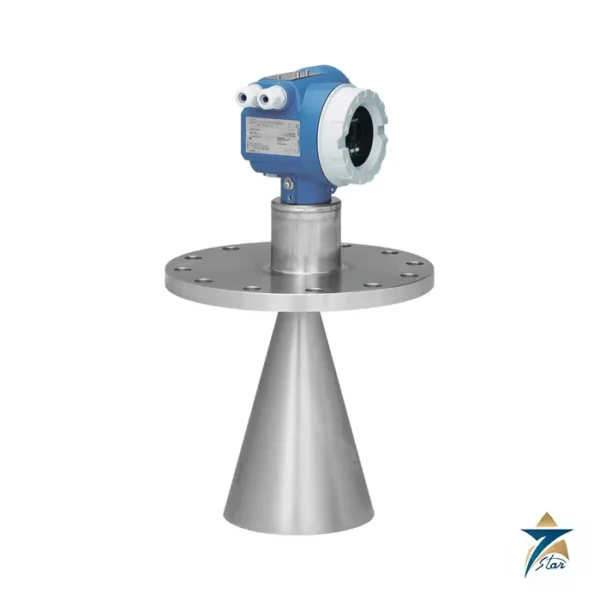
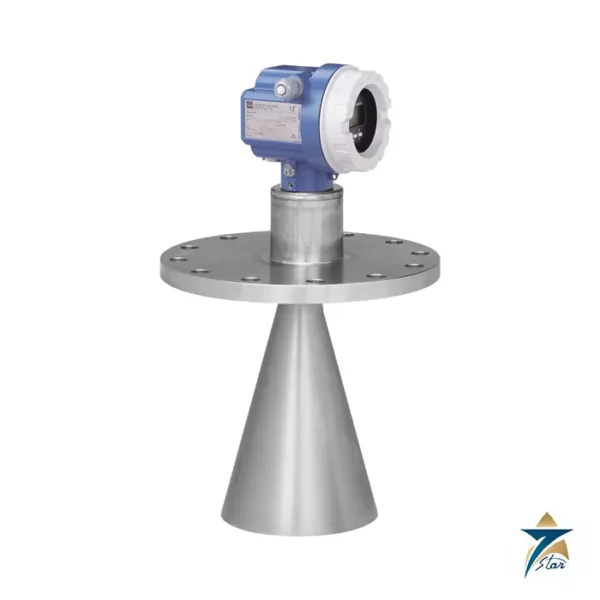
Endress+Hauser FMR56: polypropylene-cladded horn radar for silos
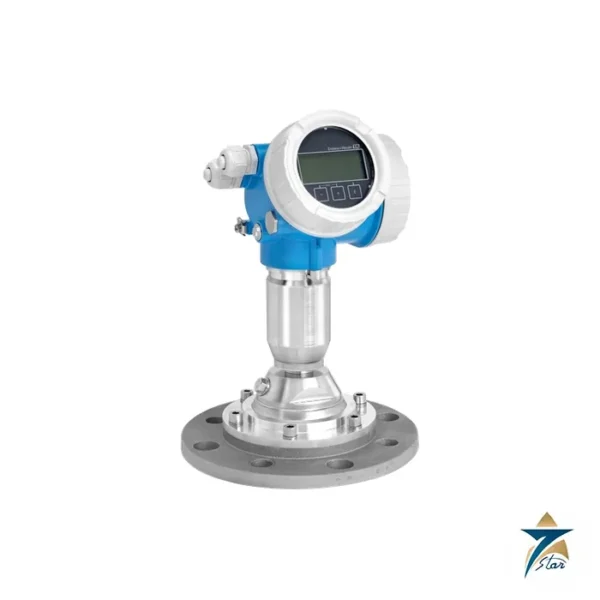
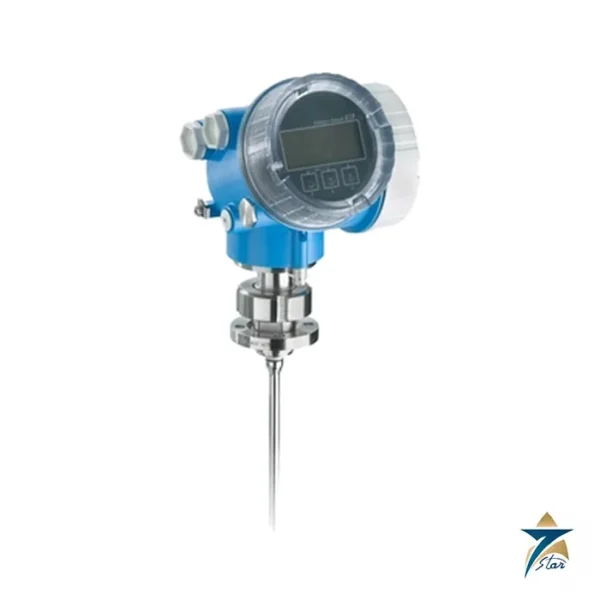
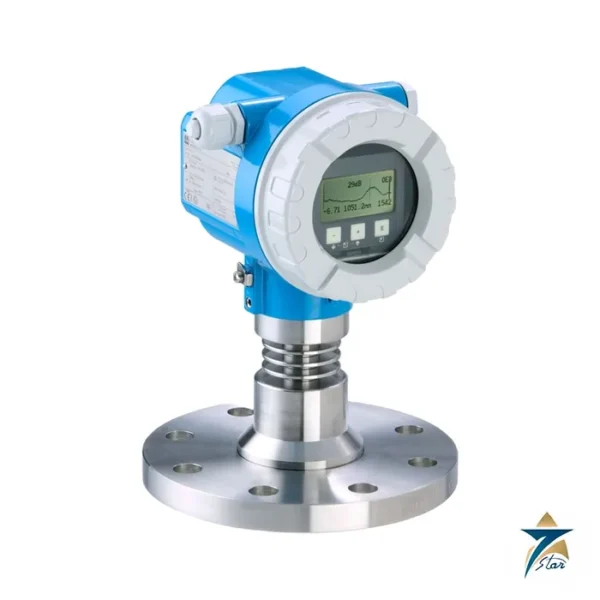
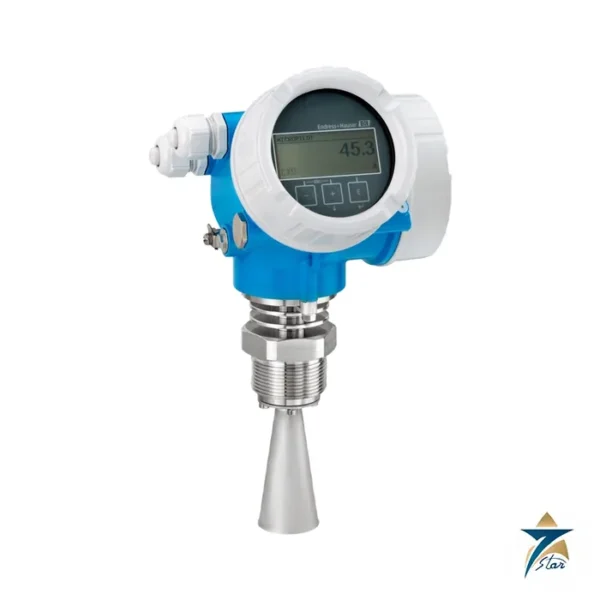
Endress+Hauser FMR56 is the bulk-solids Micropilot with a PP-cladded horn antenna. It looks down into a silo, hopper or bunker and measures the distance to the heap of powder or granules with 26 GHz pulses, ignoring dust clouds, noise from filling and temperature layers that disturb ultrasonic or laser alternatives. According to the datasheet for the FMR56/FMR57 pair, the maximum range of FMR56 is 30 m for every version, while the sibling with larger antennas reaches 70 m.
The device keeps the pair’s common features: HART output, plus or minus 3 mm accuracy, SIL2 capability, Heartbeat diagnostics, a choice of GT18, GT19 or GT20 housing and Bluetooth set-up with the SmartBlue app.
Process limits and antenna of FMR56
| Parameter | Value |
|---|---|
| Antenna | PP-cladded horn, 80 mm (3 in) beam angle 10 degrees or 100 mm (4 in) beam angle 8 degrees |
| Maximum range | 30 m for all versions |
| Process temperature | Minus 40 to plus 80 degrees Celsius for all versions |
| Process pressure | Gauge minus 1 to 3 bar; absolute below 4 bar |
| Accuracy | Plus or minus 3 mm digital; offset plus or minus 4 mm; analog 0.02 percent plus 0.03 percent |
| Response time | Below 0.8 s for heights under 10 m |
| Slip-on flange example | UNI slip-on flange 3 inch, 1.6 bar for the 80 mm horn (slip-on version for the 80 mm horn) |
| Accessory | Horn protection made of PTFE (order code OW) |
| Output | HART 1,200 bit/s with galvanic isolation; optional second 4 to 20 mA or switch output |
| Housing protection | IP68 / NEMA 6P (24 h at 1.83 m), IP66 / NEMA 4X |
| Safety | SIL2, SIL3 with redundancy; easy proof test |
Reading the media groups for FMR56
For solids the datasheet groups materials by dielectric constant: A (1.6 to 1.9) covers plastic granulate, white lime and sugar; B (1.9 to 2.5) Portland cement and plaster; C (2.5 to 4) grain, seeds, sand and ground stone; D (4 to 7) moist stone, ores and salt; E (above 7) metal powder, carbon black and coal dust. Very loose or fluidised material is moved down one group. The angle of repose, pneumatic filling and sticky deposits cut the range, so on cement or sugar the usable distance with FMR56 may be well below 30 m.
Radar behaves differently from ultrasonic sensing in a silo. The signal travels at the speed of light and is not slowed by dust or by temperature gradients, so a warm roof void above a cold heap does not bend the beam. What does matter is how much of the energy returns: a low permittivity powder reflects weakly, a steep cone of repose sends the echo away from the antenna, and fluidised material scatters it. Those three effects explain most differences between datasheet range and measured range on site.
Because the antenna is clad in polypropylene, the horn tolerates chemically aggressive atmospheres, for example fertilizer dust or humid salt air, better than bare metal parts, which is a practical advantage on the Omani coast.
Where FMR56 is used around Oman and the GCC
Cement plants, aggregate crushers, flour mills, feed mills, fertilizer and salt stores, plastics compounding, and port bulk terminals all hold dusty product. The horn on FMR56 is PP-cladded and can take a PTFE horn protection; it is a sensible choice for silos with a nozzle large enough for an 80 or 100 mm horn but with a medium that is not too hot. Process temperature stops at 80 degrees Celsius, so hot clinker or fly ash needs the FMR57 with graphite seal instead.
How FMR56 differs from FMR57
| Item | FMR56 | FMR57 |
|---|---|---|
| Antenna | PP-cladded horn 80 or 100 mm | Horn or parabolic 200 or 250 mm |
| Range | 30 m | 70 m |
| Process temperature | Minus 40 to plus 80 | Up to 200 (Viton) or 400 (graphite) |
| Pressure | 3 bar | 16 bar |
| Beam angle | 10 or 8 degrees | 4 or 3.5 degrees (parabolic) |
Installing FMR56 on a silo
Use a nozzle where the horn can protrude, or choose the mounting bracket version. Keep the antenna away from the filling stream and from the silo wall by the distance shown on the installation drawing. Avoid placing the horn at the centre of a dished roof, which can focus reflections, and use a smooth, weld-free nozzle interior. For a 100 mm horn the narrower 8 degree beam gives about the same footprint on the material surface as a 10 degree beam from the 80 mm horn at a shorter range, so the larger horn is worth specifying when the silo is tall or contains structural members. After wiring the loop, enter the empty distance to the silo floor, switch on the interference-echo mapping while the silo is partly full and confirm the reading with a hand measurement.
Maintenance of FMR56
Dust build-up on the horn is the most common issue. Inspect the cladding, wipe it clean and verify the signal strength shown in the diagnostics. The PTFE horn protection can be fitted to keep deposits off the PP face. Parameters are stored in HistoROM, and the device reports status per NAMUR NE 107. In dry, dusty plants a weekly visual check from the platform is enough; in humid ones with sticky product, a monthly cleaning is more realistic. Log the signal-to-noise figure after each clean so you can see the trend and plan cleaning by data and not by guess.
For a spare strategy, hold one electronics module and one horn protection part; both are quick to replace, and the electronics can be restored from the HistoROM backup of the original.
Ordering notes for FMR56
Quote the horn size, flange or bracket, seal, housing, approval and output option together. Adding the powder, bulk density and silo height lets the supplier cross-check the range claims against the sheet.
Documents and quotation
The datasheet is Technical Information TI01042F for FMR56. XX Seven Star LLC is an independent supplier serving Oman and the GCC and is not affiliated with the manufacturer.
Other Models in the Micropilot Fmr5x Range
Seven Star LLC supplies models from the Micropilot Fmr5x range in Oman and the GCC. Compare the related models below and request a quote for the one that matches your application.
| Model | Category | |
|---|---|---|
| Endress+Hauser FMR53 Micropilot Rod Antenna Radar | Radar & Guided Wave Radar Level | View details |
| Endress+Hauser FMR54 Micropilot Horn and Planar Radar | Radar & Guided Wave Radar Level | View details |
| Endress+Hauser FMR56 Micropilot Radar for Bulk Solids | Radar & Guided Wave Radar Level | You are viewing this model |
| Endress+Hauser FMR57 Micropilot Parabolic Radar for Silos | Radar & Guided Wave Radar Level | View details |
Datasheets & Documents
- Datasheet Endress+Hauser FMR56 Micropilot Radar for Bulk Solids Datasheet Download
Reviews (0)
How would you rate this product? Cancel reply
About brand
Endress+Hauser makes process measurement instruments for flow, level, pressure, temperature and liquid analysis. Georg H. Endress and Ludwig Hauser started the business in Lörrach, Germany, on 1 February 1953, first selling level meters, and the Endress+Hauser name has been used since 1957. The group is headquartered in Reinach, Switzerland, and has been wholly owned by the Endress family since 1975.
Seven Star LLC is an independent supplier listing Endress+Hauser flowmeters, level and pressure transmitters, temperature assemblies and liquid analysis products for buyers in Oman and the GCC. Instruments are matched from the full order code on the nameplate.
Endress+Hauser company profile
| Origin | Founded in Lörrach, Germany, on 1 February 1953 by the Swiss engineer Georg H. Endress and Ludwig Hauser |
|---|---|
| Headquarters | Endress+Hauser AG, Reinach (Basel-Landschaft), Switzerland |
| Ownership | Family owned; the Endress family has been the sole shareholder since 1975, and a family charter commits the company to stay family owned |
| Size | About 16,500 employees and sales of about EUR 3.7 billion (2023, as reported by the company) |
| Product families | Proline flowmeters, Micropilot and Levelflex radar, Liquiphant switches, Cerabar and Deltabar pressure, iTEMP and iTHERM temperature, Liquiline and Memosens liquid analysis |
Milestones
- 1953: Georg H. Endress and Ludwig Hauser start the business in Lörrach on 1 February, first selling level meters.
- 1957: The Endress+Hauser name comes into use.
- 1975: The Endress family becomes sole shareholder.
- 2023: About 16,500 employees and sales of about EUR 3.7 billion, as reported by the company.
Endress+Hauser product lines
| Line | Measuring principle | Typical use |
|---|---|---|
| Promass F 300, Promass 80F, 83F/84F | Coriolis mass flow | Direct mass flow and density of liquids and gases, hydrocarbon transfer and chemical dosing |
| Promag P 300, P 500, H 300, W 400, W 10, 50P | Electromagnetic flow | Water, wastewater, slurries and other conductive liquids |
| Prowirl F 200, 72F | Vortex flow | Steam, gas and low-viscosity liquids |
| Prosonic Flow 92F, t-mass 65F | Ultrasonic and thermal mass flow | Water lines; compressed air and industrial gases |
| Micropilot FMR62, FMR67, FMR60, FMR10B, FMR20, FMR50, FMR52 | Free-space radar level, 80 GHz and 26 GHz | Tanks, process vessels, silos and open water channels |
| Levelflex FMP51, FMP50, FMP54, FMP55 | Guided wave radar level | Level and interface in vessels, separators and bypass chambers |
| Liquiphant FTL51, Prosonic S FMU90 | Vibronic point level; ultrasonic level | High and low level alarms, pump protection, open channel flow |
| Cerabar PMC71B, PMP51B, PMP71, Deltabar PMD78B, PMD75 | Pressure and differential pressure | Process pressure, hydrostatic level and DP flow |
| iTEMP TMT82, TMT162, iTHERM TM101, TR66, TR10 | Temperature transmitters and thermometers | RTD and thermocouple points with thermowells |
| Liquiline CM444, CM442, Memosens CPS11E, Stamolys reagents | Liquid analysis | pH, ORP, conductivity, dissolved oxygen and nutrient analysis in water treatment and process |
Where Endress+Hauser instruments are used
In Oman and the GCC, Endress+Hauser instruments are common in oil and gas production and processing, refineries and petrochemicals, desalination and water networks, wastewater treatment, power plants and food and beverage plants. Coriolis meters measure hydrocarbon and chemical flows, electromagnetic meters cover water and wastewater, radar transmitters handle tank and silo level, and Liquiline analysers monitor water quality. Proline 300 and 500 flowmeters include Heartbeat Technology for in-situ verification, which reduces the need to remove a meter for checks.
Ordering Endress+Hauser instruments: what we need
The order code on the nameplate (for example PMP71-1QA1S11RDADU) defines every option: measuring range, process connection, materials, output, approvals and display. Send it with the serial number; Endress+Hauser can retrieve the original configuration from the serial number. For a new instrument add the medium, operating and design pressure and temperature, range, line size or tank geometry, process connection, wetted materials, output or protocol (4-20 mA HART, PROFIBUS, FOUNDATION Fieldbus, Modbus) and the hazardous-area approval required. Older models such as Promass 80/83 or Micropilot M are replaced by current Proline or 80 GHz Micropilot devices.
Facts checked against Endress+Hauser company history and product information, October 2026.
Browse Endress+Hauser products by category: Flowmeters, Level Transmitter, Pressure Instrumentation, Temperature, Liquid Analysis Sensors, Liquid Analytical Systems.
FAQ
Questions about the Endress+Hauser FMR56 Micropilot Radar for Bulk
Answers from our engineering team on installation, compatibility and integration.
01What is the range of Endress+Hauser FMR56?
The datasheet gives a maximum measuring range of 30 m for all FMR56 versions, compared with 70 m for FMR57.
02What antenna sizes does FMR56 offer?
PP-cladded horn antennas of 80 mm (beam angle 10 degrees) and 100 mm (beam angle 8 degrees).
03What are the process limits of FMR56?
Minus 40 to plus 80 degrees Celsius and gauge pressure minus 1 to 3 bar, absolute pressure below 4 bar.
04What is horn protection on FMR56?
An accessory made of PTFE, ordered with option OW, that protects the horn antenna from deposits and damage.
05What accuracy does FMR56 have?
Plus or minus 3 mm for non-linearity, repeatability and hysteresis, with a plus or minus 4 mm offset.


Reviews
There are no reviews yet.