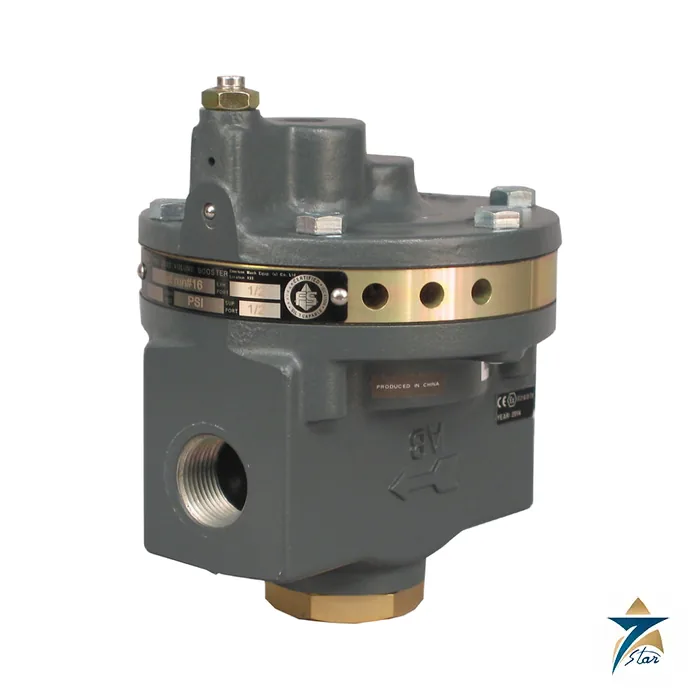
Fisher 2625 volume booster for faster control valve stroking
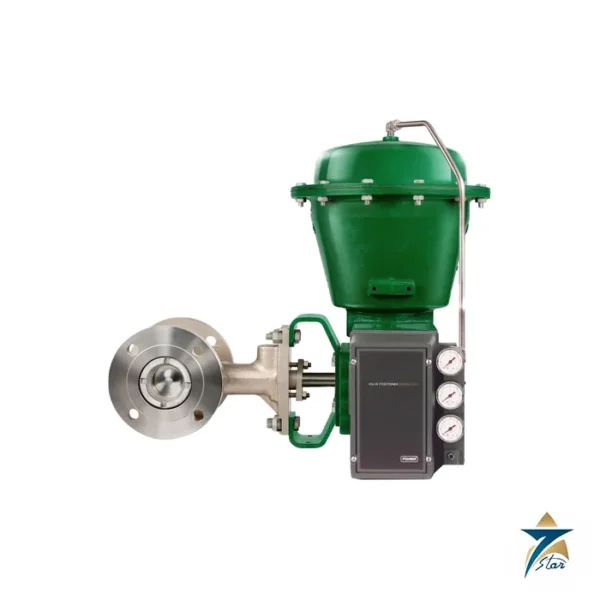
The Fisher 2625 volume booster is a pneumatic accessory that sits between a positioner and the actuator of a throttling control valve and multiplies the air flow available for stroking. The 2625 series is offered as the standard 2625, the 2625SST in stainless steel, and the 2625NS, a nuclear-service version with elastomers chosen for high temperature and radiation. Its job is simple: when the positioner output changes suddenly, the booster supplies the large air volume that a positioner relay alone cannot deliver, so a large actuator moves quickly. Seven Star LLC supplies Fisher 2625 boosters in Oman and the GCC as an independent supplier in Muscat; the details below follow the Fisher product bulletin.
Fisher 2625 technical specifications
| Parameter |
Specification |
| Manufacturer / part number |
Fisher (Emerson) / 2625, 2625SST, 2625NS |
| Function |
Volume booster used with a positioner to increase stroking speed; fixed 1:1 input-to-output pressure ratio |
| Maximum supply pressure |
2.8 bar (40 psig) with diaphragm actuators; 10.3 bar (150 psig) with piston actuators |
| Maximum input signal |
10.3 bar (150 psig) |
| Nominal deadband |
2 % with 2.4 mm exhaust port; 3.5 % with 9.5 mm; 5 % with 12.7 mm (percent of positioner output span) |
| Connections |
Input signal 1/4 NPT; supply and output 3/4 NPT |
| Port diameters |
Supply 9.5 or 12.7 mm; exhaust 2.4 (aluminum only), 9.5 or 12.7 mm |
| Maximum flow coefficient |
Supply Cv 3.74 (9.5 mm) or 4.98 (12.7 mm); exhaust Cv from 0.23 to 3.40 depending on port |
| Body material |
Aluminum or CF8M (cast 316 stainless steel); seat ring brass or S31600 |
| Elastomers |
Standard nitrile; high temperature FKM; low temperature FVMQ; 2625NS EPDM |
| Operating temperature |
Standard −40 to 71 °C; high temperature 0 to 121 °C; low temperature −60 to 65 °C (CUTR approval only); 2625NS −40 to 93 °C |
| Hazardous area |
2625: ATEX Group II Category 2 gas and dust (Ex h IIC Tx Gb, Ex h IIIC Tx Db); Customs Union TP TC 012/2011 |
| Safety classification |
SIL 3 capable, certified by exida (2625 and 2625SST) |
| Weight |
Aluminum 2.3 kg; stainless steel 4.8 kg |
How the 2625 booster responds to a signal change
An integral bypass restriction links the booster input and output. Slow or small signal changes pass straight through the restriction into the actuator, and the booster ports stay closed, so no air is wasted and the positioner keeps its steady-state accuracy. A large, sudden change reaches the booster input diaphragm faster than it reaches the actuator through the restriction. The pressure difference moves the diaphragms to open either the supply port or the exhaust port, whichever reduces the difference, and full supply volume flows to or from the actuator. The port closes again when the input-to-output difference falls back inside the deadband. The soft seats and fixed deadband keep the booster from saturating the positioner relay, a problem that affects boosters without those features.
Bypass restriction adjustment
The bypass restriction screw is the tuning adjustment and must be set for stable operation. It does not change the deadband. If the booster is used for pure on/off control, the restriction is closed fully by turning it clockwise. If precise throttling is the priority, the positioner remains the control element and the booster only assists large moves.
Choosing the 2625 port sizes and construction
- Supply port 9.5 mm or 12.7 mm sets maximum fill Cv (3.74 or 4.98), exhaust port sets the vent speed and the deadband (2, 3.5 or 5 %).
- A small 2.4 mm exhaust port gives the tightest deadband but is available only on the aluminum body.
- Choose aluminum for general use or the 2625SST stainless steel body for corrosive or offshore atmospheres.
- Choose elastomers for the ambient range: nitrile, FKM for hot sites, FVMQ for low temperature, EPDM for the 2625NS.
- Check actuator type: diaphragm actuators limit supply to 2.8 bar, piston actuators allow up to 10.3 bar.
Piping and installation of the 2625
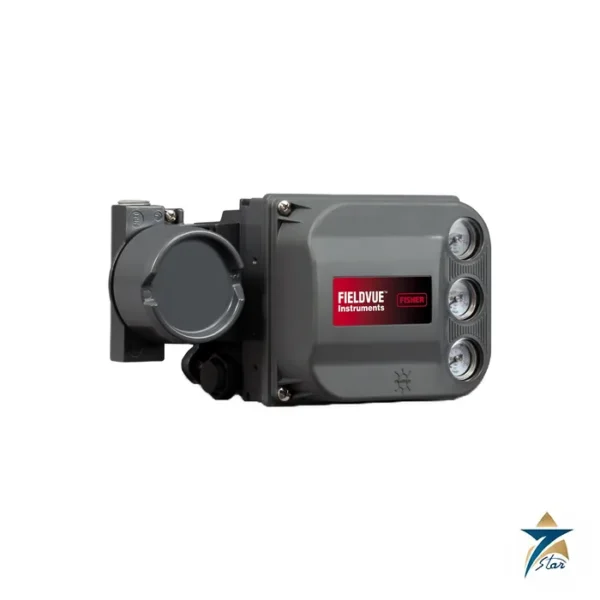
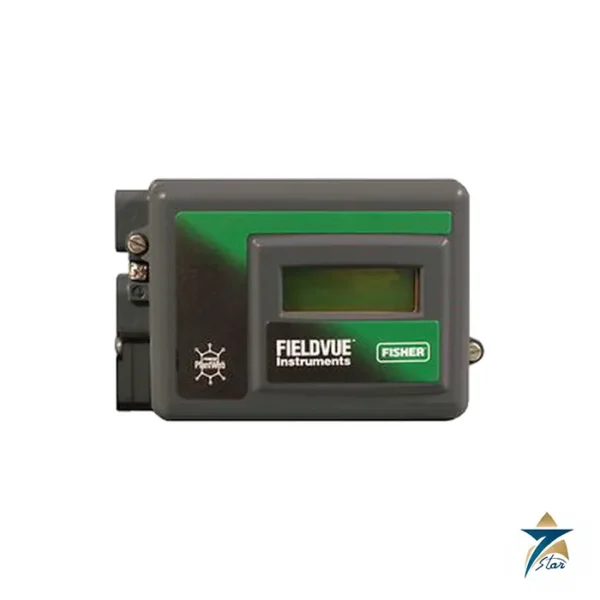
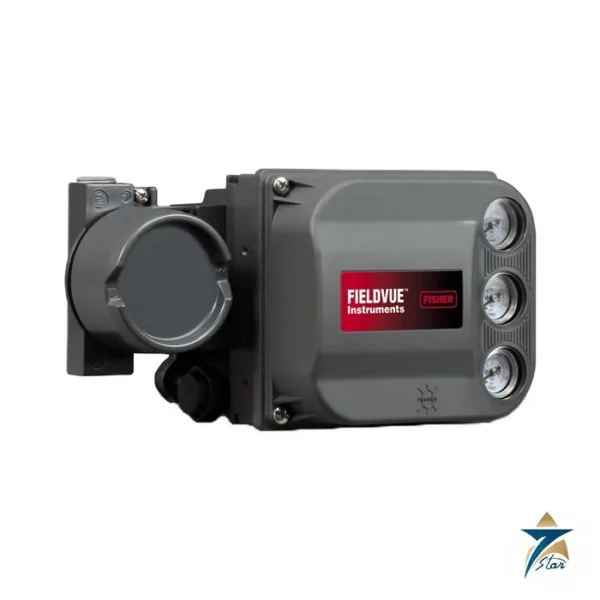
The bulletin recommends piping the positioner and booster from one common supply through a Fisher 67D, 67DR or 95H regulator, with a high-capacity filter such as the 262K upstream. Supply pressure must never exceed the actuator rating, and the air or gas must be clean, dry and oil-free. The booster mounts in the tubing between the positioner output and the actuator. Connectors for diagnostic testing can be fitted to the 2625, 2625SST or 2625NS. Positioner relay flow coefficients quoted in the bulletin show why a booster helps: the FIELDVUE DVC6200 family has a relay flow of about 0.37 Cv on supply, the DVC2000 about 0.13 to 0.19 Cv, and the 3582 positioner about 0.17, against 3.74 to 4.98 Cv for the booster supply port.
Compatible positioners and related Fisher parts
The booster is documented for use with the FIELDVUE DVC6200, DVC6200 SIS, DVC6200f, DVC6200p, DVC6000, DVC6000 SIS and DVC6000f digital valve controllers, the DVC2000, and the Fisher 3570, 3582, 3610J, 3610JP, 3611JP, 3620J, 3620JP and 3621JP positioners. Typical regulators in the supply line are the 67D, 67DR and 95H.
Safety and nuclear service versions
The 2625 and 2625SST are certified for SIS applications and carry the exida mark on the nameplate. The 2625NS uses EPDM parts for high temperature and radiation and is intended for service where oil-free supply air is available. All three can be supplied as safety-related items through the commercial-grade dedication process of 10 CFR 50 Appendix B, and seismic operability testing to 9 g uniaxial is reported in the bulletin.
2625 applications in Oman and the GCC
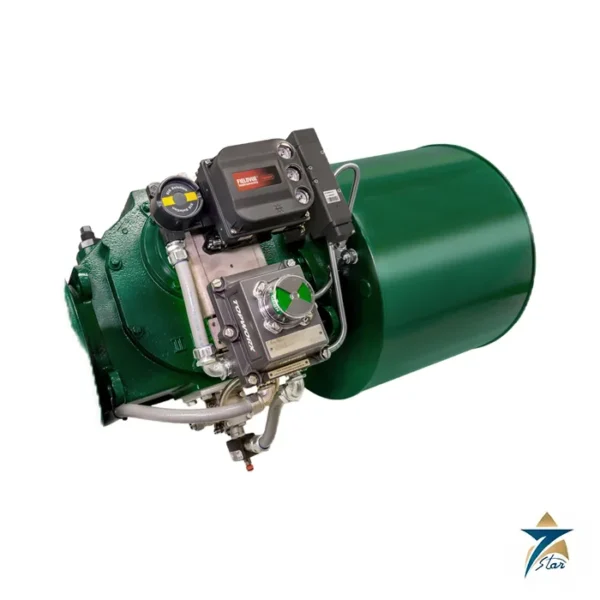
Volume boosters are most useful on large piston actuators and big diaphragm actuators with slow stroking times: anti-surge and recycle valves on gas compressors, large butterfly and ball valve actuators, fast-acting steam bypass and turbine bypass valves in power plants, and emergency depressurising service. In hot, dusty Gulf plants the stainless 2625SST and high-temperature elastomers suit exposed instrument air manifolds, and attention to clean, dry supply air matters because dirt on the soft seats causes leaks and consumption.
Information to send with an RFQ
- Actuator type, size, volume or piston diameter and required stroking time.
- Supply pressure and positioner model.
- Body material preference, supply and exhaust port sizes and elastomer option.
- Ambient temperature range, hazardous-area requirement and SIL need.
- Whether diagnostic test connectors are wanted.
Documents and quotation
The Fisher 2625, 2625SST and 2625NS product bulletin is attached to this page as a datasheet. Send your actuator and positioner details and we will confirm the matching configuration and prepare a quotation.






















Reviews
There are no reviews yet.