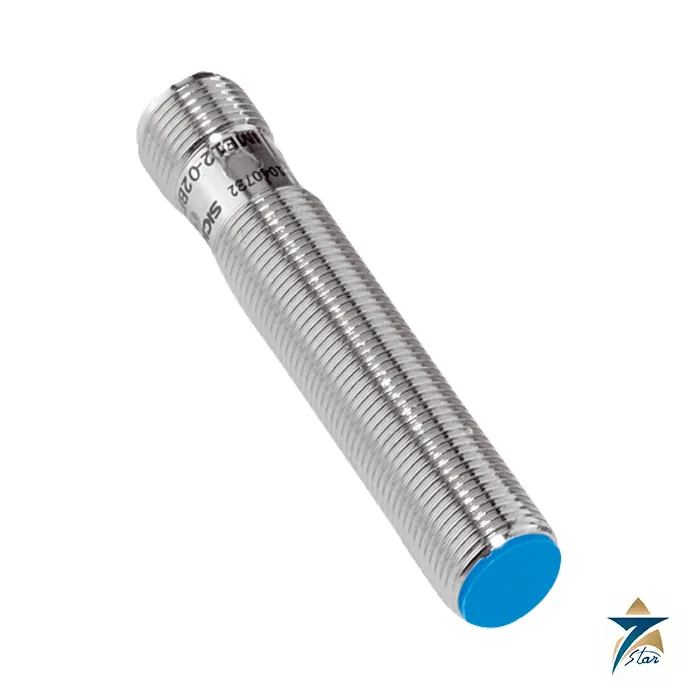
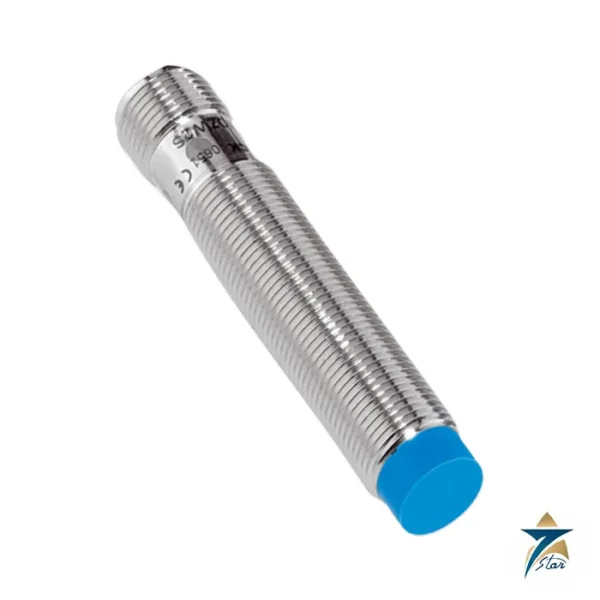
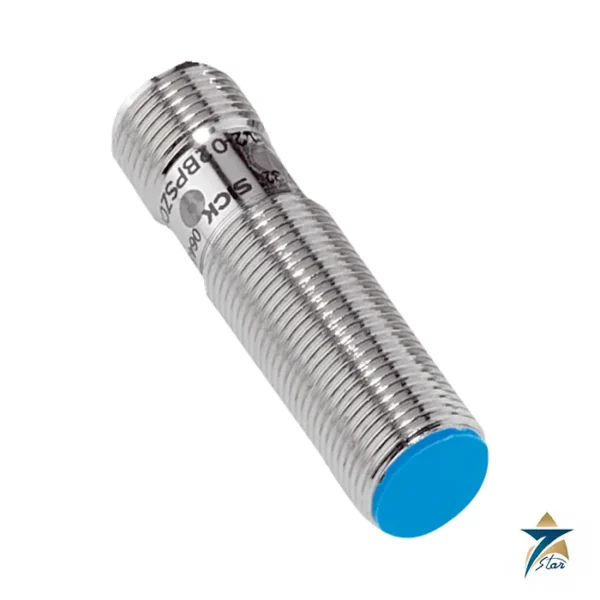
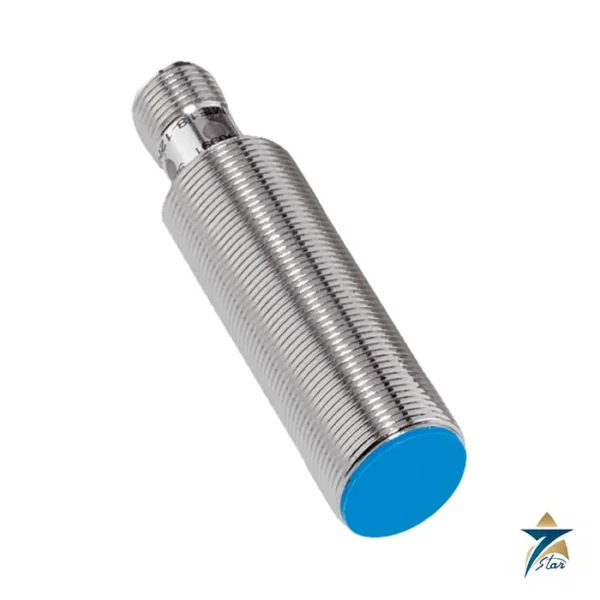
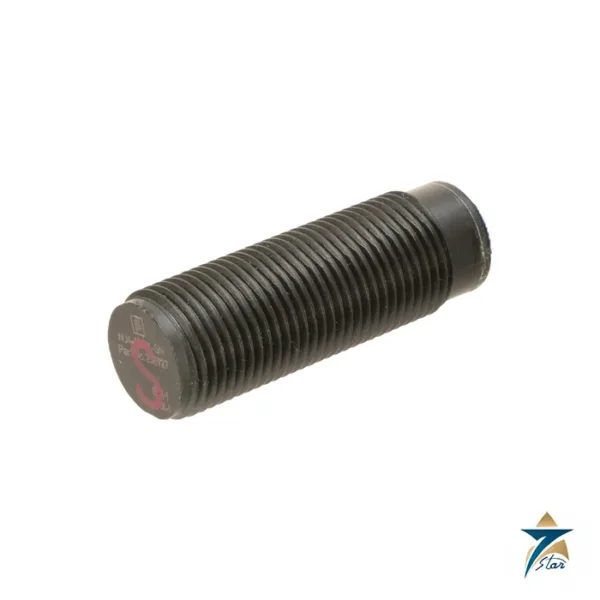
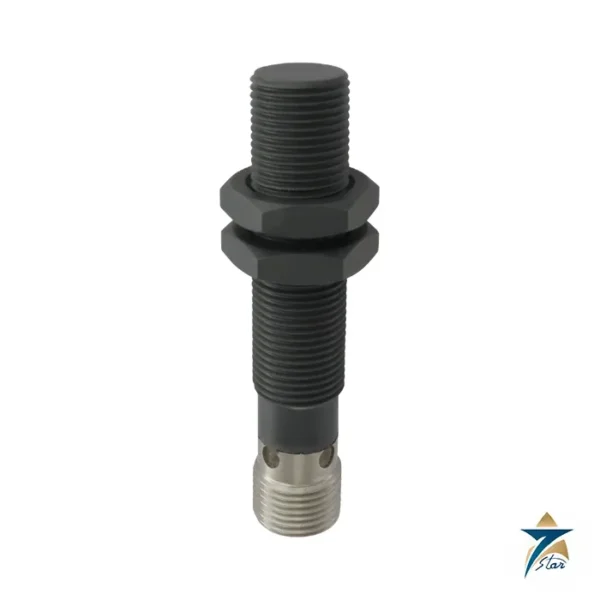
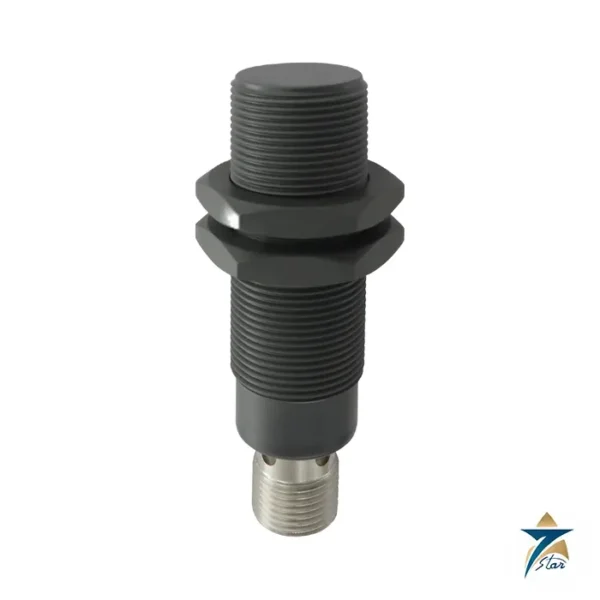
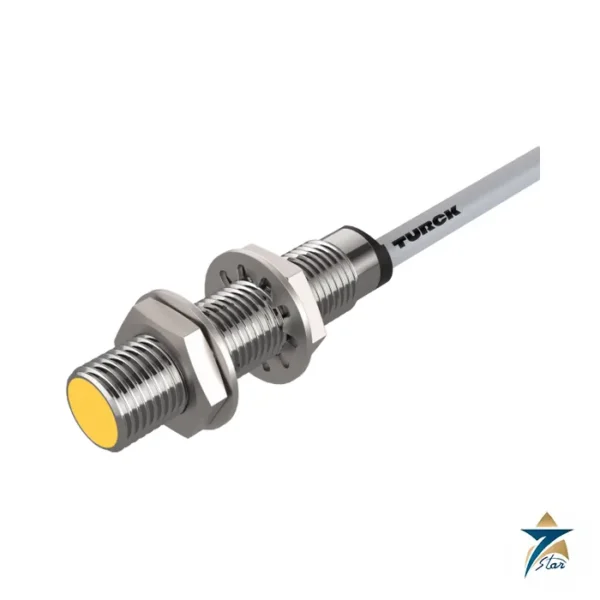
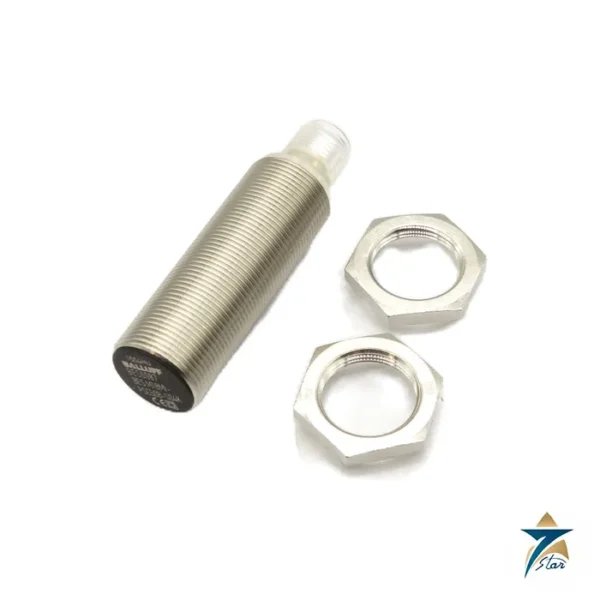
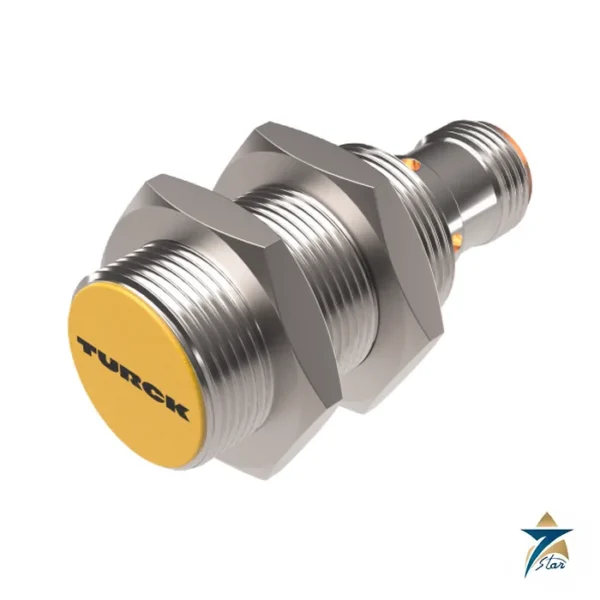
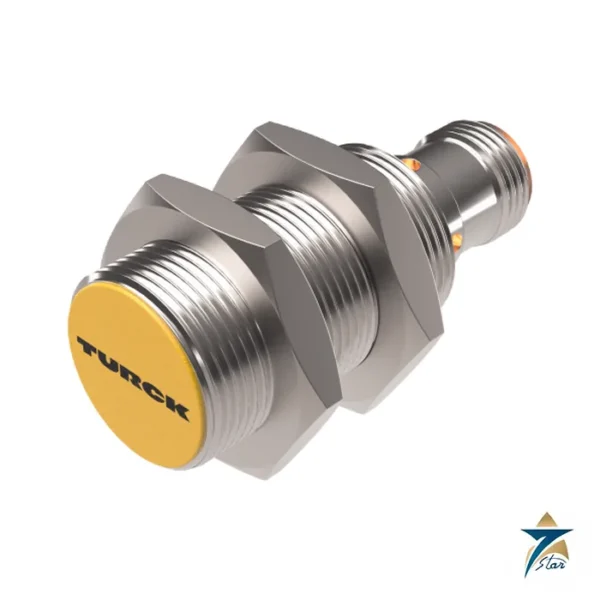
IME12-04BPPZC0S is a SICK IME inductive proximity sensor (part no. 1060232) with standard design housing, threaded M12 x 1 (Ø 12 mm), for non-contact detection of metal targets. The nominal sensing range Sn is 4 mm (safe sensing range Sa 3.24 mm), mounting is flush, and the output is PNP with complementary and DC 4-wire wiring, connected through male connector M12, 4-pin.
Inductive switching with the IME12-04BPPZC0S
Reduction factors for other metals, as listed in the data sheet: Note The values are reference values which may vary; St37 steel (Fe) 1; Stainless steel (V2A, 304) Approx. 0.8; Aluminum (Al) Approx. 0.45; Copper (Cu) Approx. 0.4. Flush mounting lets the sensing face sit level with the surrounding metal, and non-flush types need free metal-free space around the face; keep to the installation distances in the data sheet. The safe sensing range Sa is the distance at which the switching state is guaranteed over temperature and voltage tolerance, so plan the mechanics around Sa rather than around the optimistic nominal value.
The sensor is a flush type: it can be embedded in metal up to the sensing face. Switching frequency 2,000 Hz, continuous current up to ≤ 200 mA; housing brass, nickel-plated (length 65 mm, thread length 48 mm); sensing face plastic, PA 66. Supplied: mounting nut, brass, nickel-plated (2x).
Technical specifications
| Parameter |
Specification |
| Type code |
IME12-04BPPZC0S |
| Part number |
1060232 |
| EAN |
4047084263507 |
| Product family |
IME |
| Housing |
Metric |
| Housing material |
Standard design |
| Thread size |
M12 x 1 |
| Diameter |
Ø 12 mm |
| Sensing range Sn |
4 mm |
| Safe sensing range Sa |
3.24 mm |
| Installation type |
Flush |
| Switching frequency |
2,000 Hz |
| Connection type |
Male connector M12, 4-pin |
| Switching output |
PNP |
| Switching output detail |
PNP |
| Output function |
Complementary |
| Electrical wiring |
DC 4-wire |
| Enclosure rating |
IP67 |
| Items supplied |
Mounting nut, brass, nickel-plated (2x) |
| Supply voltage |
10 V DC … 30 V DC |
| Ripple |
≤ 10 % |
| Voltage drop |
≤ 2 V |
| Time delay before availability |
≤ 100 ms |
| Hysteresis |
5 % … 15 % |
| Reproducibility |
≤ 2 % ; |
| Temperature drift (of Sr) |
± 10 % |
| EMC |
According to EN 60947-5-2 |
| Continuous current Ia |
≤ 200 mA |
| No load current |
≤ 10 mA |
| Short-circuit protection |
Yes |
| Power-up pulse protection |
Yes |
| Shock and vibration resistance |
30 g, 11 ms/10 Hz … 55 Hz, 1 mm |
| Ambient operating temperature |
–25 °C … +75 °C |
| Housing material |
Brass, nickel-plated |
| Sensing face material |
Plastic, PA 66 |
| Housing length |
65 mm |
| Thread length |
48 mm |
| Tightening torque, max. |
≤ 12 Nm |
| MTTFD |
1,893 years |
| DCavg |
0 % |
| St37 steel (Fe) |
1 |
| Stainless steel (V2A, 304) |
Approx. 0.8 |
| Aluminum (Al) |
Approx. 0.45 |
| Copper (Cu) |
Approx. 0.4 |
| Brass (Br) |
Approx. 0.4 |
| B |
24 mm |
| C |
12 mm |
| D |
12 mm |
| F |
32 mm |
| Declarations and certificates in the data sheet |
EU declaration of conformity; UK declaration of conformity; ACMA declaration of conformity; Moroccan declaration of conformity; China RoHS; China Compulsory Product Certification (CCC) exempt; cULus certificate |
Type code IME12-04BPPZC0S and part number 1060232
The type IME12-04BPPZC0S encodes thread size and nominal range in its first digits. Variants of the same body differ in output polarity, in normally-open or complementary function and in connector, each under its own part number; for IME12-04BPPZC0S the number is 1060232.
Neighbouring versions of this family that SICK lists as active, with their part numbers:
- IME12-04BPPZC0K (part no. 1060546)
- IME12-04BPSZC0S (part no. 1040764) – Electrical wiring: DC 3-wire, Output function: NO
- IME12-04BPSZC0K (part no. 1040763) – Electrical wiring: DC 3-wire, Output function: NO
- IME12-04BPOZC0S (part no. 1040768) – Electrical wiring: DC 3-wire, Output function: NC
- IME12-04BPSZC0SS71 (part no. 1115941) – Electrical wiring: DC 3-wire, Output function: NO
Mounting, wiring and replacement notes
The unit runs from 10 V DC … 30 V DC and carries IP67 protection; ambient temperature in operation is –25 °C … +75 °C. Maximum tightening torque: ≤ 12 Nm. Use the nuts supplied and tighten to the stated torque; add a thread lock only if the application is subject to heavy vibration. Test with the real target material, because reduction factors can move the switching distance more than expected.
Typical applications for an M12 flush inductive sensor
The IME12-04BPPZC0S detects metal targets without contact, which makes it a common choice for position and presence checks on machines and conveyors. Typical uses include end-of-travel detection on cylinders and slides, counting metal parts or carriers on a conveyor, confirming that a clamp or gate has closed, and speed or rotation monitoring by sensing bolt heads or teeth on a rotating part. Because it is a flush type, it can be recessed into a steel machine frame, which protects the sensing face from knocks.
The complementary output gives both a normally open and a normally closed signal from one sensor. This is useful where the controller should see one signal change state while the other changes the opposite way, so a broken wire or a failed input can be recognised as a mismatch rather than going unnoticed.
Selection and integration points
Choose this type when the controller input card is sourcing PNP, the supply is within the stated DC range and a 4-wire complementary signal is wanted. If only a single normally open contact is needed, the 3-wire variants listed above may be simpler to wire. Check the target material against the reduction factors on this page: a target in stainless steel, aluminium, brass or copper must be placed closer to the face than a mild steel target to switch reliably. Design the mounting around the safe sensing range so the switching point remains stable over the full temperature range.
For speed or counting duties, compare the expected pulse rate with the switching frequency in the table, and allow for the hysteresis when the target approaches and leaves slowly.
Installation practice
Use the two nuts supplied to set the sensor depth, and tighten no further than the stated maximum torque, since the threaded body can be damaged by overtightening. Route the M12 cable away from motor and drive power cables, and provide strain relief so that the connector is not loaded by cable movement. On moving machinery, protect the sensor from direct impact by the target and leave a small clearance so that wear on guides does not bring the target into contact with the sensing face.
Site conditions in Oman and the GCC
The IP67 rating and nickel-plated brass housing suit most indoor plant areas in Oman, including packaging, food and general manufacturing halls. In hot outdoor positions or near ovens, check the actual ambient temperature against the operating range on this page. On coastal sites, where salt air is present, keep the connector fully tightened and inspect it during routine maintenance. Fine dust and metal chips can settle on the face; this does not normally block an inductive sensor, but heavy build-up of metal chips can cause false switching, so keep the sensing area clean.
Documents and quotation
For IME12-04BPPZC0S the manufacturer’s data sheet (part no. 1060232) is attached as a PDF copy; read it together with your control drawing before you commit to the order. A quotation needs only the part number, the quantity and the delivery destination; the RFQ form takes all three. Related items are listed under Inductive Proximity Sensors. We suggest a last check of the output type, plug and ratings against your site documents before the order is placed; the data sheet governs.








Reviews
There are no reviews yet.