- Automation & ControlView all 3,124 products
- Automation Accessories
- AC Drives
- PLC & I/O Cards
- Industrial Communications
- Vibration Monitoring
- Isolator & Barrier
- Controllers & Data Acquisition
- Safety Switches & Guard Locking
- Encoders
- Motor Soft Starters
- CCTV & Security
- Pneumatic Cylinders
- HMI Displays
- Servo Drives
- Industrial Computers
- Machine Vision
- Automation Software
- Robotics
Brand: Schneider Electric
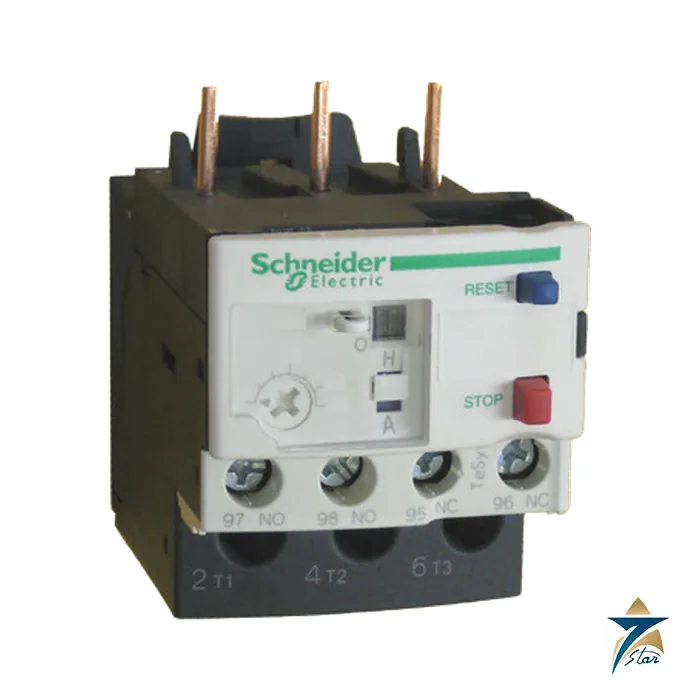
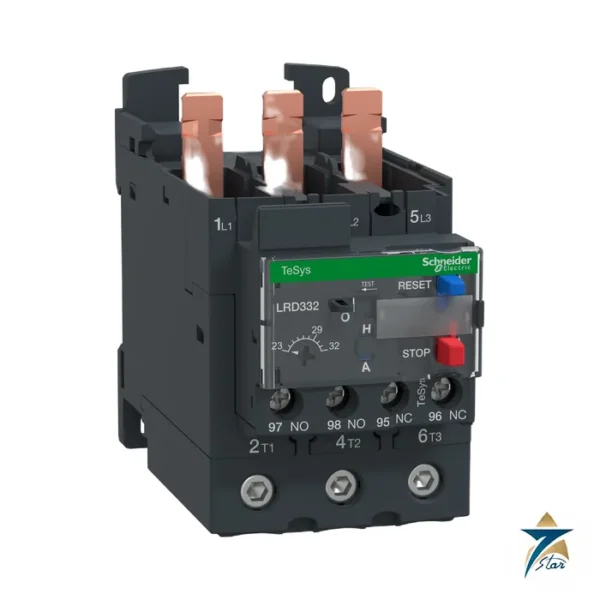
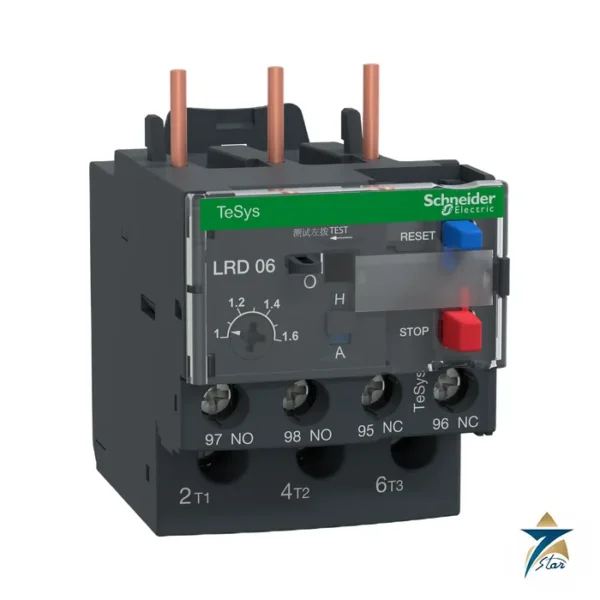
Schneider Electric TeSys LRD Thermal Overload Relay
Description
Overview
The Schneider Electric LRD thermal overload relay protects three-phase motor circuits against sustained overload current, phase failure, and phase unbalance, and is designed to mount directly onto a TeSys D LC1D contactor to form a complete direct-on-line motor starter. Covering thermal setting ranges from roughly 0.1 A up to 38 A across the LRD range at class 10A tripping, the Schneider Electric LRD is the standard overload protection device specified wherever a TeSys D contactor is used, which in practice means the majority of motor starter panels built across Oman and the GCC.
Seven Star LLC supplies the Schneider Electric LRD range on request, with manufacturer documentation and technical support for engineering, procurement, and maintenance teams across Oman and the wider GCC. Seven Star LLC sources each unit on request against the exact Schneider Electric reference, so buyers receive overload relays that match the specified setting range.
Operating Principle of the Schneider Electric LRD Relay
The Schneider Electric LRD works on a differential bimetallic principle: motor current flows through heater elements wound around bimetal strips on each of the three phases, and sustained overcurrent heats those strips at a rate proportional to the square of the current. As the bimetal strips deflect, they drive a trip mechanism that opens the contactor coil circuit through the relay’s own 1 NO + 1 NC auxiliary contacts, stopping the motor before winding insulation is damaged by sustained thermal stress. Because the three phases are compared differentially, the Schneider Electric LRD also detects phase failure and phase unbalance conditions that a simple single-phase overcurrent device would miss entirely.
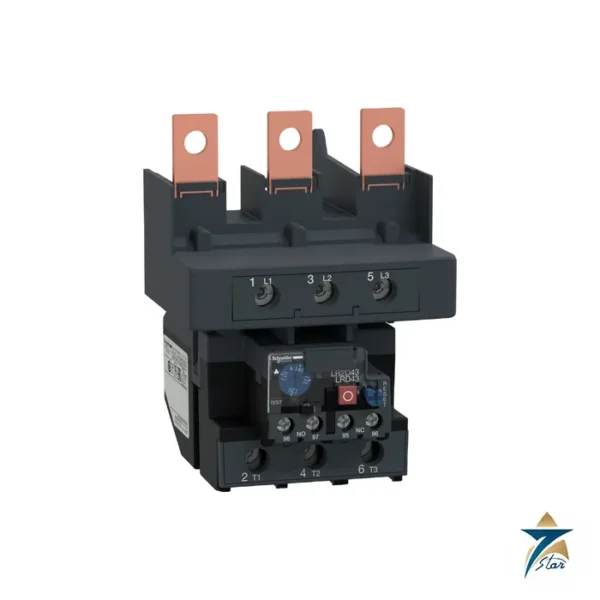
A front-mounted thermal adjustment dial lets the technician set the trip current to match the actual full-load current of the connected motor, while a manual/automatic reset selector and a test button allow trip verification without waiting for an actual fault condition. On the Schneider Electric LRD, once tripped, the relay latches until manually reset or, in automatic mode, resets itself once the bimetal strips cool – giving maintenance staff clear visibility of which motor circuit faulted and why, rather than unexplained trip at the upstream breaker.
Engineering Design of the Schneider Electric LRD
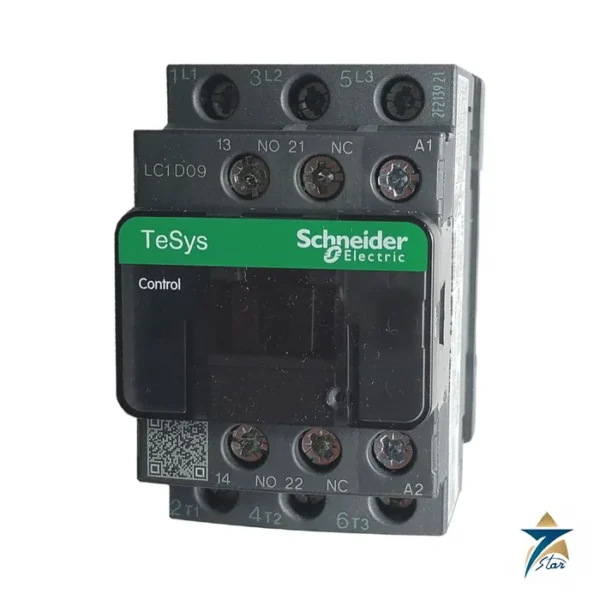
When specifying protection for a TeSys D starter, the Schneider Electric LRD is a direct clip-on accessory to the TeSys D LC1D contactor body, sharing the same physical footprint and requiring no separate DIN-rail space or additional wiring beyond the motor circuit itself. The molded thermoplastic housing carries the thermal adjustment dial, reset/stop buttons, a trip flag indicator, and screw-clamp terminals for the 1 NO + 1 NC signaling contacts, all accessible from the front face without removing the unit from the contactor.
Because the LRD mounts directly beneath the LC1D power poles, current passes through the relay’s heater elements without any additional interconnecting wiring, which both simplifies panel assembly and removes a potential point of connection failure compared with a remotely wired overload device. The relay is rated for use with 9–38 A TeSys D contactors and is multi-standard certified across IEC, UL, CSA, CCC, EAC, and marine approvals, with Green Premium RoHS/REACH compliance for projects with environmental procurement requirements.
Key Features
The Schneider Electric LRD combines simple mechanical protection with the flexibility panel builders need across a wide range of motor sizes:
- Covers thermal setting ranges from approximately 0.1 A to 38 A across the LRD range at class 10A tripping.
- Clips directly onto TeSys D LC1D contactors with no separate mounting space or additional wiring required.
- Differential phase design detects phase failure and phase unbalance in addition to standard overload conditions.
- Manual/automatic reset selector and dedicated test button support both operational and commissioning needs.
- Built-in 1 NO + 1 NC signaling contacts report trip state directly to the control and alarm system.
- Front-mounted thermal adjustment dial allows precise trip current calibration to the motor’s actual full-load rating.
- Multi-standard certified across IEC, UL, CSA, CCC, EAC, and marine approvals for cross-market projects.
- Green Premium RoHS/REACH compliant for facilities with environmental procurement policies.
Industrial Applications
The Schneider Electric LRD is fitted to the overwhelming majority of direct-on-line motor starters across Oman and the GCC, protecting pump, fan, and compressor motors in district cooling plants, commercial buildings, and RO desalination facilities around Muscat where a single tripped overload relay can prevent an expensive motor rewind. Because it mounts directly to the LC1D contactor already specified on most panels, it is effectively the default overload device wherever TeSys D is used, spanning water utility, HVAC, and general industrial applications alike.
Working closely with plant engineers in the region, Seven Star LLC distributes the LRD range to EPC contractors, panel builders, and plant maintenance departments serving the Sohar and Salalah economic zones, where reliable motor protection directly reduces unplanned downtime in petrochemical and logistics operations. The relay is equally common in hospital and hospitality electrical rooms across the Sultanate, protecting chiller and fresh-air handling unit motors where a nuisance trip or an undetected overload both carry real operational cost.
Technical Specifications
Key parameters for the Schneider Electric LRD thermal overload relay range are summarized below.
| Parameter | Specification |
|---|---|
| Model | LRD range (TeSys LRD, e.g. LRD08, LRD10, LRD21, LRD32) |
| Thermal Setting Range | Approx. 0.1 A to 38 A (model dependent) |
| Tripping Class | Class 10A |
| Rated Voltage | Up to 690 V AC |
| Auxiliary Contacts | 1 NO + 1 NC signaling contacts |
| Reset Mode | Manual or automatic, selectable |
| Protection Type | Overload, phase failure, phase unbalance |
| Mounting | Direct clip-on to TeSys D LC1D contactor |
| Compatible Contactors | TeSys D LC1D 9–38 A range |
| Standards | IEC, UL, CSA, CCC, EAC, Marine |
| Environmental Compliance | Green Premium, RoHS/REACH |
Request a Quote for Schneider Electric TeSys LRD Thermal Overload Relay
Panel builders and facility engineers in Oman and the GCC can request a formal RFQ for the Schneider Electric LRD thermal overload relay from Seven Star LLC, with lead time confirmed at quotation and full technical datasheets available on request. With fast quotation turnaround and technical support, our instrumentation and automation division supports correct thermal sizing and starter configuration for every LRD order – contact Seven Star LLC today to confirm availability and lead time.
Other Models in the Schneider Electric TeSys Motor Control Range
Seven Star LLC supplies models from the Schneider Electric TeSys Motor Control range in Oman and the GCC. Compare the related models below and request a quote for the one that matches your application.
| Model | Category | |
|---|---|---|
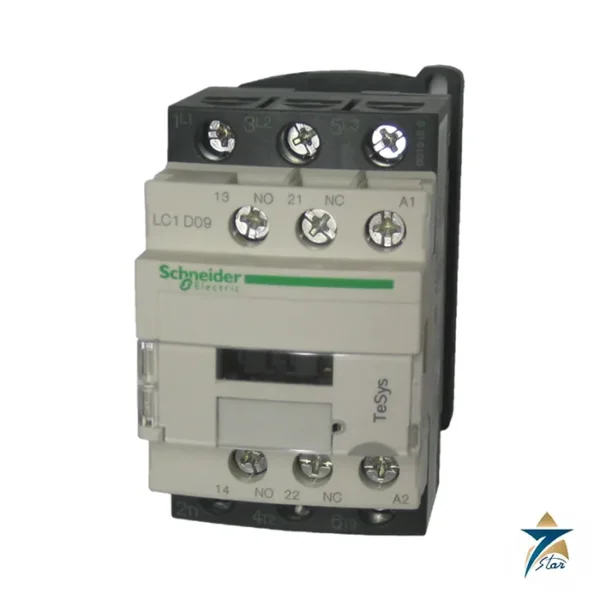
| Schneider Electric TeSys Deca LC1D Contactor | Contactors & Overload Relays | View details |
| Schneider Electric TeSys D LC1D Contactor | Contactors & Overload Relays | View details |
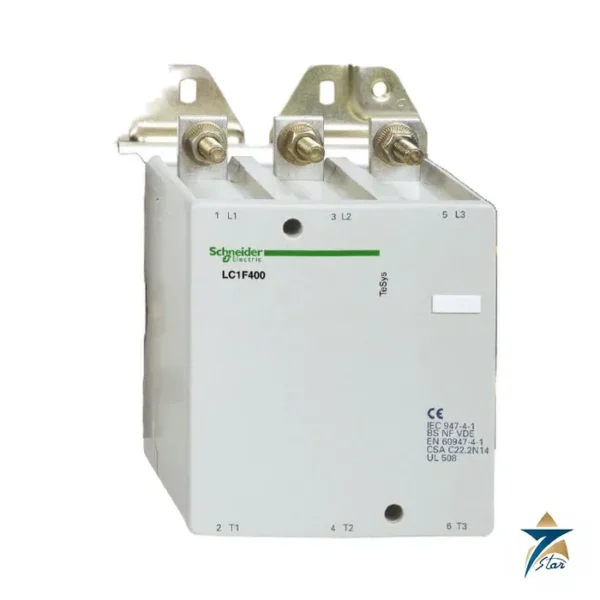
| Schneider Electric TeSys F LC1F400 Contactor | Contactors & Overload Relays | View details |
| Schneider Electric TeSys Giga LC1G High-Power Contactor | Contactors & Overload Relays | View details |
| Schneider Electric TeSys LRD Thermal Overload Relay | Contactors & Overload Relays | You are viewing this model |
| Schneider Electric TeSys Ultra Overload Relay | Contactors & Overload Relays | View details |
| Schneider Electric TeSys Vario Disconnect Switch | Circuit Breakers | View details |
| Schneider Electric TeSys Q Motor Disconnect Switch | Circuit Breakers | View details |
| Schneider Electric TeSys Track Condition Monitoring System | Motor Soft Starters | View details |
Related Products
- Schneider Electric TeSys F LC1F400 Contactor
- Schneider Electric TeSys D LC1D Contactor
- Schneider Electric TeSys Track Condition Monitoring System
- Schneider Electric Altistart 480 ATS480D62Y – Soft Starter (62 A, 208–690 V AC)
- ABB AF16Z-30-10-30 3-Pole Contactor 24VDC (1SBL176001R3010)
- Schneider Electric TeSys Vario Disconnect Switch
See also: Schneider Electric LRE02 EasyPact TVS 0.16-0.25 A Overload Relay; Schneider Electric LRE10 EasyPact TVS 4-6 A Overload Relay.
Datasheets & Documents
- manual Schneider Electric TeSys LRD Thermal Overload Relay Instruction Sheet Download
Reviews (0)
How would you rate this product? Cancel reply
About brand
Schneider Electric is the French group for energy management and industrial automation: low and medium voltage switchgear and circuit breakers, motor control, drives, PLCs, power monitoring, UPS systems and building management. Its history goes back to 1836, when the brothers Adolphe and Eugène Schneider took over the iron and steel works at Le Creusot in Burgundy. Over the 20th century the company left steel and heavy engineering and became an electrical group through acquisitions such as Merlin Gerin, Télémécanique, Square D and Modicon. Its head office is in Rueil-Malmaison near Paris, and its shares are listed on Euronext Paris.
Schneider Electric company profile
| Origins | 1836, Le Creusot, France: Adolphe and Eugène Schneider take over the Le Creusot foundry |
|---|---|
| Headquarters | Rueil-Malmaison (Paris region), France |
| Ownership | Public company listed on Euronext Paris |
| Key acquisitions | Télémécanique (1988), Square D (1991), Merlin Gerin (1992), Modicon (1997), APC (2007), Invensys (2014); majority owner of AVEVA software |
| Brand names still in use | Acti9, ComPacT and MasterPacT breakers, TeSys motor control, Altivar drives, Altistart soft starters, Modicon PLCs, Harmony control components, PowerLogic and Easergy protection and metering, APC UPS, EcoStruxure software platform |
| Product families | Low voltage distribution, medium voltage switchgear and protection relays, motor control and drives, PLCs and HMIs, power meters, UPS and cooling, enclosures, building automation and energy software |
Milestones
- 1836: The Schneider brothers acquire the Le Creusot works; the business grows in steel, locomotives and heavy engineering.
- 1975: First investment in Merlin Gerin, a French maker of electrical distribution equipment.
- 1988–1992: Télémécanique, Square D (USA) and Merlin Gerin join the group, making it an electrical specialist.
- 1997: Modicon, the company behind the first programmable logic controller, joins the group.
- 1999: The group takes the name Schneider Electric.
- 2007 and 2014: APC (UPS and data centre power) and Invensys (process automation) are acquired.
Choosing Schneider Electric breakers and motor control
Circuit breakers are chosen by current and breaking capacity. Acti9 miniature circuit breakers (iC60, C120) protect final circuits up to 125 A. ComPacT NSX molded case breakers cover about 16 to 630 A, and the letter after the frame size sets the breaking capacity: B, F, N, H, S, L from lowest to highest. MasterPacT air circuit breakers are used as main incomers on large switchboards. For motors, a TeSys contactor with an LRD overload relay or a GV2 motor circuit breaker suits direct starting, an Altistart soft starter reduces starting current, and an Altivar drive controls speed. The breaking capacity must always be at least the prospective short-circuit current at the point of installation.
Where Schneider Electric products are used
In Oman and the GCC, Schneider Electric equipment is found in main and sub-main switchboards of commercial and residential buildings, motor control centres in water, oil and gas and industrial plants, substations protected by Sepam and Easergy relays, data centres powered by Galaxy and APC UPS systems, and buildings controlled by EcoStruxure Building Operation.
APC by Schneider Electric: UPS and critical power
Since 2007, APC has been part of Schneider Electric and is now its product brand for uninterruptible power supplies, replacement batteries, battery packs, network management cards and rack power distribution. Our APC catalogue covers Smart-UPS line-interactive and on-line models, Easy UPS On-Line, the modular Symmetra LX, RM and PX ranges, Silcon three-phase systems and their spare part kits, and the RBC cartridges that keep them running. Schneider Electric breakers, drives and PLCs can be quoted together with APC UPS systems in one request.
Schneider Electric products we list
| Family | Examples |
|---|---|
| Circuit breakers | Acti9 iC60N, C120N, NSX100F, NSX250N, NSX630, EasyPact EZC, MasterPacT MTZ1, MasterPacT NW |
| Motor control | TeSys Deca LC1D, TeSys F, LRD overload relay, GV2ME08, Altistart 22, Altistart 480 |
| Drives | Altivar 12, Altivar 320, ATV340, Altivar Process 630, ATV930, Lexium 32 servo |
| PLCs, HMIs and relays | Modicon M221, M241, M580 BMEP582040, Zelio Logic, Magelis HMISTU655 |
| Protection, metering and power | Sepam series 20, Easergy P3U30, MiCOM P139, PM5560, iEM3255, Galaxy VS UPS |
Ordering Schneider Electric products: what we need
Send the commercial reference from the label (for example LC1D18M7 or ATV320U22N4C). For breakers, confirm the rated current, number of poles, breaking capacity and trip unit. For contactors, give the coil voltage. For drives, give the motor power and supply voltage. APC products are listed on their own brand page.
Facts checked against Schneider Electric's published company history, October 2026.
Browse Schneider Electric products by category: Circuit Breaker, Electrical & Power Modules, AC Drives, PLC & I/O Cards, Metering Systems, UPS and Batteries.
FAQ
Questions about the Schneider Electric TeSys LRD Thermal Overload Relay
Answers from our engineering team on installation, compatibility and integration.
01What does the Schneider Electric LRD thermal overload relay protect against?
The LRD protects three-phase motor circuits against sustained overload current, phase failure, and phase unbalance by monitoring current through bimetallic heater elements on each phase and tripping before winding damage occurs.
02Does the LRD require separate wiring or mounting space?
No. The LRD clips directly onto a TeSys D LC1D contactor and carries motor current straight through its heater elements, requiring no separate DIN-rail space or additional interconnecting wiring.
03Which contactors is the LRD compatible with?
The LRD range is designed to mount directly on TeSys D LC1D contactors from 9 A up to 38 A, forming a complete direct-on-line motor starter assembly.
04Can the LRD be reset automatically after a trip?
Yes. The LRD includes a manual/automatic reset selector, so it can either latch until manually reset by an operator or reset itself automatically once the bimetal strips have cooled.
05Is Seven Star LLC an experienced supply partner for Schneider Electric products?
Yes, Seven Star LLC is an experienced supplier of Schneider Electric in Oman and the GCC, supplying genuine LRD thermal overload relays on request with manufacturer documentation and technical support.


Reviews
There are no reviews yet.