
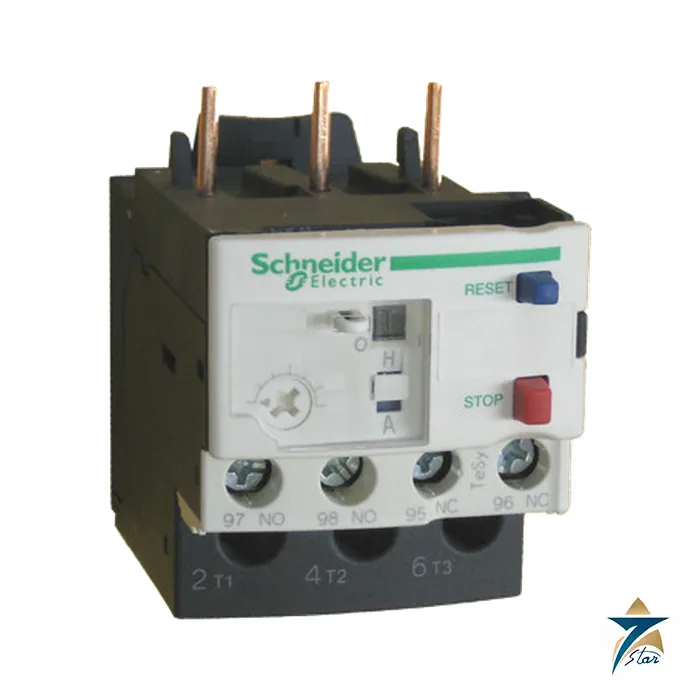
The Schneider Electric LRD thermal overload relay protects three-phase motor circuits against sustained overload current, phase failure, and phase unbalance, and is designed to mount directly onto a TeSys D LC1D contactor to form a complete direct-on-line motor starter. Covering thermal setting ranges from roughly 0.1 A up to 38 A across the LRD range at class 10A tripping, the Schneider Electric LRD is the standard overload protection device specified wherever a TeSys D contactor is used, which in practice means the majority of motor starter panels built across Oman and the GCC.
Seven Star LLC supplies the Schneider Electric LRD range on request, with manufacturer documentation and technical support for engineering, procurement, and maintenance teams across Oman and the wider GCC. Seven Star LLC sources each unit on request against the exact Schneider Electric reference, so buyers receive overload relays that match the specified setting range.
The Schneider Electric LRD works on a differential bimetallic principle: motor current flows through heater elements wound around bimetal strips on each of the three phases, and sustained overcurrent heats those strips at a rate proportional to the square of the current. As the bimetal strips deflect, they drive a trip mechanism that opens the contactor coil circuit through the relay’s own 1 NO + 1 NC auxiliary contacts, stopping the motor before winding insulation is damaged by sustained thermal stress. Because the three phases are compared differentially, the Schneider Electric LRD also detects phase failure and phase unbalance conditions that a simple single-phase overcurrent device would miss entirely.
A front-mounted thermal adjustment dial lets the technician set the trip current to match the actual full-load current of the connected motor, while a manual/automatic reset selector and a test button allow trip verification without waiting for an actual fault condition. On the Schneider Electric LRD, once tripped, the relay latches until manually reset or, in automatic mode, resets itself once the bimetal strips cool – giving maintenance staff clear visibility of which motor circuit faulted and why, rather than unexplained trip at the upstream breaker.
When specifying protection for a TeSys D starter, the Schneider Electric LRD is a direct clip-on accessory to the TeSys D LC1D contactor body, sharing the same physical footprint and requiring no separate DIN-rail space or additional wiring beyond the motor circuit itself. The molded thermoplastic housing carries the thermal adjustment dial, reset/stop buttons, a trip flag indicator, and screw-clamp terminals for the 1 NO + 1 NC signaling contacts, all accessible from the front face without removing the unit from the contactor.
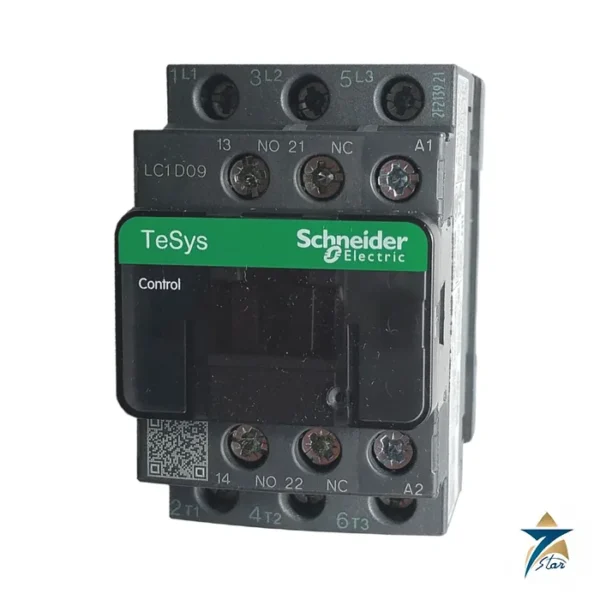
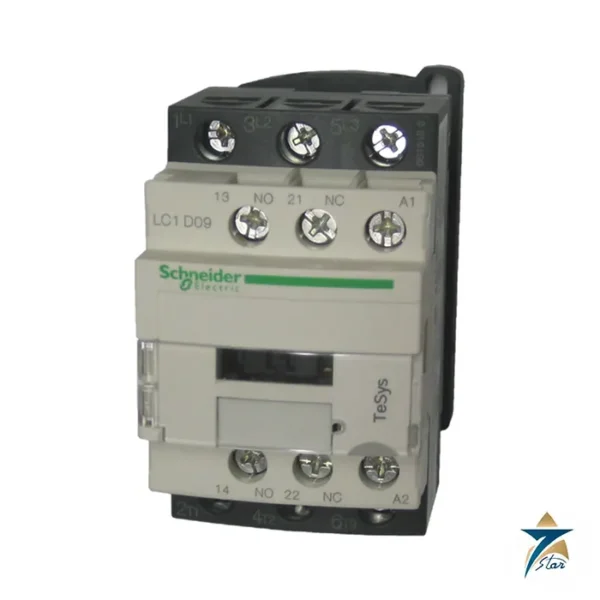
Because the LRD mounts directly beneath the LC1D power poles, current passes through the relay’s heater elements without any additional interconnecting wiring, which both simplifies panel assembly and removes a potential point of connection failure compared with a remotely wired overload device. The relay is rated for use with 9–38 A TeSys D contactors and is multi-standard certified across IEC, UL, CSA, CCC, EAC, and marine approvals, with Green Premium RoHS/REACH compliance for projects with environmental procurement requirements.
The Schneider Electric LRD combines simple mechanical protection with the flexibility panel builders need across a wide range of motor sizes:
The Schneider Electric LRD is fitted to the overwhelming majority of direct-on-line motor starters across Oman and the GCC, protecting pump, fan, and compressor motors in district cooling plants, commercial buildings, and RO desalination facilities around Muscat where a single tripped overload relay can prevent an expensive motor rewind. Because it mounts directly to the LC1D contactor already specified on most panels, it is effectively the default overload device wherever TeSys D is used, spanning water utility, HVAC, and general industrial applications alike.
Working closely with plant engineers in the region, Seven Star LLC distributes the LRD range to EPC contractors, panel builders, and plant maintenance departments serving the Sohar and Salalah economic zones, where reliable motor protection directly reduces unplanned downtime in petrochemical and logistics operations. The relay is equally common in hospital and hospitality electrical rooms across the Sultanate, protecting chiller and fresh-air handling unit motors where a nuisance trip or an undetected overload both carry real operational cost.
Key parameters for the Schneider Electric LRD thermal overload relay range are summarized below.
| Parameter | Specification |
|---|---|
| Model | LRD range (TeSys LRD, e.g. LRD08, LRD10, LRD21, LRD32) |
| Thermal Setting Range | Approx. 0.1 A to 38 A (model dependent) |
| Tripping Class | Class 10A |
| Rated Voltage | Up to 690 V AC |
| Auxiliary Contacts | 1 NO + 1 NC signaling contacts |
| Reset Mode | Manual or automatic, selectable |
| Protection Type | Overload, phase failure, phase unbalance |
| Mounting | Direct clip-on to TeSys D LC1D contactor |
| Compatible Contactors | TeSys D LC1D 9–38 A range |
| Standards | IEC, UL, CSA, CCC, EAC, Marine |
| Environmental Compliance | Green Premium, RoHS/REACH |
Panel builders and facility engineers in Oman and the GCC can request a formal RFQ for the Schneider Electric LRD thermal overload relay from Seven Star LLC, with lead time confirmed at quotation and full technical datasheets available on request. With fast quotation turnaround and technical support, our instrumentation and automation division supports correct thermal sizing and starter configuration for every LRD order – contact Seven Star LLC today to confirm availability and lead time.
Seven Star LLC supplies models from the Schneider Electric TeSys Motor Control range in Oman and the GCC. Compare the related models below and request a quote for the one that matches your application.
| Model | Category | |
|---|---|---|
| Schneider Electric TeSys Deca LC1D Contactor | Electrical & Power | View details |
| Schneider Electric TeSys D LC1D Contactor | Electrical & Power | View details |
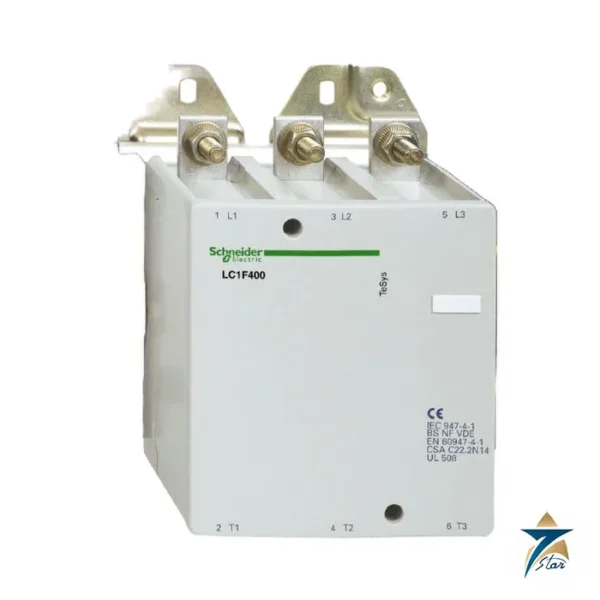
| Schneider Electric TeSys F LC1F400 Contactor | Electrical & Power | View details |
| Schneider Electric TeSys Giga LC1G High-Power Contactor | Electrical & Power | View details |
| Schneider Electric TeSys LRD Thermal Overload Relay | Electrical & Power | You are viewing this model |
| Schneider Electric TeSys Ultra Overload Relay | Electrical & Power | View details |
| Schneider Electric TeSys Vario Disconnect Switch | Circuit Breakers | View details |
| Schneider Electric TeSys Q Motor Disconnect Switch | Circuit Breakers | View details |
| Schneider Electric TeSys Track Condition Monitoring System | Motor Soft Starters | View details |
Browse Schneider Electric products by category: Circuit Breaker, Electrical & Power Modules, AC Drives, PLC & I/O Cards, Metering Systems.
Choose the option that best fits your needs to get the fastest response from our team.
Automatically fill the RFQ form with this product's details for a faster process.
Manually enter multiple part numbers, specific brands, or custom requirements.










Reviews
There are no reviews yet.