Brand:

Shinkawa VL-452A11A-2112/EX5 Sensor VK-A Series

Description

Overview

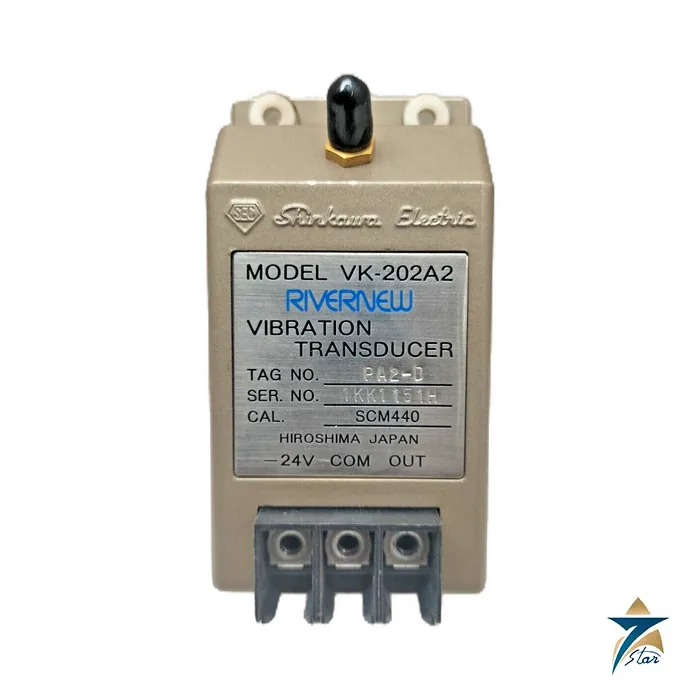
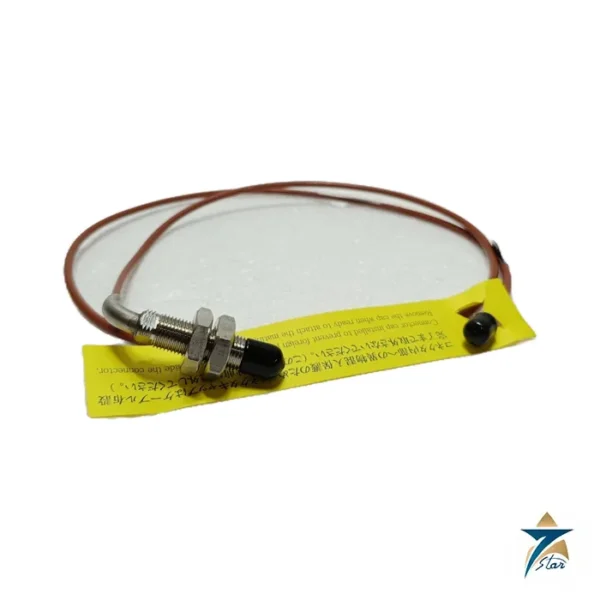
The Shinkawa VL-452 sensor, type VL-452A11A-2112/EX5, is an eddy current displacement sensor from the VK-A series transducer system, which also includes the VW extension cable and the VK driver. The VL-452 sensor measures the gap to a metallic target without physical contact and outputs a voltage proportional to distance, making it the standard sensing element for turbine and compressor vibration monitoring in Japanese and international power plants.
Shinkawa vibration monitoring systems protect the worlds major turbomachinery fleets. This Shinkawa VL-452 sensor variant, with the -2112/EX5 configuration, is the explosion-proof sensor option intended for hazardous-area machine trains, and is a direct spare for the original Shinkawa installation.

Engineering & Design

The VK-A series transducer uses the eddy current principle: the sensor head generates a high-frequency field, and changes in the gap to the target change the coil impedance, which the driver converts into a DC output voltage. According to the official VK-202A instruction manual, the system offers a linear range of 2000 μm (approximately 80 mils) for JIS SCM440 (AISI 4140 steel) as the standard calibration material.

The Shinkawa VL-452 sensor is installed in a sensor holder or mounting block on the machine bearing housing, with the sensor face positioned to the specified air gap from the shaft surface. The VW extension cable carries the high-frequency signal from the sensor to the VK driver, which conditions the signal and provides the DC output to the monitor. Correct gap setting and secure cabling are essential for repeatable readings; the official manual provides the installation accessories, mounting arrangements and test data for supply variation, target material, target diameter, target curvature and side bore, so the system can be verified against the original characteristic after installation.

The system is specifically designed to measure high-speed shaft vibration, eccentricity and thrust position. Field wiring from the driver to the monitoring instrument uses 3-wire shielded cable and can be extended up to 500 m maximum. The /EX5 suffix marks the explosion-proof sensor version for installation in classified areas.

Key Features

  • Shinkawa VL-452 sensor – VL-452A eddy current displacement sensor (VK-A series)
  • Non-contact gap measurement with voltage output proportional to distance
  • Linear range 2000 μm (approx. 80 mils) on JIS SCM440 (AISI 4140)
  • Explosion-proof /EX5 configuration for hazardous areas
  • 3-wire shielded output, extendable up to 500 m
  • Designed for shaft vibration, eccentricity and thrust position

Applications

  • Radial vibration monitoring on steam and gas turbines
  • Axial displacement (thrust position) measurement
  • Shaft eccentricity monitoring on compressors and generators
  • Replacement of worn sensors in Shinkawa VM-5/VM-7 monitor systems

Specifications

Manufacturer Shinkawa Electric Co., Ltd.
Sensor VL-452A11A-2112/EX5 eddy current displacement sensor
System VK-A series transducer (VL sensor, VW extension cable, VK driver)
Principle Eddy current, non-contact
Linear range 2000 μm (approx. 80 mils), JIS SCM440 (AISI 4140)
Output Voltage proportional to distance; 3-wire shielded, up to 500 m
Configuration -2112/EX5 (explosion-proof variant)
Typical use Shaft vibration, eccentricity, thrust position

Compatibility

The Shinkawa VL-452 sensor is part of the VK-A series transducer family and mates with the VW extension cable and VK-452 driver. It connects to Shinkawa vibration monitors and to third-party monitoring systems that accept the standard eddy current transducer signal.

Ordering Information

Order the Shinkawa VL-452 sensor, type VL-452A11A-2112/EX5, as a direct replacement for the original sensor in your Shinkawa vibration train. Verify the cable length and connector configuration of your installation before ordering.

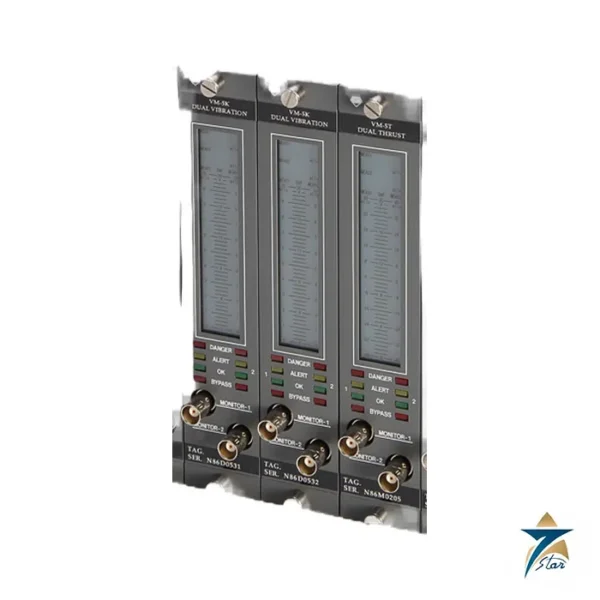
The Shinkawa VL-452 sensor with the extension cable covers the displacement measurement of the machine train with the VM-5K monitor.

Why Seven Star LLC

Seven Star LLC supplies Shinkawa vibration monitoring spares to power and oil & gas plants across Oman and the GCC. Each VL-452 sensor is checked against the original part number and

Our engineers help you verify the exact model and revision before ordering, avoiding costly mismatches.

Request a Quote for Shinkawa VL-452A11A-2112/EX5 Sensor VK-A Series

For the Shinkawa VL-452 sensor or any related control and instrumentation requirement, contact the Seven Star LLC team. Submit a formal inquiry through our RFQ page with your measurement range, connection and configuration, and our specialists will respond with a detailed commercial proposal and the official Shinkawa documentation.

Matching the Sensor to the Existing System

An eddy current probe, its extension cable and its driver are calibrated as a system, so a replacement VL-452 must match the rest of the installed chain. Before ordering, record the complete type code printed on the sensor cable tag, the model and code of the VW extension cable and VK driver, and the total system length they were set up for. Also note the thread and case length needed for the existing holder, and the hazardous area certification required at the machine. Mixing components intended for different system lengths or driver types will shift the scale factor and invalidate the vibration and position readings.

Installation and Gap Setting

  • Check the shaft target area is clean, free of scratches and within runout limits; mechanical and electrical runout appear directly in the measurement.
  • Set the gap electrically by watching the driver output voltage while adjusting the probe, rather than relying only on feeler gauges.
  • Lock the probe firmly in the holder so it cannot vibrate or back out during operation.
  • Protect cable connectors with insulating sleeves, keep them away from oil and moisture, and avoid tight bends in the cable.
  • For explosion-proof installations, follow the certified wiring method and barrier or enclosure arrangement exactly.

Verification and Troubleshooting

After installation, check the gap voltage at rest and compare it with the commissioning records, then confirm the vibration channel reads sensibly during run-up. Where readings are questionable, a static calibration of the probe, cable and driver against a micrometer rig using the correct target material confirms the system scale factor.

  • Erratic or spiking signal: suspect a loose or contaminated connector, damaged cable, or poor grounding.
  • Gap voltage out of range: probe position has shifted, or the probe or cable is damaged.
  • Unexplained high vibration at low speed: check for shaft surface defects or electrical runout at the probe location.

Applications in Oman and the GCC

Proximity probes of this type monitor radial vibration and axial position on steam and gas turbines, centrifugal compressors, large pumps and generators in power stations, gas processing plants, LNG facilities and refineries across Oman and the Gulf. A matched spare probe is a sensible part of critical machinery spares.

Sourcing Through Seven Star LLC

Send the sensor, cable and driver type codes to Seven Star LLC for a quotation on genuine Shinkawa parts, supplied with available documentation to sites across Oman and the GCC.

Related Products

Reviews (0)

Reviews

There are no reviews yet.

How would you rate this product?

It takes about 10 seconds — just tap a star. Your email is never published.

About brand

Turbine and compressor trains in many Asian-built power and process plants are protected by Shinkawa vibration monitoring. Shinkawa Electric Co., Ltd. of Tokyo makes eddy current displacement transducers, vibration sensors and rack-based monitors for rotating machinery. Seven Star LLC lists Shinkawa VM-5 and VM-700 series monitor modules, sensors and converters, and sources them by full model code for machinery protection systems in Oman.

Shinkawa company profile

Roots 1927. Incorporated as Shinkawa Electric Co., Ltd. in 1951
Head office Chiyoda, Tokyo, Japan
Sensors Displacement and vibration transducers made since 1977. Development and manufacture are at Shinkawa Sensor Technology (founded 1994) in Hiroshima
Product families Eddy current proximity probes with drivers (converters), velocity and acceleration sensors, LVDTs, and machinery protection monitors and condition monitoring systems
Typical machines Steam and gas turbines, generators, centrifugal compressors, large pumps and fans

Milestones

  • 1927: The business that became Shinkawa starts in Japan.
  • 1951: Incorporated as Shinkawa Electric Co., Ltd.
  • 1977: Displacement and vibration transducers are first made.
  • 1994: Shinkawa Sensor Technology is founded in Hiroshima for sensor development and manufacture.

Shinkawa monitors and sensors listed

Series Function Listed models
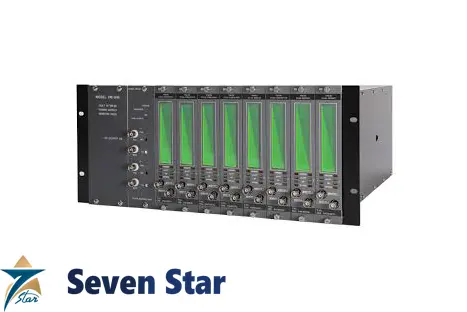
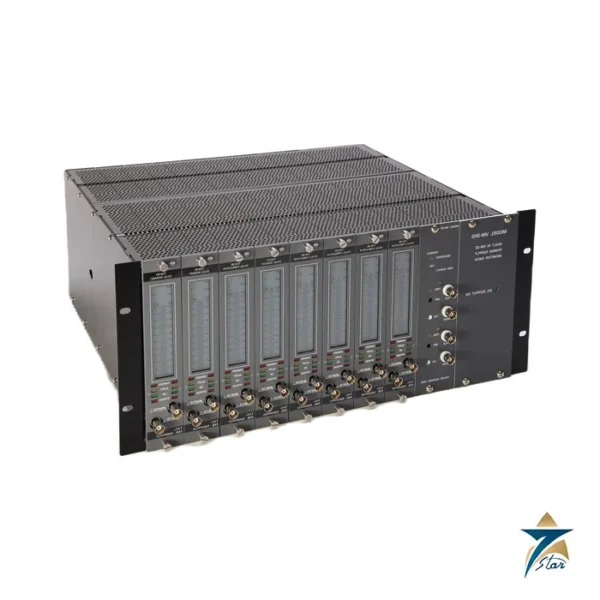
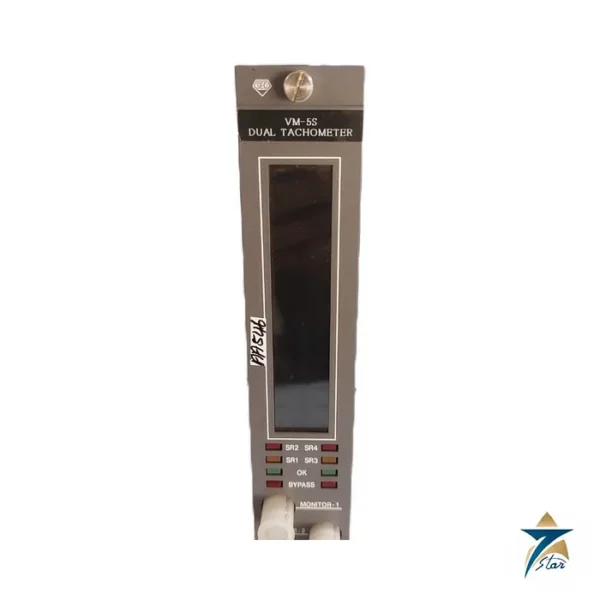
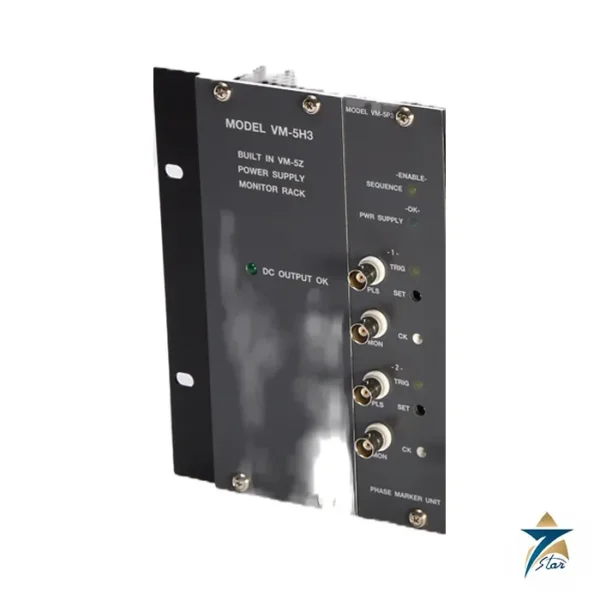
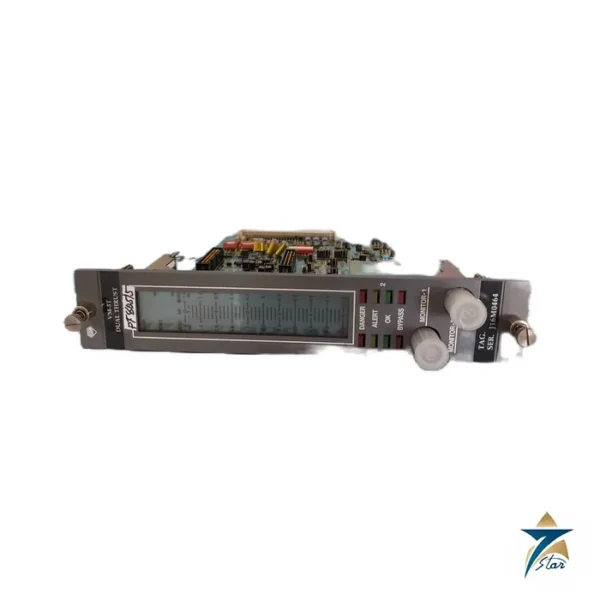
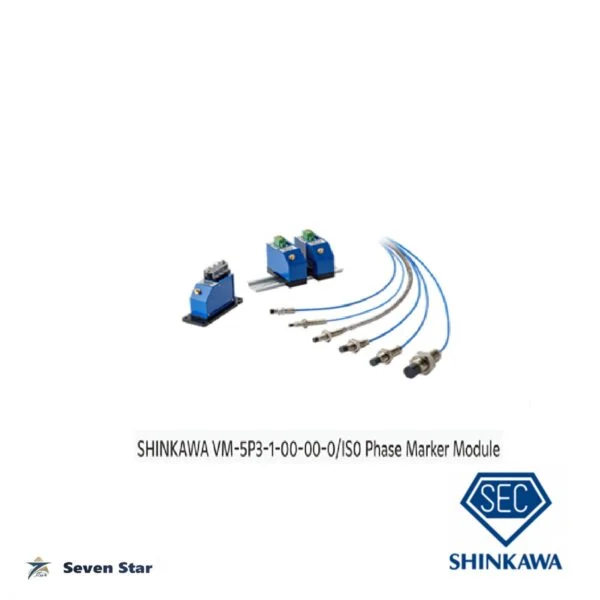
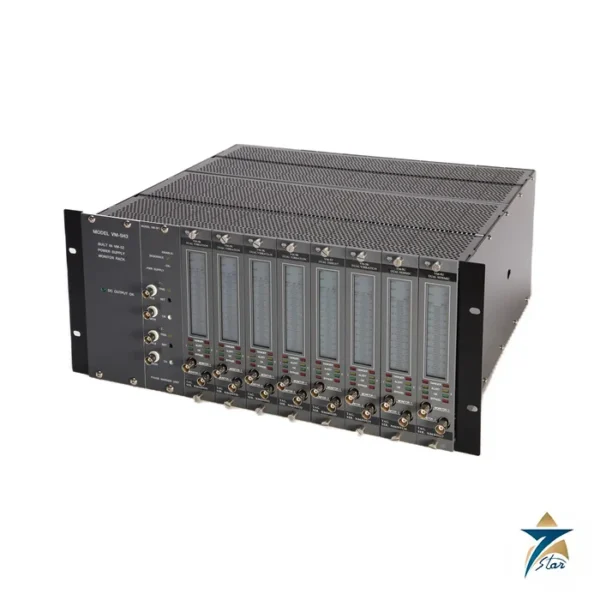
VM-5 rack Machinery protection monitor system VM-5K dual vibration, VM-5T thrust position, VM-5S tachometer, VM-5F temperature, VM-5P3 phase marker
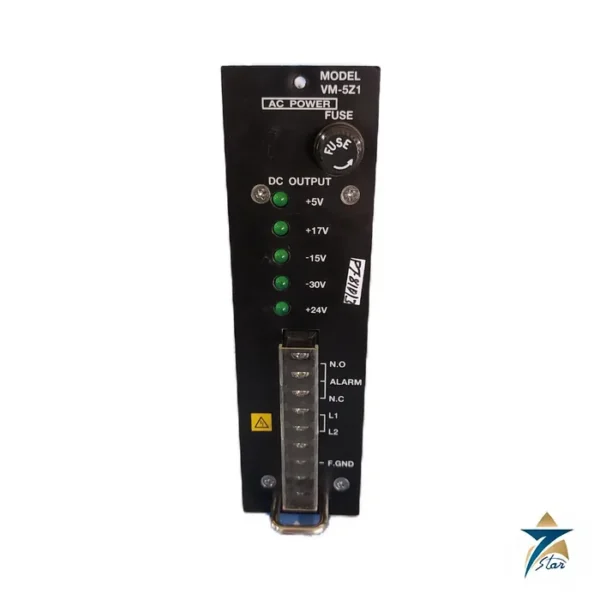
VM-5 system modules Relays, power, rack and communication VM-5Y1 and VM-5Y7 relays, VM-5Z1 power supply, VM-5W1 rack, VM-53 communication
VM-700 series Compact stand-alone vibration monitors VM-701B, VM-704B, VM-741B, VM-751B1
VK series (VL model codes) Eddy current displacement sensors VL-202A08R, VL-452A11A
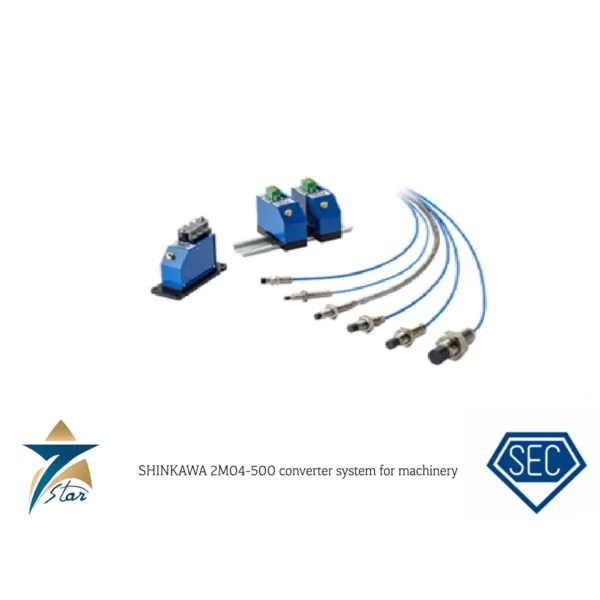
Converters Probe drivers and signal converters 2M04-500

Shinkawa's current catalog also shows the FK transducer series and the VM-7 monitor. This matters when an older part has to be matched with a present-day equivalent.

How a Shinkawa protection chain works

An eddy current probe sits a set distance from the shaft. Its driver (converter) turns the gap into a voltage, and the monitor turns that voltage into vibration, thrust position or speed values with alert and danger set points. The probe, extension cable and driver are calibrated together for one total system length and one target material, usually AISI 4140 shaft steel. Changing one part without matching the other two shifts the calibration. The monitor relays feed the turbine or compressor trip logic, and buffered outputs go to analysis systems. Many protection systems of this kind are specified to API 670.

Where Shinkawa vibration monitoring is used

Shinkawa systems measure shaft vibration, axial (thrust) position, speed, phase reference and bearing temperature on steam turbines, gas turbines, generators, compressors, pumps and fans. In the GCC they are found mainly in power stations, desalination plants, refineries and petrochemical units with Japanese or Korean machinery packages.

Ordering Shinkawa parts: what we need

Shinkawa model codes are long and every field counts. A monitor code such as VM-5K-411512-000-000-111-0/IS0/EX5 defines the input type, range, options and suffix codes, so copy the complete string from the module label, including everything after the slashes. For sensors, send the VL or FK model code, probe tip diameter, cable length and the matching driver or converter model, since the probe, extension cable and driver work as a calibrated set. A serial number and a photo of the label help us confirm the item in the manufacturer's documentation. Where a model is no longer produced, we propose the successor the manufacturer names.

Facts checked against Shinkawa Electric company information and product documentation, October 2026.

FAQ

Questions about the Shinkawa VL-452A11A-2112/EX5 Sensor VK-A Series

Answers from our engineering team on installation, compatibility and integration.

01What is the VL-452A sensor?
The Shinkawa VL-452 sensor is an eddy current displacement sensor from the VK-A series transducer system, measuring shaft gap without contact and outputting a voltage proportional to distance.
02What is the linear range of the VK-A series system?
The official Shinkawa instruction manual states a linear range of 2000 um (approx. 80 mils) with JIS SCM440 (AISI 4140 steel) as the calibration material.
03What does the /EX5 suffix mean?
The /EX5 suffix marks the explosion-proof sensor configuration intended for installation in hazardous areas.
04How far can the sensor signal be extended?
Field wiring from the driver to the monitoring instrument uses 3-wire shielded cable and can be extended up to 500 m maximum.
05Which systems is the VL-452 designed for?
It is designed for high-speed shaft vibration, eccentricity and thrust position measurement on turbines, compressors and generators.