Overview
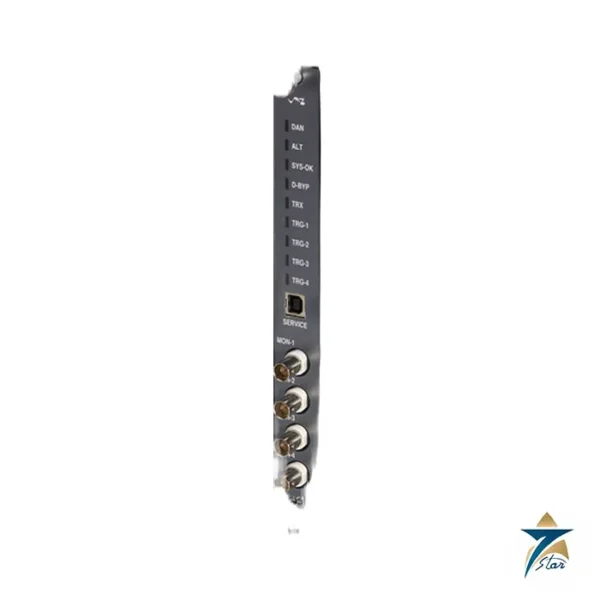
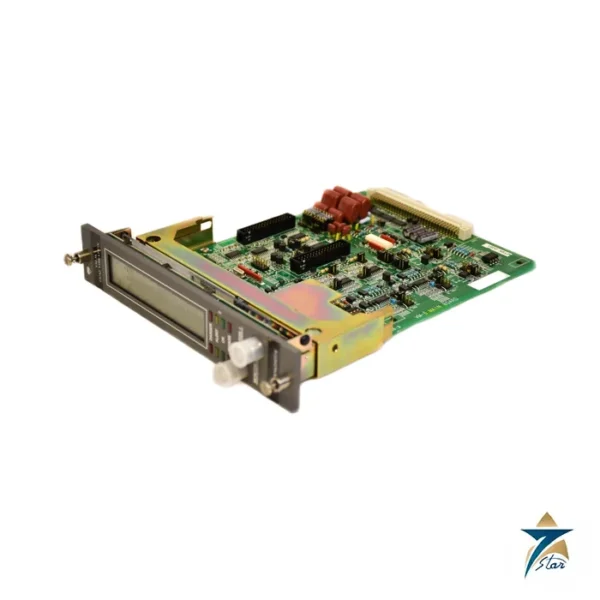
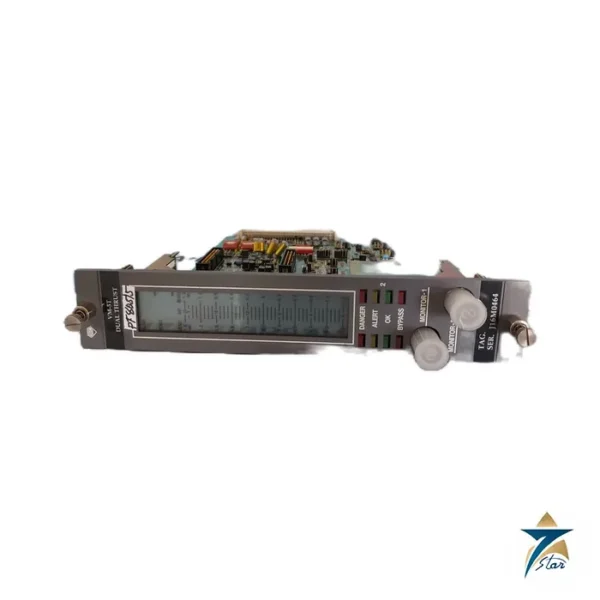
The Shinkawa VM-53-2 Dual Communication Module provides data communication and integration capability for the VM-5 series machinery protection system. It allows monitoring data from VM-5 racks to be exchanged with external systems such as DCS, SCADA, and plant networks over serial interfaces.
It supports RS-232 and RS-485 serial interfaces with the Modbus protocol, and can be installed in any relay module slot of a VM-5H3 or VM-5W1 instrument rack, with the monitor unit installed separately.
Engineering & Design
The VM-53-2 provides a dual serial port design for flexible connectivity with external devices. RS-485 operation supports multi-rack daisy chain connection at baud rates from 1200 to 38400 bps, allowing several VM-5 racks to be combined on a single communication bus for centralised data acquisition.
Modbus protocol support enables straightforward integration with PLC, DCS, and SCADA systems using standard master-slave communication, simplifying the connection of machinery protection data to plant-wide monitoring networks.
Key Features
- Dual communication module for VM-5 systems
- RS-232 and RS-485 serial interfaces
- Modbus protocol support
- Multi-rack daisy chain connection (RS-485)
- Baud rate 1200 to 38400 bps
- Installs in relay module slot of VM-5H3 / VM-5W1 racks
- External device communication via serial links
Applications
- VM-5 data transfer to DCS and SCADA
- Centralised machinery monitoring
- Multi-rack data acquisition
- Turbine and compressor fleet monitoring
- Integration with plant communication networks
Specifications
| Specification |
Value |
| Model |
VM-53-2 Dual Communication Module |
| Serial Interfaces |
RS-232, RS-485 |
| Protocol |
Modbus |
| Multi-rack Connection |
Daisy chain via RS-485 |
| Baud Rate |
1200 to 38400 bps |
| Rack Compatibility |
VM-5H3, VM-5W1 (relay module slot) |
| Installation |
Any relay module slot; monitor unit separate |
Machine data belongs in the plant network, and the Shinkawa VM-53-2 Dual Communication Module brings VM-5 data there, which is why Seven Star LLC supplies the Shinkawa VM-53-2 Dual Communication Module for machinery monitoring integration.
The Shinkawa VM-53-2 dual communication module exchanges the data with the host system, and the Shinkawa VM-53-2 dual communication module provides the dual channel communication for the monitoring.
The VM-53-2 module is configured as the master of the serial loop and the DCS polls the data of the connected monitors on the cyclic basis. The module parameters are stored in the non-volatile memory and survive the power interruption of the rack. The communication watchdog resets the link when the DCS does not answer within the configured time. The two ports of the module allow the redundant connection to the two DCS servers of the plant.
The VM-53-2 module is exchanged without stopping the monitored machine, since the rack backplane powers the module and the communication is re-established after the insertion. The spare module is configured with the same address and the station data are read by the DCS without changes to the application program.
For the long distance transmission the module converts the serial data into the repeatable frames and the signal quality is verified with the link test of the DCS tool. The module is used on the compressor and the turbine trains where the remote monitor reading is required in the control room.
Why Seven Star LLC
Seven Star LLC supplies the Shinkawa VM-53-2 Dual Communication Module for machinery protection systems across the Gulf, with complete documentation and integration guidance. Our specialists assist with Modbus mapping, baud rate configuration, and multi-rack network design.
We support VM-5 system communication upgrades and spares for turbine and compressor monitoring installations in oil and gas, power, and industrial facilities.
Data Integration
The RS-485 daisy chain capability is the key to economical multi-rack installations: several VM-5 racks share one communication bus, and the Modbus protocol lets a DCS or SCADA master poll all racks with standard function codes. The 1200 to 38400 bps range covers typical monitoring update rates.
The RS-232 interface supports direct connection to local devices such as portable diagnostic tools, giving engineers a straightforward way to verify rack communication during commissioning.
Request a Quote for SHINKAWA VM-53-2/BTT/IS0 Dual Communication Module
For the Shinkawa VM-53-2 Dual Communication Module, VM-5 communication module or any related control and instrumentation requirement, contact the Seven Star LLC team. Submit a formal inquiry through our RFQ page with your module, I/O and system configuration, and our specialists will respond with a detailed commercial proposal and the relevant Shinkawa documentation.
Identifying the Module and Configuration
Before ordering a replacement, read the full model code on the module front plate or label, including the suffix code. The suffix defines options that may affect compatibility, so the replacement should match the installed module. Also record the existing communication settings: Modbus slave address, baud rate, parity and the port configuration for RS-232 and RS-485. These are needed to restore communication quickly after the exchange, and should be kept with the rack documentation.
Commissioning the Serial Link
Commissioning is simpler when the Modbus register map is agreed early with the DCS or SCADA team. Confirm which monitor values, alarm states and status bits are needed, then check the addresses in the Shinkawa documentation. On RS-485 networks, use twisted-pair screened cable, earth the screen at one point, and fit termination resistors at both ends of the bus. Test communication with a Modbus master tool or the DCS diagnostic screen before handing over, and check that every rack on the daisy chain answers at the configured address.
Troubleshooting Communication Faults
- No response from the rack: check address, baud rate and parity settings, then check wiring polarity on RS-485.
- Intermittent timeouts: look for missing termination, poor screening or cables running next to power wiring.
- Some racks respond, others do not: check for duplicated addresses on the daisy chain.
- Wrong values in the DCS: check register addressing offsets and data format in the host configuration.
Use in Oman and GCC Plants
Gas compression stations, refineries, power plants and desalination facilities in the region rely on vibration and position monitoring for critical rotating equipment. The Shinkawa VM-53-2 dual communication module brings that data into control room systems, so operators can see machine condition trends without separate displays. Seven Star LLC supplies VM-5 modules and spares for these installations and can check the model and suffix code against the installed rack before supply.
Related Products




Reviews
There are no reviews yet.