Overview
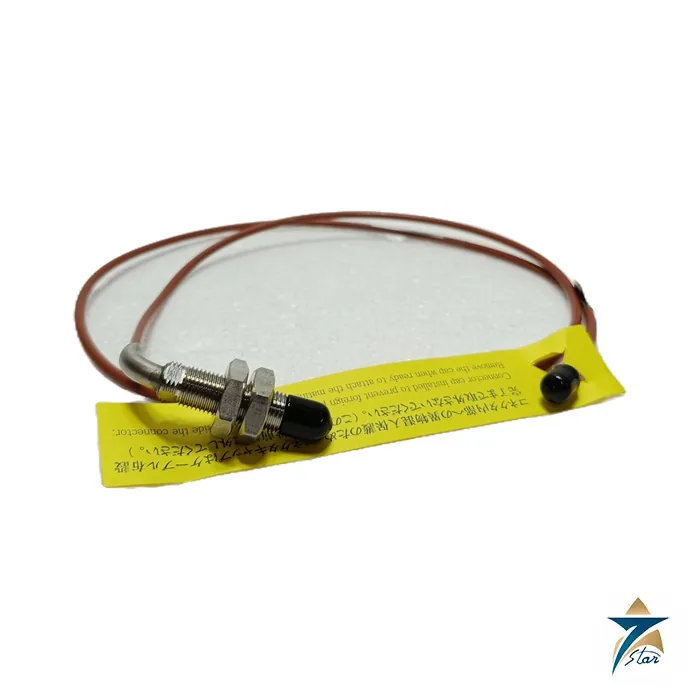
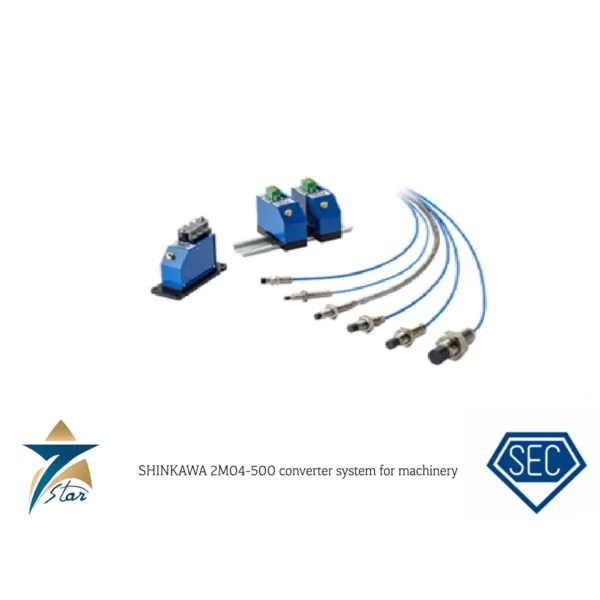
The Shinkawa VL-202 sensor, type VL-202A08R-2012/EX5, is an eddy current displacement sensor belonging to the VK-202A transducer system, documented in the official VK-A series instruction manual (no. 20801E1.0). The complete system consists of the VL sensor, the VW extension cable and the VK driver, and measures the gap to a metallic target without physical contact.
Shinkawa eddy current transducers protect turbines, compressors and generators in power plants worldwide. This Shinkawa VL-202 sensor variant with the /EX5 suffix is the explosion-proof sensor configuration, making it a direct spare for hazardous-area machine trains.
Engineering & Design
According to the official VK-202A transducer instruction manual, the system utilizes eddy currents and measures the gap between the VL sensor and the measured object without physical contact, outputting a voltage signal proportional to distance. It offers a linear range of 2000 μm (approximately 80 mils) for JIS SCM440 (AISI 4140 steel) as the standard calibration material.
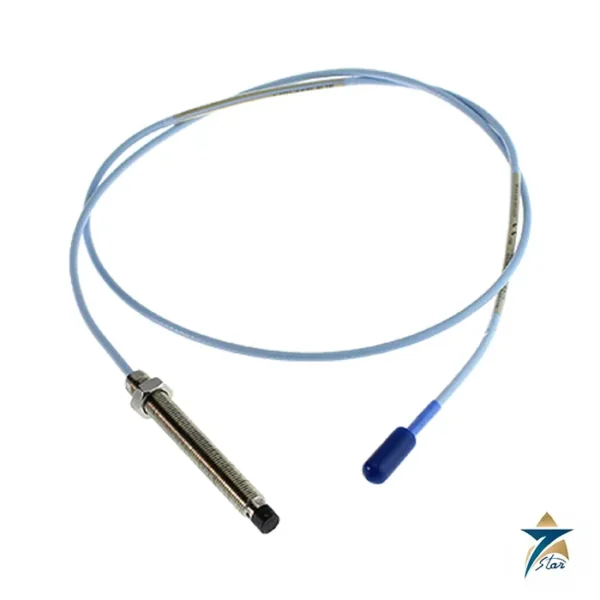
The Shinkawa VL-202 sensor mounts in the machine bearing housing with a defined air gap to the shaft, and the VW extension cable routes the high-frequency signal to the VK-202A driver, which converts it into a DC output proportional to the gap. The manual covers sensor installation accessories, mounting procedures, typical standard conduit arrangements and probe mounting arrangements, plus the standard static characteristic and frequency characteristic data used to verify the system. It also documents the required warm-up of more than 30 minutes before data collection, and the insulation and shielding rules that keep the eddy current signal clean in industrial environments.
The VK-202A system is described as the most suitable design for measuring high-speed shaft vibration, eccentricity and thrust position. Field wiring from the driver to the connecting instrument generally uses 3-wire shielded cable and can be extended up to 500 m maximum. The manual also specifies installation details such as connector insulation sleeves and warm-up requirements of more than 30 minutes before data collection.
Key Features
- Shinkawa VL-202 sensor – VL-202A eddy current displacement sensor (VK-202A system)
- Non-contact gap measurement with voltage output proportional to distance
- Linear range 2000 μm (approx. 80 mils) on JIS SCM440 (AISI 4140)
- Explosion-proof /EX5 configuration for hazardous areas
- 3-wire shielded output, extendable up to 500 m
- Covered by official manual no. 20801E1.0 (Aug 2008)
Applications
- High-speed shaft vibration monitoring on turbines
- Thrust position and eccentricity measurement on compressors
- Vibration monitoring on pumps, blowers and generators
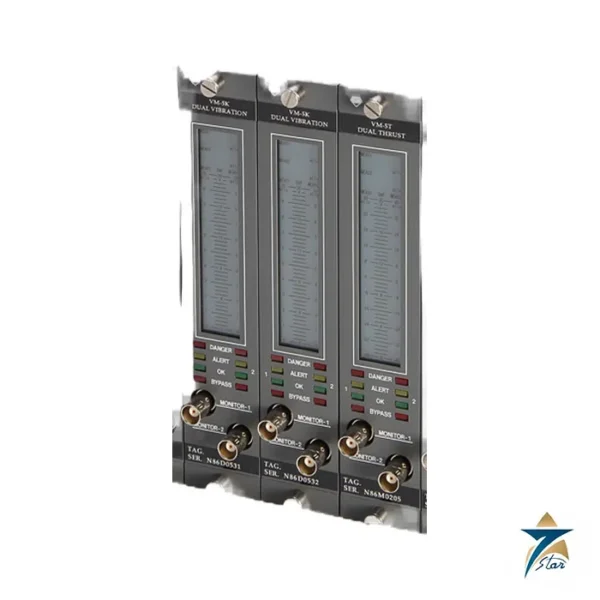
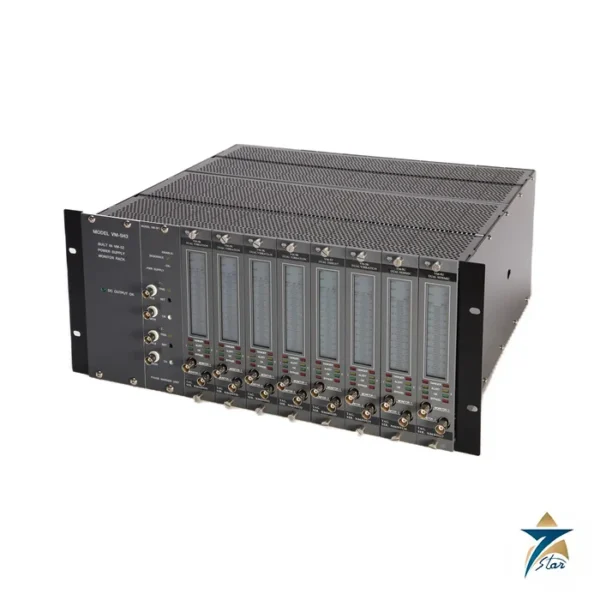
- Replacement of worn sensors in Shinkawa VM-5/VM-7 monitor systems
Specifications
| Manufacturer |
Shinkawa Electric Co., Ltd. |
| Sensor |
VL-202A08R-2012/EX5 eddy current displacement sensor |
| System |
VK-202A transducer (VL sensor, VW extension cable, VK driver) |
| Principle |
Eddy current, non-contact |
| Linear range |
2000 μm (approx. 80 mils), JIS SCM440 (AISI 4140) |
| Output |
Voltage proportional to distance; 3-wire shielded, up to 500 m |
| Configuration |
-2012/EX5 (explosion-proof variant) |
| Manual |
VK-A series, no. 20801E1.0, Aug 2008 |
Compatibility
The Shinkawa VL-202 sensor mates with the VW extension cable and VK-202A driver to form a complete VK-202A transducer system, and connects to Shinkawa vibration monitors or compatible third-party monitoring inputs.
Ordering Information
Order the Shinkawa VL-202 sensor, type VL-202A08R-2012/EX5, as a direct replacement for the original sensor in your Shinkawa vibration train. Verify the cable length and connector configuration of your installation before ordering.
The VL-202A08R-2012/EX5 sensor measures the shaft vibration with the eddy current principle, and the sensor cable and the connector are matched to the Shinkawa driver unit.
The eddy current sensor chain covers the gap setting range of the standard vibration probe installation.
Why Seven Star LLC
Seven Star LLC supplies Shinkawa vibration spares to rotating machinery teams across Oman and the GCC. Each VL-202 sensor is verified against the original part number.
Our engineers help you verify the exact model and revision before ordering, avoiding costly mismatches.
Matching the Sensor to the Transducer System
An eddy current probe is calibrated as part of a system, so the sensor, extension cable and driver must belong to the same family and have compatible electrical lengths. Before ordering a replacement Shinkawa VL-202 sensor, read the full type code from the sensor cable tag or the original documentation and confirm:
- The complete code, including case length and cable options, and the /EX5 suffix for hazardous areas
- The VW extension cable and VK-202A driver installed in the loop
- Mounting thread and the space available in the bearing housing
- Target shaft material, since the standard calibration is for AISI 4140 steel
Probe Installation and Gap Setting
Mount the probe perpendicular to the shaft surface with enough clearance around the tip that nearby metal does not affect the field. Set the initial gap using the driver output voltage rather than feeler gauges alone, aiming for the middle of the linear range so that vibration and slow position changes stay within it. Tighten the lock nut, secure the cable against fretting, and insulate connectors as described in the manual. Allow the recommended warm-up time before recording baseline gap voltages.
Troubleshooting
- Gap voltage at the limit – open or shorted cable, damaged probe, or loose connector
- Noisy signal – ground loops or a damaged cable screen
- Non-linear response – mismatched cable length or driver, or a target material different from the calibration
- Slowly changing gap – loose probe mounting or genuine bearing wear; confirm before resetting
Use in Oman and the GCC
Explosion-proof probe variants are relevant on compressors and turbines in gas processing and petrochemical plants where the machine sits in a classified area. Seven Star LLC supplies Shinkawa probes, extension cables and drivers as matched sets or individual spares, checked against the type code before dispatch.
Request a Quote for Shinkawa VL-202A08R-2012/EX5 Displacement Sensor
For the Shinkawa VL-202 sensor or any related control and instrumentation requirement, contact the Seven Star LLC team. Submit a formal inquiry through our RFQ page with your measurement range, connection and configuration, and our specialists will respond with a detailed commercial proposal and the official Shinkawa documentation.
Related Products
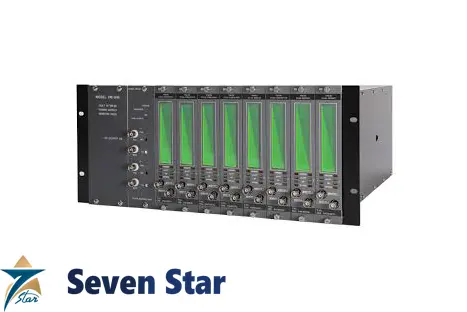
See also: Shinkawa VM-701B/CS1/TB1 Vibration Monitor.
























Reviews
There are no reviews yet.