Half-automated D86 distillation with a thermostatted condenser bath
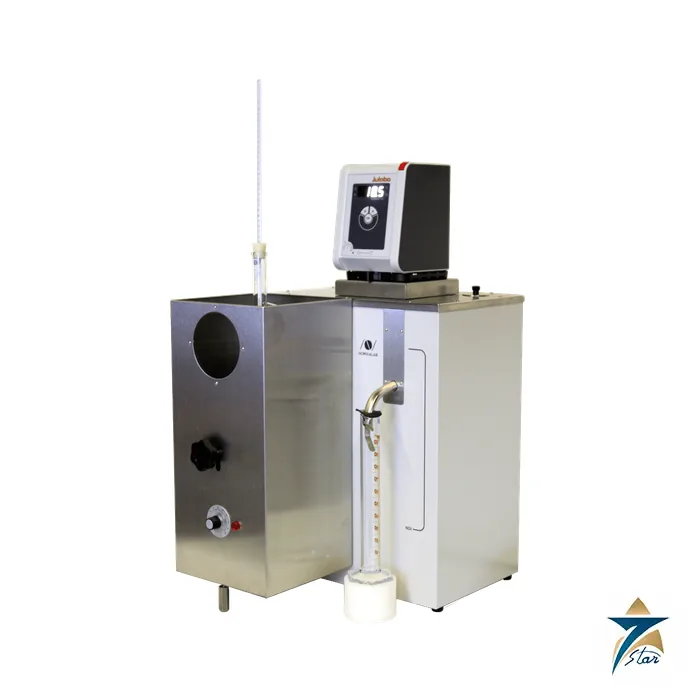
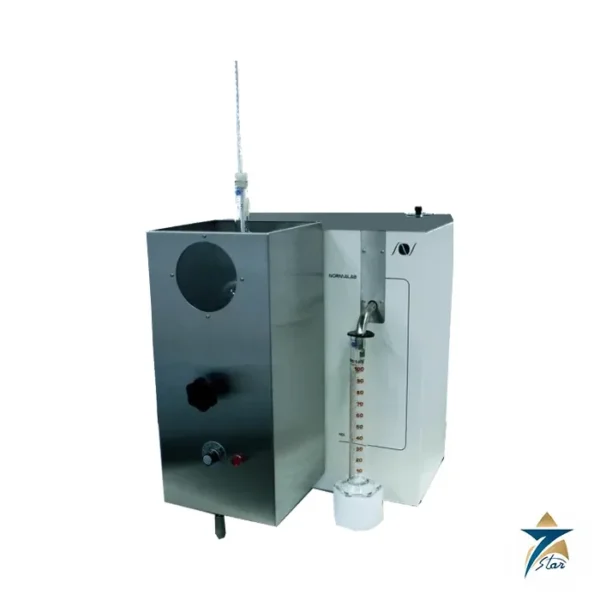
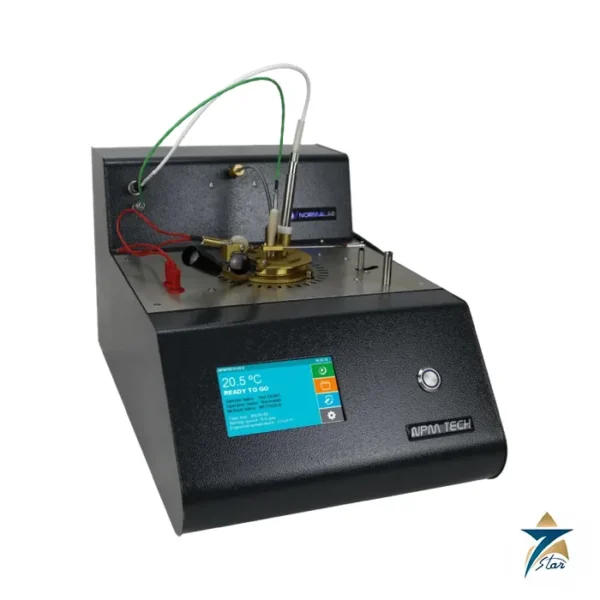
The Normalab NDI Classic is a half-automated atmospheric distillation unit for petroleum products. It sits between the manual NDI Basic and the fully automated NDI 450: the operator still reads and records the distillation, but a digital condenser bath regulator makes it easier to hold the condenser temperature that the method requires. The unit is supplied with glassware and the accessories needed to run ASTM D86 for groups 3 and 4; extra accessories are needed for groups 1 and 2.
Technical specifications
| Parameter |
Specification |
| Manufacturer / model |
Normalab NDI Classic |
| Order number |
942228 |
| Temperature range |
Ambient to 400 °C |
| Condenser bath |
Digital thermostat regulator; fluid 10 L water/glycol 50/50 mixture |
| Cooling of heating compartment |
Compressed air, 2 bar maximum, between tests |
| Safety |
Adjustable overheating safety on the control head, float for low level detection, differential circuit breaker |
| Power supply |
230 V, 50/60 Hz, 1500 W |
| Dimensions (W x D x H) |
380 x 490 x 620 mm |
| Weight |
23 kg |
Standards and when a cryostat is needed
The brochure names ASTM D86, D850 and D1078, ISO 3405, IP 123 and IP 195 and related methods, for natural, motor and aviation gasolines, aviation turbine fuels, special boiling point spirits, naphthas, white spirits, kerosines, gas oils and distillate fuel oils. Gasoline samples need a condenser temperature below ambient, so a cryostat is required for them. For groups 1 and 2, Normalab specifies a cryostat of 7 to 10 L working from -15 to 60 °C, offered as an option under reference 23206.
Because the control is simple, the unit suits routine quality control in fuel depots, power-station fuel laboratories and teaching labs where distillation throughput is moderate and a full auto-reading instrument is not justified.
In a D86 test a measured 100 mL sample is heated in a flask at a rate set by the method while the vapour is condensed and collected in a graduated receiver. Temperature is recorded against recovered volume, from the initial boiling point through the percent-recovered points to the final boiling point or dry point, and the test also reports recovery, residue and loss. The sample group (decided by vapour pressure and boiling range) fixes the flask, heater plate, condenser temperature and heating rate, which is why the group must be known before the glassware kit is chosen.
Scope of delivery and options
- Graduated receiver 100 mL (P/N 19425)
- Distillation flask 125 mL (P/N 24019)
- Ceran boards 50 mm and 100 mm (P/N 20348, 20349)
- ASTM 7C and 8C thermometers (P/N 11494, 11495), supplied without certificate; calibration on request
- Bag of pumice (P/N 60514), condenser cleaning cable (P/N 40009), 5 mL graduated cylinder (P/N 12609EC)
The product page lists options of a cryostat for group 1 and 2 analysis, a glass cooling bath and a 200 mL distilling flask.
Key features of the NDI Classic
- Half-automated operation: the operator reads and records temperature against recovered volume, while the digital regulator holds the condenser bath at the temperature the method calls for.
- Thermostatted condenser bath: the bath is filled with a water/glycol mixture, which keeps condenser conditions stable through a working day instead of relying on ice or tap water.
- Compressed-air cooling of the heating compartment: cooling between tests shortens the wait before the next sample can be started.
- Layered safety: an adjustable overheating safety, a low-level float and a differential circuit breaker protect the operator and the unit.
- Compact bench footprint: the unit fits on a standard laboratory bench under a fume extraction point.
Choosing between NDI Basic, NDI Classic and NDI 450
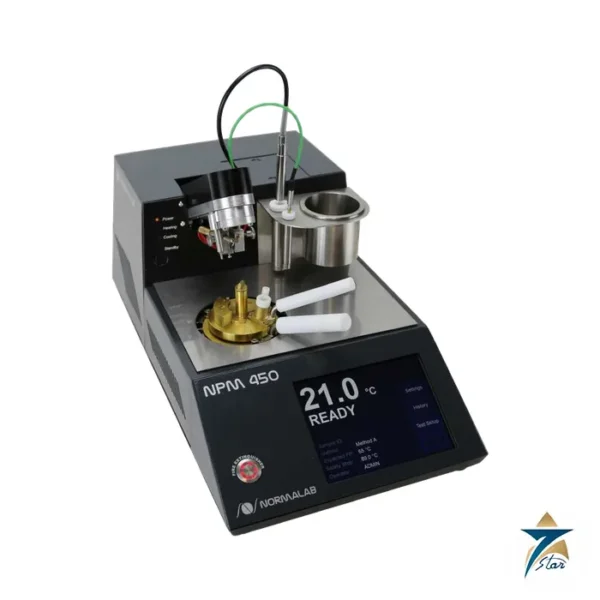
Normalab offers three steps of automation for the same distillation method. The manual NDI Basic suits laboratories that run only occasional tests and accept full operator control of the condenser. The NDI Classic adds the regulated condenser bath, which removes the most common source of operator-to-operator variation in group 3 and 4 work such as kerosine, jet fuel and gas oil. The fully automated NDI 450 reads the recovered volume itself and is the better choice when a laboratory runs many samples per shift or needs electronic records for every test. If most of your samples are diesel, kerosine and fuel oil, the NDI Classic is usually the balanced choice; if gasoline dominates the workload, plan for the cryostat or consider a higher level of automation.
Installation and routine maintenance
- Place the unit in a ventilated area or under extraction, since hydrocarbon vapours are released at the receiver.
- Provide a clean, dry compressed-air line with a regulator so that the supply to the heating compartment does not exceed the stated maximum pressure.
- Check the level and condition of the water/glycol mixture regularly; the low-level float is a safeguard, not a substitute for inspection.
- Clean the condenser tube with the supplied cleaning cable to remove deposits that can bias recovery readings.
- Have the thermometers or temperature measuring devices calibrated at the interval your quality system requires, and keep the certificates with the test records.
- Inspect flasks and the graduated receiver for chips and worn graduations, and replace them rather than repairing them.
Use in Oman and GCC laboratories
Fuel depots, refineries, power stations and marine bunkering laboratories in Oman routinely test diesel, jet fuel and fuel oil, and distillation is one of the core release tests for these products. High ambient temperatures in summer make a regulated condenser bath particularly useful, because tap water and room air can be too warm to hold the condenser at the method temperature. Where gasoline or light naphtha must be tested, the cryostat option is needed to bring the condenser below ambient. Dust and humidity in coastal and desert sites mean the instrument should be kept in a conditioned room and the glassware stored covered between tests.
What to include in your RFQ
- The method and sample groups you run (ASTM D86, ISO 3405, IP 123 and so on).
- Whether you need the cryostat option, a glass cooling bath or a 200 mL flask.
- Required thermometer type and whether calibration certificates are needed.
- Number of spare flasks, receivers and consumables for the first year.
- Power supply available at the bench and delivery location in Oman or the GCC.
Documents and quotation
The Normalab brochure for the NDI Classic is linked here. Seven Star LLC, an independent supplier in Muscat, can quote it with its liquid analytical systems equipment. Confirm before ordering which sample groups you test (groups 1 and 2 need a cryostat and extra accessories), the thermometer certificates you require and the water/glycol fluid for the bath.








Reviews
There are no reviews yet.