A manual Pensky-Martens tester for routine flash point work
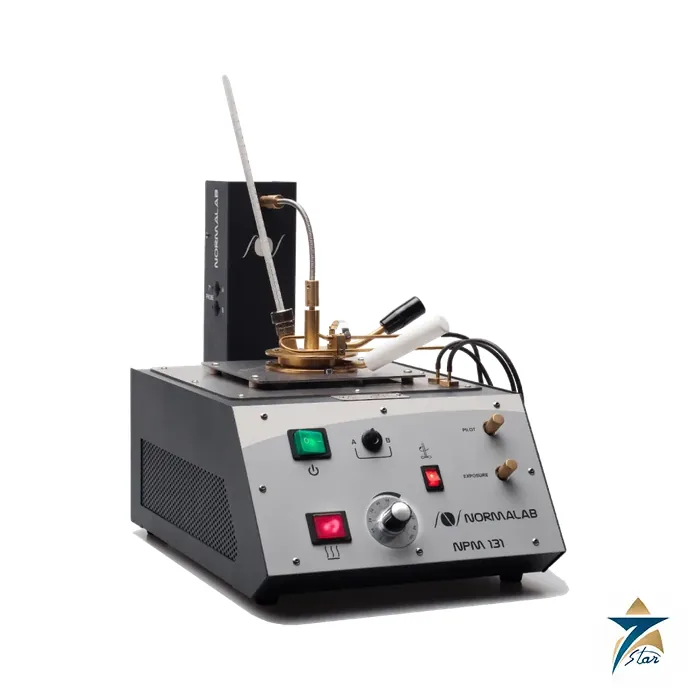
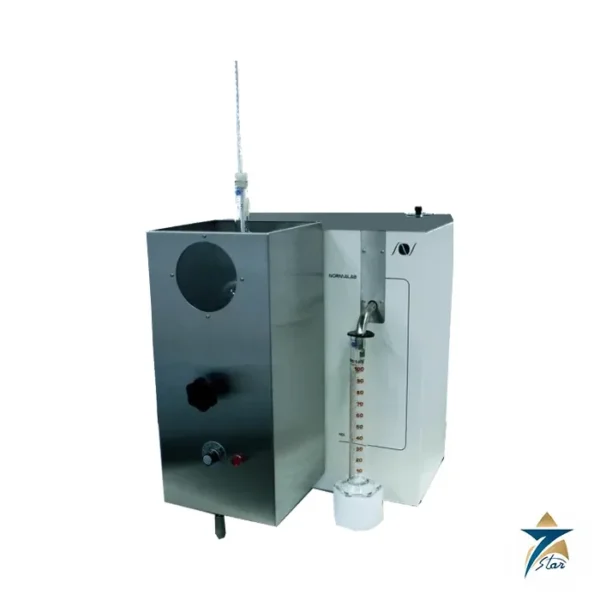
The Normalab NPM 131 is a manual Pensky-Martens closed-cup flash point tester. It offers electric heating, automatic stirring and easy flame control, and runs method A or method B of the Pensky-Martens standards. The operator sets the heating slope, applies the gas flame by hand and watches for the flash, which keeps the instrument simple, robust and inexpensive to maintain.
Technical specifications
| Parameter |
Specification |
| Manufacturer / model |
Normalab NPM 131 |
| Order number |
942616 |
| Temperature range |
Ambient to 370 °C |
| Heating |
Electric heater with manual heating slope |
| Stirring |
Rotating speed according to the specified method; switch to stop the stirrer during presentation |
| Temperature measurement |
ASTM thermometer |
| Cooling |
Compressed air (maximum 2 bar) |
| Ignition |
Gas, presented manually; butane or propane |
| Flash detection |
Visual |
| Safety |
Temperature thermostat |
| Power |
230 V, 50/60 Hz, 1200 W (6 A) |
| Dimensions and weight |
420 x 260 x 320 mm; 8.5 kg |
Standards and sample types
The brochure lists ASTM D93, IP 34, ISO 2719, NF M07019, DIN 51758, GBT 261 and JIS K 2265-3. The test determines flash point between 40 and 370 °C. Procedure A applies to distillate fuels, lubricating oils and other homogeneous petroleum liquids, and procedure B to residual fuel oils, cutback residua, used lubricating oils and mixtures of petroleum liquids. Front-panel controls adjust heating power, stirrer and the heating indicator, and a switch selects method A or B.
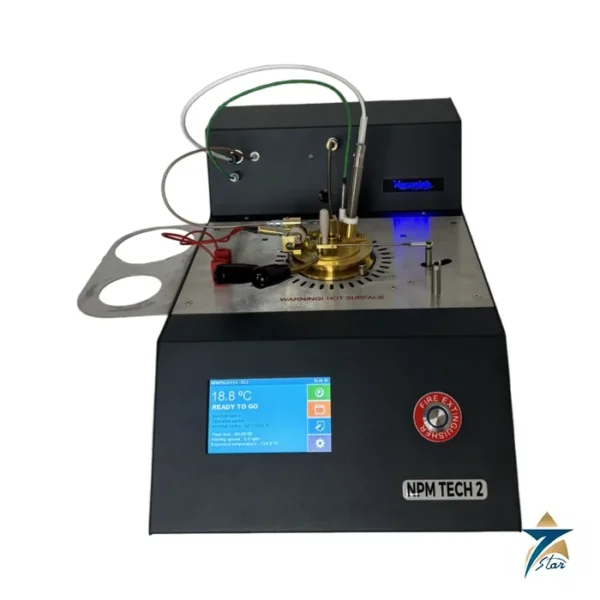
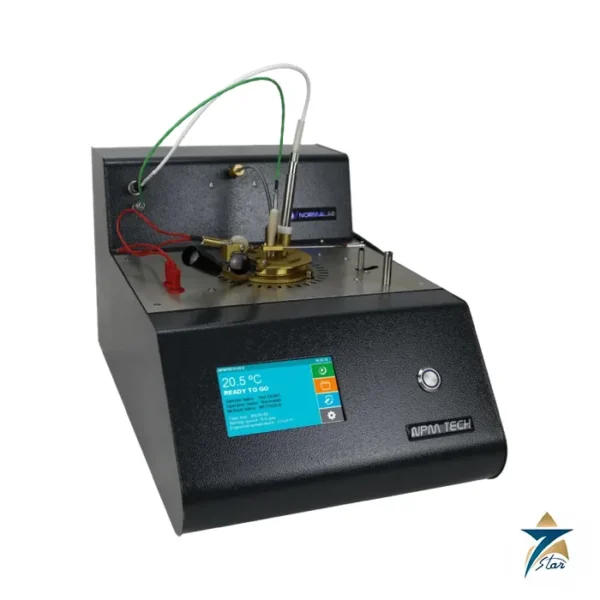
A manual tester remains the right choice when the daily sample count is low, when an inspector wants direct visual confirmation of the flash, or when a back-up unit is needed next to an automated tester. If results must be logged or the ignitor presented automatically, compare the NPM Tech and NPM TECH 2.
Scope of delivery and options
The NPM 131 is delivered ready to use with a cup (P/N 9411930) and lid (9411931), ASTM 9C and 10C thermometers (11496, 11497; supplied without certificate, calibration on request) and a flexible stirring shaft (942699). Options on the product page: a pair of heat-resistant gloves, a stainless steel support for lid and bowl, and a gas kit with cartridge and holder.
Typical users are small quality control laboratories, lubricant blenders, fuel depots and teaching labs. The compressed-air connection, limited to 2 bar, is used to cool the heater between tests, so a regulated air line should be planned at installation. Because both thermometers are delivered without a certificate, laboratories working under accreditation should state their certification requirement when requesting the quotation.
Brass cup and lid dimensions are defined by the standard, so the same cup and lid are used for method A and method B; only stirring and heating rate change, which the front-panel switch handles.
Maintenance is straightforward: clean the cup and lid with a suitable solvent and dry them after each test, inspect the lid seals and shutter for wear, and check that the stirring shaft turns freely. Keep spare ASTM thermometers in the laboratory so that a breakage does not stop routine testing, and arrange regular verification of the thermometers and the stirrer speed.
Deciding whether the NPM 131 fits your laboratory
The deciding questions for the NPM 131 are sample type, workload and record-keeping. Because the instrument covers flash points between 40 and 370 °C and offers both procedures, one unit can handle distillate fuels and clean lubricating oils under procedure A as well as residual fuel oils and used oils under procedure B. That makes it practical for a depot or blender that sees a mixed sample stream but only a handful of tests per shift. A laboratory that must produce electronic test records, or that runs flash point tests continuously, will find that the manual operator workload becomes the constraint, which is the point at which the NPM Tech and NPM TECH 2 named above deserve a comparison.
Think also about who will run the tests. Visual flash detection and hand presentation of the gas flame depend on a trained, consistent operator, so plan for operator training and periodic cross-checks between analysts when several people share the instrument.
Installing and commissioning the tester
- Place the 420 x 260 x 320 mm unit on a stable, non-combustible bench, ideally under a fume extraction hood, as heated petroleum samples release vapours.
- Provide a 230 V, 50/60 Hz supply able to carry the 1200 W (6 A) heater load.
- Route a regulated compressed-air line for heater cooling and make sure the pressure at the instrument does not exceed 2 bar.
- Connect butane or propane for the ignition flame, or use the optional gas kit with cartridge and holder, and leak-check the connection before the first test.
- Fit the flexible stirring shaft, seat the cup and lid, insert the ASTM 9C or 10C thermometer appropriate to the expected flash point, and confirm that the method A/B switch matches the procedure being run.
- Run a reference material of known flash point before releasing the instrument for routine samples.
Typical problems and how to approach them
Results that drift high or low from expected values are most often traced to an incorrect heating slope, a stirring speed that does not match the selected procedure, a cup that was not cleaned and dried, or a thermometer that has been damaged or misread. A flame that will not stay lit usually points to the gas supply or cartridge. If the heater does not cool between tests, check that compressed air is reaching the instrument. The temperature thermostat is a safety device; if it intervenes, find the cause rather than repeating the test immediately.
Operating notes for Oman and the GCC
Laboratories at fuel depots, ports and oilfield sites in Oman often deal with high ambient temperatures, which affects samples with low flash points. Store samples in closed containers in a cool place and keep them sealed until test time so lighter fractions are not lost before the test begins. Fine dust in desert locations settles on the cup, lid and shutter, so cover the instrument when idle and clean the cup immediately before use. In coastal laboratories, humid salt-laden air can attack exposed metal fittings and the gas connection, so include a visual check of these parts in the routine maintenance described above. Compressed air from site networks in hot climates can carry condensed water and oil; a filter and regulator ahead of the 2 bar connection protects the instrument.
Documents and quotation
Normalab’s brochure is linked here. Seven Star LLC, an independent supplier in Muscat, supplies it under liquid analytical systems. Confirm the gas arrangement, the thermometer certificate and whether compressed air at up to 2 bar is available before ordering.







Reviews
There are no reviews yet.