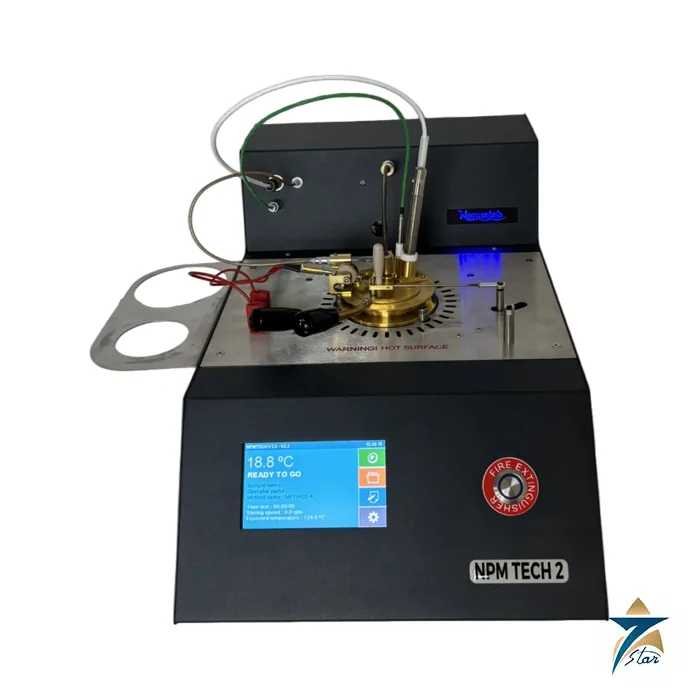
Fully automated Pensky-Martens flash point in a compact case
The Normalab NPM TECH 2 is the automated model of the NPM Tech line. The ignitor is presented to the cup automatically, so once the sample is loaded and the method chosen on the 4.3 inch resistive colour touch screen the instrument heats, stirs, tests and detects the flash on its own. It uses an adjustable-power electric ignitor, which means no gas bottle is needed, and a double fire detection system of ionization and optical sensors guards against fire in the cup.
Technical specifications
| Parameter |
Specification |
| Manufacturer / model |
Normalab NPM TECH 2 |
| Order number |
42600 |
| Temperature range |
Ambient to 400 °C, displayed in °C or °F |
| Temperature resolution |
0.1 °C |
| Temperature probe |
Pt 100, class B |
| Predefined methods |
A, A+, B, C and Research |
| Operating modes |
Research mode and safety mode |
| Stirring |
Adjustable, 0 to 250 rpm; sample preheating with or without stirring |
| Flash detection |
Thermocouple, no calibration required |
| Fire detection |
Ionization and optical; 3 release modes: optical, ionization, manual push button |
| Cooling |
Mechanical fan |
| Interfaces |
1 RS232C (LIMS or printer); 2 mini USB for updates; nitrogen quick connector |
| Memory |
Last 20 results |
| Power |
230 V, 50/60 Hz, 5 A |
| Dimensions |
272 x 450 x 247 mm without holder; 362 x 450 x 247 mm with holder |
| Weight |
11.5 kg; nitrogen supply max 10 bar |
Standards and applications
Normalab states conformity with ASTM D93, IP 34 and ISO 2719 and related methods, for petroleum products between 40 and 370 °C and biodiesel between 60 and 190 °C; the product page also lists ASTM D8175 and ISO 15267. The brochure names refineries, commercial labs, biodiesel plants, safety and environmental labs, stations, fuel depots and terminals, power plants, paints, lacquers and perfumes, and engine manufacturers as typical users.
The software offers predefined rates for each method, simplified temperature calibration with up to five calibration offsets, password-protected access and bilingual French and English menus. A removable holder carries the cup, the lid and the nitrogen bottle.
Options and scope of delivery
Delivered ready to use: a lid with ignitor and thermocouple, a cup, a power cable, a stirring cable, a stylus, the removable holder for cup and nitrogen bottle, a conformity leaflet and a USB key with the instruction manual. Options are an N2 nitrogen bottle for automatic fire extinguishing, which acts by smothering the fire, and a metal probe.
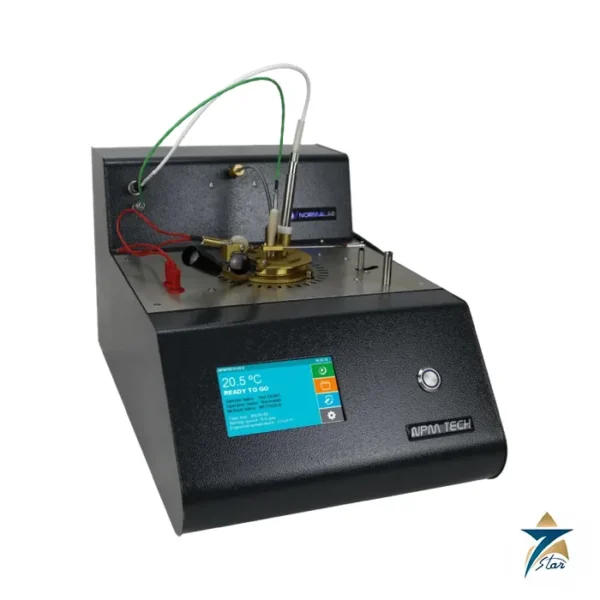
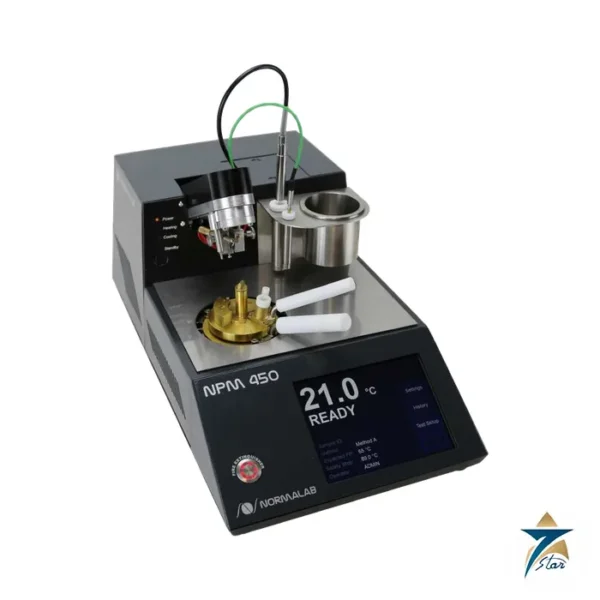
Within Normalab’s Pensky-Martens range the TECH 2 is the model to look at when unattended presentation and fire protection matter: the NPM Tech presents the ignitor by push button and relies on the operator, while the NPM 450 adds a larger 6.4 inch capacitive screen, gas ignition and a 0 to 410 °C range. For a laboratory that must keep gas cylinders out of the room, an electric-ignitor automated unit with an optional nitrogen extinguisher is a practical compromise between convenience and safety.
Key features of the NPM TECH 2
- Automatic ignitor presentation, heating, stirring and flash detection once the sample cup is loaded and the method selected.
- Electric ignitor with adjustable power, removing the need for gas bottles, regulators and gas lines in the laboratory.
- Flash detection by thermocouple, which Normalab states requires no calibration.
- Double fire detection by ionization and optical sensors, with a nitrogen quick connector for fire extinguishing.
- Predefined procedures A, A+, B and C, plus a Research mode for non-standard heating and test conditions.
- 4.3 inch colour touch screen, RS232C output for LIMS or a printer, and storage of the last 20 results.
- Compact footprint and a weight of 11.5 kg, suitable for crowded benches and mobile laboratories.
Choosing the right procedure and set-up
The Pensky-Martens closed cup method is selected by sample type. Procedure A is generally used for distillate fuels such as diesel, kerosene and heating oil, and for new lubricating oils; procedure B is used for residual fuel oils, cutback residua, used lubricating oils and liquids with suspended solids or a tendency to form a surface film; procedure C covers biodiesel. The method chosen on the instrument should match the specification the result will be reported against, because heating rate and stirring speed differ between the procedures. Research mode is useful for development work or for samples outside the standard scopes, but its results should not be reported as a standard-method value. A laboratory that already runs a manual Pensky-Martens tester can usually move to the NPM TECH 2 without changing sample preparation.
Operation and maintenance
- Verify the instrument regularly with a certified reference material of known flash point, and record the result for quality control.
- Clean the cup, lid and stirrer after every test so residues do not affect the next sample.
- Inspect the ignitor and thermocouple for deposits and replace consumables as recommended by Normalab.
- Keep the nitrogen supply connected and below the 10 bar maximum stated for the instrument.
- Check the Pt 100 probe calibration against a traceable thermometer at the interval set by the laboratory quality system.
Applications in Oman and the GCC
Flash point is a safety and quality parameter for fuels handled across the region’s refineries, fuel depots, bunkering terminals, power stations and independent testing laboratories. Marine fuel testing for ships calling at regional ports, quality checks on diesel and jet fuel, and acceptance testing of transformer oils and lubricants are typical duties. Automated testing improves repeatability between operators and shifts, which matters for laboratories working under ISO/IEC 17025 accreditation. Because the instrument is gas-free and compact, it also suits field laboratories at remote sites where handling gas bottles is inconvenient.
What to include in your RFQ
- Model NPM TECH 2 and order number 42600, plus quantity.
- Sample types and standards to be run (ASTM D93 procedures, ISO 2719, IP 34 or others).
- Required accessories such as spare cups, printer, reference materials or nitrogen fittings.
- Power supply available in the laboratory.
- Installation, training and calibration requirements at the delivery site.
Documents and quotation
The brochure is linked on this page. Seven Star LLC, an independent supplier in Muscat, quotes the tester within its liquid analytical systems range. Before ordering, confirm the nitrogen bottle option, the methods required (A, A+, B, C) and the mains plug for 230 V.










Reviews
There are no reviews yet.