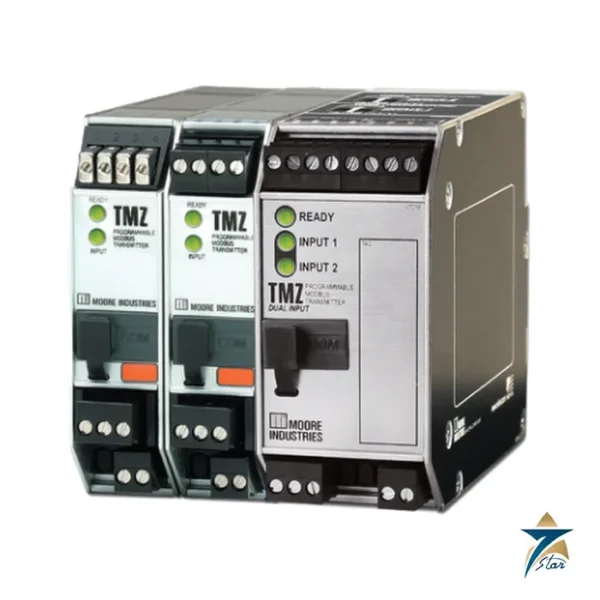
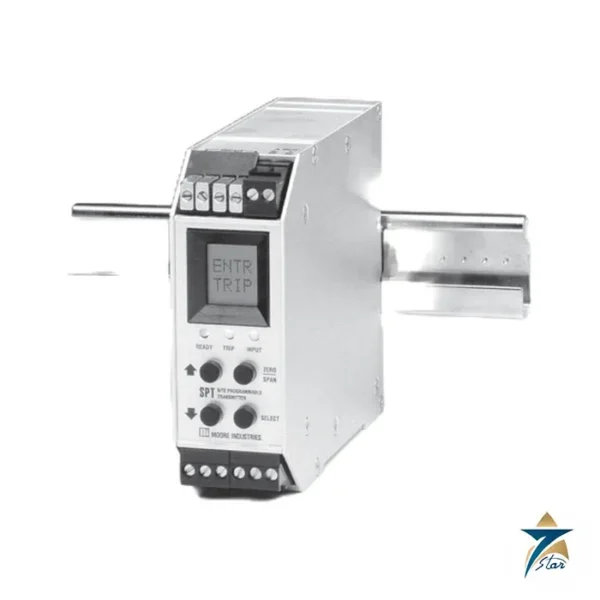
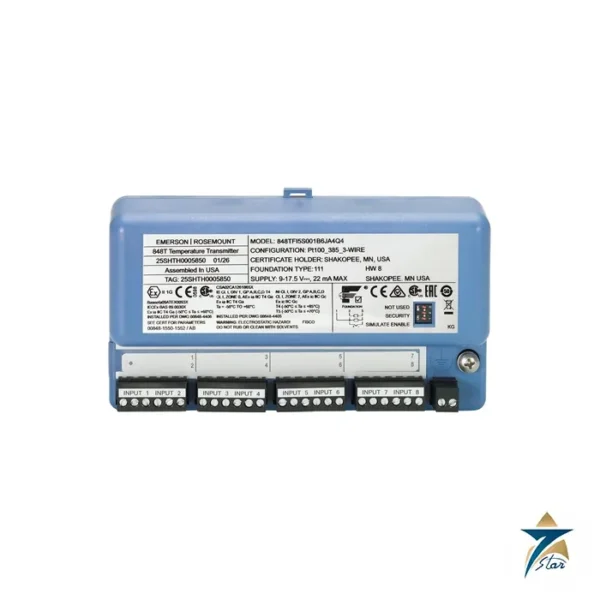
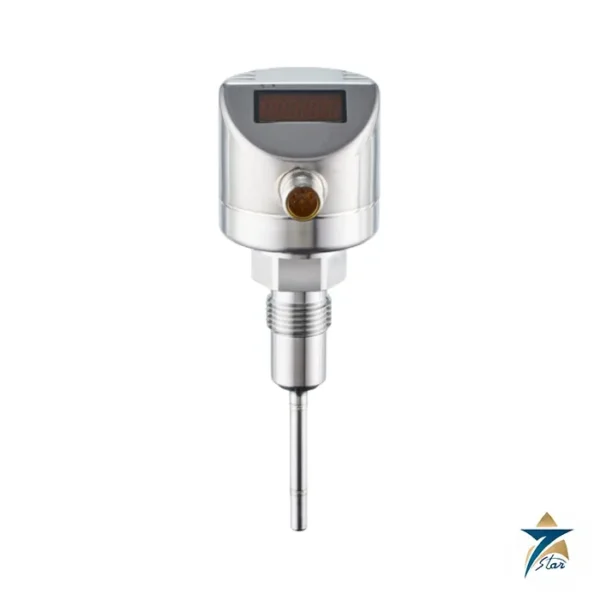
Moore Industries THZ3/PRG/4-20MA/12-30DC [LH2NS] Transmitter

Description

Overview of Moore Industries THZ3/PRG/4-20MA/12-30DC [LH2NS]

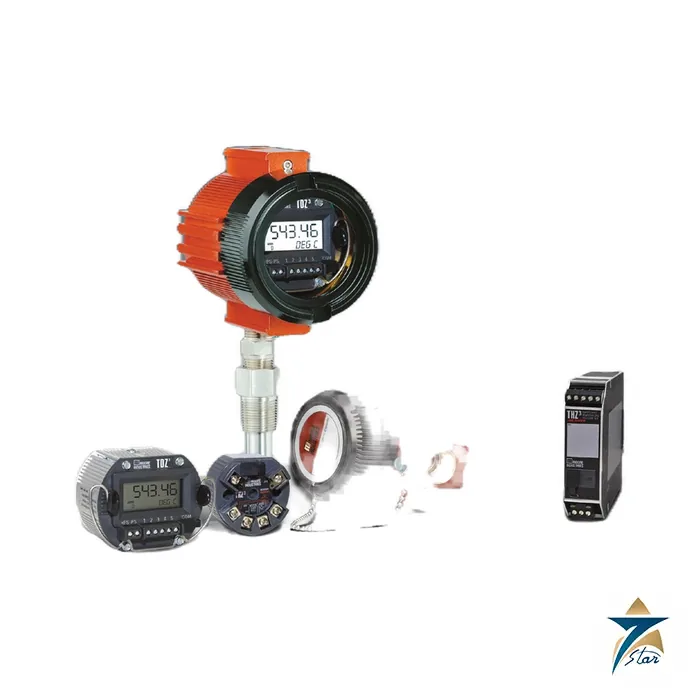
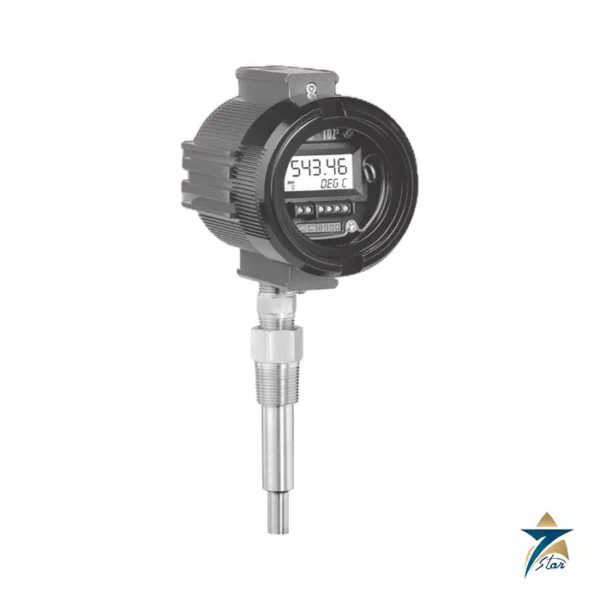
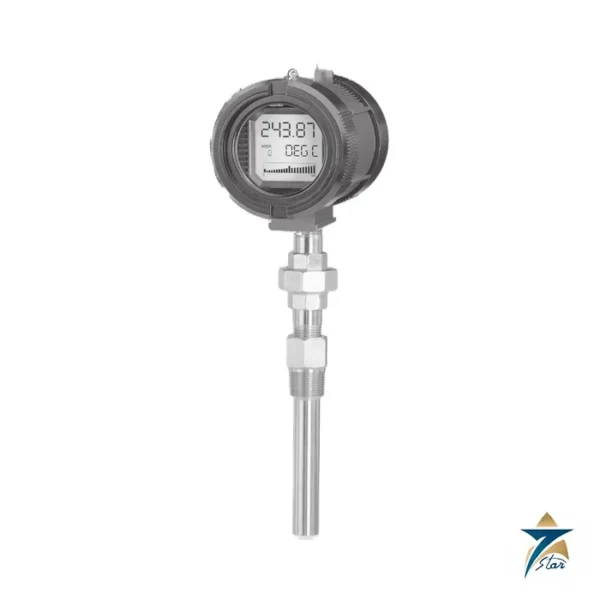
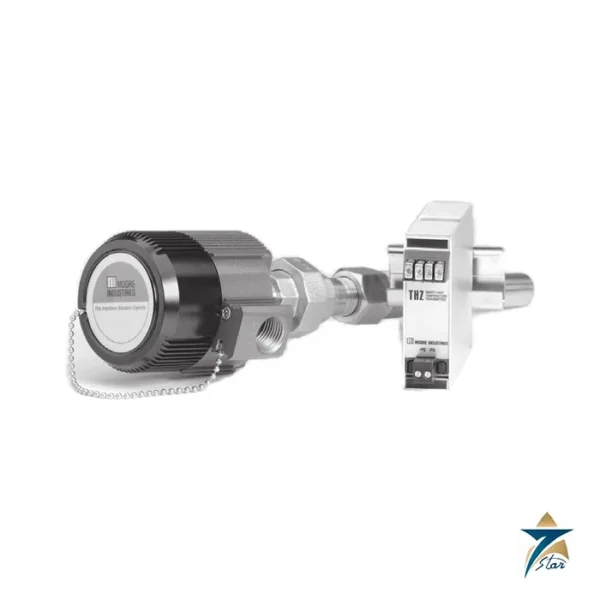
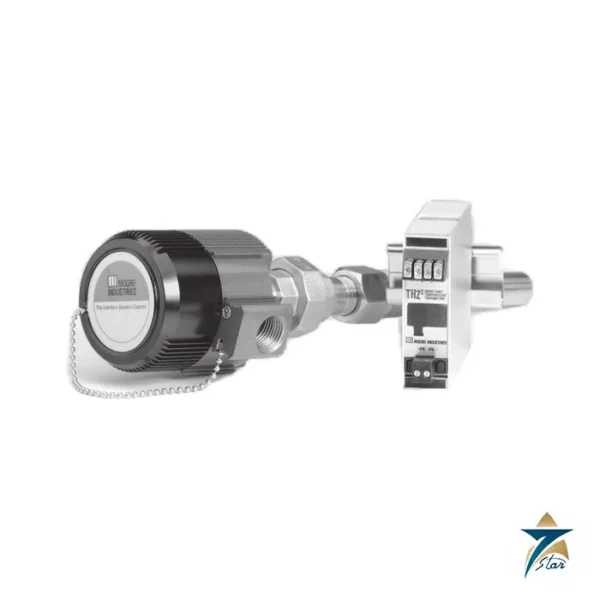
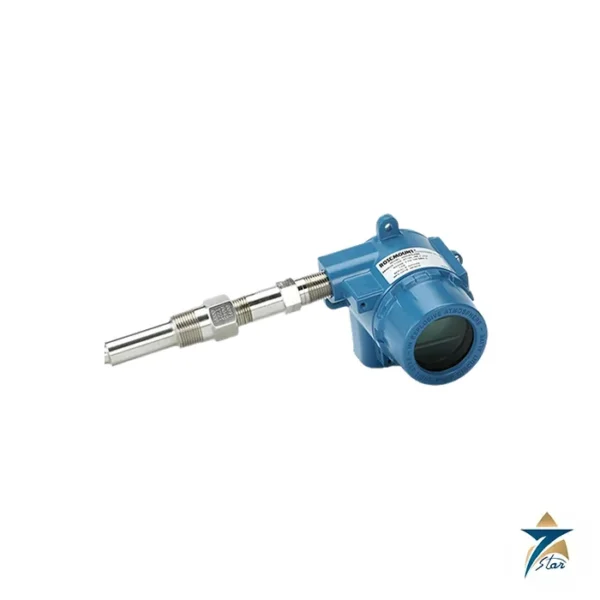
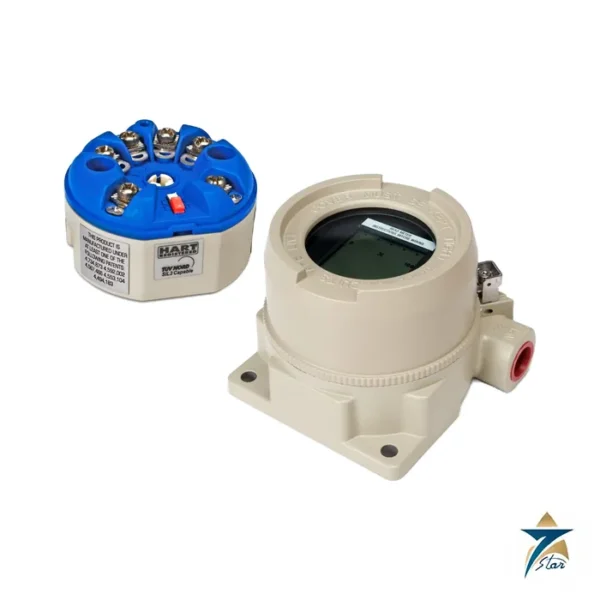
Moore Industries THZ3/PRG/4-20MA/12-30DC [LH2NS] brings the dual-input THZ3 module to the field in an explosion-proof LH2 connection head. Dual input is the headline: two sensors can feed one transmitter, giving backup with automatic failover, average, differential, or low and high select measurement without a second device.

The code reads straightforwardly. PRG means programmable input, 4-20MA is the scalable output, 12-30DC is the intrinsically safe supply selection, and LH2NS identifies a head with two 1/2-inch NPT-type entries and a metal cover. Spend a moment on the supply field: 12-42DC is the standard option, so a buyer who needs I.S. operation must remember to choose 12-30DC as in this string.

Why choose THZ3/PRG/4-20MA/12-30DC [LH2NS]

  • Dual sensor input for redundancy and drift or corrosion detection, including smart range alarms and input simulation.
  • HART 7 with exception-based reporting and dynamic variable mapping; address range 0 to 63 for large multidrop networks.
  • Operation from a HART communicator, any HART host, or an FDT frame such as PACTware through the Moore DTM.
  • Accuracy up to 0.014 C analog and 0.1 C digital with Pt RTDs, and 20-bit input resolution.
  • Namur 43 fail response with a choice of upscale, downscale, preset or hold-last values.

These features put the THZ3 well beyond the basic single-input THZ, particularly in critical measurement points where the cost of a false reading is high.

THZ3/PRG/4-20MA/12-30DC [LH2NS] technical table

The key values from the THZ3 and TDZ3 datasheet are collected here.

Parameter Value for THZ3/PRG/4-20MA/12-30DC [LH2NS]
Model code THZ3/PRG/4-20MA/12-30DC [LH2NS]
Unit THZ3 dual input Smart HART temperature transmitter, HPP module
Input PRG: single or dual input; 14 RTD types, 9 thermocouple types (J, K, E, T, R, S, B, N, C), 0 to 4000 ohm, -50 to 1000 mV, potentiometer
Output 4-20 mA scalable, HART 7 compliant, addresses 0 to 63
Supply 12-30 V DC (intrinsically safe selection); standard version 12-42 V DC
Housing LH2NS: aluminum explosion-proof or flameproof connection head, two entries (1/2-inch NPT cable and process), metal cover
Output accuracy 3 microamps, 0.019% of the 4-20 mA span
Step response 460 ms single input, 650 ms dual input, typical
Isolation 500 Vrms input to output continuous; withstands 1350 Vac for one minute
Fail response Namur 43 compliant; upscale 23.6 mA, downscale 3.6 mA, preset or hold-last, user programmable
Damping 0 to 60 seconds
Cold junction compensation Plus or minus 0.25 C for HPP; plus or minus 0.45 C for DIN
Weight 644 g (22.9 oz) for HPP in LH2; 423 g in LH1; 91 g bare HPP
RFI/EMI 10 V/m at 80-1000 MHz, 1 kHz AM, per IEC 61000-4-3 for THZ3 HPP
Start-up Output reaches 90% within 5 seconds of power-up
Ambient -40 to +85 C; 0 to 95% RH non-condensing

How THZ3/PRG/4-20MA/12-30DC [LH2NS] differs from THZ3 DIN and TDZ3 codes

The DIN version of the THZ3 offers the -AIS option, which adds an intrinsically safe barrier for sensors in Zone 0 or 1, but the LH2NS head does not: instead the head itself is explosion-proof and the module inside is the HPP. The TDZ3 adds a display but is bigger, with 1.4 kg in the BH enclosure.

Immunity also differs: THZ3 HPP is rated at 10 V/m while the DIN with -RF and the TDZ3 HP are rated at 20 V/m. Cold junction compensation is plus or minus 0.25 C in the HPP and plus or minus 0.45 C in the DIN.

Applications

Typical uses in Oman include fired heater outlets and critical reactor temperatures where a primary and backup thermocouple are wired to one transmitter, and gas turbine exhaust or bearing temperatures where average or differential values are valuable. The dual input provides a direct way to flag sensor drift, which is useful in custody transfer and furnace protection loops.

In water and power plants the same head can read two RTDs in a cooling water return, calculating the temperature difference across a heat exchanger in the transmitter itself.

Selecting THZ3/PRG/4-20MA/12-30DC [LH2NS]

Choose the supply code to match your safety method: 12-30DC for intrinsically safe loops and 12-42DC for general use. Note the explosion-proof head carries A and E suffix options for ANZEx and ATEX approvals, and a P suffix that adds a pipe-mount kit; this code carries none of those, so request them explicitly if your site needs them.

Think carefully about the dual-input mode you will use, since average, differential and low or high select behave differently on sensor failure. The configuration software shows each rule before you commit to the setting.

Installation and set-up of THZ3/PRG/4-20MA/12-30DC [LH2NS]

Mount the head at the sensor, terminate both sensors on the transmitter terminals, then wire the loop supply. Configure with a HART tool: choose each input type, set the dual-input mode, the damping (0 to 60 s), the Namur 43 failure values and the PV range.

After closing the metal cover, confirm that the output reaches its steady value within five seconds after power-up.

Maintenance

The module has no internal adjustments. Review the sensor drift and corrosion alerts reported by the device, and periodically compare the two sensors against a reference. Retain the configuration file so a replacement module can be loaded the same way.

If one sensor fails, the transmitter keeps working on the other when configured for backup, giving maintenance time to plan the repair.

Supply of THZ3/PRG/4-20MA/12-30DC [LH2NS]

Please give the full code THZ3/PRG/4-20MA/12-30DC [LH2NS] and the sensor types in your enquiry.

Seven Star LLC is an independent supplier serving Oman and the wider GCC and is not affiliated with the manufacturer; all names and part numbers are used only to identify the product being requested.

Documents and quotation

The datasheet for Moore Industries THZ3/PRG/4-20MA/12-30DC [LH2NS] can accompany our quotation. Send an RFQ listing the part number, quantity and delivery point.

Datasheets & Documents
  • PDF Datasheet Moore Industries THZ3/PRG/4-20MA/12-30DC [LH2NS] Transmitter Datasheet Download
Reviews (0)

Reviews

There are no reviews yet.

How would you rate this product?

It takes about 10 seconds — just tap a star. Your email is never published.

About brand

Moore Industries is an American manufacturer of signal interface instruments, founded in 1968 by engineer Leonard W. Moore in North Hills, California. Its first product was the SCT signal converter, built in a friend's workshop. The company has been at its North Hills headquarters since 1974 and still designs and builds its products there, known for rugged aluminium housings.

Seven Star LLC, an independent supplier in Oman, lists Moore Industries temperature transmitters, limit alarm trips, isolators and a PID backup controller, and sources units and replacements by full model number.

Moore Industries company profile

Founded 1968, North Hills, California, USA, by Leonard W. Moore
Headquarters North Hills, California, since 1974
Ownership Privately owned (Moore Industries-International, Inc.)
First product SCT signal converter
Product families Signal isolators and converters (ECT, SCT), temperature transmitters (TRY, THZ), alarm trip units (SPA), miniMOORE multichannel signal conditioners, HART interfaces, SIL-rated safety logic solvers (STA)

Milestones

  • 1968: Leonard W. Moore founds the company and builds the first SCT signal converter.
  • 1974: The company moves into its North Hills headquarters.
  • 2009: miniMOORE wins a Control Engineering Engineers' Choice Award.

Moore Industries product families on this page

The manufacturer's catalog is arranged by function, and many of the items listed here map onto it directly:

  • Temperature transmitters: the TRX, and the STZ functional safety dual input smart HART transmitter
  • Alarm trips: the SPA2 programmable limit alarm trip, including an SPA2 with HLPRG input and four relay outputs
  • Signal isolators, repeaters and converters: the SIX
  • PID controllers and backup stations: the 535 in 1/4 DIN format

Other catalog groups include temperature assemblies and sensors, I/P and P/I converters, remote I/O, HART gateways and interfaces, indicators, and fieldbus device couplers.

Where Moore Industries instruments are used

These are control room and marshalling cabinet devices, plus field-mounted transmitters. Typical jobs are isolating a 4-20 mA loop between two systems, converting a thermocouple or RTD signal for a DCS input, adding an independent high or low trip next to the control system, and keeping a control loop running on a backup station when the main controller is out of service. Process plants in oil and gas, chemicals and power across the GCC use them for exactly these tasks.

Moore Industries products we list

Family Examples
Controllers & Data Acquisition Moore 535-21120BD000 | Industrial PID Ba…, SPA2 Programmable Limit Alarm Trip, Moore-SPA2HL Associated IS Programmable…
Isolator & Barrier HIM Smart HART Loop Interface and Monitor, SIX Signal Isolator, SLA SIL 2/3 Safety Logic Solver and Alarm
Temperature Instrumentation STZ Functional Safety Dual Input Smart H…, TRX Temperature Transmitter
Industrial Communications HES HART to Ethernet Gateway
Valve Positioners IPT2 Current-to-Pressure I/P Transmitter

Ordering Moore Industries instruments: what we need

Moore Industries model numbers are built from fields separated by slashes: unit, input, output, power and options, followed by the housing code in brackets. Every field matters. Send the complete string from the label, the serial number, and for programmable units the input type and range you want set. State any hazardous area or functional safety requirement, because approved versions are ordered with their own option codes.

Facts checked against trade press obituaries of Leonard W. Moore (Control Engineering, Control Global), October 2026.

FAQ

Questions about the Moore Industries THZ3/PRG/4-20MA/12-30DC [LH2NS]

Answers from our engineering team on installation, compatibility and integration.

01What does dual input mean on a THZ3?
Two sensors can connect to one transmitter for backup and failover, average, differential, or low and high select measurement.
02What HART version does the THZ3 use?
It is HART 7 compliant with exception-based reporting and dynamic variable mapping, with addresses 0 to 63.
03What is the step response?
The datasheet lists 460 ms for single input and 650 ms for dual input, typical.
04Which supply selection does 12-30DC represent?
The intrinsically safe version; the standard version is 12-42DC.
05How long can damping be set?
From 0 up to 60 seconds, longer than the 30 seconds on the older THZ and THZ2.