Moore Industries TDZ/PRG/4-20MA/12-42DC [BH2NGE] Transmitter

Description

Moore Industries TDZ/PRG/4-20MA/12-42DC [BH2NGE] at a glance

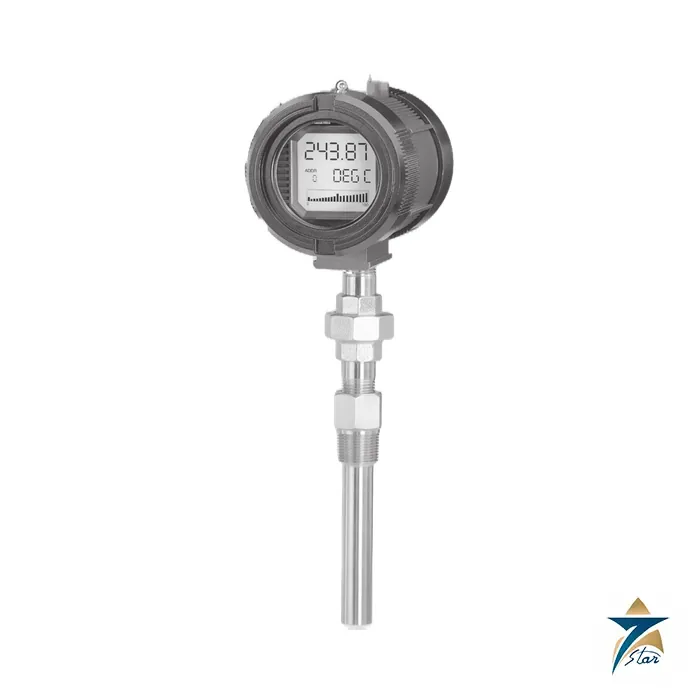
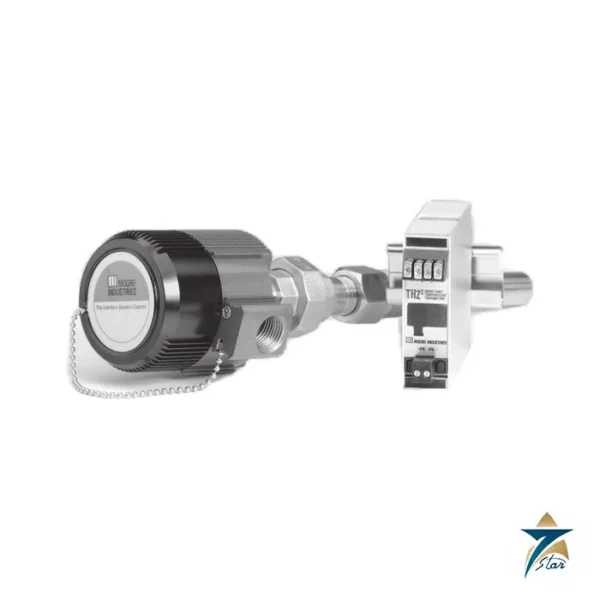
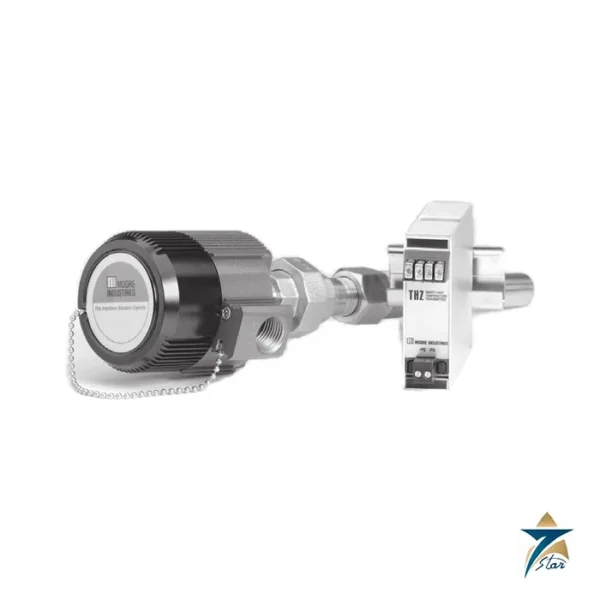
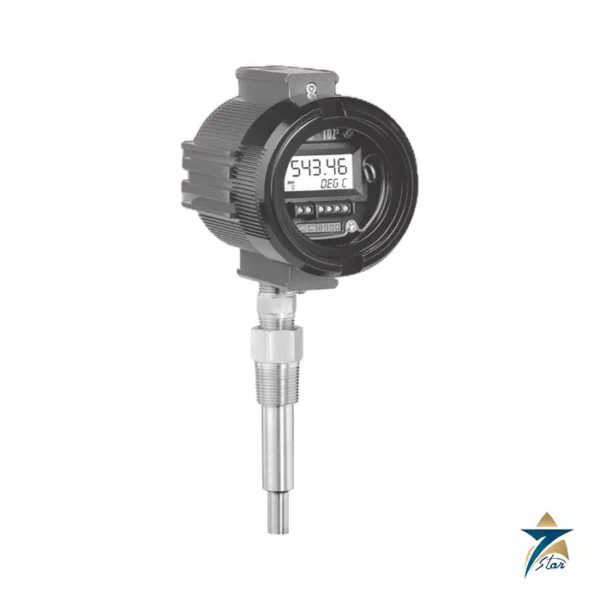
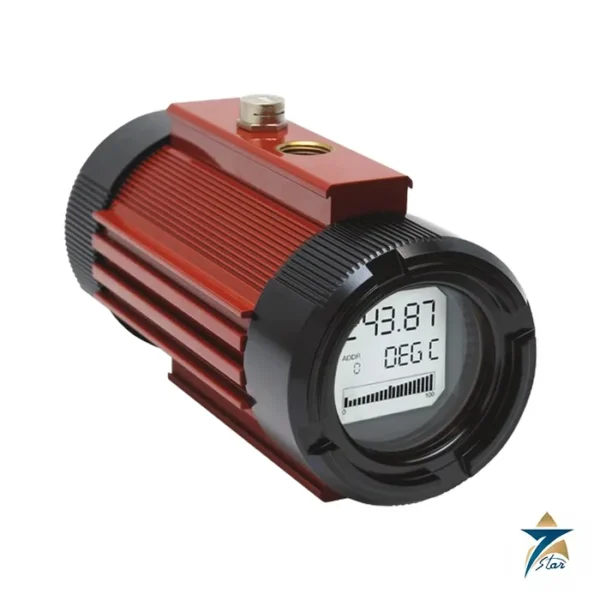
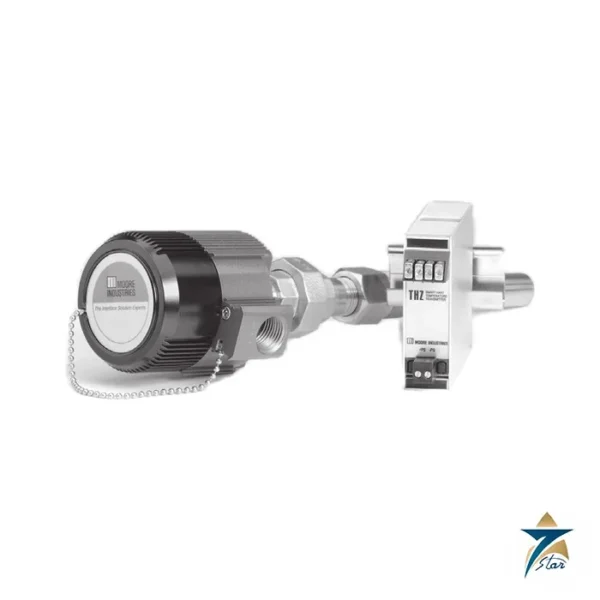
Moore Industries TDZ/PRG/4-20MA/12-42DC [BH2NGE] is the TDZ version of the Smart HART temperature transmitter: the same universal input and HART-superimposed 4-20 mA output as the THZ, but the electronics come with an integral display and the housing is the aluminum BH explosion-proof enclosure. The code BH2NGE reads as follows: BH is the aluminum enclosure family, 2 means two cable entries, N selects 1/2-inch NPT threads, G adds a glass cover, and the final E marks the ATEX flameproof version supplied with a two-inch pipe-mount kit.

Buyers usually look for this exact string when they must replace a failed transmitter in an existing flameproof head without altering the conduit layout, because the entries and the glass window are what the installed hardware dictates.

Features that come with TDZ/PRG/4-20MA/12-42DC [BH2NGE]

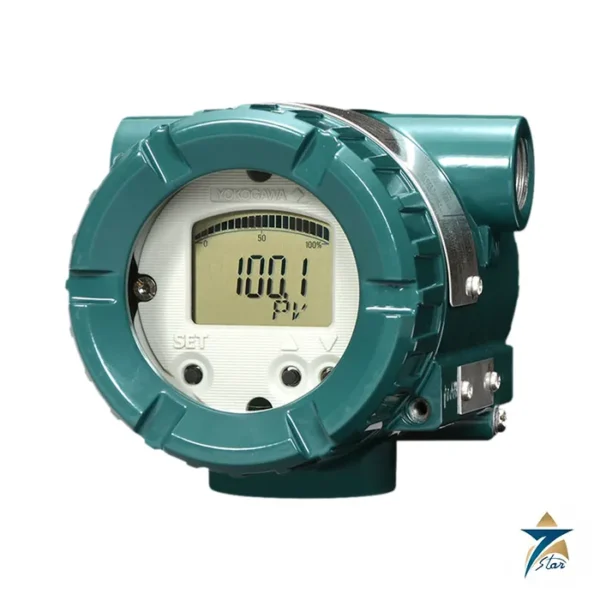
  • Integral two-row display: 10 mm digits for the process value and 6 mm digits for the output or status text.
  • Universal input covering RTDs, thermocouples, resistance and millivolt sources with total sensor diagnostics.
  • Two-point sensor trim and optional custom linearization from the PC configuration software.
  • HART multidrop capability with addresses 1 to 15; HART communicator device description support for THZ and TDZ.
  • Isolated output that tolerates 500 Vrms between input and output.

Specification table for TDZ/PRG/4-20MA/12-42DC [BH2NGE]

These values come from the datasheet specification pages and apply to the TDZ in the BH enclosure.

Parameter Value for TDZ/PRG/4-20MA/12-42DC [BH2NGE]
Model code TDZ/PRG/4-20MA/12-42DC [BH2NGE]
Unit TDZ Smart HART temperature transmitter with integral display
Input PRG programmable: RTD (Pt, Cu, Ni, 2-, 3-, 4-wire), thermocouple J, K, E, T, R, S, B, N, C, ohms to 4000, millivolts -50 to 1000, potentiometer
Output / power 4-20 mA with HART; 12-42 V DC (12-28 V when intrinsically safe)
Housing code BH2NGE: aluminum explosion-proof BH enclosure, two 1/2-inch NPT entries, glass cover; E suffix = ATEX flameproof with 2-inch pipe-mount kit
Display Top row 10 mm digits, bottom row 6 mm digits, two-digit HART address
Isolation 500 Vrms input to output continuous; 500 Vac dielectric test for one minute
Step response 700 ms maximum, 500 ms typical (all TDZ models); rise time 100 ms maximum
Analog output accuracy Plus or minus 0.015% of span
Digital accuracy Plus or minus 0.1 C with platinum RTDs; up to plus or minus 0.014 C analog input-to-output under matched 4-wire Pt1000 conditions
Resolution Input 20-bit, output 16-bit; HART address range 0 to 15
Burnout Upscale to 23.6 mA or downscale to 3.6 mA; limits 3.8 and 21.6 mA; 25 mA hardware maximum
Ambient -40 to +85 C, 0 to 95% RH non-condensing, start-up within 8 seconds
Damping 0 to 30 seconds, user set
Alternative housings HP puck 188 g, D-BOX 678 g, BH, SB and D2LC enclosures

How TDZ/PRG/4-20MA/12-42DC [BH2NGE] differs from the THZ and from other TDZ housings

The THZ in a DH enclosure uses 18 mm and 10 mm digits, whereas every TDZ housing keeps the smaller 10 mm and 6 mm display. The TDZ is the right pick when a compact display module is acceptable and the case must be an aluminum explosion-proof BH, a stainless SB hub or a light D2LC IP66 box.

Within the TDZ branch the HP module weighs 188 g, the D-BOX version 678 g, and the BH variant has its own, higher weight listed in the datasheet. Step response is 700 ms maximum across all TDZ models, slower than the 600 ms of the bare THZ modules.

Where TDZ/PRG/4-20MA/12-42DC [BH2NGE] is used

Flameproof field transmitters of this type are common at wellhead separators, flare knock-out drums, fired heater skin points and pipeline pump stations. In Oman they appear in gas processing trains, refinery tank farms and LNG utilities where ATEX or IECEx marking is accepted for Zone 1 equipment.

Outside oil and gas, the same BH housing suits solvent plants, fertilizer lines and fuel handling at power stations, where a local readout saves operators from carrying a handheld communicator.

Compatibility and selection for TDZ/PRG/4-20MA/12-42DC [BH2NGE]

Check that the E suffix suits your site certificates, since the datasheet also defines an A suffix for ANZEx and a P suffix for a plain pipe kit. Verify the cable gland thread: BH2NG denotes 1/2-inch NPT, while BH2TG uses 3/4-inch NPT and BH2MG uses M20 x 1.5, and adapters change the rating of the assembly.

Choose the sensor to match the range: a four-wire Pt RTD gives the finest accuracy, a thermocouple adds a cold junction compensation error of 0.45 C. The loop supply must provide at least 12 V at the transmitter terminals, with HART communication requiring 250 to 1100 ohms of loop resistance.

Installation and start-up of TDZ/PRG/4-20MA/12-42DC [BH2NGE]

Fix the enclosure on the 2-inch pipe, fit certified glands, and wire the sensor to terminals 1 to 4. After closing the cover apply loop power and wait about eight seconds for the display to settle. Use the PC software with a HART modem, or a hand-held communicator, to select the input type, range, burnout mode and display units.

Keep the glass cover and its threads clean; the flameproof rating depends on the joint, so never replace a cover or gasket with a non-matching part.

Maintenance guidance for TDZ/PRG/4-20MA/12-42DC [BH2NGE]

Inspect the enclosure for corrosion, check that all entries are plugged or glanded, and compare the displayed value with a reference sensor annually. Moore Industries quotes long-term stability that supports multi-year calibration intervals; keep a record of any trim offset programmed into the unit.

Spare TDZ modules can be dropped into the existing housing, so a stocked electronics unit shortens downtime when a failure is traced to the transmitter itself.

Supplier notes and ordering for TDZ/PRG/4-20MA/12-42DC [BH2NGE]

When you send an enquiry for TDZ/PRG/4-20MA/12-42DC [BH2NGE], give us the complete order string, the intended sensor and the area classification so we can match the correct approvals.

Seven Star LLC is an independent supplier serving Oman and the wider GCC and is not affiliated with the manufacturer; all names and part numbers are used only to identify the product being requested.

Documents and quotation

The datasheet that covers Moore Industries TDZ/PRG/4-20MA/12-42DC [BH2NGE] lists housings, approvals and dimensions and can accompany our quotation. Send an RFQ stating the part number, quantity and delivery point, and we will respond with availability and terms.

Other Models in the THZ TDZ Range

Seven Star LLC supplies models from the THZ TDZ range in Oman and the GCC. Compare the related models below and request a quote for the one that matches your application.

ModelCategory
Moore Industries TDZ/PRG/4-20MA/12-42DC [BH2NGE] TransmitterTemperature TransmittersYou are viewing this model
Moore Industries THZ/PRG/4-20MA/12-42DC [HPP] Head TransmitterTemperature TransmittersView details
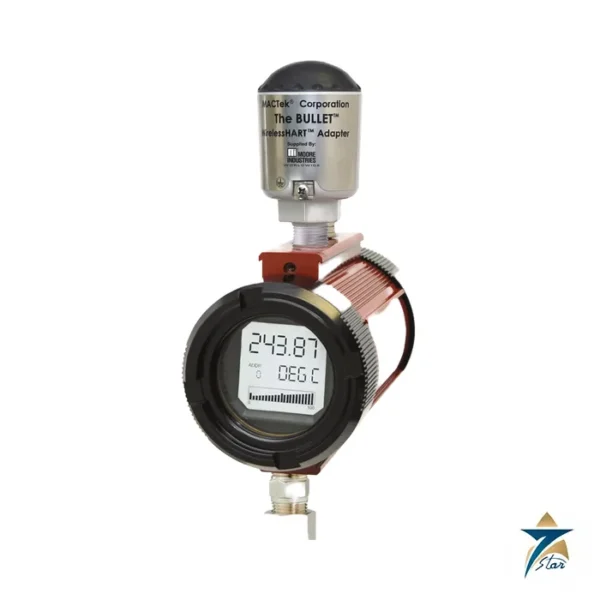
Moore Industries THZ/PRG/4-20MA/12-42DC [WL2NG] WirelessHART CaseTemperature TransmittersView details
Moore Industries THZ/PRG/4-20MA/12-30DC/-ISF [DH2NGP] TransmitterTemperature TransmittersView details
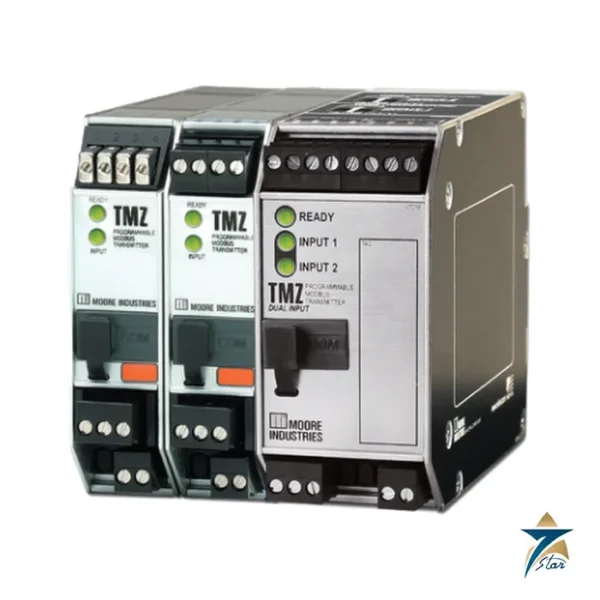
Moore Industries THZ/PRG/4-20MA/12-42DC [DIN] Rail TransmitterTemperature TransmittersView details
Datasheets & Documents
  • PDF Datasheet Moore Industries TDZ/PRG/4-20MA/12-42DC [BH2NGE] Transmitter Datasheet Download
Reviews (0)

Reviews

There are no reviews yet.

How would you rate this product?

It takes about 10 seconds — just tap a star. Your email is never published.

About brand

Moore Industries is an American manufacturer of signal interface instruments, founded in 1968 by engineer Leonard W. Moore in North Hills, California. Its first product was the SCT signal converter, built in a friend's workshop. The company has been at its North Hills headquarters since 1974 and still designs and builds its products there, known for rugged aluminium housings.

Seven Star LLC, an independent supplier in Oman, lists Moore Industries temperature transmitters, limit alarm trips, isolators and a PID backup controller, and sources units and replacements by full model number.

Moore Industries company profile

Founded 1968, North Hills, California, USA, by Leonard W. Moore
Headquarters North Hills, California, since 1974
Ownership Privately owned (Moore Industries-International, Inc.)
First product SCT signal converter
Product families Signal isolators and converters (ECT, SCT), temperature transmitters (TRY, THZ), alarm trip units (SPA), miniMOORE multichannel signal conditioners, HART interfaces, SIL-rated safety logic solvers (STA)

Milestones

  • 1968: Leonard W. Moore founds the company and builds the first SCT signal converter.
  • 1974: The company moves into its North Hills headquarters.
  • 2009: miniMOORE wins a Control Engineering Engineers' Choice Award.

Moore Industries product families on this page

The manufacturer's catalog is arranged by function, and many of the items listed here map onto it directly:

  • Temperature transmitters: the TRX, and the STZ functional safety dual input smart HART transmitter
  • Alarm trips: the SPA2 programmable limit alarm trip, including an SPA2 with HLPRG input and four relay outputs
  • Signal isolators, repeaters and converters: the SIX
  • PID controllers and backup stations: the 535 in 1/4 DIN format

Other catalog groups include temperature assemblies and sensors, I/P and P/I converters, remote I/O, HART gateways and interfaces, indicators, and fieldbus device couplers.

Where Moore Industries instruments are used

These are control room and marshalling cabinet devices, plus field-mounted transmitters. Typical jobs are isolating a 4-20 mA loop between two systems, converting a thermocouple or RTD signal for a DCS input, adding an independent high or low trip next to the control system, and keeping a control loop running on a backup station when the main controller is out of service. Process plants in oil and gas, chemicals and power across the GCC use them for exactly these tasks.

Moore Industries products we list

Family Examples
Controllers & Data Acquisition Moore 535-21120BD000 | Industrial PID Ba…, SPA2 Programmable Limit Alarm Trip, Moore-SPA2HL Associated IS Programmable…
Isolator & Barrier HIM Smart HART Loop Interface and Monitor, SIX Signal Isolator, SLA SIL 2/3 Safety Logic Solver and Alarm
Temperature Instrumentation STZ Functional Safety Dual Input Smart H…, TRX Temperature Transmitter
Industrial Communications HES HART to Ethernet Gateway
Valve Positioners IPT2 Current-to-Pressure I/P Transmitter

Ordering Moore Industries instruments: what we need

Moore Industries model numbers are built from fields separated by slashes: unit, input, output, power and options, followed by the housing code in brackets. Every field matters. Send the complete string from the label, the serial number, and for programmable units the input type and range you want set. State any hazardous area or functional safety requirement, because approved versions are ordered with their own option codes.

Facts checked against trade press obituaries of Leonard W. Moore (Control Engineering, Control Global), October 2026.

FAQ

Questions about the Moore Industries TDZ/PRG/4-20MA/12-42DC [BH2NGE]

Answers from our engineering team on installation, compatibility and integration.

01What does the E in BH2NGE mean?
It denotes the ATEX flameproof (Ex d) version of the BH enclosure, supplied with a 2-inch pipe-mount kit; BH is aluminum, 2 is the number of hubs and NG means 1/2-inch NPT with a glass cover.
02What is the difference between TDZ and THZ?
The TDZ is the display-equipped field model with 10 mm and 6 mm digits, while the THZ is sold as module housings and the DH enclosure with an 18 mm display option.
03What supply voltage does it need?
The 12-42DC code means 12 to 42 V DC at the output terminals in standard use; the intrinsically safe version is limited to 12 to 28 V.
04How fast is the step response?
Every TDZ model is rated at 700 ms maximum and 500 ms typical for the output to reach 90% after an input step.
05Which sensors can it read?
RTD (2-, 3-, 4-wire), thermocouples J, K, E, T, R, S, B, N and C, resistance up to 4000 ohms, millivolt signals from -50 to 1000 mV and potentiometers.