Brand:

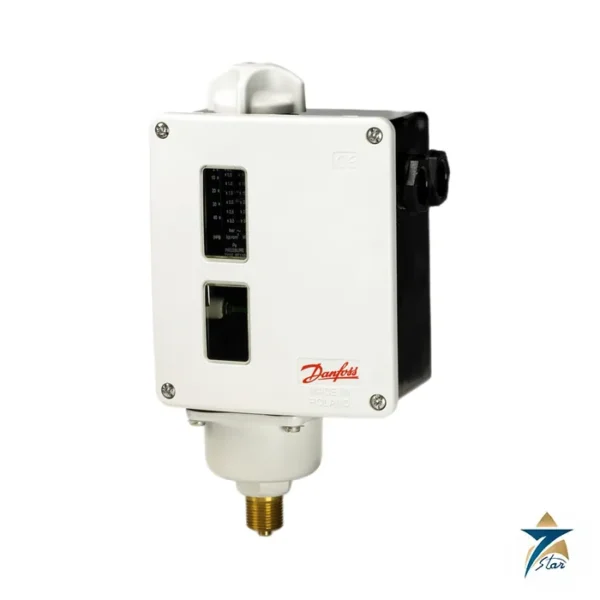
CCS 604V1 Vacuum Switch

Description

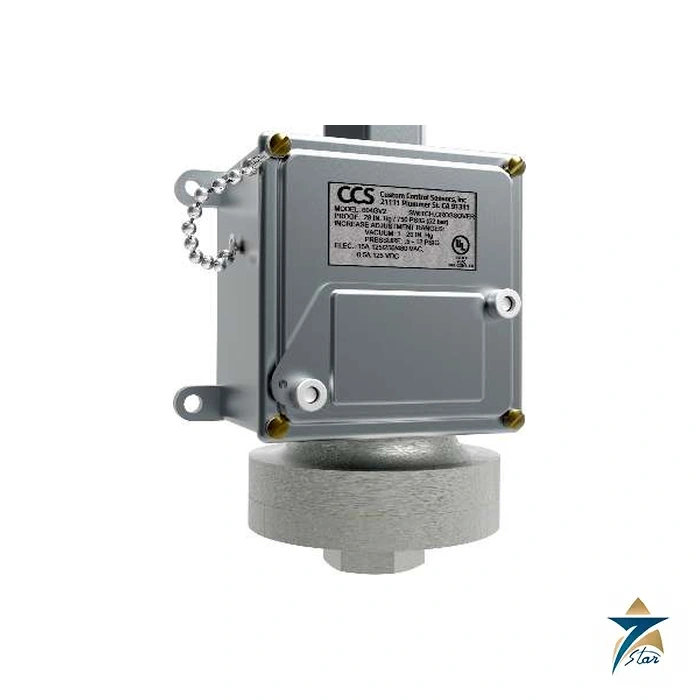
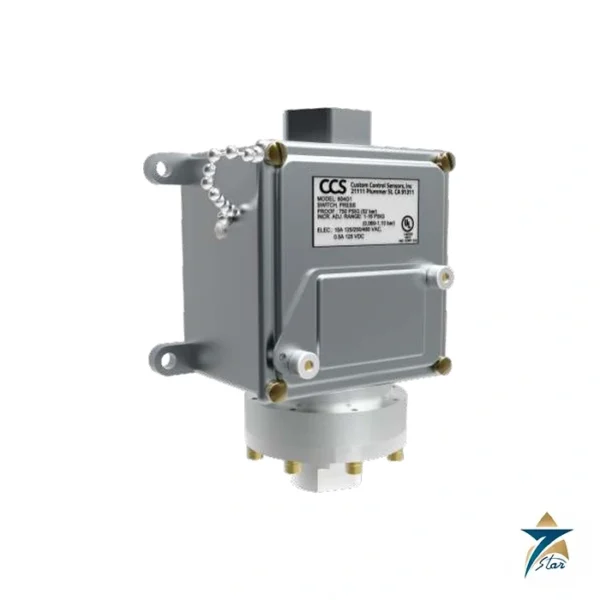
CCS 604V1 adjustable vacuum switch: overview

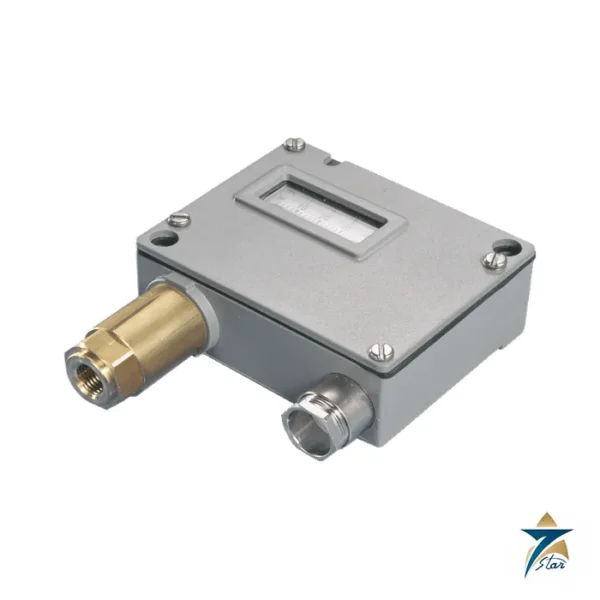
The CCS 604V1 is an internally adjustable vacuum switch from the Custom Control Sensors (CCS) 604V/604GV series of Dual-Snap switches for non-hazardous areas. It senses vacuum through a polyimide diaphragm and switches an SPDT contact when the vacuum level rises or falls through the set point. Its range, 3.5–28.5 inHg on increasing vacuum, covers most industrial vacuum duties from light suction monitoring to near-full vacuum, and the aluminium port and Buna-N seal suit air and other non-corrosive gases.

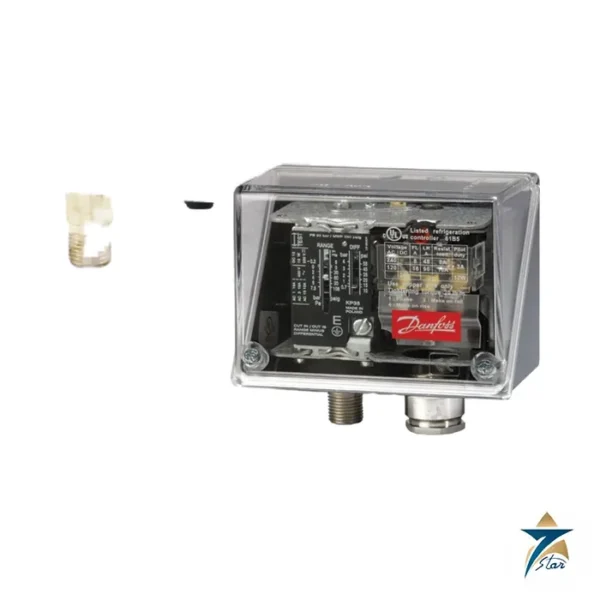
The manufacturer drawing for the series shows the 604V1 as the illustrated model, so its outline dimensions and wiring details apply directly to this reference.

Key features

  • Snap-action Belleville disc: positive, repeatable switching that stays stable under vibration and shock.
  • Wide vacuum adjustment: a single unit covers 3.5 to 28.5 inHg increasing vacuum.
  • Narrow deadband: about 2.5 inHg between trip and reset.
  • Overpressure tolerance: 150 psig system pressure and 250 psig proof pressure, so the sensor survives a line that is accidentally pressurised.
  • Enclosure: weatherproof NEMA 4 and 13 / IP65 housing with an internal case ground and a 3/4-14 NPT conduit connection.
  • Series standard features: CE, CRN, CCC, NACE MR0175 and UL listing under file E72038.

Technical specifications of the CCS 604V1

Parameter Specification
Manufacturer / series Custom Control Sensors (CCS), 604V series vacuum switch, non-hazardous areas
Model 604V1
Adjustable range, increasing vacuum 3.5–28.5 inHg (89–724 mmHg)
Adjustable range, decreasing vacuum 1–26 inHg (25–660 mmHg)
Approximate deadband 2.5 inHg (64 mmHg)
System pressure 150 psig (10.3 bar)
Proof pressure 250 psig (17.2 bar)
Vacuum port 1/4"-18 NPT, aluminium
Diaphragm / O-ring Polyimide / Buna-N
Contact form (base model) SPDT
Electrical rating, SPDT (resistive) 15 A at 125/250/480 VAC; 6 A at 28 VDC; 0.5 A at 125 VDC; 0.2 A at 250 VDC
Operating temperature (series) −40 to 186 °F (−40 to 86 °C)
Conduit connection 3/4-14 NPT
Mounting Four 0.265" (6.7 mm) holes
Enclosure NEMA 4, 13 / IP65, weatherproof, internal case ground
Approximate shipping weight 40 oz (1134 g)

Operating principle

Vacuum applied to the port draws the polyimide diaphragm, and the resulting force is carried to a Belleville snap disc. The disc holds its position until the force passes the set point, then reverses suddenly and transfers the contacts. As the vacuum decays, the disc returns at a lower value, and the gap between trip and reset is the deadband of about 2.5 inHg. For that reason the datasheet lists two ranges. A unit set to trip at 20 inHg rising vacuum will reset at roughly 17.5 inHg as the vacuum falls. The series datasheet also notes that the related gauge-mode GV models have their wiring diagram reversed, which matters when comparing drawings across the family.

Typical applications

  • Vacuum pump monitoring and low-vacuum alarms on packaging, pick-and-place and material-handling equipment.
  • Vacuum holding systems for clamping or lifting, where loss of vacuum must stop the machine.
  • Filter and suction line monitoring, signalling a blocked intake or a leak.
  • Process vessels and degassing systems that operate under partial vacuum.
  • Interlocks that must confirm vacuum is established before a cycle starts.

Selection and ordering-code notes

CCS model numbers combine the series, an optional letter and a suffix. For the 604V family the documented letters include A (Viton O-ring), F (EPR O-ring), J (CSA approved, SPDT only), M (DPDT) and X (double break). Documented suffixes include -7005 (Viton/Dacron diaphragm with stainless steel port cap, Z models only), -7008 (gold contacts) and -7011 (stainless steel diaphragm). The CCS 604V1 has no letter or suffix, so it is the base SPDT unit with aluminium port, polyimide diaphragm and Buna-N O-ring.

Where the medium attacks aluminium or nitrile rubber, the 604VZ*1 is the closely related choice. It has the same vacuum ranges but a 1/2"-14 NPT 316 stainless steel port with a Viton O-ring. Because the port size differs, piping must be checked before switching between the two. Always quote the full nameplate string when replacing an installed switch.

Installation and commissioning

  • Mount the switch on a flat, rigid surface using the four 6.7 mm holes; do not let the process pipe carry its weight.
  • Tighten the 1/4"-18 NPT connection on the port hex only. Avoid over-tightening the aluminium thread and use a sealant suitable for vacuum service.
  • Keep the sensing line short and free of low points where condensate can collect and dampen the signal.
  • Bring the wiring in through the 3/4-14 NPT conduit entry and seal the entry to keep the IP65 rating. Connect the internal ground.
  • Set the switch through the access cover with the internal adjustment wheel. Then confirm both trip and reset values with a calibrated vacuum source and gauge.

Maintenance and troubleshooting

Routine care consists of periodic functional tests against a reference vacuum gauge, plus checks of the cover gasket, conduit seal and terminals. A switch that never trips often has a leaking sensing line or a blocked port, so check the line before adjusting the set point. If the trip point appears to have drifted, confirm whether the reading was taken on rising or falling vacuum, because the two differ by the deadband. On DC circuits, check that the load stays within 0.5 A at 125 VDC or 0.2 A at 250 VDC; heavier inductive loads should be switched through a relay. Replace a unit that has been exposed to pressure above the 250 psig proof rating.

Quotation enquiries for Oman and the GCC

Seven Star LLC supplies the CCS 604V1 on request to customers in Oman and throughout the GCC. Please include the following with your enquiry:

  • The exact model reference from the nameplate, including any letters or suffixes.
  • The quantity needed.
  • A photo of the nameplate for replacement items.
  • Application details: medium, required set point and direction, and the electrical load to be switched.

Availability, condition and lead time are confirmed at quotation. We offer technical support with selection and cross-checking of the reference against CCS documentation.

Datasheets & Documents
  • PDF Datasheet CCS 604V / 604GV Manufacturer Datasheet — 2017 Download
Reviews (0)

Reviews

There are no reviews yet.

How would you rate this product?

It takes about 10 seconds — just tap a star. Your email is never published.

About brand

CCS (Custom Control Sensors) is an American maker of pressure, vacuum, differential pressure and temperature switches with roots in the late 1950s. Its founder began by designing switches for the United States Air Force. CCS is known for its patented Dual-Snap disc spring design, and its switches are used in aerospace, oil and gas, and industrial plants.

Seven Star LLC lists CCS pressure switches and differential pressure switches in explosion-proof housings and supplies them to plants in Oman, with each part number checked against the manufacturer's documentation before an offer is made.

CCS company profile

Origins Late 1950s, California
Base Chatsworth, California
Technology Dual-Snap disc spring switches
Industries Aerospace, oil and gas, industrial
Product families 604 series pressure and vacuum switches, 646 series explosion-proof pressure switches, 646DZE differential pressure switches, temperature switches

CCS pressure switch models listed here

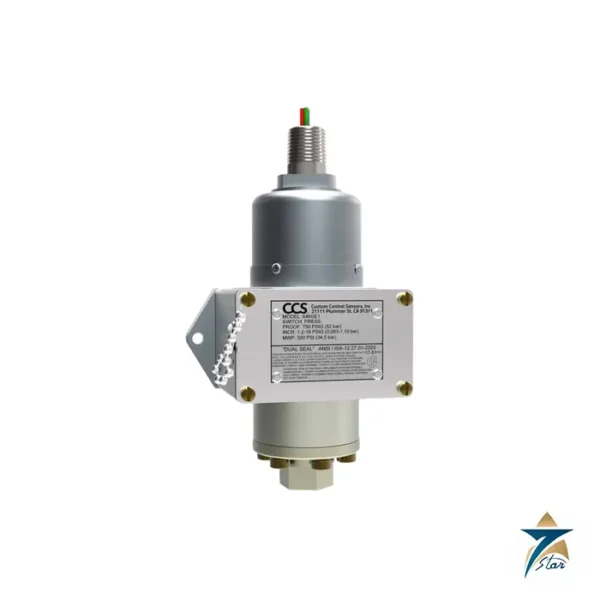
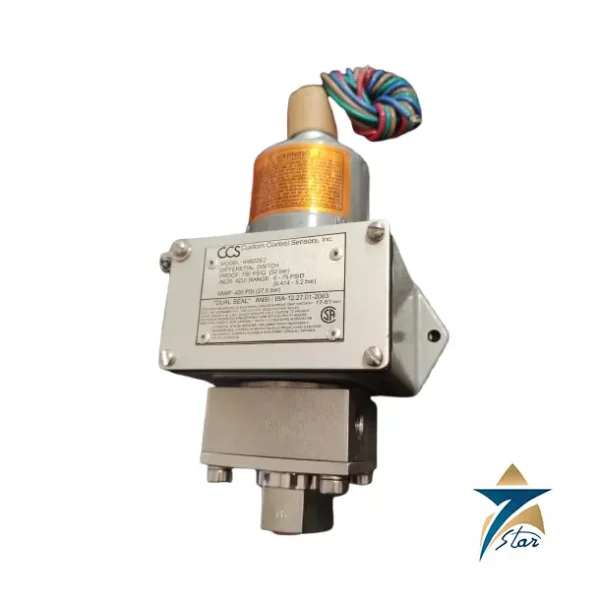
Two members of the 646 line are on this page: the 646GZE-7011 explosion-proof Dual-Snap pressure switch and the 646DZE adjustable differential pressure switch, also explosion-proof. The letters and digits that follow 646 are not decoration. They fix the sensing type, the pressure port, the wetted material, the electrical rating and the adjustable span, so two CCS switches that look alike from the outside can have very different set point limits.

CCS products we list

Family Examples
Pressure Instrumentation 604GZ2-7011 Pressure Switch, 604V1 Vacuum Switch, 646DZE Adjustable Differential Pressure…, 646GZE-7011 Series Explosion-Proof Dual-…

Ordering a CCS switch: what we need

Send the complete part number from the nameplate with every suffix, plus the set point, whether the contact must act on rising or falling pressure, the process fluid and the area classification of the location. A nameplate photo is the quickest way to avoid a wrong match. For projects elsewhere in the GCC, tell us which approval marking the site specification calls for and we will compare it with the CCS datasheet before quoting.

Facts checked against CCS's own company pages (ccsdualsnap.com), October 2026.

FAQ

Questions about the CCS 604V1 Vacuum Switch

Answers from our engineering team on installation, compatibility and integration.

01What vacuum range does the CCS 604V1 cover?
It is adjustable from 3.5 to 28.5 inHg on increasing vacuum and from 1 to 26 inHg on decreasing vacuum, with an approximate deadband of 2.5 inHg.
02What are the wetted materials of the 604V1?
The 1/4 inch-18 NPT port is aluminium, the diaphragm is polyimide and the O-ring is Buna-N.
03Can the 604V1 tolerate positive pressure?
Yes, within limits. The datasheet lists 150 psig system pressure and 250 psig proof pressure.
04What is the difference between the 604V1 and 604VZ1?
Both have the same vacuum ranges. The VZ version uses a 1/2 inch-14 NPT 316 stainless steel port with a Viton O-ring instead of the aluminium port and Buna-N seal.
05What contact rating does the switch have?
The SPDT contact is rated 15 A at 125, 250 or 480 VAC and 6 A at 28 VDC, falling to 0.5 A at 125 VDC and 0.2 A at 250 VDC (resistive).