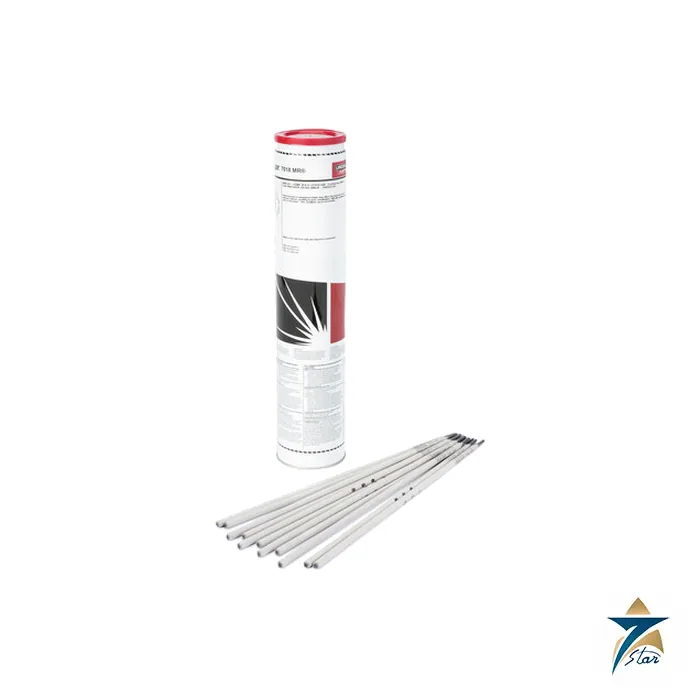
Lincoln Electric Excalibur 7018 MR E7018 H4R Low Hydrogen Stick Electrode Supplied by Seven Star LLC

Welding Electrodes

Welding electrodes for stick welding (SMAW or MMA) are listed here by AWS classification, from low-hydrogen E7018 types to stainless, chrome-moly and nickel alloy grades. Seven Star LLC supplies stick electrodes in Oman from Hyundai Welding, Ador Welding and Lincoln Electric. Stick welding needs no shielding gas and runs from simple power sources, which is why these welding rods remain the standard consumable for site erection, shutdown repair and pipeline tie-ins.
Read more about Welding Electrodes

Cellulosic Pipeline Electrodes

Category guide

About Welding Electrodes

26 products 3 brands 1 sub-category

Welding electrodes for stick welding (SMAW or MMA) are listed here by AWS classification, from low-hydrogen E7018 types to stainless, chrome-moly and nickel alloy grades. Seven Star LLC supplies stick electrodes in Oman from Hyundai Welding, Ador Welding and Lincoln Electric. Stick welding needs no shielding gas and runs from simple power sources, which is why these welding rods remain the standard consumable for site erection, shutdown repair and pipeline tie-ins.

Stick electrode types in the listing

  • Low-hydrogen carbon steel: E7018, E7018-1 and E7018 H4R, plus a weathering steel grade.
  • Chrome-moly: E9018-B3 for 2.25Cr-1Mo and E9015-B91 for P91.
  • Stainless: E308L-17, E309L-17, duplex E2209-16 and super duplex E2594-16.
  • Nickel alloy: ENiCrMo-3 for alloy 625 and dissimilar joints.
  • Cellulosic pipeline electrodes, a separate sub-category: E6010, E7010-P1 and E8010-P1.

How to select a welding electrode

Start from the base metal and the welding procedure. Low-hydrogen electrodes are used on thick, restrained or higher-strength steel where hydrogen cracking is a risk. The suffix on E7018-1 indicates a lower impact test temperature than plain E7018, and H4R marks a very low diffusible hydrogen level with a moisture-resistant coating. On stainless electrodes, the -16 and -17 endings are rutile-type coatings usable on AC or DC. E309L is the usual choice for stainless to carbon steel joints and for buffer layers. Cellulosic types are reserved for vertical-down passes on line pipe.

Storage, certificates and inquiry data

Low-hydrogen electrodes must stay dry: keep them sealed, then hold them in a heated oven and re-bake as the manufacturer instructs. Cellulosic electrodes are never baked. For a quotation, send the classification, diameter and length, pack type, quantity and the certificate required. Contractors on GCC oil and gas projects should add any approved manufacturer list and hydrogen or impact requirements from the specification.

What to include in your inquiry

These details let us quote the right item the first time.

  • AWS or EN classification
  • Diameter
  • Base material to be welded
  • Packaging (spool, drum, kg) and quantity
  • Approvals or certificates required

Missing some of them? Send what you have. A nameplate photo or an old part number is enough to start.

Request a Quote for Welding Electrodes

Looking for a specific model, part number or brand in Welding Electrodes? Send us your requirements and quantities. Seven Star LLC sources genuine industrial equipment for customers across Oman and the GCC and replies with a formal quotation.

Free, no-obligation quotation · takes about 1 minute

Other enquiries: [email protected] · WhatsApp

Frequently Asked Questions

What is the difference between E7018, E7018-1 and E7018 H4R?
All are low-hydrogen, all-position carbon steel electrodes of the same strength class. E7018-1 is tested for impact toughness at a lower temperature than standard E7018, which matters for low-temperature service. H4 indicates a maximum of 4 ml of diffusible hydrogen per 100 g of weld metal, and R shows that the coating passed a moisture absorption test.
Which electrode is used to weld stainless steel to carbon steel?
E309L is the usual choice. Its higher chromium and nickel content tolerates dilution from the carbon steel side without forming a brittle, crack-sensitive weld. It is also used for the first layer when cladding carbon steel with stainless. For high-temperature service or thermal cycling, many specifications call for a nickel alloy electrode instead, so check the design conditions.
What should I know before ordering P91 electrodes such as E9015-B91?
B91 is the current AWS designation for what was previously called B9, so older procedures may show E9015-B9. These electrodes are low hydrogen and must be handled strictly as such. P91 welding requires controlled preheat, interpass temperature and post-weld heat treatment, and many specifications limit elements such as manganese plus nickel. Send those limits with the inquiry so the batch certificate can be checked.
Do low-hydrogen electrodes in vacuum packs still need baking?
Electrodes taken from an undamaged vacuum or hermetically sealed pack can normally be used directly, within the exposure time the manufacturer states. Once that time is exceeded, or if the pack has lost its seal, they are re-baked at the maker's temperature and then kept in a holding oven or heated quiver. Carton-packed electrodes are usually baked before first use.
What details do you need to quote stick electrodes?
The AWS classification with all suffixes, electrode diameter and length, packaging type (carton, tin or vacuum pack), quantity in kilograms or packs, and the certificate type. If the electrode replaces another brand, give the trade name in your procedure. Add base metal grade and any impact or hydrogen requirement so the match can be checked against the datasheet.