- Automation & ControlView all 3,185 products
- Automation Accessories
- AC Drives
- PLC & I/O Cards
- Industrial Communications
- Vibration Monitoring
- Controllers & Data Acquisition
- Isolator & Barrier
- Safety Switches & Guard Locking
- Encoders
- Motor Soft Starters
- CCTV & Security
- Pneumatic Cylinders
- HMI Displays
- Servo Drives
- Industrial Computers
- Machine Vision
- Automation Software
- Robotics
Brand: Meinberg
Meinberg GNS183PEX Multi-GNSS PCI Express Clock Card
Description
Overview
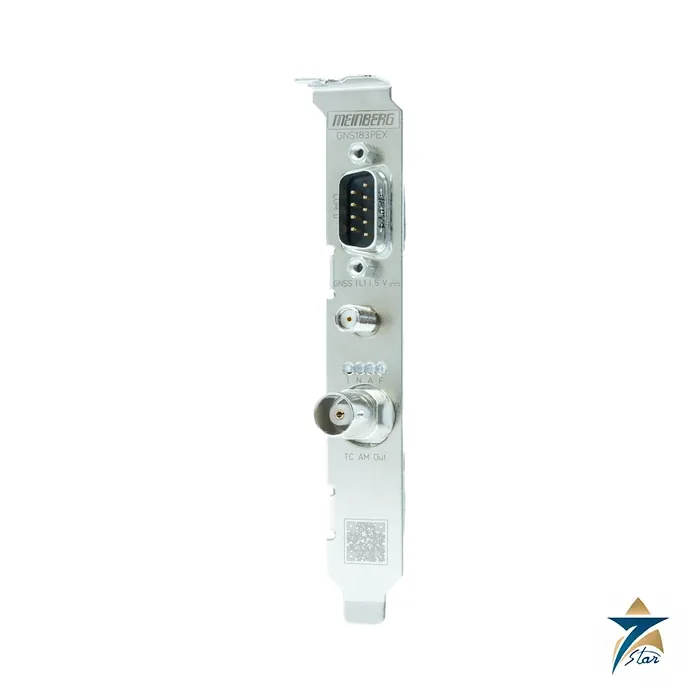
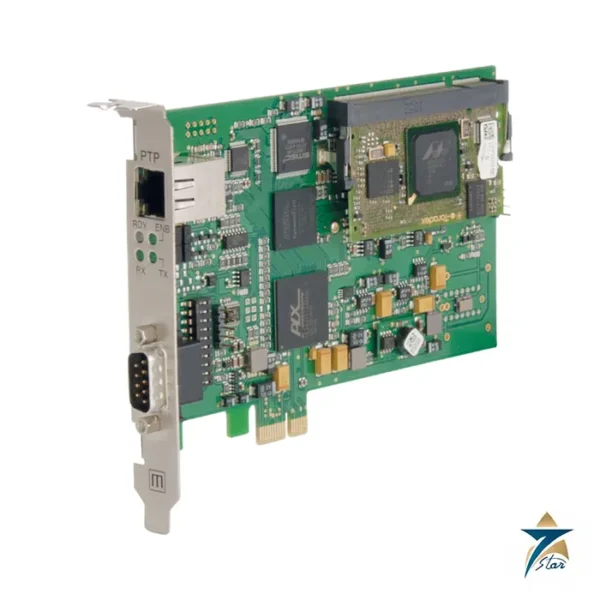
Meinberg GNS183PEX is a PCI Express clock card that brings satellite time into a desktop or server. A 72-channel multi-GNSS receiver on the card listens to GPS, Galileo, BeiDou and GLONASS, and from those signals it disciplines the host computer clock and produces precise pulse and time code outputs on the card bracket. It needs only a free PCI Express slot and an outdoor antenna.
Where a plant keeps its own time scale, for sequence-of-events recording, protection logging or a historian, a card like this removes the dependence on the corporate network clock. Seven Star LLC is an independent supplier serving Oman and the GCC. The notes below follow the manufacturer data sheet for the card, and the final choice of oscillator and cabling should be confirmed in your RFQ.
Meinberg GNS183PEX receiver and outputs
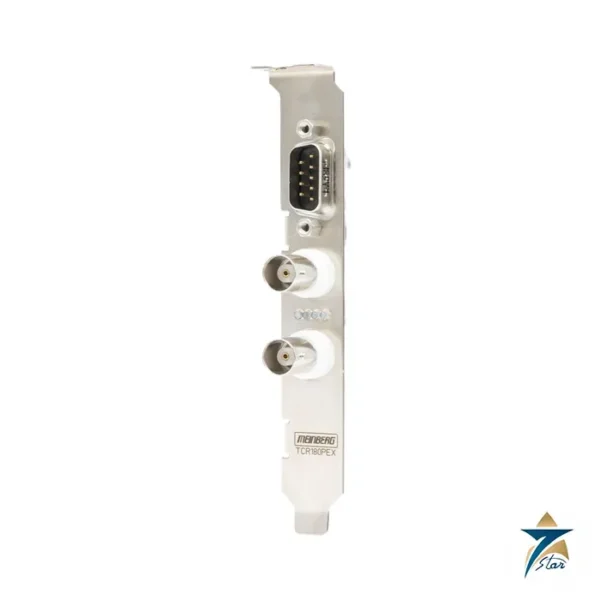
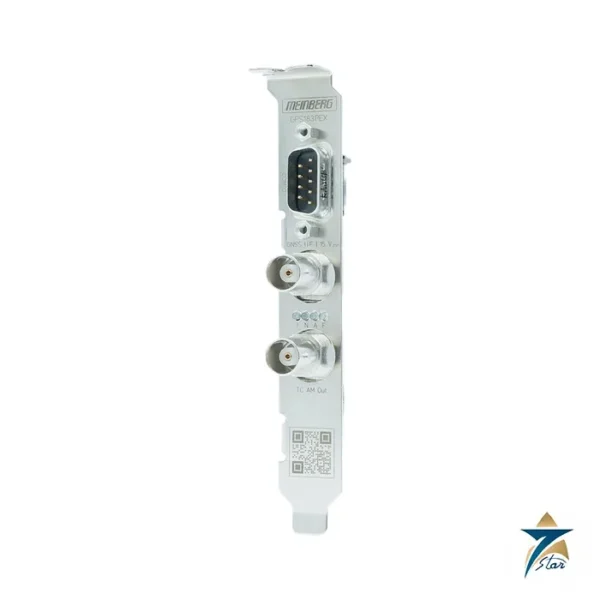
The card is described by the manufacturer as a self-contained reference clock module. It talks to the host over the PCI Express interface to set the PC clock, and the free Meinberg Radio Clock Monitor tool, called MbgMon, handles configuration and monitoring. On the bracket the card offers a 9-pin D-Sub COM port, an SMA antenna connector, a BNC connector for amplitude modulated time code and four status LEDs.
- Receiver type: 72-channel multi-GNSS receiver for GPS, Galileo, BeiDou and GLONASS, from a fixed location or in mobile use.
- Antenna: Meinberg GNSS multi-band antenna GNMANTv2, powered at 5 V DC from the card with up to 120 mA.
- AM time code output: BNC female, sine wave, 1 kHz carrier, 3 Vpp for mark and 1 Vpp for space into 50 ohm.
- Time code formats: IRIG-B B122, B123, B126 and B127, AFNOR NF S87-500, IEEE 1344 and C37.118.
- DCLS time code: IRIG B002, B003, B006 and B007, available on pins 4, 7, 8 or 9 of the COM port.
Meinberg GNS183PEX technical data
| Parameter | Value |
|---|---|
| Card type | PCI Express card, with a low-profile bracket supplied as an alternative |
| Receiver | 72-channel multi-GNSS |
| Antenna connector | SMA female, 50 ohm |
| Antenna supply | 5 V DC, maximum 120 mA |
| Recommended cable | RF240-ZH, maximum 70 m |
| COM port | D-Sub 9-pin male, RS-232, baud rates 300 to 19200, default 19200 |
| Framing | 7N2, 7E1, 7E2, 8N1 (default), 8N2, 8E1, 8O1 |
| Time code output | IRIG AM and DCLS, AFNOR, IEEE 1344, C37.118 |
| Operating temperature | 0 degrees C to 50 degrees C |
| Storage temperature | -20 degrees C to 70 degrees C |
| Relative humidity | Maximum 85 percent at 30 degrees C, non-condensing |
| Surge protection | Integrated protector for the connected antenna |
| Support and warranty | Free lifetime support with firmware updates, three-year warranty |
| Compliance | RoHS compliant |
How Meinberg GNS183PEX differs between oscillator options
The card ships as standard with a TCXO oscillator, and on request it can be built with an OCXO SQ or OCXO HQ holdover oscillator. The three options differ by orders of magnitude in the numbers the data sheet gives. Short-term stability at one second is 2 times 10 to the minus 9 for TCXO, 5 times 10 to the minus 10 for OCXO SQ and 5 times 10 to the minus 12 for OCXO HQ. Holdover drift after one day is plus or minus 4.3 ms for TCXO, 65 microseconds for OCXO SQ and 10 microseconds for OCXO HQ, and after one year it is 16 seconds, 4.7 seconds and 788 milliseconds respectively.
The oscillator also sets the temperature range over which that holdover is valid: minus 20 to 70 degrees C for TCXO, minus 10 to 70 for OCXO SQ and 5 to 70 for OCXO HQ. Values were measured near 20 degrees C without vibration, and full holdover performance needs 24 hours of earlier synchronisation. A site where the antenna may be lost for hours, for example during construction near the antenna, justifies the better oscillator.
Programmable outputs of Meinberg GNS183PEX
Pins on the COM connector can be set to several signal modes, subject to the firmware version and a DIP switch setting on the board. The data sheet lists idle, timer, single shot, cyclic pulse, pulse per second, pulse per minute, pulse per hour, position OK, time sync, all sync, DCF77 marks, DCLS time code and synthesizer frequency. In practice, the pulse per second output is the one most often wired to a protection relay logger or a PLC capture input, while the time sync output drives a lamp or a status input so operators see when the clock loses lock.
Antenna and cabling for Meinberg GNS183PEX
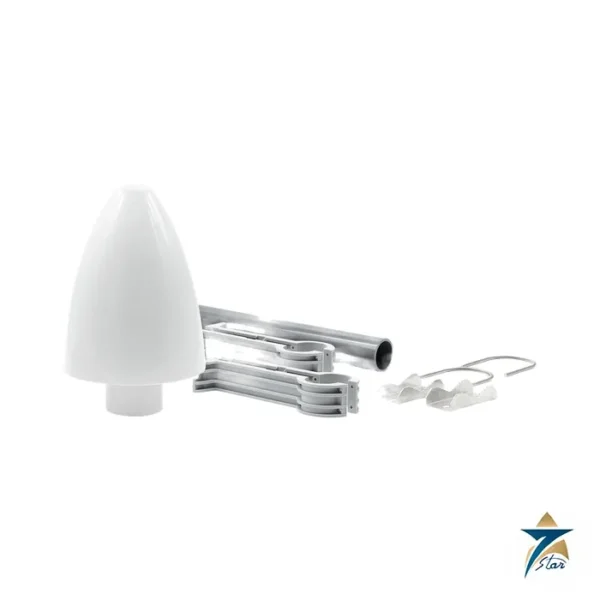
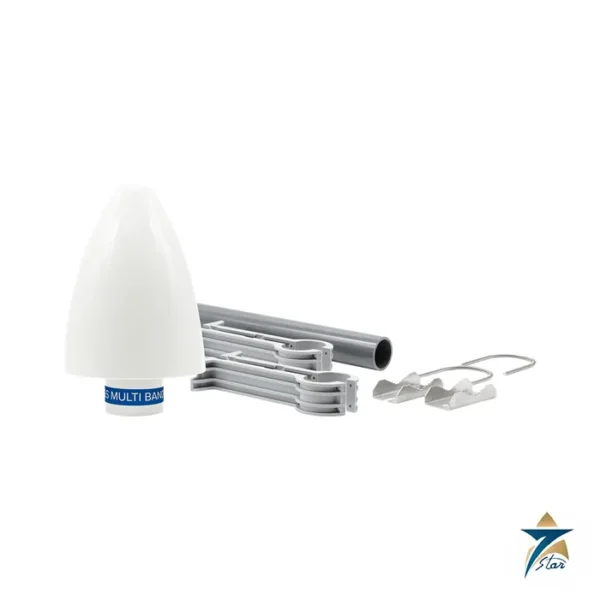
The card is specified for the GNMANTv2 antenna with RF240-ZH coaxial cable. A standard package includes the antenna, a mounting kit for a pole or wall and a 20 m cable with fitted connectors. Cable runs longer than 70 m need a suitable inline amplifier, and the data sheet names the INA-20 and INA-30 for that purpose. An in-line surge protector, the MBG-S-PRO, is offered as an option between the antenna and the card.
In Oman and the Gulf, give the antenna a clear view of the sky, keep it away from reflective metal and plan the cable route so the lightning exposure is low. Allow for the path delay of the cable, which the data sheet notes accumulates linearly and is compensated by the clock as a constant offset.
Installation and commissioning
- Fit the card in a free PCI Express slot, using the low-profile bracket if the chassis needs it.
- Connect the antenna through the SMA connector and watch the status LEDs for initialization, navigation and antenna state.
- Install MbgMon on the host and confirm the receiver finds at least four satellites.
- Select the time code format and signal modes needed by the connected equipment.
- Record the oscillator type, cable length and firmware version for the asset register.
Maintenance
Check the antenna cable and connectors after storms or building work, review the status LEDs during routine rounds and keep firmware current through the free support. If holdover performance matters, schedule a synchronisation check after any extended power loss.
Ordering Meinberg GNS183PEX
In your request, state the oscillator option, whether the low-profile bracket is needed, the antenna cable length and whether a surge protector or inline amplifier should be quoted. Add the site location in Oman or the GCC.
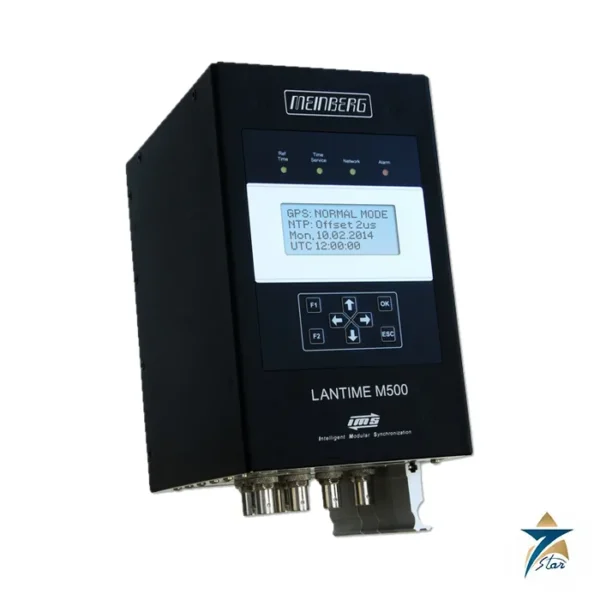
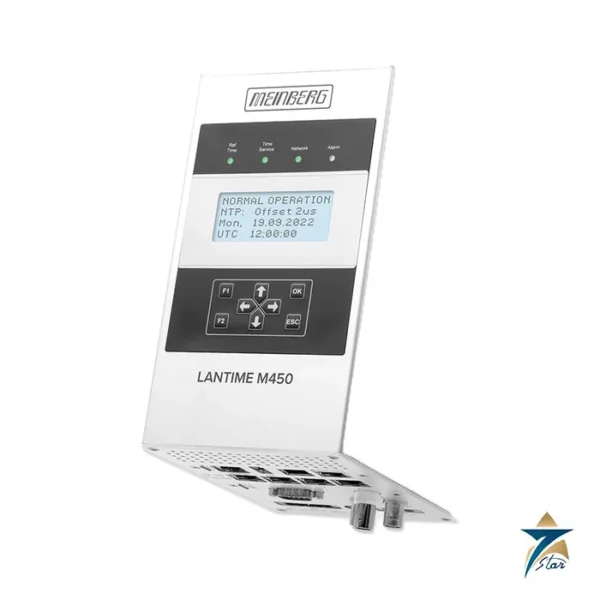
Related items you may also need: Meinberg GNMANTv2 Dual-Band Multi-GNSS Antenna, IP65 | Meinberg LANTIME M250 Compact NTP Time Server | Meinberg LANTIME M500 Modular DIN-Rail Time Server | All Meinberg products.
Documents and quotation
The manufacturer data sheet for the GNS183PEX is attached to this page. Send an RFQ with the part number, oscillator option and quantity through the enquiry form, and our team will reply with availability.
Datasheets & Documents
- Datasheet Meinberg GNS183PEX Multi-GNSS PCI Express Clock Card Datasheet Download
Reviews (0)
How would you rate this product? Cancel reply
About brand
Meinberg is a German maker of time and frequency synchronisation products, founded in 1979 by the brothers Werner and Günter Meinberg in Bad Pyrmont. It began with DCF77 longwave radio clock receivers and now makes GPS and GNSS-referenced NTP and PTP time servers. Meinberg is family-owned and designs and manufactures its products in Bad Pyrmont.
Seven Star LLC sources and supplies Meinberg LANTIME time servers for utilities and networks in Oman, including the M1000 and M320 listed here.
Meinberg company profile
| Founded | 1979, Bad Pyrmont, Germany |
|---|---|
| Founders | Werner and Günter Meinberg |
| Ownership | Family-owned |
| Manufacturing | Bad Pyrmont, Germany |
| Product families | LANTIME M150, M250, M320, M500 and M1000 NTP/PTP time servers, IMS modular systems, GNSS and DCF77 receivers, PTP grandmaster clocks |
Meinberg LANTIME models listed here
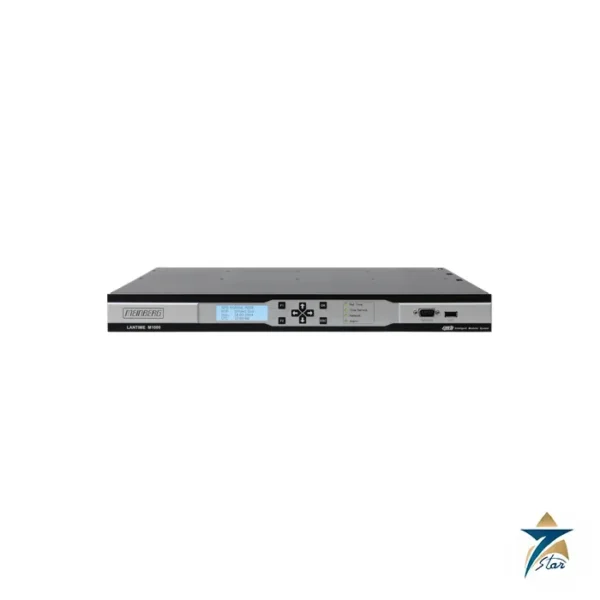
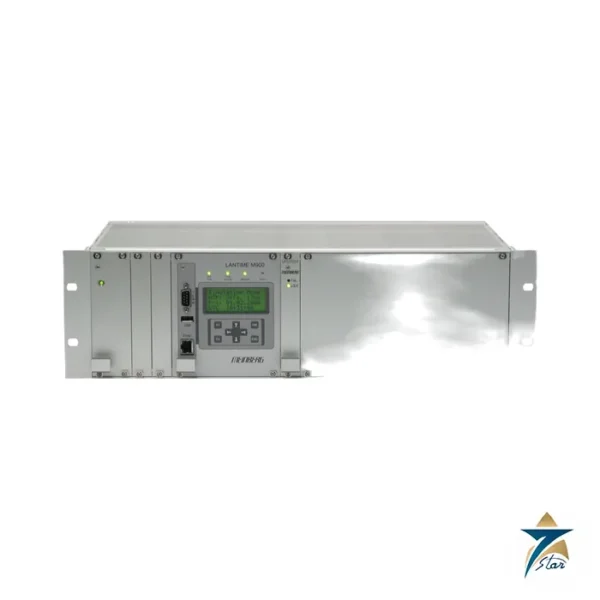
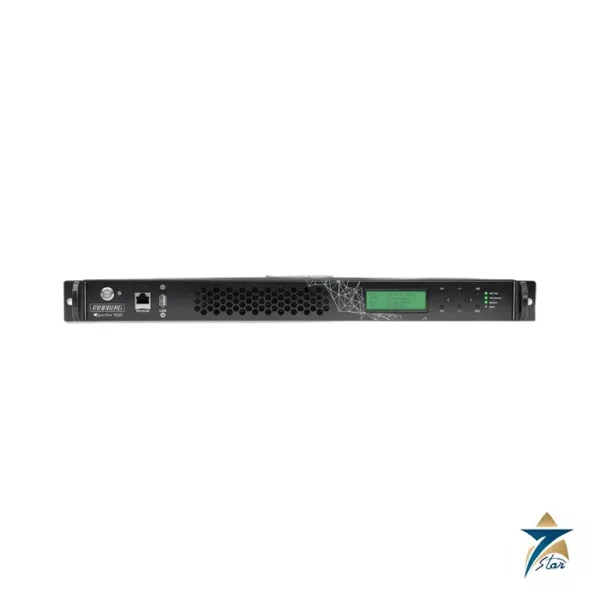
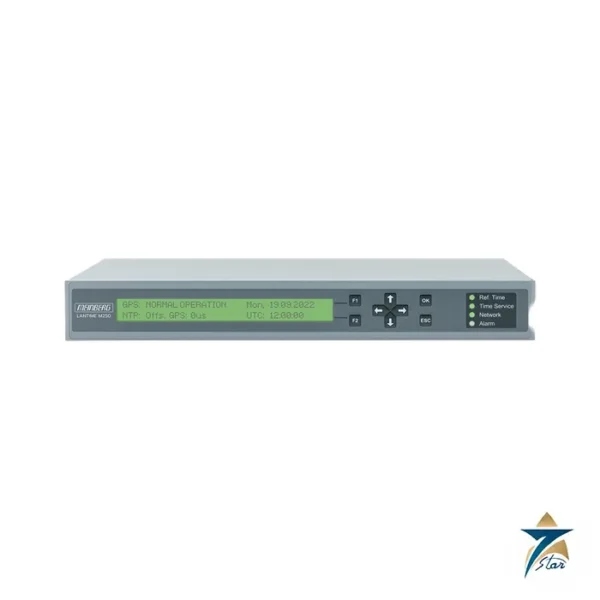
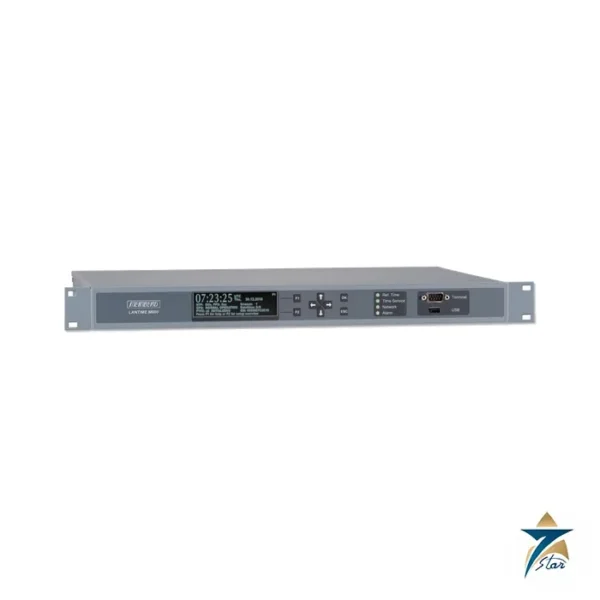
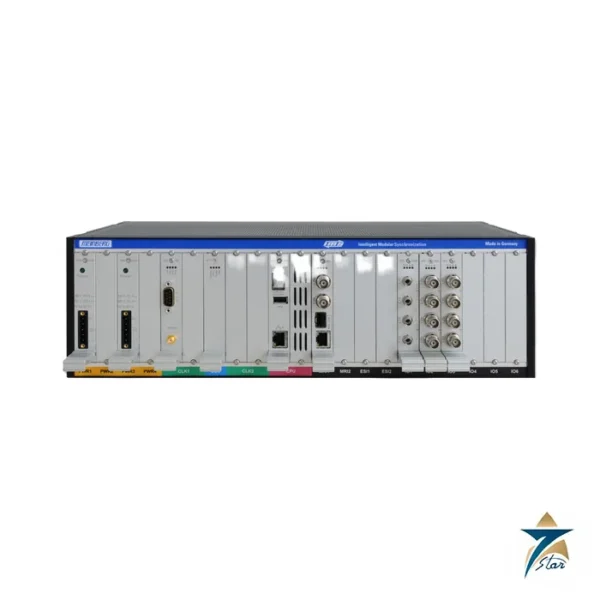
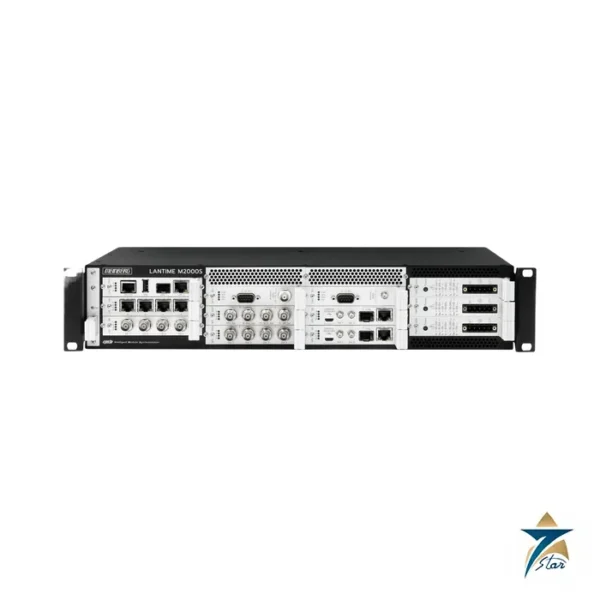
The LANTIME M320 is a 1U rackmount NTP time server. It works as a stratum 1 source with its own reference receiver, and Meinberg offers it with GPS, combined GNSS, DCF77 (PZF), MSF and IRIG time code references. The LANTIME M1000 is a 1U platform on the modular IMS system, with slots for up to two reference clocks, two power supplies and hot-pluggable I/O modules, plus PTP (IEEE 1588) and IEC 61850 time synchronization.
Meinberg products we list
Ordering a Meinberg time server: what we need
A Meinberg order code describes the build. In M320/GPS/AD10, GPS is the receiver and AD10 is the wide-range AC/DC power supply. Send the full code or serial number, the reference source, oscillator option, supply voltage, the outputs you need (PPS, 10 MHz, IRIG, extra LAN ports) and the antenna cable length. GCC utility projects often require redundant supplies.
Facts checked against Meinberg's own company history (meinbergglobal.com), October 2026.
Browse Meinberg products by category: Industrial Communications.
FAQ
Questions about the Meinberg GNS183PEX Multi-GNSS PCI Express Clock Card
Answers from our engineering team on installation, compatibility and integration.
01What is the Meinberg GNS183PEX?
It is a PCI Express reference clock card with a 72-channel multi-GNSS receiver for GPS, Galileo, BeiDou and GLONASS that synchronises a desktop or server clock.
02Which antenna does the GNS183PEX use?
The data sheet specifies the Meinberg GNSS multi-band antenna GNMANTv2 with RF240-ZH coaxial cable, with a maximum unamplified cable length of 70 m.
03What oscillator options exist for the GNS183PEX?
TCXO is standard, and OCXO SQ or OCXO HQ can be supplied on request, with one-day holdover drift of 4.3 ms, 65 microseconds and 10 microseconds respectively.
04Which time codes does the GNS183PEX output?
It outputs IRIG-B AM B122, B123, B126 and B127, DCLS B002, B003, B006 and B007, AFNOR NF S87-500, IEEE 1344 and C37.118.
05What operating conditions does the GNS183PEX specify?
The data sheet gives 0 to 50 degrees C operating, minus 20 to 70 degrees C storage and maximum 85 percent relative humidity at 30 degrees C, non-condensing.


Reviews
There are no reviews yet.