- Automation & ControlView all 3,135 products
- Automation Accessories
- AC Drives
- PLC & I/O Cards
- Industrial Communications
- Vibration Monitoring
- Controllers & Data Acquisition
- Isolator & Barrier
- Safety Switches & Guard Locking
- Encoders
- Motor Soft Starters
- CCTV & Security
- Pneumatic Cylinders
- HMI Displays
- Servo Drives
- Industrial Computers
- Machine Vision
- Automation Software
- Robotics
Brand: Metrohm
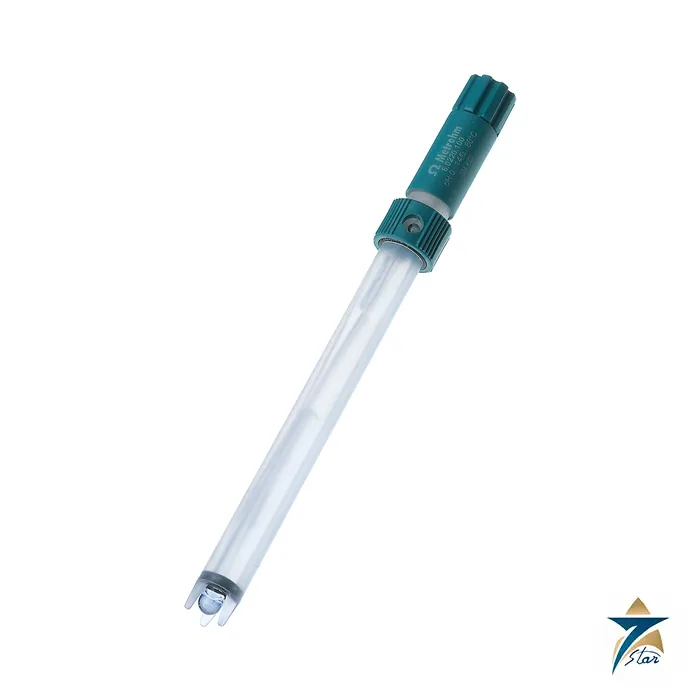
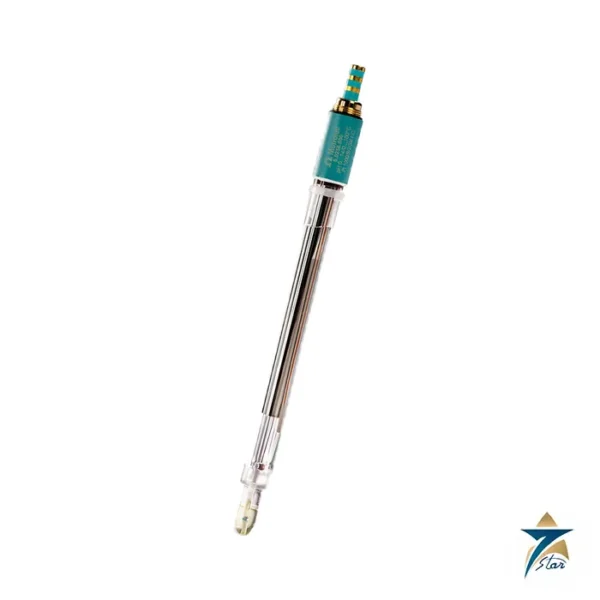
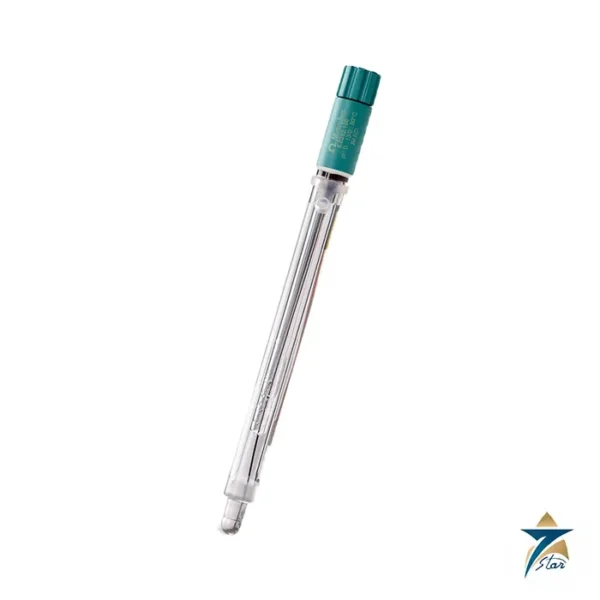
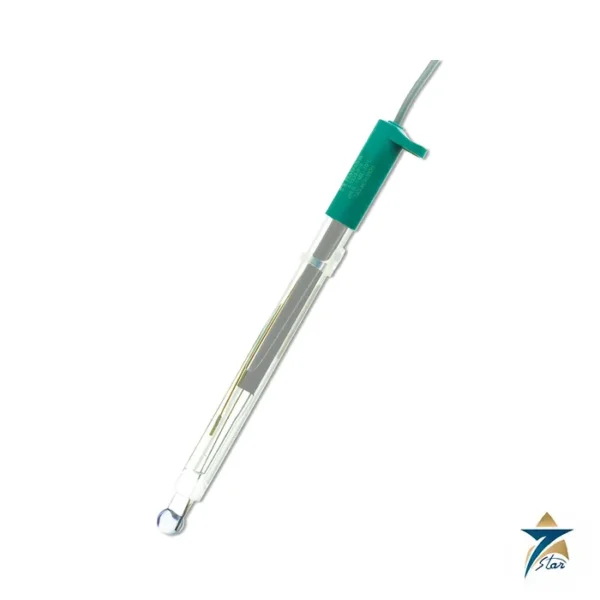
Metrohm 6.0220.100 Solitrode Unbreakable pH Electrode
Description
Overview
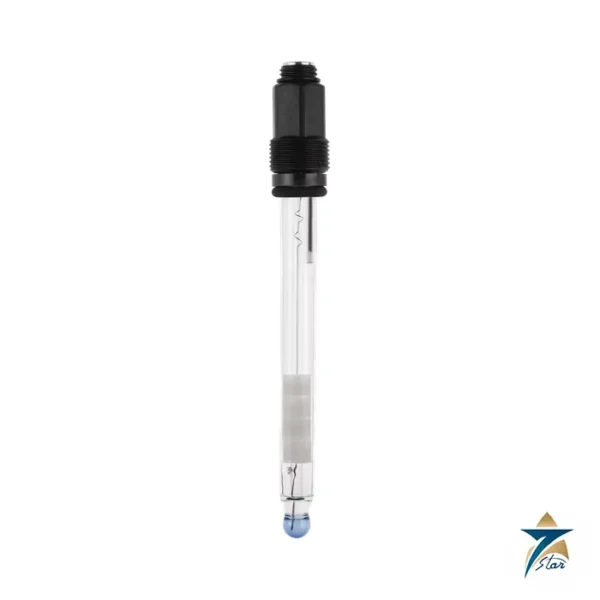
Glass electrodes break, and in a busy laboratory they break at the worst moment. The Metrohm 6.0220.100 Solitrode answers with a shaft made of polypropylene instead of glass, plus impact protection around the glass membrane. It is a combined pH electrode for routine titrations in solutions that contain no precipitates, proteins or sulfides, and it comes without a temperature sensor and without a cable. Seven Star LLC is an independent supplier serving Oman and the GCC.
The glass membrane is of type T, the diaphragm is a ceramic pin and the reference electrolyte is 3 mol/L potassium chloride, which makes the electrode a long-lasting standard for everyday use.
Specification table for Metrohm 6.0220.100
| Property | Solitrode value |
|---|---|
| Shaft | Polypropylene; completion PP, glass and Viton |
| Membrane glass | Type T, hemispherical indicator |
| Membrane resistance | 200 to 500 megaohm |
| pH range | 0 to 14 |
| Temperature range | 0 to 80 degrees C, long and short term |
| Zero point and slope | Plus or minus 15 mV; slope above 0.97 |
| Diaphragm | Ceramic diaphragm, resistance 0.5 to 5 kiloohm |
| Electrolyte flow | 5 to 25 microlitres per hour at 10 cm water column |
| Installation length | 113 mm, shaft diameter 12 mm |
| Minimum immersion depth | 15 mm |
| Plug-in head | Metrohm plug-in head G |
| Delivery | Without temperature sensor and cable |
The plastic shaft in daily practice
The shaft is made of polypropylene, described by Metrohm as unbreakable, and a protective guard surrounds the glass membrane. That combination suits teaching laboratories, production floors, and sampling at sites where glassware is hard to replace. The installation length of 113 mm is shorter than the 125 mm of the glass-shaft electrodes, and the 15 mm minimum immersion depth is the smallest in the family, so the Solitrode works in small beakers.
How 6.0220.100 differs from other Solitrode and pH electrodes
A Solitrode with a Pt1000 sensor and a fixed cable with plug I is also listed in the catalog, and that variant is intended for the 913 and 914 pH meters because the waterproof plug I gives IP67 protection. The Metrohm 6.0220.100 has no sensor and no cable and uses the plug-in head G. Compared with the Ecotrode Plus 6.0262.100 it extends the range from pH 13 to pH 14, uses a ceramic diaphragm instead of a ground joint and has an unbreakable shaft, but its immersion depth is 5 mm smaller and its installation length 12 mm shorter.
Where 6.0220.100 should not be used
Metrohm recommends it for solutions without precipitates, proteins or sulfides. A ceramic pin diaphragm can become blocked by solids or by sulfide deposits, and protein can foul the diaphragm. For such samples the catalog suggests the Unitrode with its fixed ground joint or a double-junction electrode. For non-aqueous work use the Solvotrode, and for low-ion water the Aquatrode Plus.
Applications in Oman and the GCC
Water and wastewater laboratories, utilities and municipal plants perform alkalinity and acidity titrations with electrodes of this kind, and food and beverage producers use them for acidity checks. In field laboratories and mobile cabins the unbreakable shaft reduces replacement frequency. Contract laboratories processing many clean aqueous samples can keep a Solitrode at each titrator.
Reading the specification
Several lines of the table deserve a comment. The membrane resistance of 200 to 500 megaohm is typical for a general-purpose glass and requires a meter with a high-ohm input, which every Metrohm titrator and pH module provides. The electrolyte flow of 5 to 25 microlitres per hour through the ceramic pin is small, so the sample is barely contaminated by chloride, yet large enough to keep the junction stable. A diaphragm resistance of 0.5 to 5 kiloohm tells you that the junction is conductive and gives a low-noise reading in solutions with moderate ionic strength. The completion materials, polypropylene, glass and Viton, matter if you intend to use the electrode in warm aqueous solutions: stay inside 0 to 80 degrees C, which is the limit for both long-term and short-term exposure.
Choosing between plastic and glass shafts
If the electrode will be handled by many users, passed between benches or used outdoors, the plastic shaft cuts the risk of breakage and the cost of replacement. If you titrate in hot solutions near 80 degrees C or in samples with organic solvents that could attack plastic, a glass-shaft electrode such as the Ecotrode Plus or Unitrode is the safer choice. Our team can compare the options for your sample type before you place an order, and can include a matching spare in the same offer so downtime is avoided.
Commissioning
Open the filler opening, fill 3 mol/L KCl up to the opening and keep it open while measuring. Calibrate with buffers or run the Metrohm electrode test, choosing the standard electrode type. The slope should be above 0.97 and the zero point within plus or minus 15 mV. Connect a cable that matches the plug-in head G of your instrument and, if temperature compensation is needed, a separate temperature sensor.
Handling tips for busy laboratories
Hold the electrode by the shaft and the plug-in head, never by the membrane, and fit it into the electrode holder so that the ceramic pin is submerged but the filler opening stays above the liquid. Wipe the shaft after each sample, rinse with distilled water and keep a beaker of storage solution next to the titrator for short breaks. Label the electrode with its first-use date so every user can see its age at a glance.
Storage and care
Store the electrode in the Metrohm storage solution 6.2323.000, which prevents ageing of the glass and avoids conditioning before use, and never store it dry. Rinse the tip after each series and do not touch it. Do not use ultrasonic baths. If the response becomes sluggish, soak the electrode in water and check the electrolyte level.
Ordering Metrohm 6.0220.100
Please quote Metrohm 6.0220.100, and also state the cable or temperature sensor needed because neither is included. We can add buffers, storage solution and electrolyte. Seven Star LLC supplies laboratories in Oman and across the GCC.
Related items you may also need: Metrohm 916 Ti-Touch Compact Potentiometric Titrator | Metrohm 888 Titrando Potentiometric Titrator | Metrohm 905 Titrando Potentiometric Titrator | All Metrohm products.
Checklist before ordering the Metrohm 6.0220.100
- Before ordering the Metrohm 6.0220.100, compare the nameplate of the unit being replaced with the code shown on this page, character by character.
- Our team confirms the Metrohm 6.0220.100 code, condition and lead time in writing before any order is placed.
- The datasheet attached to this page is the reference for the Metrohm 6.0220.100 dimensions, ratings and wiring.
- The Metrohm 6.0220.100 is listed in our liquid analysis sensors range and ships to sites across Oman and the GCC.
- Spare quantities of the Metrohm 6.0220.100 are worth planning for critical duty so that a failure does not stop production.
Documents and quotation
The Metrosensor electrode catalog that lists the Solitrode is attached as the datasheet. Please send your RFQ with the part number Metrohm 6.0220.100, quantity and delivery location, and we will respond with availability and lead time.
Other Models in the PH Electrodes Range
Seven Star LLC supplies models from the PH Electrodes range in Oman and the GCC. Compare the related models below and request a quote for the one that matches your application.
| Model | Category | |
|---|---|---|
| Metrohm 6.0229.010 Solvotrode easyClean Non-Aqueous pH Electrode | Liquid Analysis Sensors | View details |
| Metrohm 6.0258.600 Unitrode with Pt1000 pH Electrode | Liquid Analysis Sensors | View details |
| Metrohm 6.0262.100 Ecotrode Plus Combined pH Electrode | Liquid Analysis Sensors | View details |
| Metrohm 6.0220.100 Solitrode Unbreakable pH Electrode | Liquid Analysis Sensors | You are viewing this model |
Datasheets & Documents
- Datasheet Metrohm 6.0220.100 Solitrode Unbreakable pH Electrode Datasheet Download
Reviews (0)
How would you rate this product? Cancel reply
About brand
Metrohm is a Swiss maker of instruments for chemical analysis, founded in 1943 by Bertold Suhner in Herisau, where it is still headquartered. It is best known for titration and also makes ion chromatography, electrochemistry, spectroscopy and process analysers. Metrohm is owned by a foundation.
Seven Star LLC lists the Metrohm 905 Titrando, the 916 Ti-Touch and the 2035 Process Analyzer, and supplies Metrohm instruments and accessories to laboratories and plants in Oman and the GCC.
Metrohm company profile
| Founded | 1943, Herisau, Switzerland |
|---|---|
| Founder | Bertold Suhner |
| Headquarters | Herisau, Switzerland |
| Ownership | Metrohm Foundation |
| Product families | Titrando and Ti-Touch titrators, ion chromatography systems, 2035 and 2060 process analysers, electrodes |
Metrohm instruments listed here
The 905 Titrando is a high-end potentiometric titrator for use with Dosino dosing units. It runs dynamic (DET), monotonic (MET) and set endpoint (SET) titrations, takes up to four 800 Dosino units, recognizes intelligent iTrode electrodes, and is operated from tiamo or OMNIS software or a Touch Control. The 2035 Process Analyzer is an online wet-chemistry analyzer for automatic analysis of samples drawn from the process.
Metrohm products we list
| Family | Examples |
|---|---|
| Liquid Analytical Systems | 2035 Process Analyzer, 905 Titrando Potentiometric Titrator, 916 Ti-Touch Compact Potentiometric Titr… |
Ordering Metrohm equipment: what we need
Metrohm article numbers follow a fixed pattern (the 905 Titrando is 2.905.0010), and that number is the best reference for instruments, electrodes and accessories. For a new application, tell us the sample, the parameter and its concentration range, the method or standard you follow, and for a process analyzer the number of sample streams and the signals your control system needs.
Facts checked against Metrohm's published company history, October 2026.
Browse Metrohm products by category: Liquid Analytical Systems.
FAQ
Questions about the Metrohm 6.0220.100 Solitrode Unbreakable pH
Answers from our engineering team on installation, compatibility and integration.
01Is the shaft of the Metrohm 6.0220.100 Solitrode made of glass?
No. The shaft is polypropylene and Metrohm describes it as unbreakable, with impact protection for the glass membrane.
02Which samples suit the 6.0220.100 Solitrode?
It is intended for routine titrations in solutions that contain no precipitates, proteins or sulfides.
03What diaphragm does the 6.0220.100 use?
It has a ceramic diaphragm with a resistance of 0.5 to 5 kiloohm and an electrolyte flow of 5 to 25 microlitres per hour.
04Does the 6.0220.100 include a temperature sensor or cable?
No. It is supplied without temperature sensor and without cable, and uses Metrohm plug-in head G.
05What are the dimensions of the 6.0220.100 electrode?
The installation length is 113 mm, the shaft diameter 12 mm and the minimum immersion depth 15 mm.


Reviews
There are no reviews yet.