- Automation & ControlView all 3,140 products
- Automation Accessories
- AC Drives
- PLC & I/O Cards
- Industrial Communications
- Vibration Monitoring
- Controllers & Data Acquisition
- Isolator & Barrier
- Safety Switches & Guard Locking
- Encoders
- Motor Soft Starters
- CCTV & Security
- Pneumatic Cylinders
- HMI Displays
- Servo Drives
- Industrial Computers
- Machine Vision
- Automation Software
- Robotics
Brand: Autonics
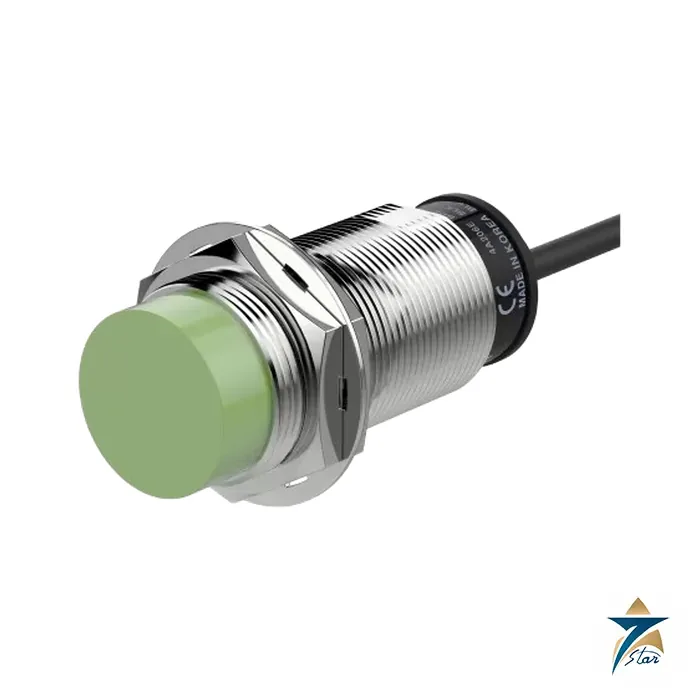
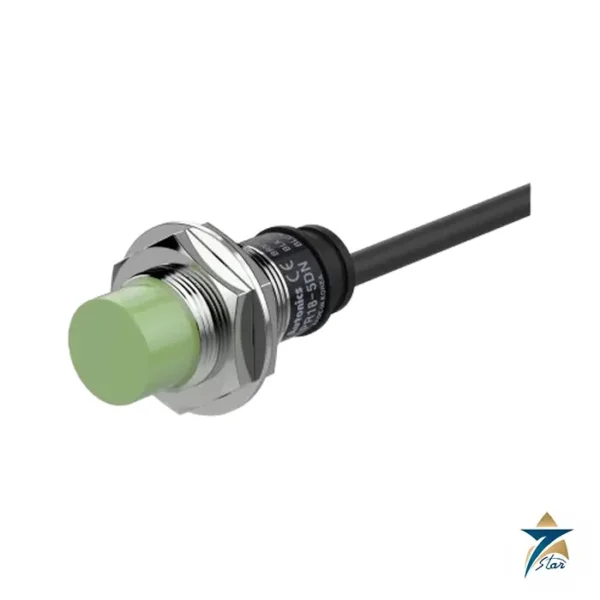
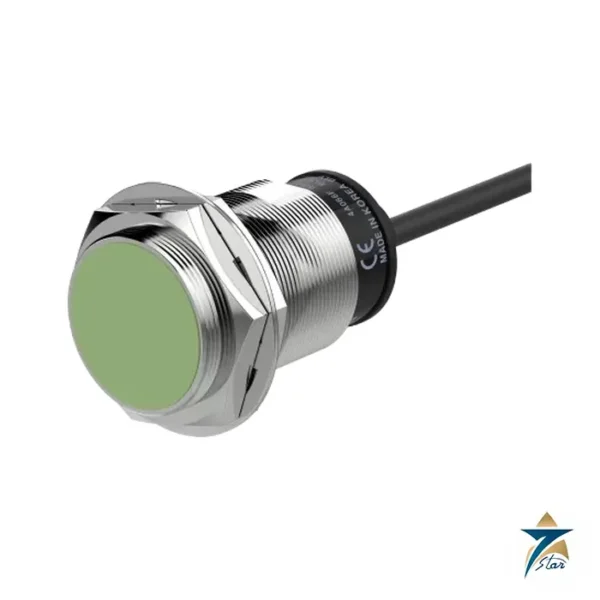
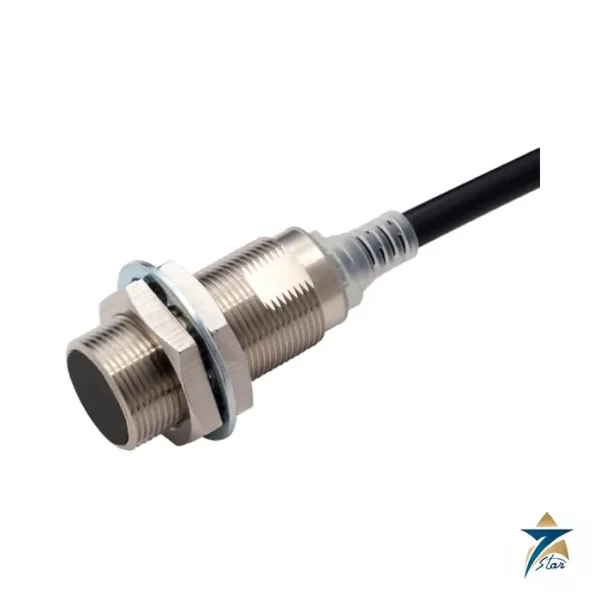
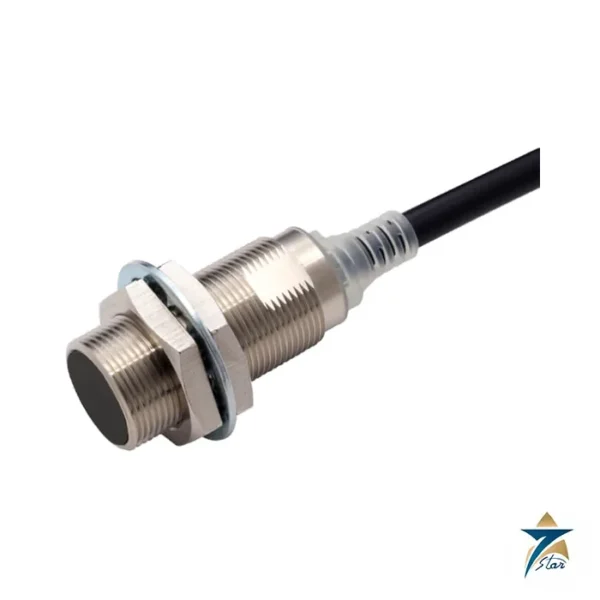
Autonics PRL30-15DN M30 Long Inductive Proximity Sensor, NPN
Description
Overview
Large-gap detection on heavy steel parts is what the Autonics PRL30-15DN is for. It is an M30 cylindrical inductive sensor with a long body, a non-flush head and a 15 mm rated sensing distance, switching a 12 to 24 V DC load through an NPN normally open output. Seven Star LLC is an independent supplier serving Oman and the GCC. The data below is taken from the PR series DC 3-wire instruction manual and applies to this exact code.
The sensor is intended for ferrous targets such as steel plates, bolt heads and cast lugs, and its output is a simple switched signal that any 24 V DC PLC input card can read without a converter or amplifier. Seeing the red operation indicator light up when the target arrives makes alignment quick even for a single technician working on a ladder or inside a guard.
A long housing is chosen when the sensor has to reach through a thick bracket, a cast machine wall or a guard plate, and still leave the face at the right distance from the target. Many plants discover that a standard-length replacement does not reach, which is why the L version is worth quoting separately.
Decoding Autonics PRL30-15DN
- PR: cylindrical inductive proximity sensor series
- L: long body (normal length has no letter; S short exists only for smaller sizes)
- 30: 30 mm diameter of the sensing side
- 15: sensing distance of 15 mm, which indicates the non-flush column
- D: 12 to 24 V DC supply
- N: NPN output, normally open
Technical data for Autonics PRL30-15DN
| Item | Data |
|---|---|
| Sensing side diameter | 30 mm |
| Installation | Non-flush |
| Rated sensing distance | 15 mm |
| Setting distance | 0 to 10.5 mm |
| Standard target | Iron, 45 x 45 x 1 mm |
| Response frequency | 200 Hz |
| Hysteresis | 10 percent or less |
| Supply | 12 to 24 V DC, ripple 10 percent or less |
| Load current | 200 mA or less |
| Residual voltage | 1.5 V or less |
| Insulation resistance | 50 megohm or more at 500 V DC |
| Dielectric strength | 1,500 V AC for one minute between live part and case |
| Vibration and shock | 1 mm double amplitude 10 to 55 Hz; 500 m/s2 |
| Protection class | IP67 |
| Cable | 5 mm diameter, 3-wire, 2 m |
| Weight, cable type, long | About 210 g, about 247 g packed |
Mounting rules for a non-flush head
A non-flush sensor needs free air around its head. For the Autonics PRL30-15DN the manual calls for a clear zone with a diameter of 90 mm in front of the face and a depth of 15 mm that is free of metal other than the target. Two sensors facing each other need 90 mm between them, and side by side also 90 mm.
The reason for the generous clearance is physical: a non-flush head radiates its field forward and sideways, so nearby steel behaves like an extra target and shortens or shifts the switching point. Fix the sensor on a non-magnetic spacer or an aluminium bracket when the structure behind it is steel, and always test the switching point with the real target after installation, not only with a test plate.
The nut tightening torque is high on this size: 49 N m when the nut sits at the front part of the body and up to 78.4 N m at the rear. Use the washer supplied and a suitable spanner, not a pipe wrench, so that the plated brass does not deform.
How PRL30-15DN differs from similar codes
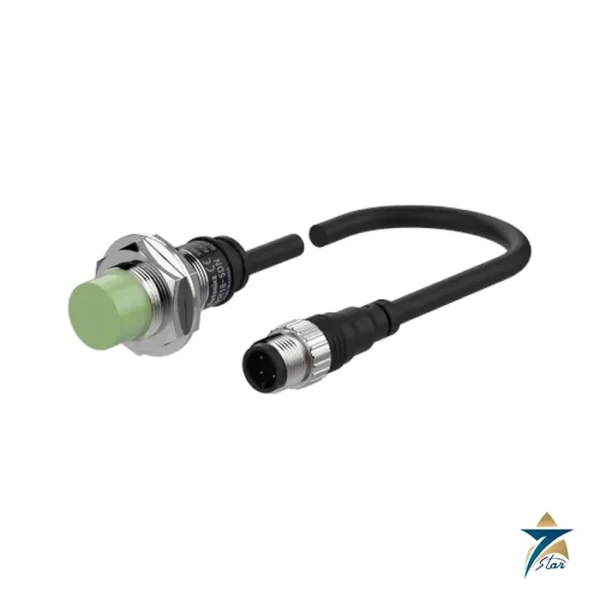
The normal-length PR30-15DN carries the same electrical figures but weighs about 170 g, against 210 g for this long version. The flush PR30-10DN offers only 10 mm at 400 Hz. The cable connector version uses a 300 mm lead and an M12 plug instead of 2 m of cable. If your bracket is 20 mm or thicker, the long body of the Autonics PRL30-15DN usually saves a custom spacer.
Field applications
Typical Omani uses are gap checking on crusher and screening equipment in quarries, position proof of heavy gate valve actuators in water treatment, overtravel detection on gantry cranes and shuttle cars in ports, and rotation checks on large fan shafts in cooling towers where a steel bolt head passes the face. The 200 Hz response suits slow and medium rotation; fast shafts need the smaller sensors.
In dusty sites such as cement and aggregates, the non-flush head will collect fine steel dust, so schedule a quick wipe.
Wiring and commissioning
Connect brown to the supply plus, blue to 0 V and black to the PLC input. The sensor needs 0.8 seconds after power-on. With the Autonics PRL30-15DN on an NPN output the load is connected between the positive supply and black. Place a diode or varistor across relays or solenoids in the same panel. Set the gap to about 70 percent of the rated distance, around 10 mm, so that thermal drift of up to plus or minus 10 percent does not cause dropouts.
Care and spares
Cable handling matters on a sensor this size. Pulling the 5 mm cable with 50 N or more can break the conductors and create a fire risk, as the manual warns, and any extension should use AWG 22 or thicker wire with a total run of no more than 200 m. Route it with a drip loop where cleaning water is used, because IP67 protects against temporary immersion and not against a permanently submerged lead.
Wipe with a dry cloth only. Do not strike the head with tools. Keep one spare unit for each critical interlock, since a failed sensor on a safety-related guard stops the whole machine. Remember that the sensor is not a safety device; the manual asks for a fail-safe device wherever a failure could injure people.
Ordering PRL30-15DN
For the Autonics PRL30-15DN, specify the full code including the L and the N. Variants with PNP output or normally closed function are different part numbers. Accessories such as brackets and M12 cables are sold separately by the manufacturer and can be quoted at the same time.
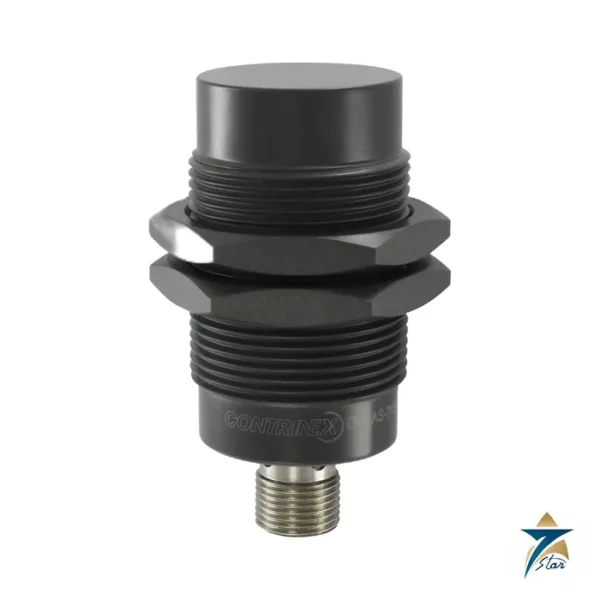
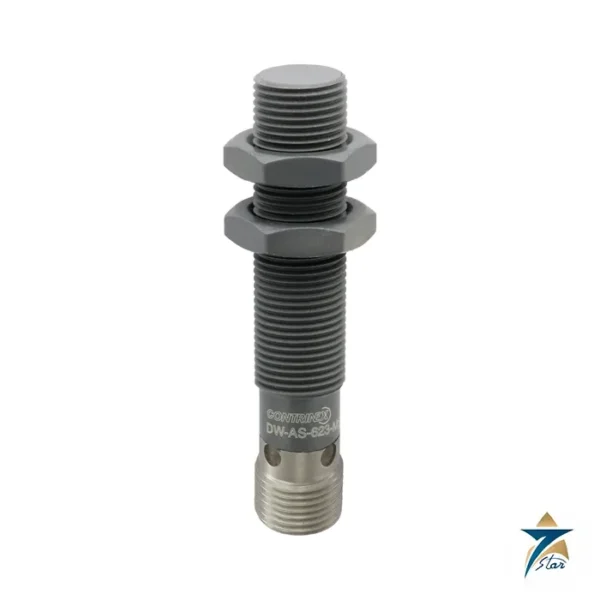
Related items you may also need: Autonics E40S6-2500-6-L-5 Rotary Encoder Incremental | Autonics PR18-8DN M18 Inductive Proximity Sensor 8 mm | Contrinex DW-AS-623-M30-693 Weld-Immune M30 Inductive Sensor | All Autonics products.
Checklist before ordering the Autonics PRL30-15DN
- Before ordering the Autonics PRL30-15DN, compare the nameplate of the unit being replaced with the code shown on this page, character by character.
- Our team confirms the Autonics PRL30-15DN code, condition and lead time in writing before any order is placed.
- The datasheet attached to this page is the reference for the Autonics PRL30-15DN dimensions, ratings and wiring.
Documents and quotation
The series instruction manual is attached as the datasheet. Send your RFQ with the part number Autonics PRL30-15DN, quantity and destination to Seven Star LLC in Muscat, and we will reply with availability and shipping to Oman and the GCC.
Other Models in the PR DC3 Range
Seven Star LLC supplies models from the PR DC3 range in Oman and the GCC. Compare the related models below and request a quote for the one that matches your application.
| Model | Category | |
|---|---|---|
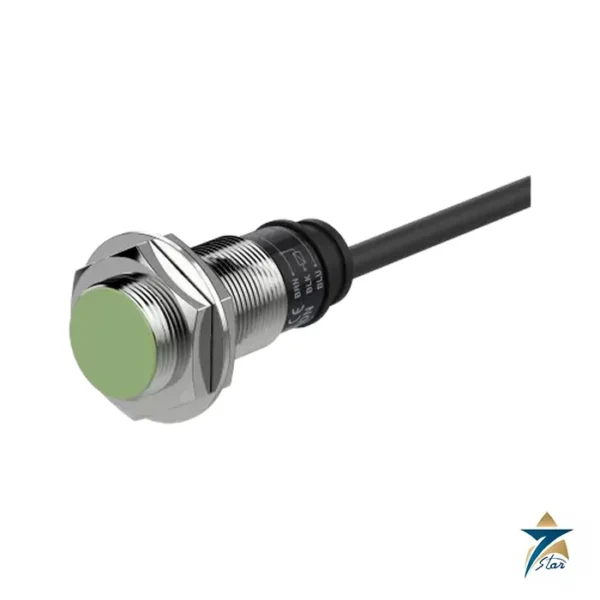
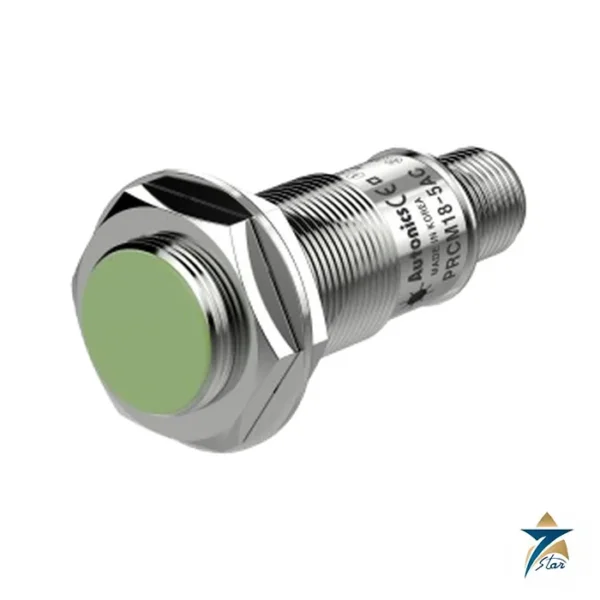
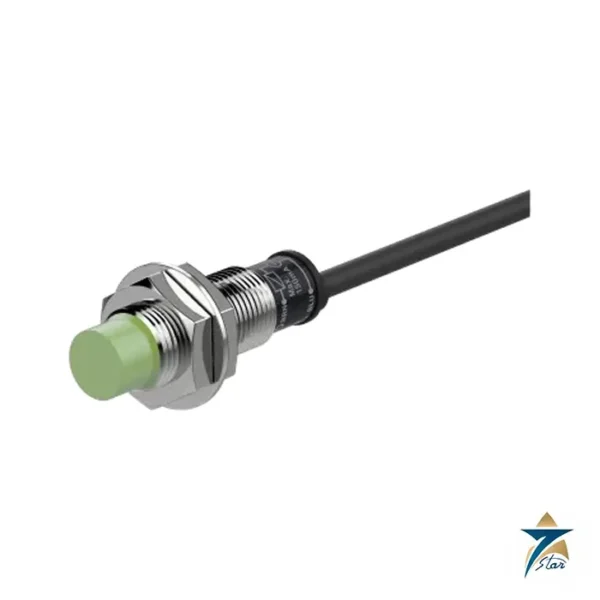
| Autonics PR18-5DN M18 Inductive Proximity Sensor, NPN NO | Inductive Proximity Sensors | View details |
| Autonics PRL30-15DN M30 Long Inductive Proximity Sensor, NPN | Inductive Proximity Sensors | You are viewing this model |
Datasheets & Documents
- Datasheet Autonics PRL30-15DN M30 Long Inductive Proximity Sensor, NPN Datasheet Download
Reviews (0)
How would you rate this product? Cancel reply
About brand
Autonics is a South Korean maker of sensors and controllers, founded in 1977 as a small engineering business making controllers for looms. It took the Autonics name in 1988 and opened a new corporate headquarters in Busan in 2014. Autonics makes proximity and photoelectric sensors, rotary encoders, temperature controllers, counters, timers and stepper motor systems, with factories in Busan and Yangsan.
Seven Star LLC lists the Autonics E40S6-2500-6-L-5 incremental rotary encoder and supplies Autonics sensors and control devices in Oman and the GCC.
Autonics company profile
| Founded | 1977, South Korea |
|---|---|
| Current name | Autonics, since 1988 |
| Headquarters | Busan, South Korea |
| Factories | Busan and Yangsan |
| Product families | E40 and E50 rotary encoders, PR proximity sensors, BJ photoelectric sensors, TK temperature controllers |
Milestones
- 1977: The company is founded.
- 1988: Renamed Autonics Corporation.
- 2014: Opens its Busan headquarters.
Reading the Autonics E40S encoder code
E40S is the 40 mm diameter shaft-type incremental encoder, and the 6 that follows is the 6 mm shaft. 2500 is the resolution in pulses per revolution. The next 6 means six output signals: A, B and Z with their inverted signals. L is a line driver output and the final 5 is a 5 V DC supply. The same 40 mm body is made in hollow shaft form as the E40H and E40HB series.
Where Autonics encoders are used
Servo and spindle feedback, conveyor length measurement, packaging and printing machines.
Ordering Autonics encoders: what we need
Send the complete model string from the label. If it is worn off, give the body and shaft diameter, pulses per revolution, output type, supply voltage and cable or connector style.
Facts checked against Autonics corporate profiles, October 2026.
Browse Autonics products by category: Encoders.
FAQ
Questions about the Autonics PRL30-15DN M30 Long Inductive Proximity
Answers from our engineering team on installation, compatibility and integration.
01Why choose PRL30-15DN over PR30-15DN?
The L stands for the long body. Electrical data is the same, but the longer housing, about 210 g, reaches through thick brackets or machine walls.
02What clear zone does the Autonics PRL30-15DN need?
As a non-flush sensor it requires a metal-free zone about 90 mm in diameter and 15 mm deep in front of the face, and 90 mm spacing to neighbours.
03What is the correct gap setting for the PRL30-15DN?
Use the setting distance range of 0 to 10.5 mm, which is 70 percent of the 15 mm rated sensing distance, for stable operation.
04What tightening torque does the PRL30-15DN allow?
The manual lists 49 N m for the front nut position and 78.4 N m for the rear position on the 30 mm size.
05Does the PRL30-15DN have a PNP output?
No, this code has an NPN normally open output. The PNP type is a separate code with P in the output position.


Reviews
There are no reviews yet.