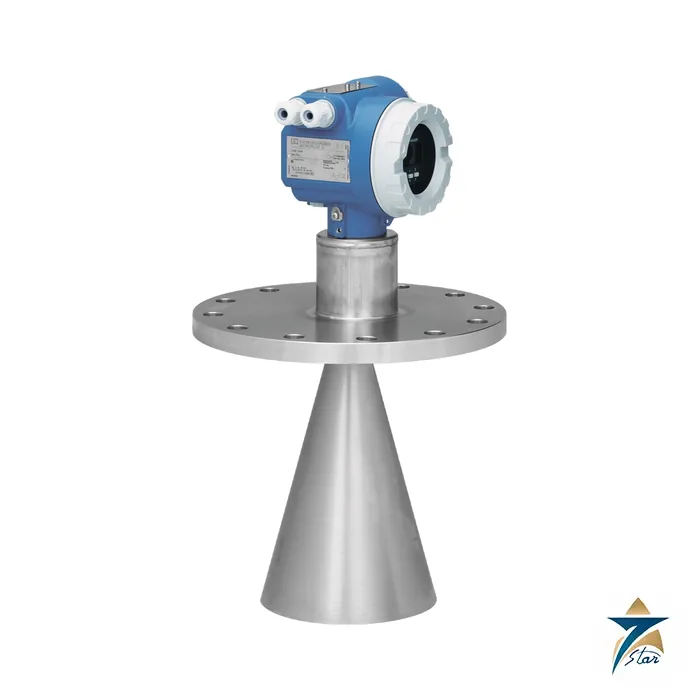
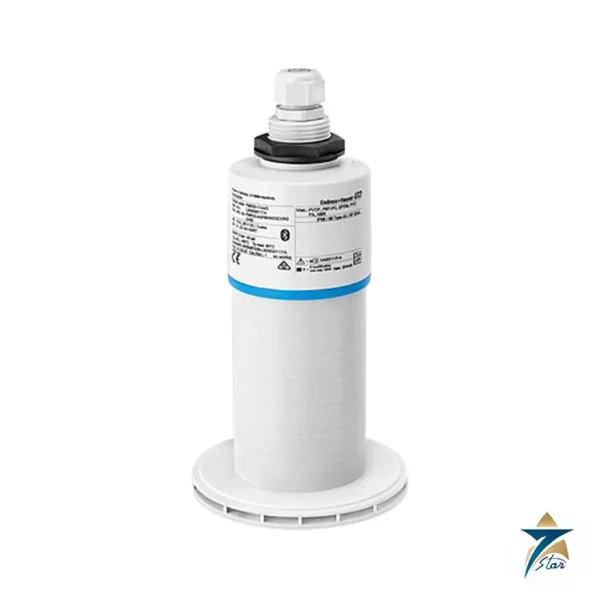
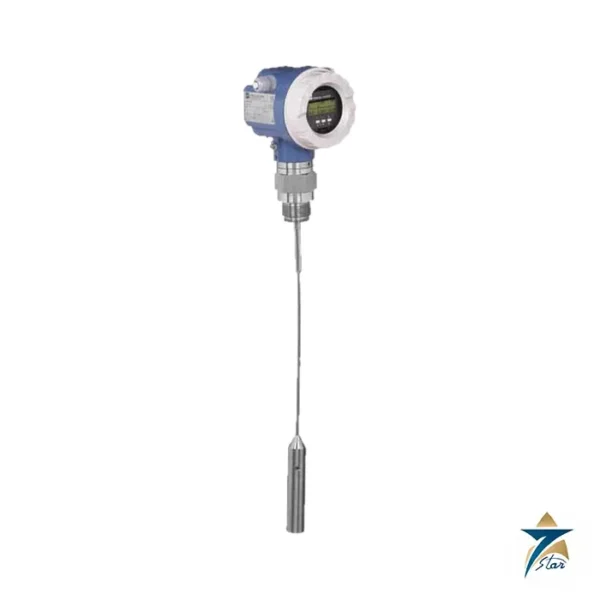
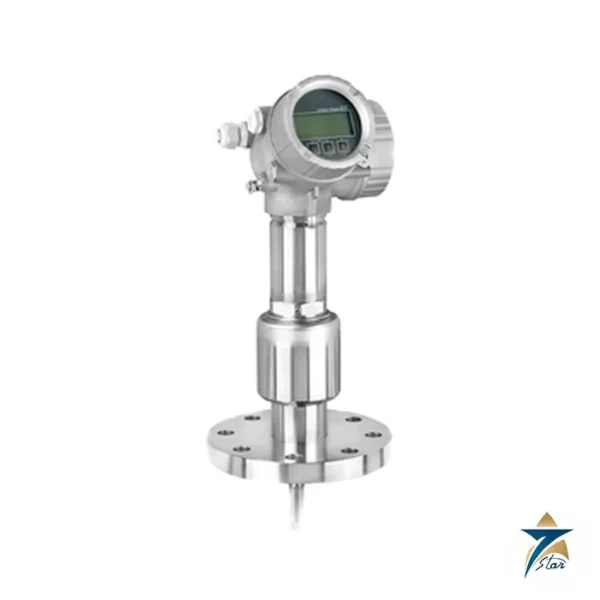
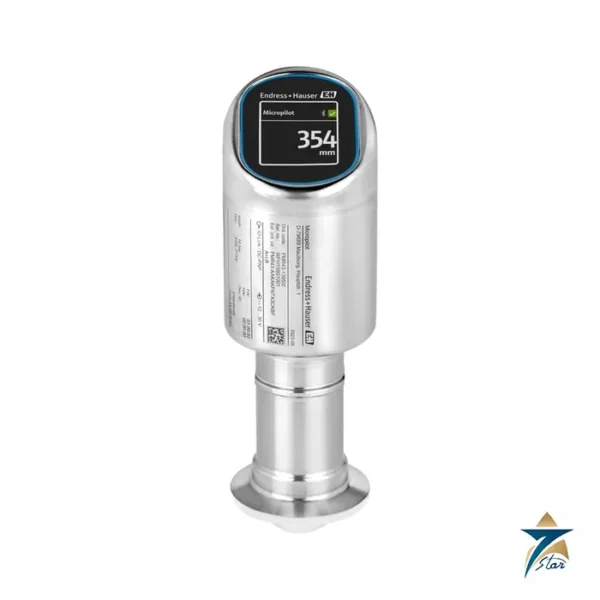
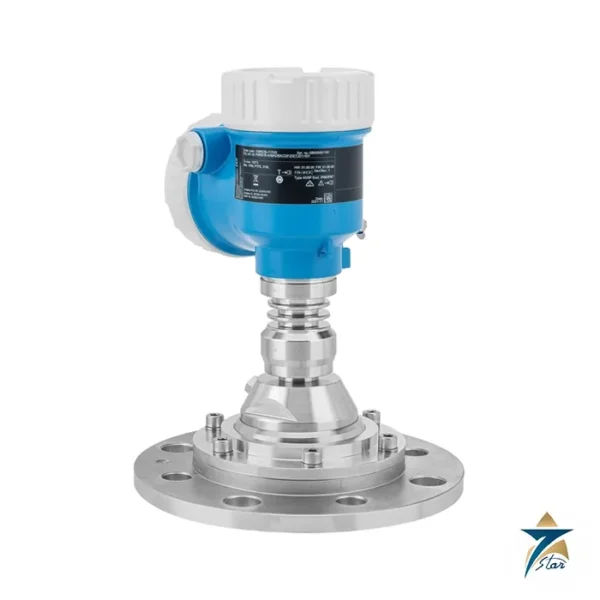
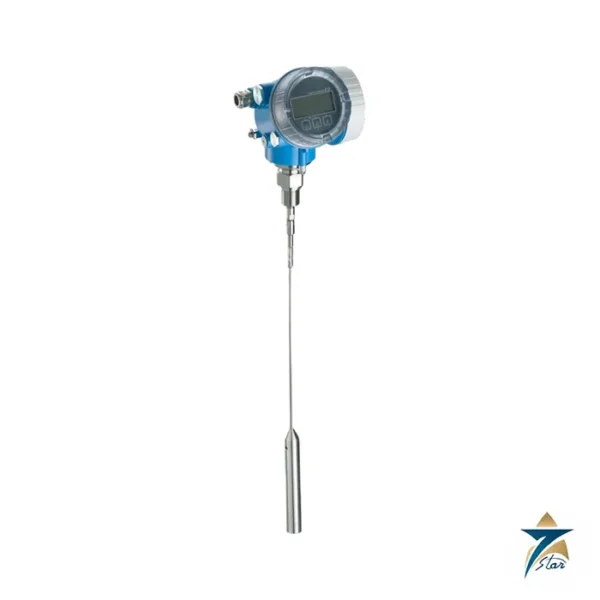
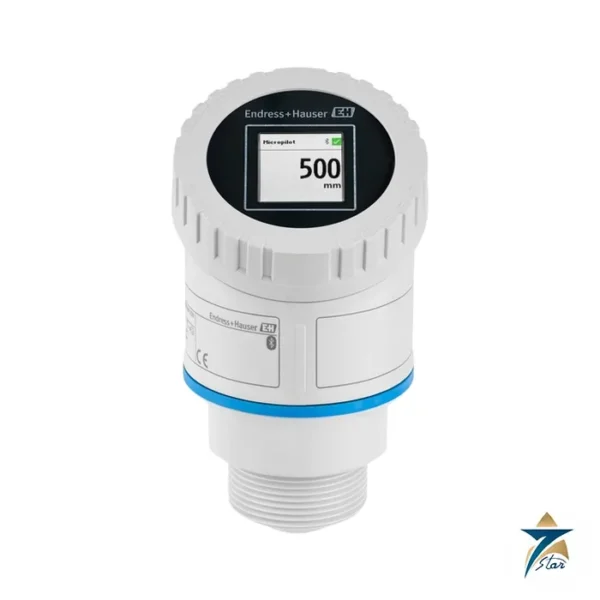
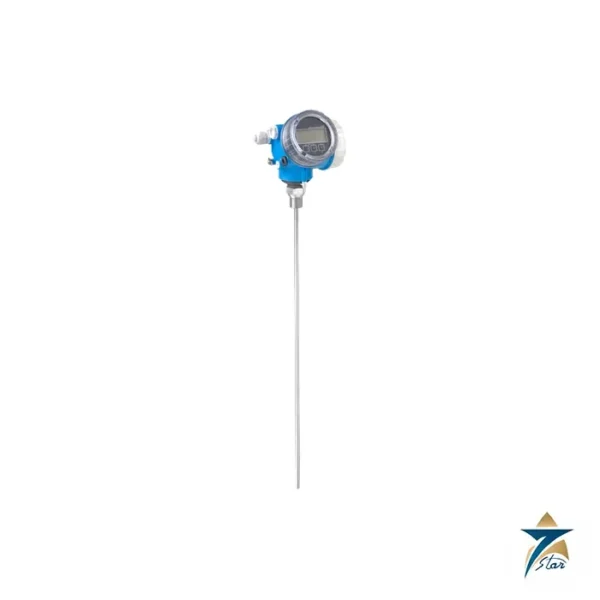
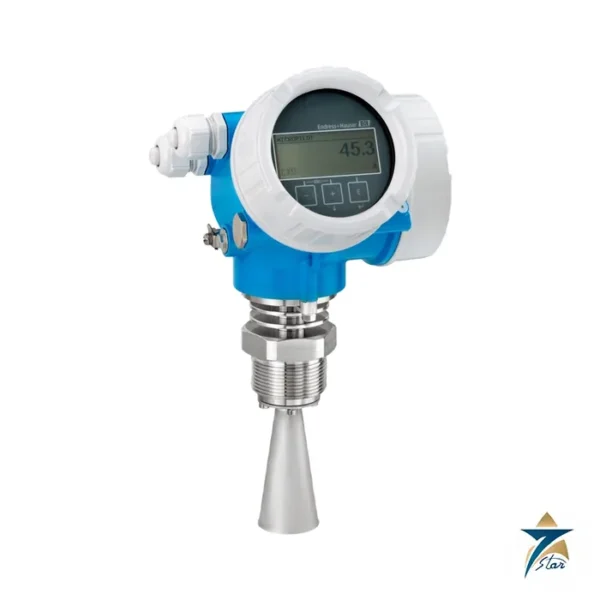
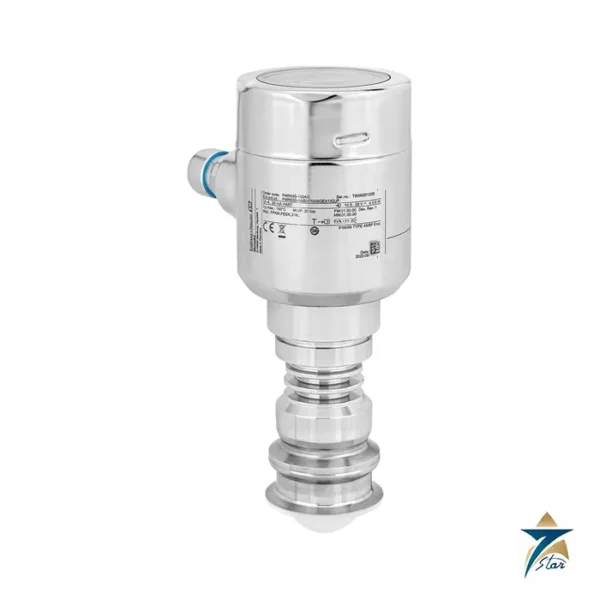
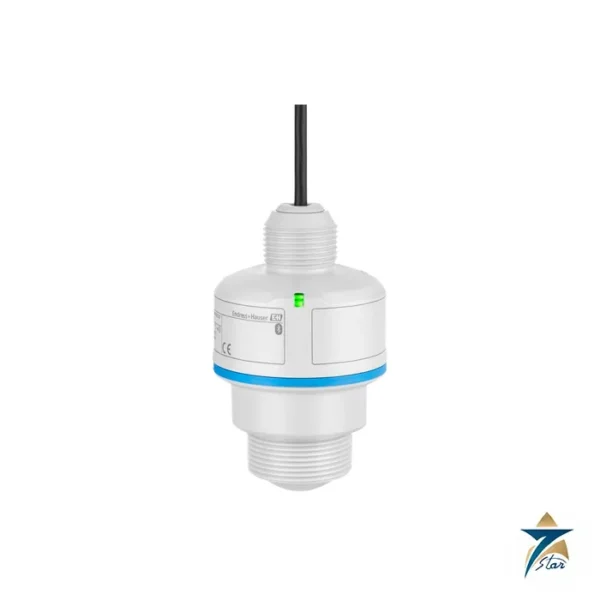
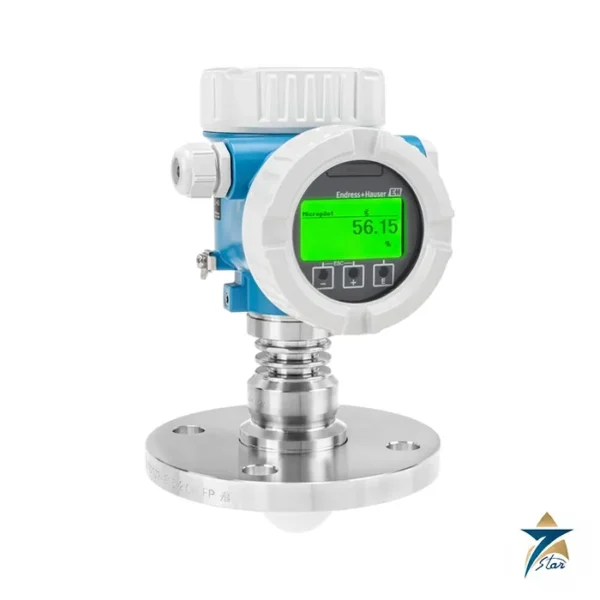
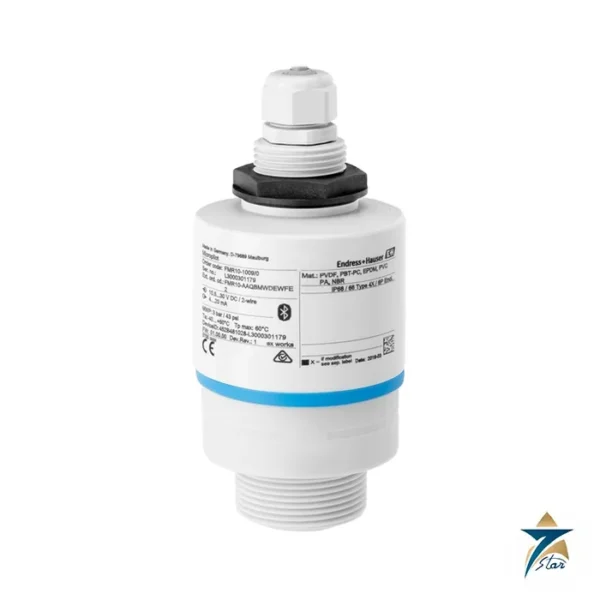
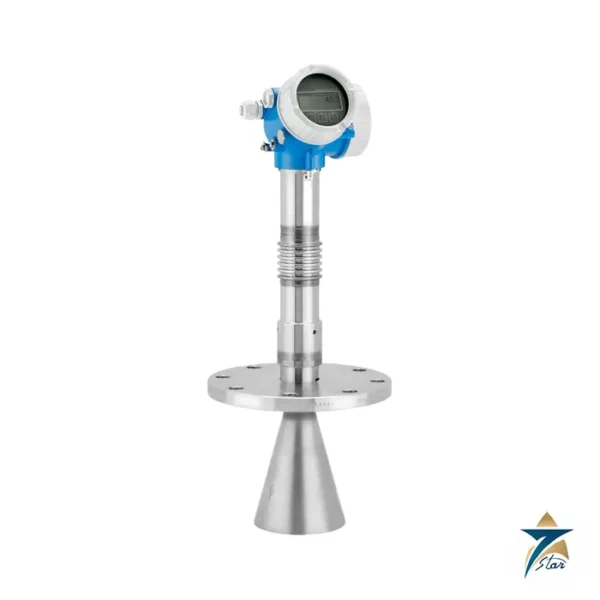
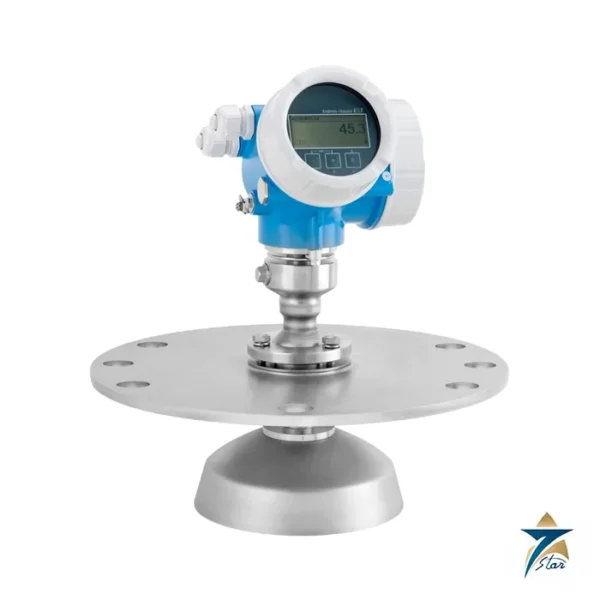
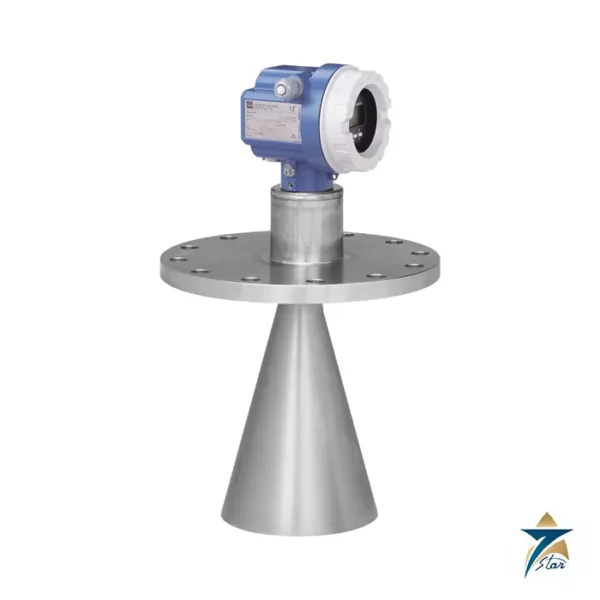
Endress+Hauser FMR530 Micropilot S Custody Transfer Radar

Description

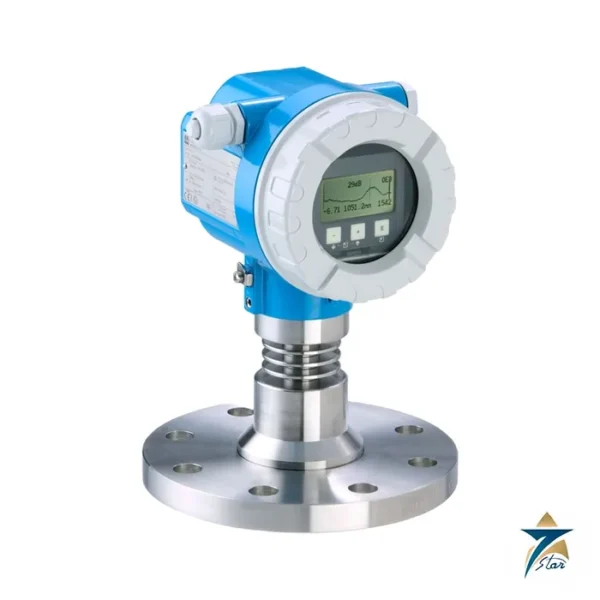
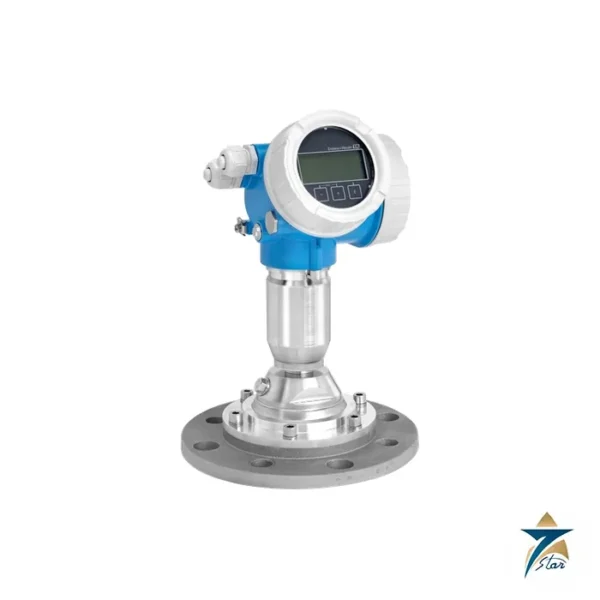
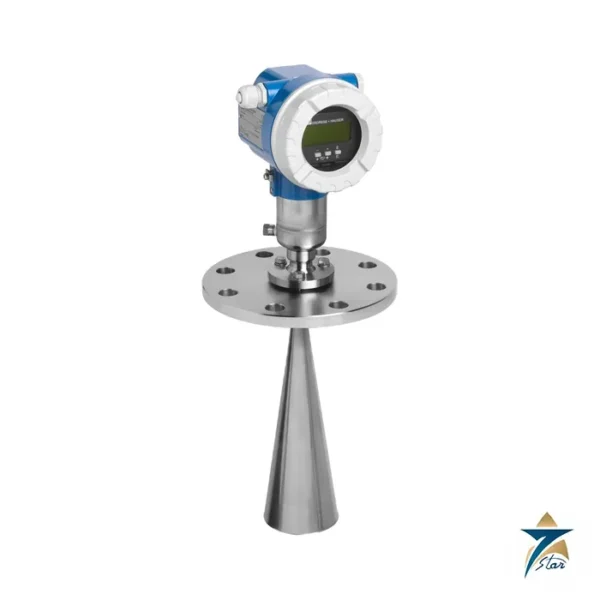
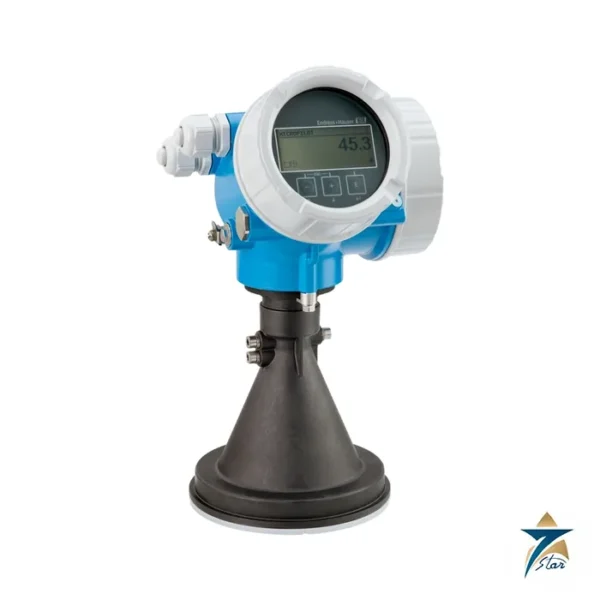
Endress+Hauser FMR530 for tank gauging with a horn antenna

Endress+Hauser FMR530 is the horn-antenna Micropilot S, designed for highly accurate level measurement in storage tanks and for custody transfer. The datasheet states that it meets the relevant requirements of OIML R85 and API 3.1B, carries NMi and PTB approvals and is suitable for free-space applications up to 25 m where the tank or nozzle geometry rules out a parabolic antenna.

Its absolute accuracy is better than plus or minus 1 mm, and in free-space use it typically reaches plus or minus 0.5 mm (2 sigma).

Data for FMR530

Parameter Value
Accuracy Absolute better than plus or minus 1 mm; typical plus or minus 0.5 mm (2 sigma) in free space
Free-space range Up to 25 m with the horn antenna
Approvals NMi and PTB custody transfer; OIML R85; API 3.1B
Inventory Control version Reduced accuracy of 3 mm available for all versions (order code version R)
Output 4 to 20 mA (invertible) with HART; 4-wire cable with 24 VDC, intrinsically safe
Power consumption Maximum 330 mW at 16 V; 500 mW at 24 V
Min. HART load 250 ohm
Linearization Tables up to 32 value pairs; dip chart correction for roof movement
Process connection Gas-tight, second line of defense, standard for any antenna
Calibration proof Certificate with laser interferometer reference (absolute accuracy 0.1 mm)
Integration Tank Side Monitor NRF590, up to 6 HART devices; FieldCare, AMS

Tank gauging systems with FMR530

The sensor is meant for a four-wire HART bus that runs to the Tank Side Monitor NRF590. The monitor collects radar, temperature, water and pressure signals and passes them to inventory software over many protocols. HART carries the measurement because the digital signal is needed to keep millimetre resolution; the analog loop alone cannot.

Wiring follows a clear rule: use four-wire twisted-pair screened cable, with separate power and signal pairs, wire cross-section 0.5 to 2.5 mm squared, and keep the shield grounded on one side at the Tank Side Monitor when potential matching cannot be run to the tank. Connection details change with the area classification, so the wiring diagram in the datasheet for the hazardous-area version must be followed exactly. A transmitter power supply unit RN221N with a communication resistor can serve a stand-alone installation in a hazardous area.

Because the measured value is the distance from the reference point to the product surface, the quality of the gauge reference height (GRH) decides the final accuracy. The datasheet says explicitly that the gauge reference height has a decisive influence on the accuracy of the measurement, so the tank must be strapped or otherwise verified and the value entered with care.

Use of FMR530 in terminals and refineries in Oman and the GCC

Oil terminals, product depots, refineries and LPG or chemical storage that must reconcile volumes for custody or fiscal reasons. The unit continuously monitors compliance with OIML R85 accuracy requirements and signals if the accuracy cannot be maintained. Each instrument leaves the factory with a calibration certificate that records the measured deviation against a laser interferometer with 0.1 mm absolute accuracy, which gives the weights-and-measures inspector the proof needed for sealing.

Examples include crude and fuel tanks in terminals on the Batinah coast and in Duqm, LPG and naphtha storage, jet fuel at airport depots and chemical tanks at free-zone terminals. In every case the gauge must be compatible with the tank gauging software and with the local metrology authority.

How FMR530 differs from FMR532 and FMR533

Model Antenna Typical accuracy Range
FMR530 Horn 0.5 mm Up to 25 m free space
FMR532 Planar, stilling well 0.8 mm Up to 38 m
FMR533 Parabolic 0.5 mm Up to 40 m free space

Installation of FMR530

The instrument measures the distance from its reference point on the flange to the product surface, and the tank gauging software converts it into level, volume and mass. For free-space operation the horn must extend below the nozzle, and the largest horn that fits should be chosen because beam angle decreases with size. The sheet assumes a tank where the beam touches the wall on one side only, so for narrow tanks check the beam angle against the diameter. Keep the beam clear of the tank wall on all but one side, avoid interference echoes from internal fittings, and compensate temperature effects on the tank shell height through the tank gauging system.

Maintenance of FMR530

Make sure the nameplate, the seal and the certificate documentation stay together for inspections. Check the calibration certificate on file, verify against a manual gauging tape at agreed intervals, and review the self-monitoring status. After tank repairs, repeat the empty calibration. Long-term drift stays within the specified accuracy according to the datasheet, and the influence of ambient temperature is within the OIML R85 limits, so routine recalibration is replaced by verification at the interval set by the plant and authority.

Keep spares simple: one electronics module and the documentation set for the order code. Since replacing a custody transfer gauge may require re-verification and re-sealing, plan lead time with the metrology authority before a shutdown.

Ordering information for FMR530

Specify antenna size, flange, approval (custody transfer, with the NMi or PTB mark you need, or inventory control), and the intrinsic safety requirements. State the tank type, diameter, nozzle size and the measuring range as well, so that the horn and flange can be matched to the tank at the first attempt.

Documents and quotation

Datasheet: Technical Information TI00344F. Send the part number, version and quantity through the RFQ form. Seven Star LLC is an independent supplier serving Oman and the GCC and is not affiliated with the manufacturer.

Datasheets & Documents
  • PDF Datasheet Endress+Hauser FMR530 Micropilot S Custody Transfer Radar Datasheet Download
Reviews (0)

Reviews

There are no reviews yet.

How would you rate this product?

It takes about 10 seconds — just tap a star. Your email is never published.

About brand

Endress+Hauser makes process measurement instruments for flow, level, pressure, temperature and liquid analysis. Georg H. Endress and Ludwig Hauser started the business in Lörrach, Germany, on 1 February 1953, first selling level meters, and the Endress+Hauser name has been used since 1957. The group is headquartered in Reinach, Switzerland, and has been wholly owned by the Endress family since 1975.

Seven Star LLC is an independent supplier listing Endress+Hauser flowmeters, level and pressure transmitters, temperature assemblies and liquid analysis products for buyers in Oman and the GCC. Instruments are matched from the full order code on the nameplate.

Endress+Hauser company profile

Origin Founded in Lörrach, Germany, on 1 February 1953 by the Swiss engineer Georg H. Endress and Ludwig Hauser
Headquarters Endress+Hauser AG, Reinach (Basel-Landschaft), Switzerland
Ownership Family owned; the Endress family has been the sole shareholder since 1975, and a family charter commits the company to stay family owned
Size About 16,500 employees and sales of about EUR 3.7 billion (2023, as reported by the company)
Product families Proline flowmeters, Micropilot and Levelflex radar, Liquiphant switches, Cerabar and Deltabar pressure, iTEMP and iTHERM temperature, Liquiline and Memosens liquid analysis

Milestones

  • 1953: Georg H. Endress and Ludwig Hauser start the business in Lörrach on 1 February, first selling level meters.
  • 1957: The Endress+Hauser name comes into use.
  • 1975: The Endress family becomes sole shareholder.
  • 2023: About 16,500 employees and sales of about EUR 3.7 billion, as reported by the company.

Endress+Hauser product lines

Line Measuring principle Typical use
Promass F 300, Promass 80F, 83F/84F Coriolis mass flow Direct mass flow and density of liquids and gases, hydrocarbon transfer and chemical dosing
Promag P 300, P 500, H 300, W 400, W 10, 50P Electromagnetic flow Water, wastewater, slurries and other conductive liquids
Prowirl F 200, 72F Vortex flow Steam, gas and low-viscosity liquids
Prosonic Flow 92F, t-mass 65F Ultrasonic and thermal mass flow Water lines; compressed air and industrial gases
Micropilot FMR62, FMR67, FMR60, FMR10B, FMR20, FMR50, FMR52 Free-space radar level, 80 GHz and 26 GHz Tanks, process vessels, silos and open water channels
Levelflex FMP51, FMP50, FMP54, FMP55 Guided wave radar level Level and interface in vessels, separators and bypass chambers
Liquiphant FTL51, Prosonic S FMU90 Vibronic point level; ultrasonic level High and low level alarms, pump protection, open channel flow
Cerabar PMC71B, PMP51B, PMP71, Deltabar PMD78B, PMD75 Pressure and differential pressure Process pressure, hydrostatic level and DP flow
iTEMP TMT82, TMT162, iTHERM TM101, TR66, TR10 Temperature transmitters and thermometers RTD and thermocouple points with thermowells
Liquiline CM444, CM442, Memosens CPS11E, Stamolys reagents Liquid analysis pH, ORP, conductivity, dissolved oxygen and nutrient analysis in water treatment and process

Where Endress+Hauser instruments are used

In Oman and the GCC, Endress+Hauser instruments are common in oil and gas production and processing, refineries and petrochemicals, desalination and water networks, wastewater treatment, power plants and food and beverage plants. Coriolis meters measure hydrocarbon and chemical flows, electromagnetic meters cover water and wastewater, radar transmitters handle tank and silo level, and Liquiline analysers monitor water quality. Proline 300 and 500 flowmeters include Heartbeat Technology for in-situ verification, which reduces the need to remove a meter for checks.

Ordering Endress+Hauser instruments: what we need

The order code on the nameplate (for example PMP71-1QA1S11RDADU) defines every option: measuring range, process connection, materials, output, approvals and display. Send it with the serial number; Endress+Hauser can retrieve the original configuration from the serial number. For a new instrument add the medium, operating and design pressure and temperature, range, line size or tank geometry, process connection, wetted materials, output or protocol (4-20 mA HART, PROFIBUS, FOUNDATION Fieldbus, Modbus) and the hazardous-area approval required. Older models such as Promass 80/83 or Micropilot M are replaced by current Proline or 80 GHz Micropilot devices.

Facts checked against Endress+Hauser company history and product information, October 2026.

FAQ

Questions about the Endress+Hauser FMR530 Micropilot S Custody Transfer

Answers from our engineering team on installation, compatibility and integration.

01What is Endress+Hauser FMR530 used for?
High-accuracy tank level measurement, including custody transfer under OIML R85 and API 3.1B, with NMi and PTB approvals.
02What accuracy does FMR530 have?
Better than plus or minus 1 mm absolute, typically plus or minus 0.5 mm (2 sigma) in free space.
03What range does FMR530 offer?
Up to 25 m in free space with the horn antenna.
04How does FMR530 connect to a gauging system?
Through a four-wire HART cable to the Tank Side Monitor NRF590, which can serve up to 6 HART devices.
05Is there a lower-accuracy version of FMR530?
Yes, an Inventory Control version with 3 mm accuracy is available for all device versions.