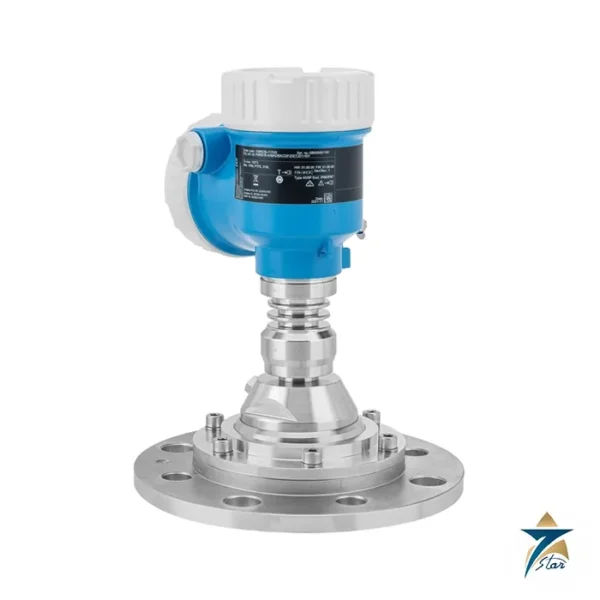
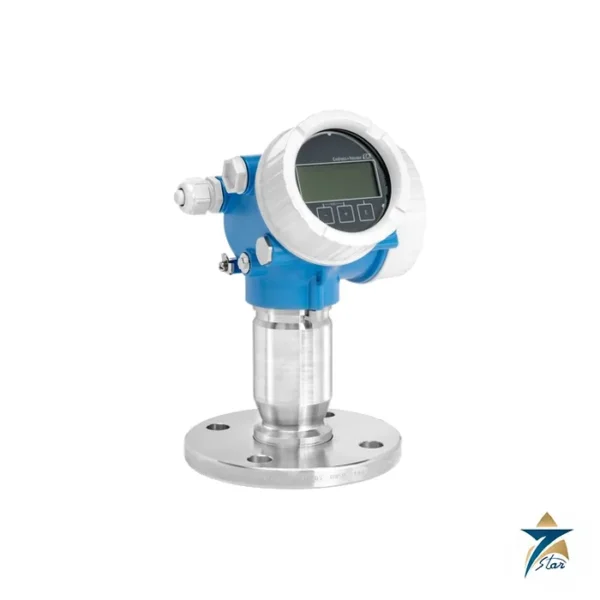
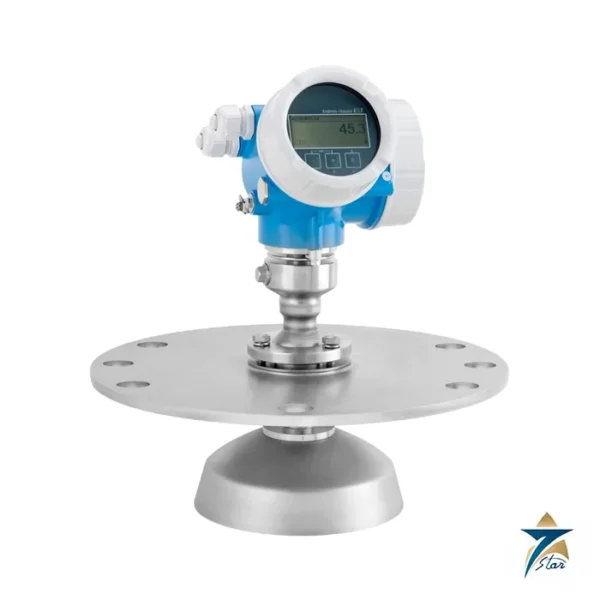
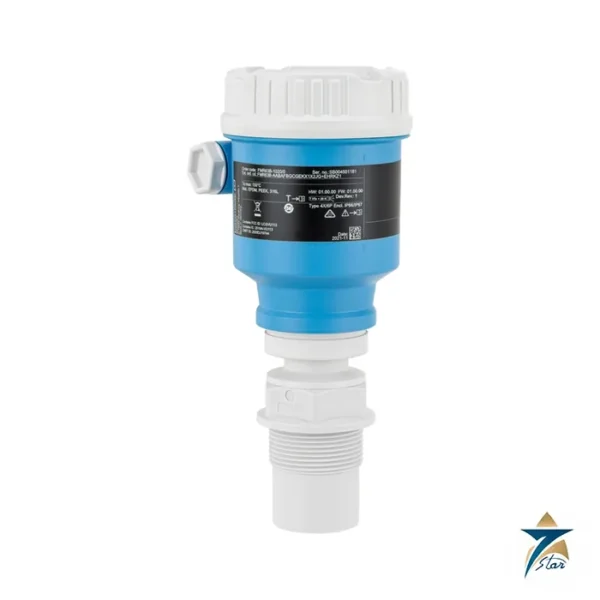
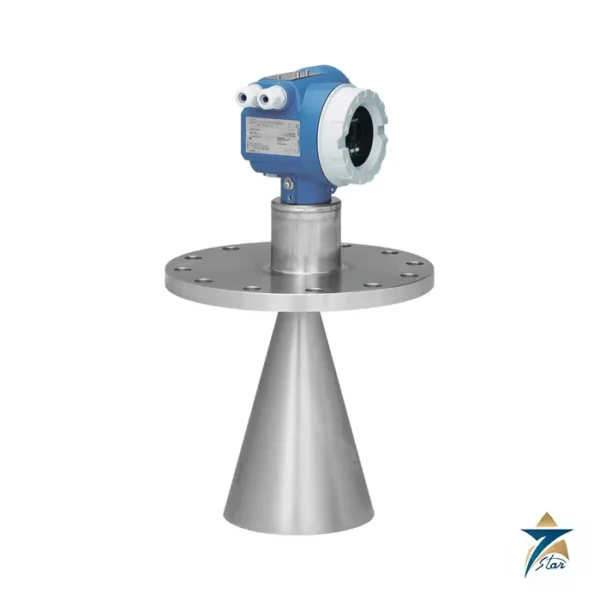
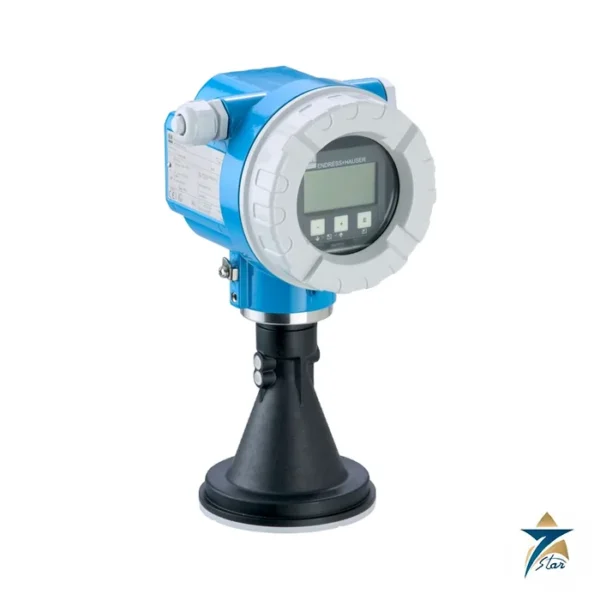
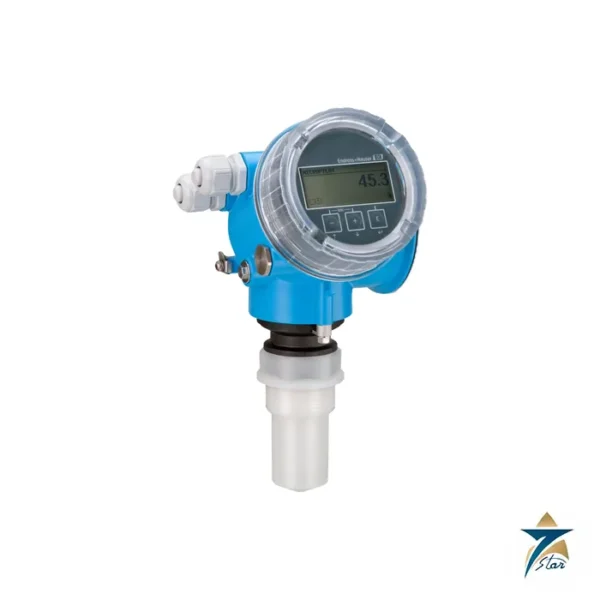
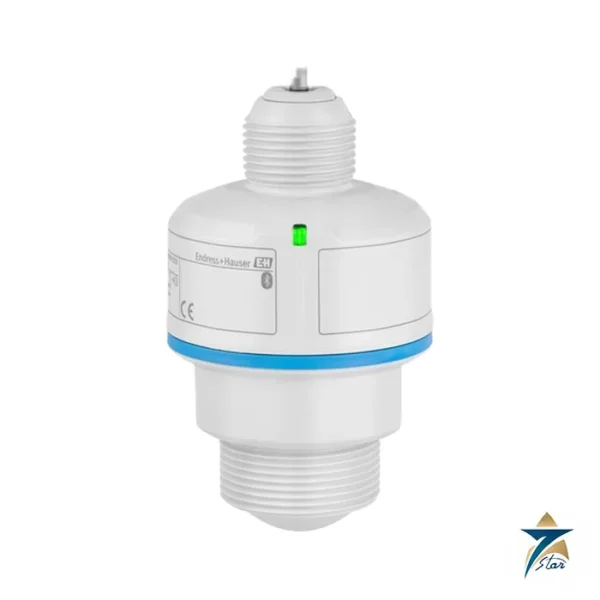
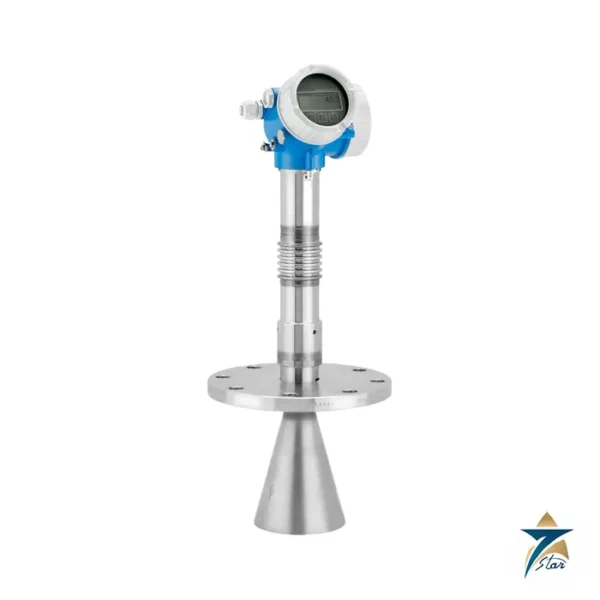
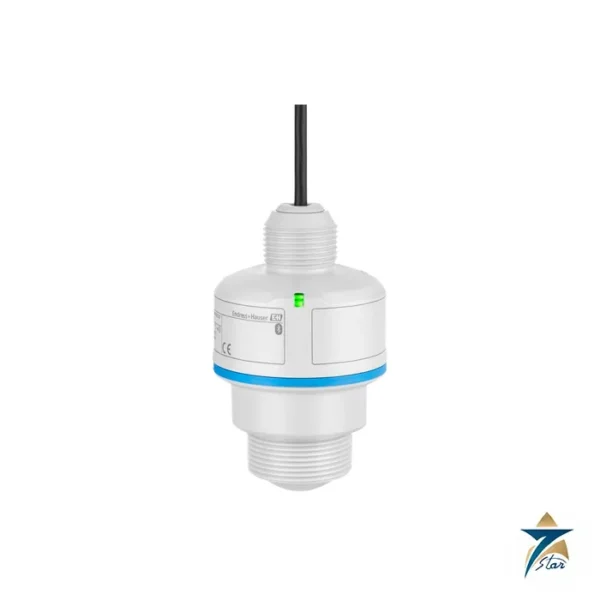
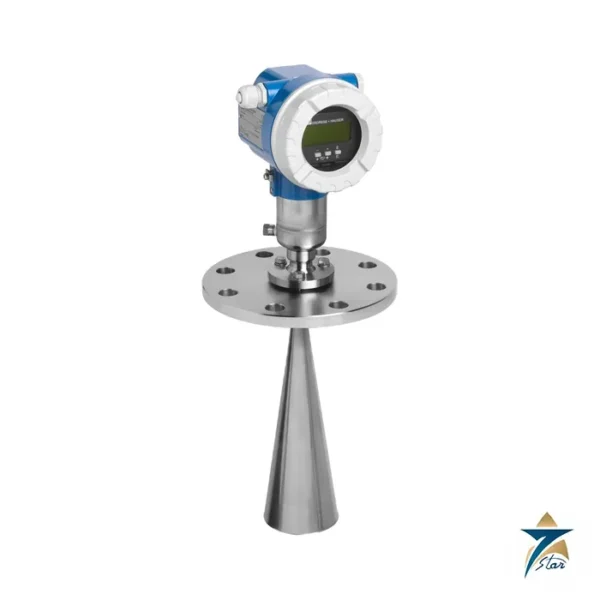
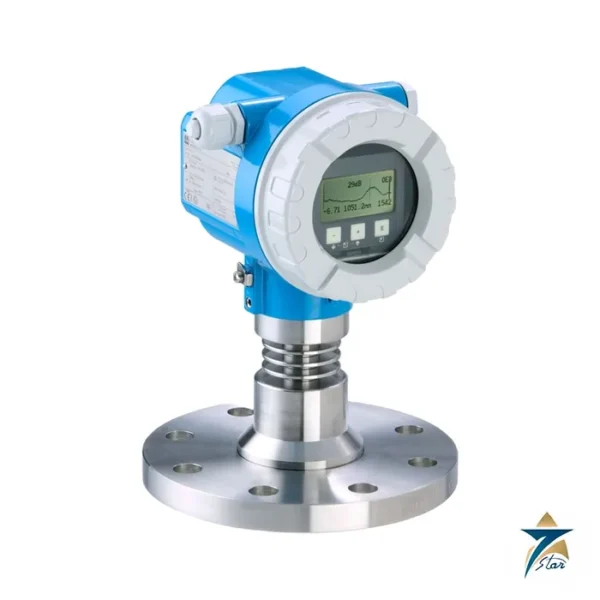
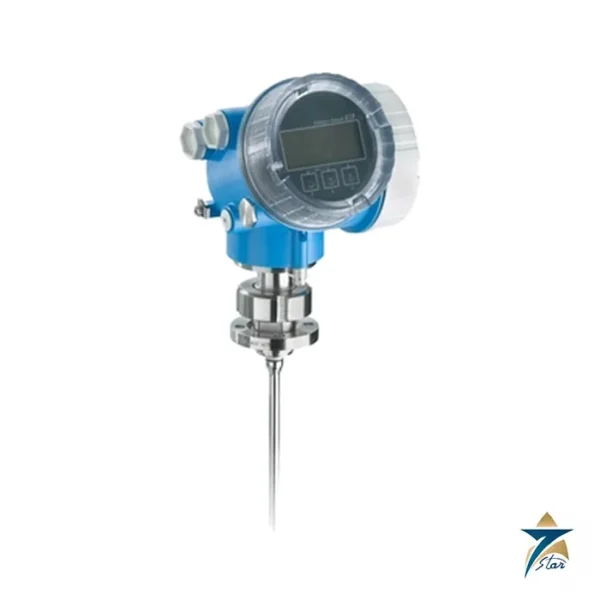
Endress+Hauser FMR10 Micropilot Compact Radar Level Sensor

Description

Endress+Hauser FMR10: the compact Bluetooth radar for liquids

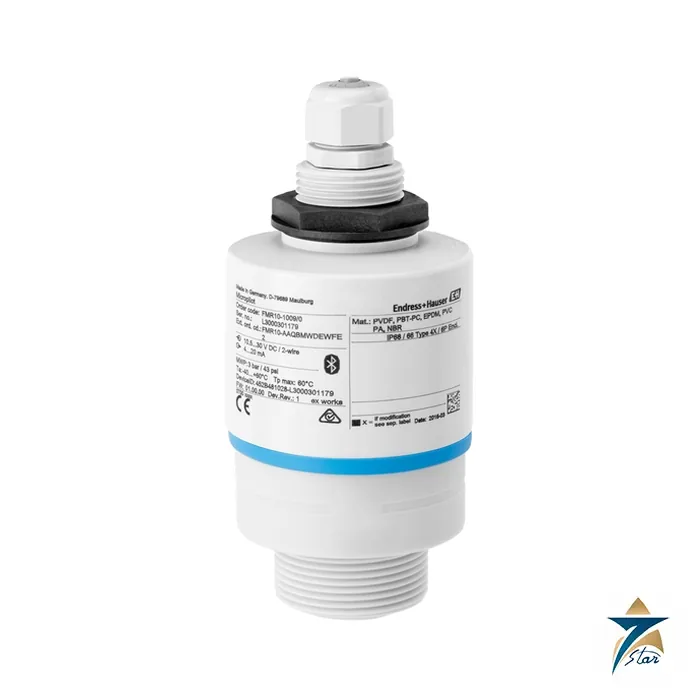
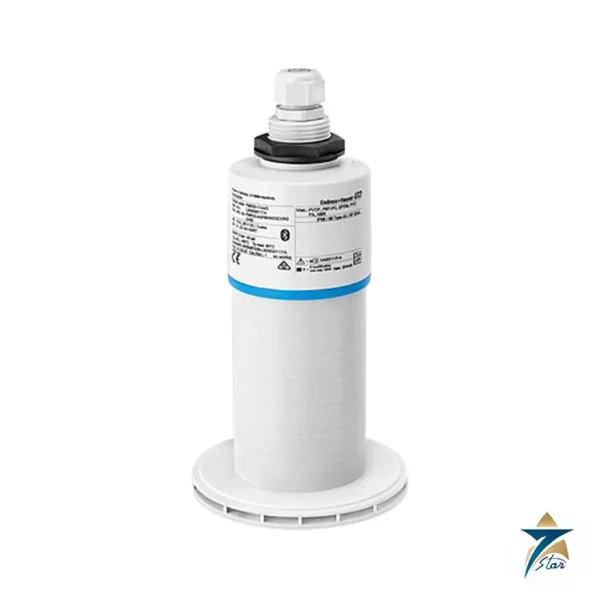
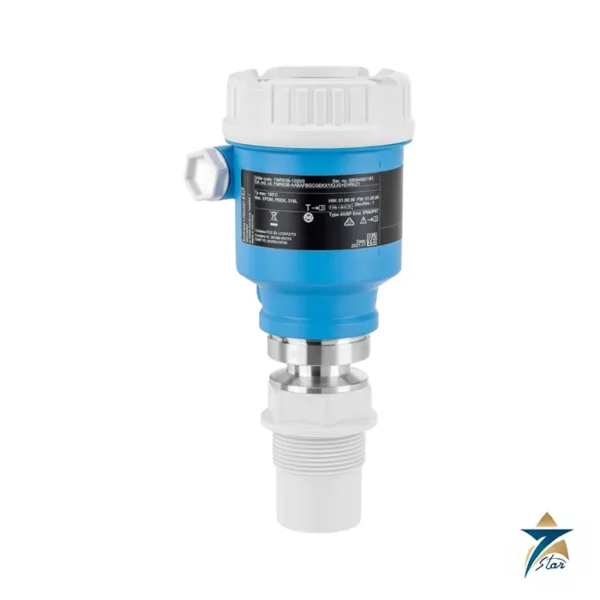
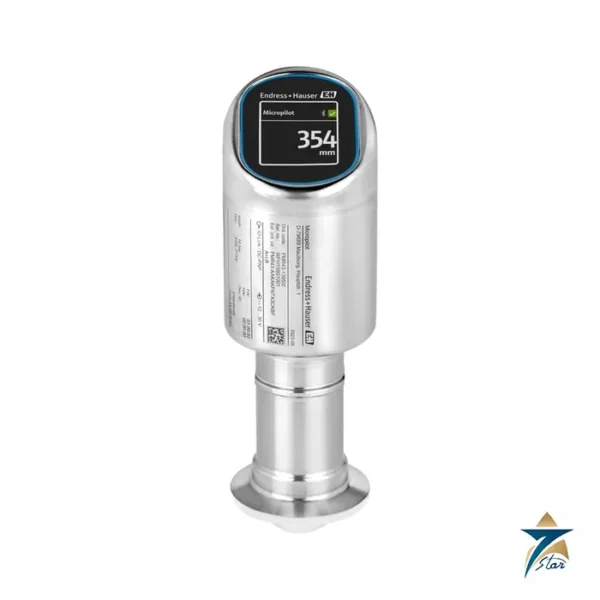
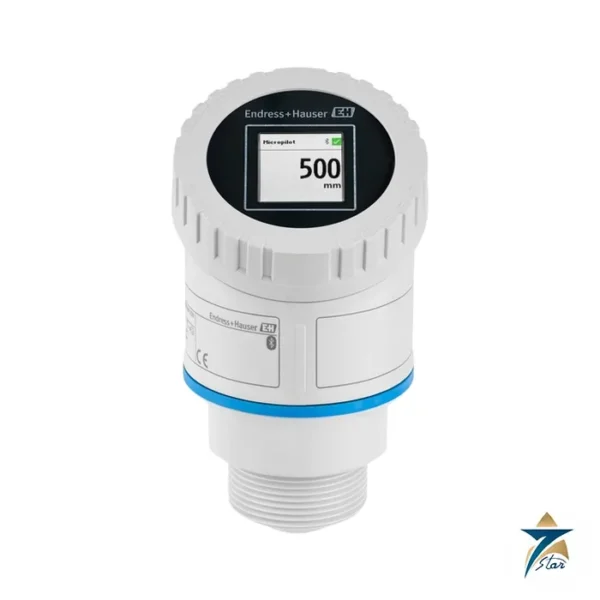
Endress+Hauser FMR10, sold as the Micropilot FMR10, is a small 26 GHz radar that looks down onto a liquid and reports the distance to its surface. The datasheet calls it the most compact radar of the range and the most favourable one in price-to-performance terms. A whole sensor of PVDF with a 40 mm antenna and a 10 m connecting cable weighs about 3.0 kg, so it fits tank lids, pump-station covers and canal brackets where a larger radar would never go.

The device is a loop-powered 4 to 20 mA transmitter without HART. Set-up and diagnostics are done wirelessly: the unit speaks Bluetooth, and the free SmartBlue app on an Android or iOS phone replaces a local display. For a plant technician in Muscat standing on a wet tank roof, being able to read and configure the sensor from a few steps away is the main selling point of FMR10.

Key facts about FMR10 from the datasheet

  • Maximum range 8 m with the 40 mm antenna; 12 m when the flooding protection tube accessory is fitted (with the GR approval the figures drop to 5 m and 8 m).
  • Accuracy of the digital value: plus or minus 5 mm; analog stage adds 0.02 percent non-linearity and 0.03 percent offset of span.
  • Process temperature minus 40 to plus 60 degrees Celsius, gauge pressure minus 1 to 3 bar, absolute pressure below 4 bar.
  • Fully potted electronics and a PVDF sensor body; protection IP66 / NEMA 4X and IP68 / NEMA 6P (24 hours at 1.83 m under water).
  • Linearization table of up to 32 value pairs entered through SmartBlue; alarm current 22.5 mA per NAMUR NE 43.

Technical specifications of FMR10

Parameter Value
Measuring principle Time-of-flight radar, free space, K-band about 26 GHz
Output 4 to 20 mA, no HART; digital reading over Bluetooth
Supply voltage 10.5 to 30 VDC, external supply required
Power / current Maximum input power 675 mW; maximum input current below 25 mA; start-up current 3.6 mA
Start time First stable value after 20 s at 24 VDC
Resolution Digital 1 mm; analog 4 microamp
Response time Below 3 s for tank height under 5 m, sampling 1 per second
Blocking distance Automatic, at least 0.1 m
Ambient / storage Minus 40 to plus 60 / minus 40 to plus 80 degrees Celsius
Dielectric constant Relative dielectric constant of 4 or more
Process connection G 1 inch rear thread with PA66 counter nut and EPDM seal
Cable 10 m PVC standard; total with extension up to 300 m
Bluetooth range 25 m under reference conditions, can be deactivated
Approvals Non-hazardous area, CSA C/US general purpose, EAC; radio standard EN 302729

Where FMR10 earns its place in Oman and the GCC

The datasheet names storage tanks, open basins, pump shafts and canal systems. Translated into local practice that means desalination break tanks, municipal sump pits, wastewater lift stations, irrigation reservoirs in the interior and utility-water buffer tanks inside industrial plants. These are quiet-surface applications: the sheet asks for calm liquid, no agitator and no heavy build-up, and recommends a tank height above 1.5 m and an open channel at least 0.5 m wide.

Because FMR10 has no Ex certificate, it belongs in non-hazardous locations only. For a hydrocarbon sump or a solvent tank the sibling with ATEX approval is the right choice, not this one.

Selecting FMR10 and checking the medium

Before ordering, check the dielectric constant of the liquid. The unit needs a value of 4 or higher; the sheet groups media into 4 to 10 (acids, solvents, esters, acetone) and above 10 (water-based, conductive liquids, alcohol). Foam, strong condensation, ice on the sensor and build-up all shorten the usable range. Where a pit is deeper than 8 m the 12 m figure only applies together with the flooding protection tube, and the tube also protects the antenna if the pit surcharges.

Installing FMR10 and bringing it into service

The sensor screws into its G 1 inch rear connection and is locked with the supplied counter nut and EPDM seal. Aim the antenna so that nothing sticks into the beam, keep it out of direct sun with a weather cover, and avoid mounting it centred over an inlet. Wire the brown conductor to plus and the blue to minus on a supply of 10.5 to 30 V. Once powered, wait about 20 seconds, open SmartBlue, enter empty and full distance, and the 4 to 20 mA output follows. Battery-fed loops can switch Bluetooth off to extend life.

Maintenance of FMR10

With a sealed PVDF body, no display and no moving parts, service reduces to keeping the antenna face clean and confirming the empty distance after any tank modification. The configuration is retained in the sensor if power fails. Wipe off condensate or deposits and re-run the SmartBlue echo view if the reading drifts.

Ordering notes for FMR10

Typical add-ons from the datasheet are the FAX50 screw-in flange, wall angle bracket, cantilever with pivot, ceiling bracket, and manhole or confined-space brackets for sewer shafts. Quote them with the device so the first fit is clean.

How FMR10 differs from other Micropilot compact radars

Sensor Maximum range Accuracy Output Process temperature
FMR10 8 m (12 m with tube) 5 mm 4 to 20 mA plus Bluetooth minus 40 to plus 60
FMR20 15 m or 20 m 2 mm 4 to 20 mA HART, Bluetooth optional minus 40 to plus 80

Put plainly, FMR10 is the cheaper, shorter-range sibling with no HART and no hazardous-area approval; when you need 15 m or more or HART, move up to the FMR20.

Documents and quotation

The Technical Information TI01266F is available as the datasheet for FMR10. To request a quotation send the part number, the quantity, the required cable length and any mounting accessories through the RFQ form. Seven Star LLC is an independent supplier serving Oman and the GCC and is not affiliated with the manufacturer.

What to Include in Your Endress+Hauser FMR10 Enquiry

An accurate quotation for the Endress+Hauser FMR10 depends on a few details. Please share the complete part number, any suffix codes for options or approvals, the operating conditions at the installation point, and whether certificates of conformity or test reports must ship with the goods. It also helps to know whether the unit is for planned maintenance, a shutdown or an urgent breakdown, because that decides how it is sourced and shipped. With this information our team can check compatibility with your existing radar & guided wave radar level and reply with availability and a realistic delivery estimate.

Datasheets & Documents
  • PDF Datasheet Endress+Hauser FMR10 Micropilot Compact Radar Level Sensor Datasheet Download
Reviews (0)

Reviews

There are no reviews yet.

How would you rate this product?

It takes about 10 seconds — just tap a star. Your email is never published.

About brand

Endress+Hauser makes process measurement instruments for flow, level, pressure, temperature and liquid analysis. Georg H. Endress and Ludwig Hauser started the business in Lörrach, Germany, on 1 February 1953, first selling level meters, and the Endress+Hauser name has been used since 1957. The group is headquartered in Reinach, Switzerland, and has been wholly owned by the Endress family since 1975.

Seven Star LLC is an independent supplier listing Endress+Hauser flowmeters, level and pressure transmitters, temperature assemblies and liquid analysis products for buyers in Oman and the GCC. Instruments are matched from the full order code on the nameplate.

Endress+Hauser company profile

Origin Founded in Lörrach, Germany, on 1 February 1953 by the Swiss engineer Georg H. Endress and Ludwig Hauser
Headquarters Endress+Hauser AG, Reinach (Basel-Landschaft), Switzerland
Ownership Family owned; the Endress family has been the sole shareholder since 1975, and a family charter commits the company to stay family owned
Size About 16,500 employees and sales of about EUR 3.7 billion (2023, as reported by the company)
Product families Proline flowmeters, Micropilot and Levelflex radar, Liquiphant switches, Cerabar and Deltabar pressure, iTEMP and iTHERM temperature, Liquiline and Memosens liquid analysis

Milestones

  • 1953: Georg H. Endress and Ludwig Hauser start the business in Lörrach on 1 February, first selling level meters.
  • 1957: The Endress+Hauser name comes into use.
  • 1975: The Endress family becomes sole shareholder.
  • 2023: About 16,500 employees and sales of about EUR 3.7 billion, as reported by the company.

Endress+Hauser product lines

Line Measuring principle Typical use
Promass F 300, Promass 80F, 83F/84F Coriolis mass flow Direct mass flow and density of liquids and gases, hydrocarbon transfer and chemical dosing
Promag P 300, P 500, H 300, W 400, W 10, 50P Electromagnetic flow Water, wastewater, slurries and other conductive liquids
Prowirl F 200, 72F Vortex flow Steam, gas and low-viscosity liquids
Prosonic Flow 92F, t-mass 65F Ultrasonic and thermal mass flow Water lines; compressed air and industrial gases
Micropilot FMR62, FMR67, FMR60, FMR10B, FMR20, FMR50, FMR52 Free-space radar level, 80 GHz and 26 GHz Tanks, process vessels, silos and open water channels
Levelflex FMP51, FMP50, FMP54, FMP55 Guided wave radar level Level and interface in vessels, separators and bypass chambers
Liquiphant FTL51, Prosonic S FMU90 Vibronic point level; ultrasonic level High and low level alarms, pump protection, open channel flow
Cerabar PMC71B, PMP51B, PMP71, Deltabar PMD78B, PMD75 Pressure and differential pressure Process pressure, hydrostatic level and DP flow
iTEMP TMT82, TMT162, iTHERM TM101, TR66, TR10 Temperature transmitters and thermometers RTD and thermocouple points with thermowells
Liquiline CM444, CM442, Memosens CPS11E, Stamolys reagents Liquid analysis pH, ORP, conductivity, dissolved oxygen and nutrient analysis in water treatment and process

Where Endress+Hauser instruments are used

In Oman and the GCC, Endress+Hauser instruments are common in oil and gas production and processing, refineries and petrochemicals, desalination and water networks, wastewater treatment, power plants and food and beverage plants. Coriolis meters measure hydrocarbon and chemical flows, electromagnetic meters cover water and wastewater, radar transmitters handle tank and silo level, and Liquiline analysers monitor water quality. Proline 300 and 500 flowmeters include Heartbeat Technology for in-situ verification, which reduces the need to remove a meter for checks.

Ordering Endress+Hauser instruments: what we need

The order code on the nameplate (for example PMP71-1QA1S11RDADU) defines every option: measuring range, process connection, materials, output, approvals and display. Send it with the serial number; Endress+Hauser can retrieve the original configuration from the serial number. For a new instrument add the medium, operating and design pressure and temperature, range, line size or tank geometry, process connection, wetted materials, output or protocol (4-20 mA HART, PROFIBUS, FOUNDATION Fieldbus, Modbus) and the hazardous-area approval required. Older models such as Promass 80/83 or Micropilot M are replaced by current Proline or 80 GHz Micropilot devices.

Facts checked against Endress+Hauser company history and product information, October 2026.

FAQ

Questions about the Endress+Hauser FMR10 Micropilot Compact Radar Level

Answers from our engineering team on installation, compatibility and integration.

01What is the maximum range of Endress+Hauser FMR10?
Up to 8 m with the 40 mm antenna, or 12 m when the flooding protection tube accessory is installed; with the GR approval these become 5 m and 8 m.
02Does Endress+Hauser FMR10 have HART?
No. FMR10 is a 4 to 20 mA loop device with a Bluetooth interface for the SmartBlue app; the HART version of this radar family is the FMR20.
03What supply and temperature limits apply to FMR10?
10.5 to 30 VDC with an external supply, ambient and process temperature from minus 40 to plus 60 degrees Celsius, gauge pressure minus 1 to 3 bar.
04Can FMR10 be used in a hazardous area?
The datasheet lists only non-hazardous, CSA general purpose and EAC non-hazardous approvals, so it is meant for non-hazardous locations.
05How long is the connecting cable of FMR10?
The standard PVC cable is 10 m; with an extension cable the total of sensor cable plus extension must not exceed 300 m.