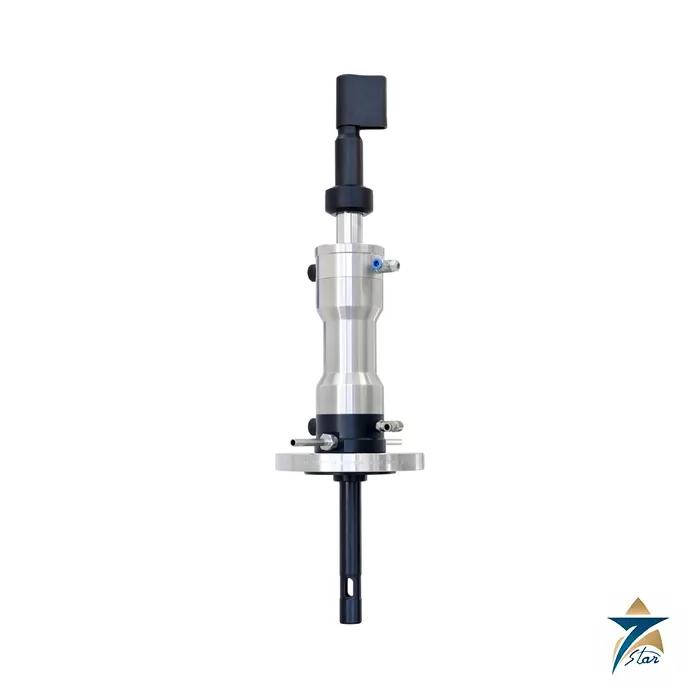
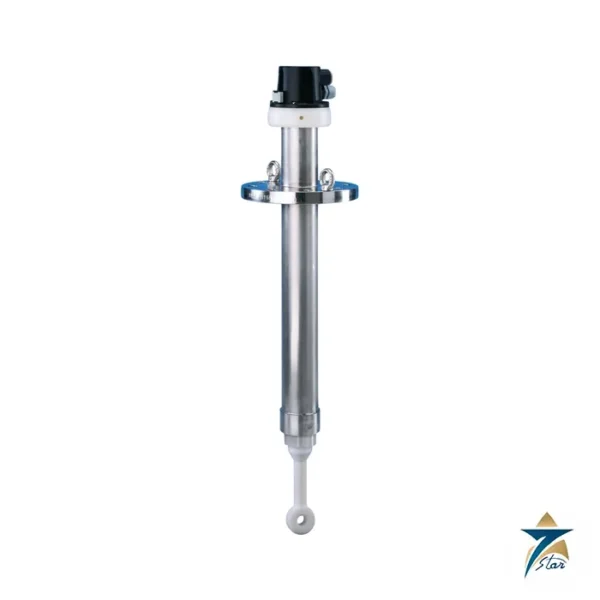
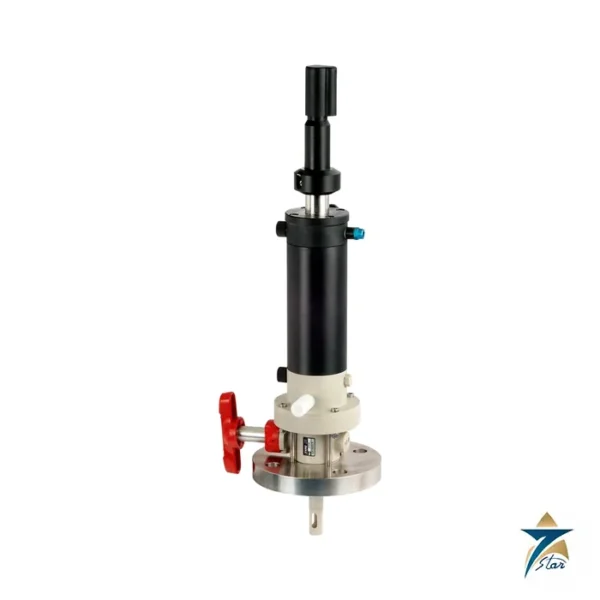
Endress+Hauser CPA472D Cleanfit Heavy-Duty Retractable Assembly

Description

CPA472D Cleanfit: a retractable assembly built for harsh chemistry

The Endress+Hauser CPA472D is a heavy-duty retractable process assembly for pH and ORP electrodes. A stainless steel housing carries the load while only three modules touch the process: rinse chamber, electrode holder and raised face. Because each of these can be specified in a different material, the same assembly can be set up for biodiesel, chemical, power-plant and plant-construction duty.

Without stopping the process, the sensor can be retracted into the rinse chamber, rinsed with water or cleaning solution, kept wet during pauses, dismounted, sterilised or calibrated. Seven Star LLC is an independent supplier serving Oman and the GCC and is not affiliated with the manufacturer.

CPA472D data sheet extract

Parameter Value
Application Chemical industry, biodiesel plants, power plants, plant design; tanks, vats and pipes
Process temperature 0 to 140 degrees C
Process pressure 0 to 4 bar manual; 0 to 10 bar pneumatic
Materials in contact with medium PEEK, PVDF, conductive PVDF, Alloy C22 or stainless steel 1.4571 for holder, rinse chamber and raised face
Seals EPDM, FPM (Viton) or FFKM (Kalrez)
Housing Stainless steel 1.4404 (AISI 316 L), FPM seals
Immersion depth Standard up to 146 mm; long up to 280 mm
Process connections Flange DN 50, DN 80, ANSI 2 inch, JIS 10K 50A; G 1 1/4 internal thread with union nut for metal versions
Rinse fittings 2 x G 1/4 internal or NPT 1/4 inch
Pneumatics 5 to 6 bar, filtered 40 micrometre, free of water and oil, air lines at least 4 mm
Rinse pressure 2 to 6 bar; water needs check valve and 100 micrometre filter
Limit switches NAMUR type, maximum permissible ambient 90 degrees C; ambient not below 0 degrees C
Weight 7.5 to 12.0 kg depending on material

Safety and serviceability features

An electrode must be present before the assembly can travel to the measuring position, because the compressed air circuit relies on the electrode closing its air channels. A locking mechanism adds safety while a sensor is replaced, and a pressure-tight stainless housing contains the process. The assembly can hold gel electrodes or pressure-overlay KCl electrodes, and automatic cleaning and calibration is possible together with the Topcal CPC310 controller.

How CPA472D differs from other Cleanfit assemblies

CPA473 and CPA474 close off the process with a ball valve and tolerate fibrous or sticky media, with stainless and plastic bodies. CPA472D has no ball valve; instead it relies on the retraction pipe and a rinse chamber inside a pressure-tight stainless frame, plus the safety stop. It is the heavy-duty modular option, with material combinations across PEEK, PVDF and Alloy C22, a 140 degrees C ceiling, and a 7.5 to 12.0 kg mass. The lighter CPA871 and CPA875 target water, wastewater and hygienic duties.

Installation notes for CPA472D

  • Install glass electrodes at least 15 degrees above horizontal; ISFET Tophit sensors have no angle restriction.
  • Use pipes of DN 80 or larger, or the flow assembly with sight glass for DN 50.
  • Fit a pressure reducer if air or rinse water can exceed 6 bar, even for short surges; a pneumatic throttle is available for smoother movement.
  • Install a check valve and 100 micrometre filter in the rinse water inlet and an outlet valve on the rinse chamber.
  • Leave the dummy plug in place if the rinse function is unused.

Maintenance of CPA472D in Oman plants

The service position lets operators swap electrodes while the process runs, which is helpful at chemical plants where shutdown windows are rare. The datasheet lists the usual sequence: move to the rinse chamber, rinse with water or cleaning solution, keep the electrode wet during pauses, then dismount, sterilise or calibrate it, all without interrupting the process. Because Memosens laboratory calibration is supported, a technician can carry the removed sensor to the lab rather than calibrate it hanging over a tank. Check seals for the elastomer chosen, replace them before they harden, and keep the pneumatic filter clean in dusty coastal sites. Confirm the limit position switches at each inspection.

Ordering Endress+Hauser CPA472D

The product structure covers material, immersion depth, flange and drive; please provide the nameplate code of the assembly you need to match. Electrodes, cables and controllers are separate items; the Topcal CPC310, a CPG310 control unit, a CPR rinse block, rinse valves and the pneumatic throttle are accessories that you may want to quote at the same time. Tell us the electrode length in use, since the standard version suits 225 mm gel electrodes and 360 mm KCl electrodes, while the long version suits 360 mm gel electrodes.

CPA472D questions answered briefly

What process pressure does Endress+Hauser CPA472D allow? Manual actuation is rated 0 to 4 bar overpressure and pneumatic actuation 0 to 10 bar overpressure, at process temperatures of 0 to 140 degrees C.

What does the safety stop on CPA472D do? It is a patented mechanism that stops the assembly from moving into the process when compressed air is connected but no electrode is installed, signalled by a loud air noise.

Which materials can the CPA472D wetted modules be made of? PVDF, conductive PVDF, PVDF with Alloy C22 holder, PEEK, Alloy C22 or stainless steel 1.4571 (AISI 316 Ti), with EPDM, FPM or FFKM seals.

What immersion depths does CPA472D offer? Standard version up to 146 mm and long version up to 280 mm, for 225 mm gel, 360 mm gel and 360 mm KCl electrodes depending on version.

What air and rinse pressure does CPA472D need? Pneumatic operation needs filtered, oil-free air at 5 to 6 bar through lines of at least 4 mm; the rinse chamber accepts water or cleaning solution at 2 to 6 bar.

Documents and quotation

The datasheet for CPA472D is attached. Send an RFQ with CPA472D, the material and flange combination, manual or pneumatic drive and quantity to receive a quotation.

Other Models in the Cleanfit Range

Seven Star LLC supplies models from the Cleanfit range in Oman and the GCC. Compare the related models below and request a quote for the one that matches your application.

ModelCategory
Endress+Hauser CPA472D Cleanfit Heavy-Duty Retractable AssemblyInstrument Valves & FittingsYou are viewing this model
Endress+Hauser CPA474 Cleanfit Plastic Retractable AssemblyInstrument Valves & FittingsView details
Datasheets & Documents
  • PDF Datasheet Endress+Hauser CPA472D Cleanfit Heavy-Duty Retractable Assembly Datasheet Download
Reviews (0)

Reviews

There are no reviews yet.

How would you rate this product?

It takes about 10 seconds — just tap a star. Your email is never published.

About brand

Endress+Hauser makes process measurement instruments for flow, level, pressure, temperature and liquid analysis. Georg H. Endress and Ludwig Hauser started the business in Lörrach, Germany, on 1 February 1953, first selling level meters, and the Endress+Hauser name has been used since 1957. The group is headquartered in Reinach, Switzerland, and has been wholly owned by the Endress family since 1975.

Seven Star LLC is an independent supplier listing Endress+Hauser flowmeters, level and pressure transmitters, temperature assemblies and liquid analysis products for buyers in Oman and the GCC. Instruments are matched from the full order code on the nameplate.

Endress+Hauser company profile

Origin Founded in Lörrach, Germany, on 1 February 1953 by the Swiss engineer Georg H. Endress and Ludwig Hauser
Headquarters Endress+Hauser AG, Reinach (Basel-Landschaft), Switzerland
Ownership Family owned; the Endress family has been the sole shareholder since 1975, and a family charter commits the company to stay family owned
Size About 16,500 employees and sales of about EUR 3.7 billion (2023, as reported by the company)
Product families Proline flowmeters, Micropilot and Levelflex radar, Liquiphant switches, Cerabar and Deltabar pressure, iTEMP and iTHERM temperature, Liquiline and Memosens liquid analysis

Milestones

  • 1953: Georg H. Endress and Ludwig Hauser start the business in Lörrach on 1 February, first selling level meters.
  • 1957: The Endress+Hauser name comes into use.
  • 1975: The Endress family becomes sole shareholder.
  • 2023: About 16,500 employees and sales of about EUR 3.7 billion, as reported by the company.

Endress+Hauser product lines

Line Measuring principle Typical use
Promass F 300, Promass 80F, 83F/84F Coriolis mass flow Direct mass flow and density of liquids and gases, hydrocarbon transfer and chemical dosing
Promag P 300, P 500, H 300, W 400, W 10, 50P Electromagnetic flow Water, wastewater, slurries and other conductive liquids
Prowirl F 200, 72F Vortex flow Steam, gas and low-viscosity liquids
Prosonic Flow 92F, t-mass 65F Ultrasonic and thermal mass flow Water lines; compressed air and industrial gases
Micropilot FMR62, FMR67, FMR60, FMR10B, FMR20, FMR50, FMR52 Free-space radar level, 80 GHz and 26 GHz Tanks, process vessels, silos and open water channels
Levelflex FMP51, FMP50, FMP54, FMP55 Guided wave radar level Level and interface in vessels, separators and bypass chambers
Liquiphant FTL51, Prosonic S FMU90 Vibronic point level; ultrasonic level High and low level alarms, pump protection, open channel flow
Cerabar PMC71B, PMP51B, PMP71, Deltabar PMD78B, PMD75 Pressure and differential pressure Process pressure, hydrostatic level and DP flow
iTEMP TMT82, TMT162, iTHERM TM101, TR66, TR10 Temperature transmitters and thermometers RTD and thermocouple points with thermowells
Liquiline CM444, CM442, Memosens CPS11E, Stamolys reagents Liquid analysis pH, ORP, conductivity, dissolved oxygen and nutrient analysis in water treatment and process

Where Endress+Hauser instruments are used

In Oman and the GCC, Endress+Hauser instruments are common in oil and gas production and processing, refineries and petrochemicals, desalination and water networks, wastewater treatment, power plants and food and beverage plants. Coriolis meters measure hydrocarbon and chemical flows, electromagnetic meters cover water and wastewater, radar transmitters handle tank and silo level, and Liquiline analysers monitor water quality. Proline 300 and 500 flowmeters include Heartbeat Technology for in-situ verification, which reduces the need to remove a meter for checks.

Ordering Endress+Hauser instruments: what we need

The order code on the nameplate (for example PMP71-1QA1S11RDADU) defines every option: measuring range, process connection, materials, output, approvals and display. Send it with the serial number; Endress+Hauser can retrieve the original configuration from the serial number. For a new instrument add the medium, operating and design pressure and temperature, range, line size or tank geometry, process connection, wetted materials, output or protocol (4-20 mA HART, PROFIBUS, FOUNDATION Fieldbus, Modbus) and the hazardous-area approval required. Older models such as Promass 80/83 or Micropilot M are replaced by current Proline or 80 GHz Micropilot devices.

Facts checked against Endress+Hauser company history and product information, October 2026.

FAQ

Questions about the Endress+Hauser CPA472D Cleanfit Heavy-Duty

Answers from our engineering team on installation, compatibility and integration.

01What process pressure does Endress+Hauser CPA472D allow?
Manual actuation is rated 0 to 4 bar overpressure and pneumatic actuation 0 to 10 bar overpressure, at process temperatures of 0 to 140 degrees C.
02What does the safety stop on CPA472D do?
It is a patented mechanism that stops the assembly from moving into the process when compressed air is connected but no electrode is installed, signalled by a loud air noise.
03Which materials can the CPA472D wetted modules be made of?
PVDF, conductive PVDF, PVDF with Alloy C22 holder, PEEK, Alloy C22 or stainless steel 1.4571 (AISI 316 Ti), with EPDM, FPM or FFKM seals.
04What immersion depths does CPA472D offer?
Standard version up to 146 mm and long version up to 280 mm, for 225 mm gel, 360 mm gel and 360 mm KCl electrodes depending on version.
05What air and rinse pressure does CPA472D need?
Pneumatic operation needs filtered, oil-free air at 5 to 6 bar through lines of at least 4 mm; the rinse chamber accepts water or cleaning solution at 2 to 6 bar.