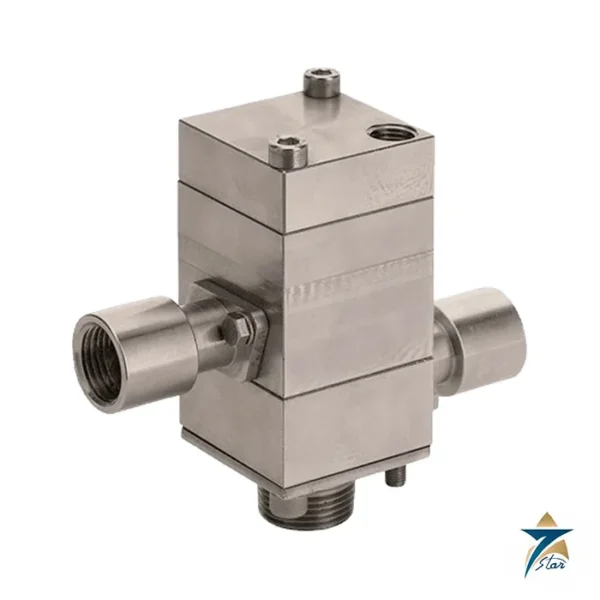
IMI STI AL air-lock device: pressure switch and two 3-way valves in one body
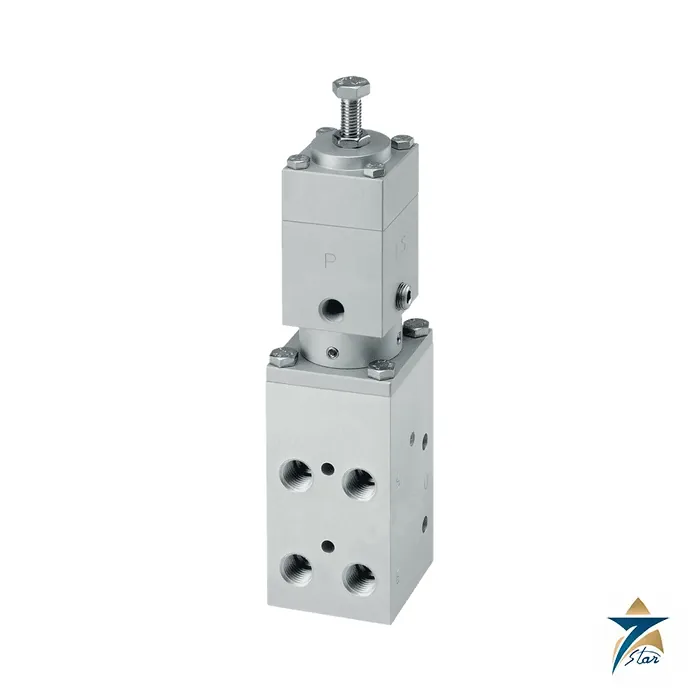
The IMI STI AL is an air-lock device that isolates a pneumatic actuator from its control devices when the supply air pressure falls below a preset safety value. Seven Star LLC supplies the IMI STI AL in Oman and the GCC as an independent supplier in Muscat. On the manufacturer’s product page it is also presented as the Air-lock 101 device.
“AL” is the model code. Internally, the AL is a TP pneumatic pressure switch combined with two 1/4″ three-way valves in a single machined body. Because the sensing element and both valves are integrated, the installer does not have to buy, mount and pipe a separate switch and two lock-up valves. The brochure describes this integrated, double three-way arrangement as an STI design that cuts assembly time, space and cost.
IMI STI AL technical specifications
| Parameter |
Specification |
| Manufacturer / part number |
IMI STI / AL (Air-lock device) |
| Construction |
TP pneumatic pressure switch with 2 × 3-way valves ND 1/4″ in one body |
| Body materials |
Anodized aluminium; stainless steel 316 |
| Feeding connections |
1/4″ NPT |
| Output connections |
1/4″ NPT |
| Pilot signal connection |
1/8″ NPT |
| Cv max |
Inlet 1; outlet 1 |
| Minimum operating pressure |
2 bar |
| Operating pressure |
7 bar |
| Design pressure |
10 bar |
| Operating temperature |
-20°C to 70°C; -40°C to 70°C and -20°C to 85°C available; other limits on request |
| Weight |
Aluminium 1 kg; stainless steel 316 2.5 kg |
| Actuator types |
Single and double acting |
| Reset behaviour |
Automatic reset when line pressure is 1 bar above the set pressure |
How the AL protects an actuator
A control valve actuator normally receives air from a positioner or an electro-pneumatic distributor. If the plant air header collapses, the positioner can no longer control the valve, and it may even vent the actuator, which lets the valve drift. The AL is installed between those control devices and the actuator. Its pressure switch watches the supply, and when the pressure reaches the set point the switch drives both three-way valves at the same moment.
The synchronous action is the main point of the design. With one body and one switching element, both actuator lines change state together, instead of relying on two separate switches that might trip at slightly different pressures. The action is immediate even if the pressure is falling gradually, and the device resets automatically only after the line pressure rises 1 bar above the set value, which prevents unstable switching around the set point.
The adjustable set point has a set screw that can be locked with a nut, and the brochure lists insensitivity to vibration as a benefit. Together these keep the trip setting stable on skids, compressor packages and pipe racks.
AL compared with a separate TP and lock-up valve
Many plants assemble the same function from a TP pressure switch and a separate lock-up valve. That approach works, but it adds fittings, tubing and mounting hardware, and each joint is another leak point. The AL packages the function so that the installer only makes the feed, output and pilot connections. For a double acting actuator, the two three-way valves allow both chambers to be managed. For a single acting actuator, one of the valves does the work that your scheme requires, and you should confirm the intended behavior with the supplier before ordering.
If the requirement is only a switching signal to another device, the standalone TP is the leaner choice. If the requirement is speed rather than safety, look at the BD derivative booster or the CSQ integral quick exhaust valve in the same IMI STI instrument accessory range. The GR manual override covers manual operation when air is lost.
Selecting an AL
- Body material: aluminium at 1 kg for general service or stainless steel 316 at 2.5 kg for offshore and corrosive areas.
- Flow: the maximum Cv is 1 at inlet and outlet. Compare this with the air volume and stroking time the actuator needs, because a large actuator may stroke more slowly through the AL than through a larger accessory.
- Pressure: the unit works from 2 bar minimum to 7 bar operating, with 10 bar design. Set the trip point inside that window and above the lowest pressure at which the valve can still reach its safe position.
- Connections: feed and output are 1/4″ NPT and the pilot is 1/8″ NPT. Check your tubing and fittings.
- Temperature: choose the standard range or ask for the -40°C or 85°C variants where the site conditions require them.
- Environment: standard, offshore, sandstorm and copper-free conditions are listed for this family.
Installation, commissioning and checks for the AL
Mount the AL close to the actuator so that the trapped volume between the device and the actuator is small. Connect the instrument air feed to the 1/4″ NPT feeding port, the actuator lines to the outputs, and the pilot signal to the 1/8″ NPT port from the supply that you want to supervise. Use filtered, dry air and a non-hardening thread sealant on male threads only.
At commissioning, set the trip pressure with the lockable adjuster, tighten the nut and then test by reducing supply pressure slowly. Confirm that the actuator is isolated from its positioner or distributor at the set value and that normal control returns only after the header recovers by about 1 bar. Record both pressures. Include the AL in the valve’s periodic function test, and keep a spare on critical services so that a defective unit can be replaced without long outages.
Typical applications in Oman and the GCC
The AL suits control and shut-down valves that must not drift when plant air is lost: wellhead and gathering lines, gas compression, power station feedwater and fuel systems, desalination plant control valves and petrochemical process lines. In hot coastal locations, stainless steel 316 resists salt-laden air, and the extended 85°C variant is worth considering where enclosures or sun-exposed pipework run hot. In desert sites, the sandstorm version listed for the family helps protect the device from dust ingress.
AL variant overview
| Option |
Value |
Typical fit |
| Aluminium body |
1 kg |
General industrial service |
| Stainless steel 316 body |
2.5 kg |
Offshore, coastal, corrosive environments |
| -20°C to 70°C |
Standard |
Typical hot-climate service |
| -40°C to 70°C |
Available |
Cold ambient |
| -20°C to 85°C |
Available |
High-temperature enclosures |
What to send with an AL request for quotation
- Part number AL and the body material.
- Actuator type (single or double acting), actuator size or volume and required stroking time.
- Air supply pressure and the required trip pressure.
- Ambient temperature range and environment (offshore, sandstorm, copper-free).
- Positioner or distributor model that the AL will isolate.
- Quantity, delivery location and documents required.
Documents and quotation
The manufacturer brochure for the IMI STI AL is attached on this page as a PDF, so your engineers can compare it with the data above before ordering. Seven Star LLC is an independent supplier in Muscat and does not act on behalf of the brand, and we do not publish prices online.
To receive a quotation for the IMI STI AL, send the details listed in the previous section by email or through the RFQ form. We reply with availability, lead time and commercial terms for delivery in Oman and across the GCC.




















Reviews
There are no reviews yet.