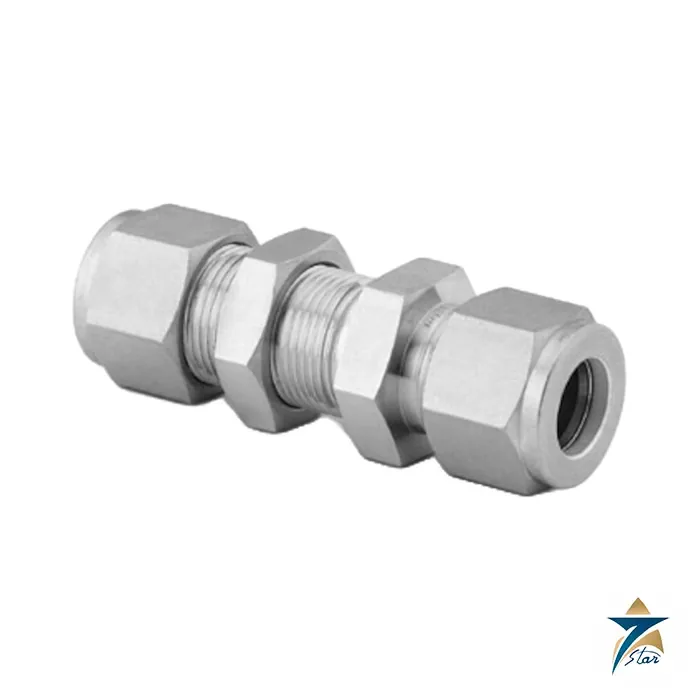
The Swagelok SS-810-61 carries a 1/2 in. tube line straight through a panel, enclosure wall or bulkhead. Its long threaded body passes through a drilled hole and is held by a hex nut, leaving a Swagelok tube-fitting end on each side so that tubing can be disconnected from one side without disturbing the other.
Technical specifications
| Parameter |
Specification |
| Part number |
SS-810-61 |
| Description |
Bulkhead union, 1/2 in. Swagelok tube-fitting ends |
| Body material |
316 stainless steel |
| Tube OD |
1/2 in. |
| Dimension A (overall length) |
2.80 in. |
| Dimension D (nut size) |
0.90 in. |
| Dimension E (nominal opening) |
0.41 in. |
| Hex flat F (bulkhead nut) |
15/16 in. |
| Panel hole size |
49/64 in. |
| Maximum panel thickness |
0.50 in. |
| Pressure basis |
Working pressure of tubing used (Tubing Data MS-01-107) |
Panel cut-out and fit
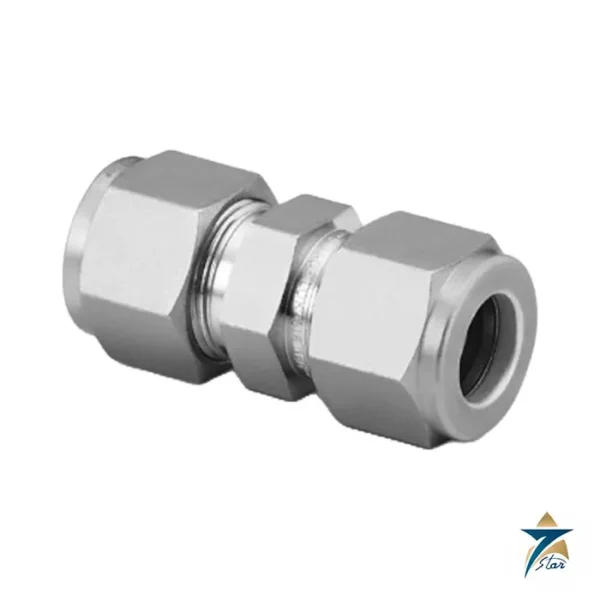
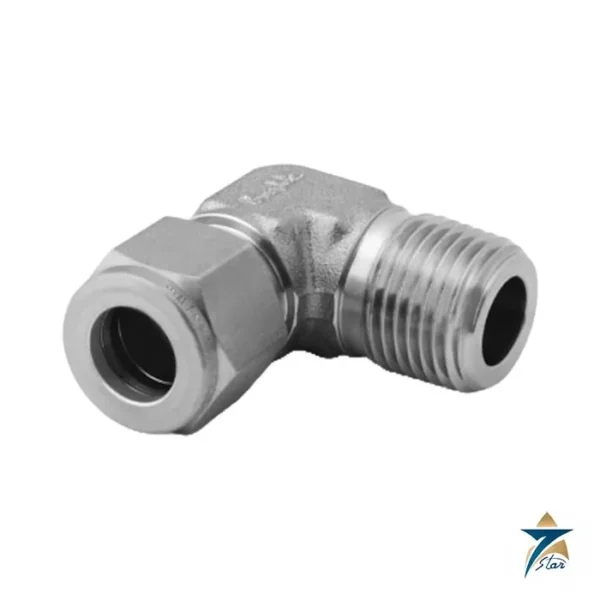
The catalog specifies a 49/64 in. panel hole for the 1/2 in. bulkhead union and a maximum panel thickness of 0.50 in. The hex nut is 15/16 in. across flats, wider than the 13/16 in. flats on elbows and tees, so allow wrench clearance on the rear. At 2.80 in. overall, the body is nearly 0.8 in. longer than the plain union SS-810-6; the extra length is the threaded section that passes through the panel.
Typical uses are analyser cabinets and sample-conditioning enclosures, where tubing enters from a field line on one side and runs to instruments on the other. Because the through-panel joint is a standard Swagelok connection at each end, either side can be remade without removing the panel nut.
Ordering and variants
SS-810-61 decodes as 316 stainless, 1/2 in. tube, bulkhead union (code 61). If one side must end in a pipe thread, the catalog uses bulkhead male and bulkhead female connectors under codes 11 and 71, for example SS-810-11-8 and SS-810-71-8. A bulkhead reducing union exists for mixed sizes. Metric bulkhead unions use the 12M0 block; SS-12M0-61 is the 12 mm version. The catalog also lists bulkhead retainers, so confirm whether you need a retainer for thin panels.
Specify cleaning and packaging if the part is going into an analytical or oxygen system: CP and BQ suffixes are described in the catalog.
Installation
Drill the panel to the stated size, deburr, pass the body through and tighten the panel nut. Then make up each tube end in the usual way: seat the tube on the shoulder, finger-tighten, then one and one-quarter turns on the nut for the 1/2 in. size, with the gap inspection gauge confirming pull-up. Never rotate the body against the panel while tightening the tube nut.
Pressure limit comes from the tubing on each side. Confirm the working pressure with the Swagelok tubing data for your wall thickness and material, then compare to the system design pressure.
Choosing a bulkhead union for the panel layout
A bulkhead union is the right choice when tubing of the same size continues on both sides of the wall and both sides may need to be disconnected independently. If one side ends at an instrument with a threaded port, a bulkhead connector with a pipe thread on that side saves a joint. Count how many lines pass through the same panel area and set out the holes on a drawing first, so that every nut can be reached with a wrench and every tube can be bent into its fitting without forcing.
- Confirm the tube outside diameter, wall thickness and material on both sides of the panel.
- Check the panel thickness against the catalog limit, including any gasket, sheet coating or reinforcing plate.
- Leave enough straight tube at each end for correct insertion into the fitting.
- Group lines that carry similar fluids together and label them on both faces of the panel.
Commissioning and leak checking
After making up both tube ends, check the pull-up with the gap inspection gauge on each nut, then pressure test the line according to the site procedure before introducing process fluid. For instrument air and sample lines, a soap solution or a suitable leak detection fluid at the bulkhead is a quick way to confirm the joints. Record the test result on the panel documentation so that later work can be compared against it.
When a tube end has to be disconnected for maintenance, mark the nut and body position before loosening. On reassembly, return the nut to the marked position and then tighten slightly, following the Swagelok remake instructions in the catalog. Hold the body steady with a second wrench whenever one side is being loosened or tightened so that the panel nut and the opposite joint are not disturbed.
Maintenance and troubleshooting
- Leak at a tube end: check that the tube was fully bottomed and that the gauge confirms correct pull-up.
- Body turns in the panel: the panel nut has loosened; retighten it while holding the body.
- Scored or kinked tube at the joint: cut back to sound tube and remake with new ferrules rather than reusing damaged ones.
Analyser shelters and panels in Oman and the GCC
In Omani refineries, gas plants and water treatment facilities, bulkhead unions often pass sample and utility lines into air-conditioned analyser shelters. The wall separates hot, dusty outside air from a cooled interior, so make sure the panel penetration is sealed around the union to keep sand and moisture out of the shelter. Tubing on the sun-exposed side expands and contracts daily; include a bend or loop near the bulkhead so that thermal movement does not load the joint.
Along the coast, salt deposits can collect on stainless steel fittings in crevices and under clamps. Rinse and inspect exposed fittings during routine rounds, keep the bulkhead area free of trapped dirt, and replace any fitting showing pitting or staining that cannot be cleaned off.
Documents and quotation
Everything summarised here comes from the Swagelok catalog MS-01-140 (Gaugeable Tube Fittings and Adapter Fittings), which you can download from this page. To receive a quotation, reply with SS-810-61, how many you need and whether special cleaning is required.
Related items: product category.





Reviews
There are no reviews yet.