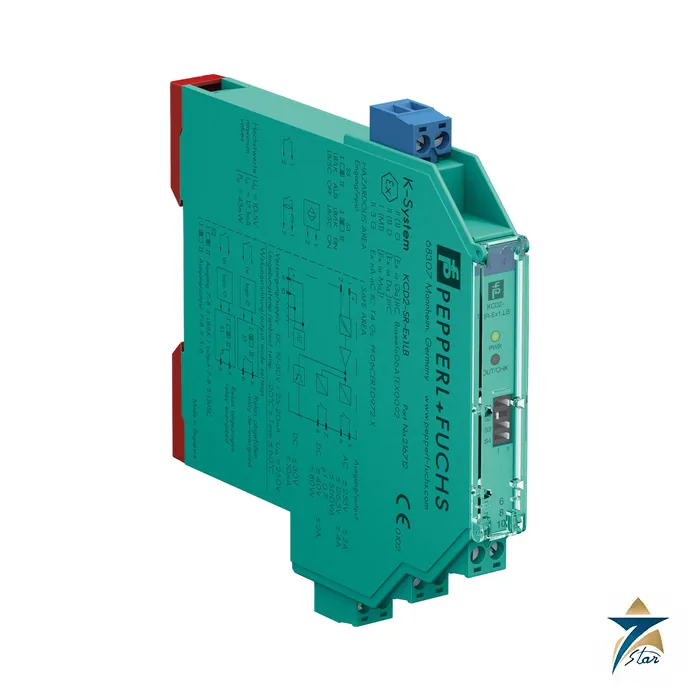
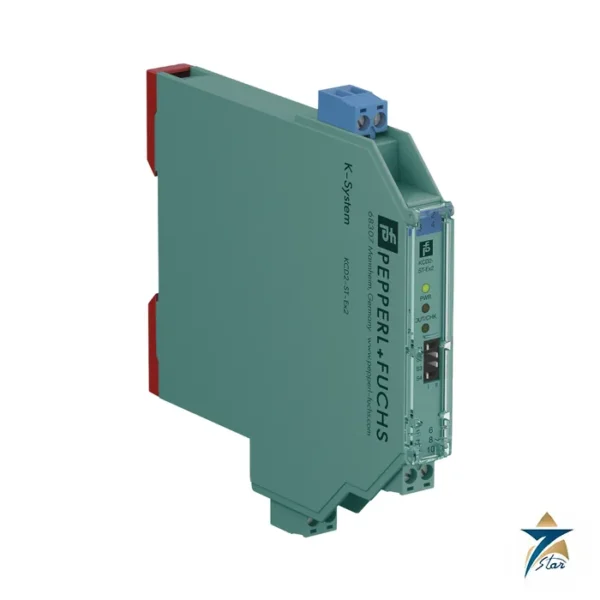
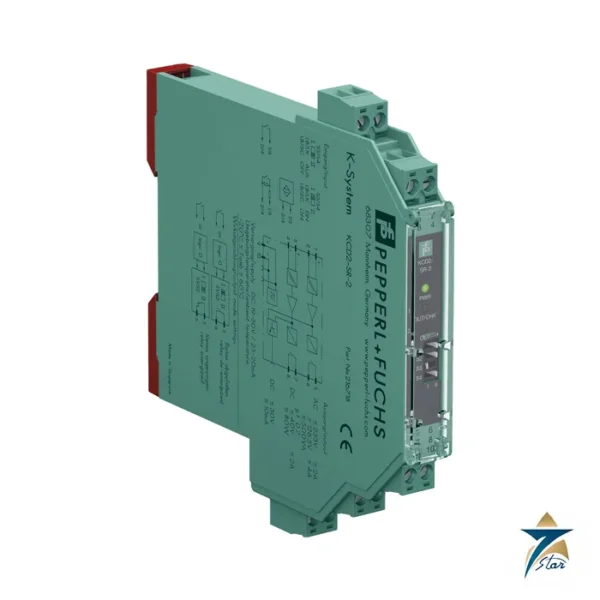
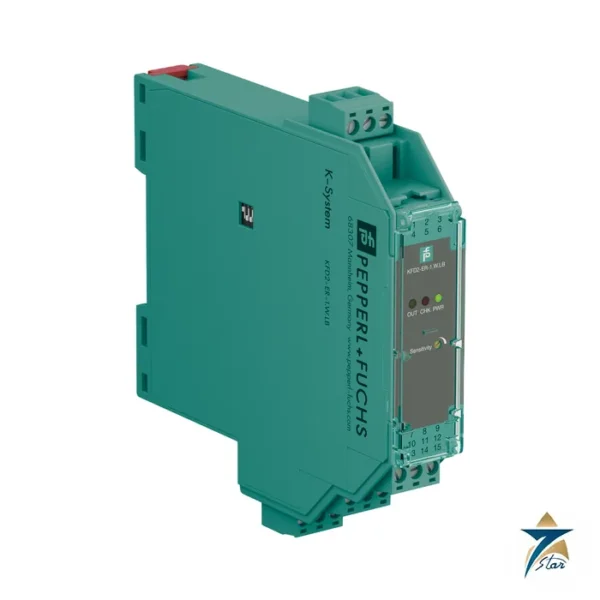
KCD2-SR-Ex1.LB compact 12.5 mm relay switch amplifier
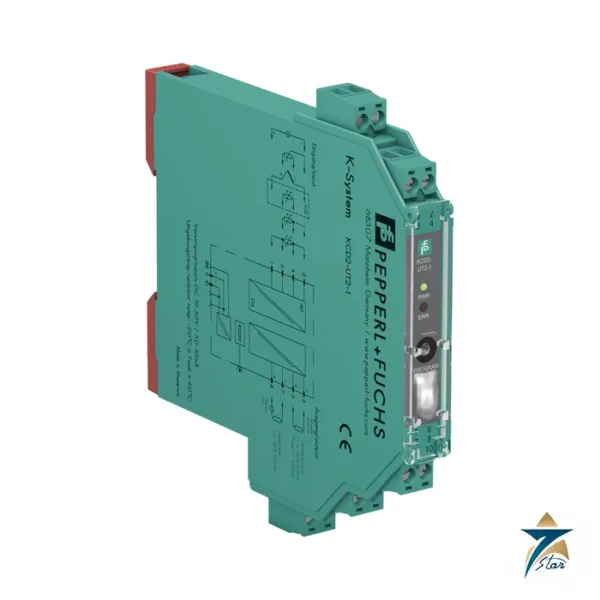
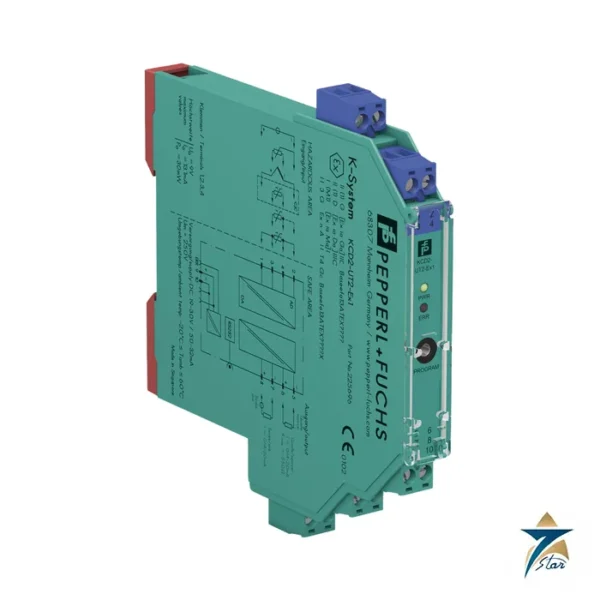
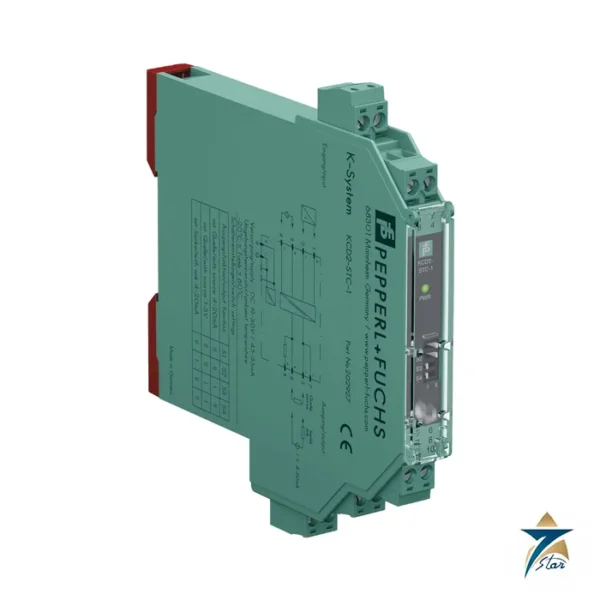
The KCD2-SR-Ex1.LB is a one-channel isolated barrier from the Pepperl+Fuchs KC-System, the narrow 12.5 mm housing line. It takes a NAMUR proximity sensor or a dry contact from a hazardous area and switches relay contacts in the safe area. A single input can be used as a signal splitter, because the module provides two relay outputs: output I is the signal and output II can be set to repeat the signal or to act as a fault relay.
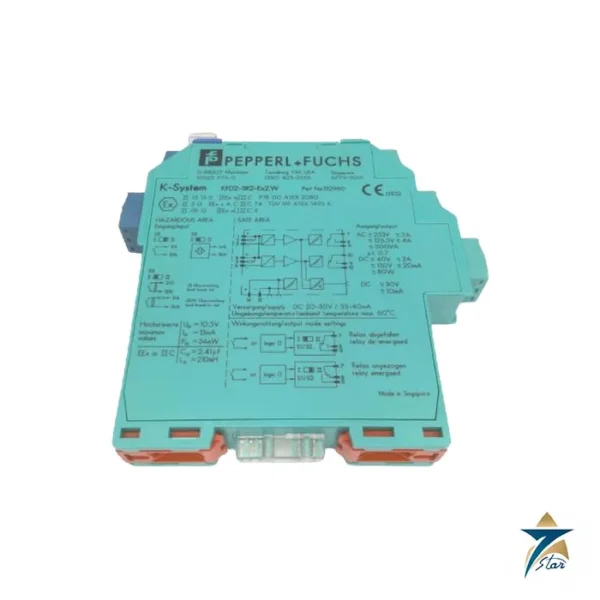
In the part number, KCD2 identifies the compact 24 V DC barrier range, SR the relay-output switch amplifier, Ex1 a single channel, and .LB the version with line fault detection and a second selectable output. Wider-housing relatives are the KFD2-SR2-Ex1.W and the KFD2-SR2-Ex2.W.
Seven Star LLC supplies this module in Oman and the GCC as an independent supplier in Muscat, typically for instrument rooms where rack space is scarce.
Technical specifications of the KCD2-SR-Ex1.LB
| Parameter |
Specification |
| Manufacturer / part number |
Pepperl+Fuchs KCD2-SR-Ex1.LB |
| Channels |
1 input, 2 relay outputs |
| Input |
Dry contact or NAMUR sensor, EN 60947-5-6; terminals 1+, 2- |
| Open circuit voltage / short-circuit current |
approx. 8 V DC / approx. 8 mA |
| Switching point / hysteresis |
1.2 to 2.1 mA / approx. 0.2 mA |
| Line fault detection |
Breakage I ≤ 0.1 mA, short-circuit I ≥ 6.5 mA |
| Relay contacts |
250 V AC / 2 A (cos φ > 0.75); 126.5 V AC / 4 A; 30 V DC / 2 A resistive; minimum 2 mA at 24 V DC |
| Delay / mechanical life |
≤ 20 ms energize and de-energize; 107 switching cycles |
| Switching frequency |
≤ 10 Hz |
| Supply |
19 to 30 V DC via Power Rail or terminals 9+/10-; ≤ 37 mA, ≤ 750 mW |
| Functional safety |
SIL 2, SC 3 acc. to IEC/EN 61508 |
| Approvals listed |
BASEEFA 06 ATEX 0092 X, II 3(1)G Ex ec nC [ia Ga] IIC T4 Gc; IECEx BAS 06.0025 X |
| Ambient temperature |
-40 to 70 °C |
| Housing |
Type A2, 12.5 x 119 x 114 mm, IP20, approx. 100 g |
Operating principle and diagnostics of the KCD2-SR-Ex1.LB
The input of the KCD2-SR-Ex1.LB powers a NAMUR sensor from about 8 V and measures the loop current; the 1.2 to 2.1 mA window defines the switching point. The relay on the safe side then follows the sensor. Reinforced insulation rated for 300 Veff separates input, outputs and supply from each other, which is why two relay outputs can safely drive separate circuits.
On a fault such as a cut or shorted sensor cable the relay drops to its de-energized state and the LED indicates the fault per NAMUR NE 44. When the module sits on a Power Rail a collective fault message is available as well. DIP switches reverse the mode of operation, turn line fault detection off for plain contacts, and choose whether output II acts as signal or fault output.
System fit and related parts
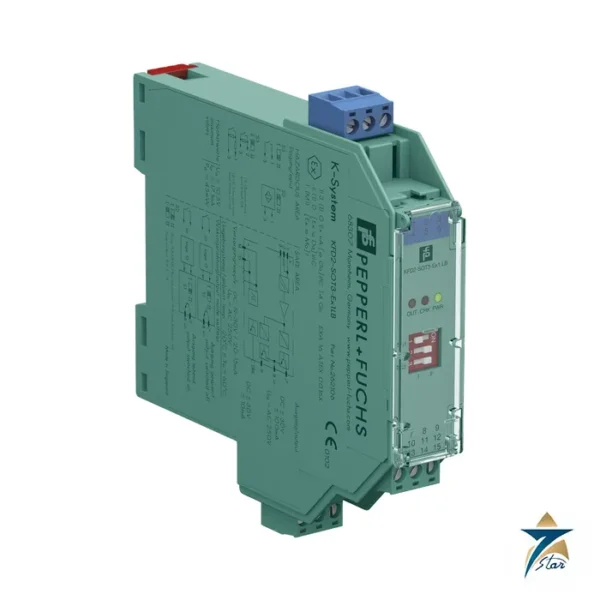
The relay output of the KCD2-SR-Ex1.LB is the right choice when the receiving circuit is a mains-level contactor control, an annunciator or a legacy panel that needs potential-free contacts. Where the PLC input is a transistor type, the KFD2-SOT3-Ex1.LB gives faster response (200 µs against 20 ms). The narrow housing allows 12.5 mm pitch, which is the main reason for choosing the KC family over the 20 mm KFD2-SR2-Ex1.W.
Selection and ordering checklist
- Confirm the field device is NAMUR or a contact with resistor network.
- Check load against relay data: 2 A at 250 V AC or 30 V DC resistive.
- Decide if output II is a second signal or the fault relay.
- Allow for 20 ms delay and 10 Hz maximum switching frequency in the logic.
- Check hazardous-area approvals and Zone for the intended location.
- Verify rail or discrete 19 to 30 V DC supply.
Installation, commissioning and maintenance of the KCD2-SR-Ex1.LB
Mount on 35 mm DIN rail with 12.5 mm spacing, route the intrinsically safe cables apart from other wiring and label the front strip. Test with a real sensor: actuate it, then open and short the loop, checking both relays and the LED each time. Because the relay has a stated mechanical life of 10 million operations, check usage on high-cycle signals and keep spares for those.
Contact reliability is lower below the minimum switch current of 2 mA at 24 V DC, so avoid driving tiny signal loads directly.
Typical applications in Oman and the GCC
With its -40 to 70 °C range, the KCD2-SR-Ex1.LB copes with hot instrument shelters in the Omani interior and with unconditioned remote junction cabinets. Typical uses are well-site valve limit signals, pump and compressor status contacts, and fuel gas skids at power and desalination plants where one detector must feed both a PLC and a hard-wired trip circuit.
Family comparison
| Part |
Key difference |
| KCD2-SR-Ex1.LB (this part) |
1 channel, 2 relays, 12.5 mm, -40 to 70 °C |
| KFD2-SR2-Ex1.W |
1 channel, relay, 20 mm housing |
| KFD2-SR2-Ex2.W |
2 channels, relay, 20 mm housing |
| KFD2-SOT3-Ex1.LB |
1 channel, transistor outputs |
Information to send with an RFQ
- Part number KCD2-SR-Ex1.LB and quantity
- Sensor type and Ex data
- Load voltage and current at the relay
- Fault output requirement
- Supply method
- Delivery location
Site conditions in Oman for the KCD2-SR-Ex1.LB
Control cabinets in Gulf plants often run hot, because many sit in outdoor kiosks or in rooms where air conditioning is not always reliable. Before you finalise the KCD2-SR-Ex1.LB, check the permitted ambient range and any derating stated by the manufacturer against the real temperature inside your panel, and leave the recommended spacing around the device so that heat can escape. Long cable runs between the field and the marshalling cabinet are common on large sites, so confirm the signal types, wiring limits and earthing arrangement early in the design.
It also helps to standardise on a small number of part numbers across a project. Keeping a few spare KCD2-SR-Ex1.LB units on site in Oman shortens recovery time after a fault, and documenting configuration settings makes replacement faster for the maintenance team.
Documents and quotation
The manufacturer datasheet for KCD2-SR-Ex1.LB is attached on this page, so you can check wiring, approvals and dimensions before ordering. Send the exact part number, quantity and delivery location in Oman or the GCC and Seven Star LLC will reply with a quotation.
Seven Star LLC is an independent supplier in Muscat and is not the manufacturer; confirm availability, lead time and any project approval requirements in your RFQ.



















Reviews
There are no reviews yet.