- Automation & ControlView all 2,896 products
- Automation Accessories
- AC Drives
- PLC & I/O Cards
- Industrial Communications
- Vibration Monitoring
- Controllers & Data Acquisition
- Isolator & Barrier
- Safety Switches & Guard Locking
- Motor Soft Starters
- CCTV & Security
- Encoders
- Pneumatic Cylinders
- HMI Displays
- Servo Drives
- Industrial Computers
- Machine Vision
- Automation Software
- Robotics
Brand: WIKA
WIKA 990.40 Threaded Diaphragm Seal for Low Pressure Ranges
Description
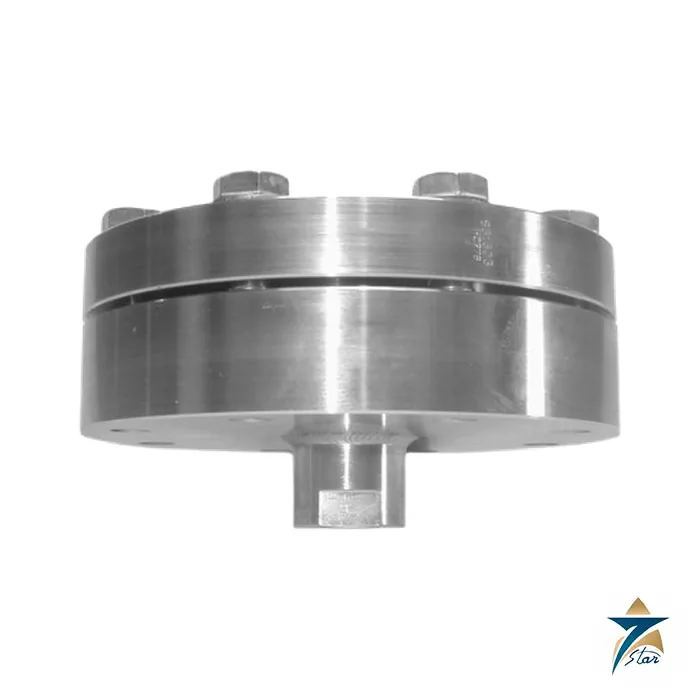
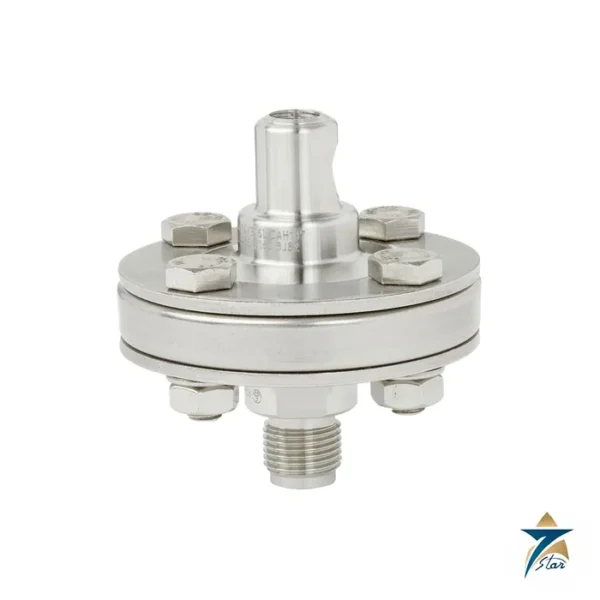
WIKA 990.40 threaded diaphragm seal for low pressure ranges
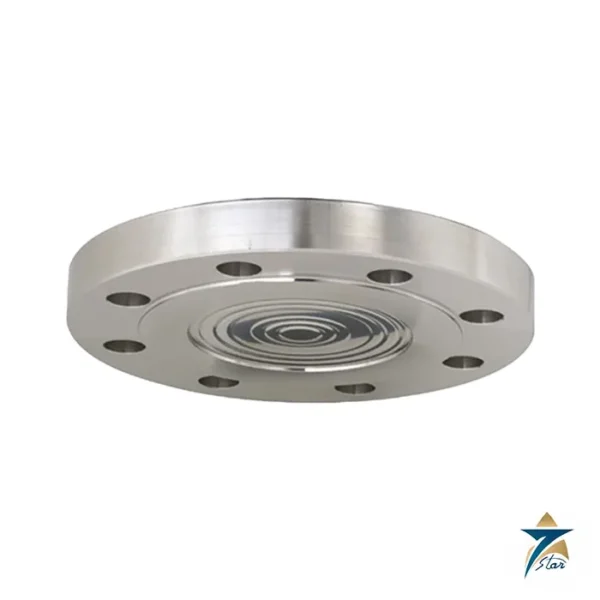
The WIKA 990.40 is a diaphragm seal with a threaded process connection, designed for low pressure ranges. A diaphragm seal separates a pressure instrument from an aggressive, hot, corrosive, environmentally hazardous or toxic medium and transmits the pressure through a fill fluid. The 990.40 uses an internal diaphragm with a large working volume and a diaphragm seal assembled from screwed-together parts. Its large diaphragm gives a smaller error at the instrument when the temperature changes, which is why it suits low ranges and differential pressure measurement. Seven Star LLC supplies the 990.40 in Oman and the GCC as an independent supplier in Muscat.
Where the 990.40 differs from the 990.10
The 990.40 shares the threaded-connection idea with the 990.10, but the data sheet describes it as the low-pressure version. The pressure range is 0 to 100 bar (0 to 1,450 psi) or the equivalent vacuum and combined ranges, the effective diaphragm diameter is large (Mb = 90 mm in the dimension tables), and the lower body of the seal can be replaced without modifying the diaphragm seal system. This construction suits filter monitoring, level measurement and instruments for low pressure ranges or differential pressure.
Technical specifications of the 990.40
| Parameter | Specification |
|---|---|
| Manufacturer / part number | WIKA / 990.40 |
| Type | Diaphragm seal, threaded design, internal diaphragm, screwed construction |
| Pressure range | 0 … 100 bar (0 … 1,450 psi), or equivalent vacuum or combined ranges |
| Diaphragm diameter Mb | 90 mm (3.543 in) |
| Process connection standards | DIN ISO 228-1 (G), ASME B1.20.1 (NPT), DIN 13-1 (M20 x 1.5), ISO 7-1 (R) |
| Male threads, standard | G ½A, G ⅜A, G ¾A, G 1A, G 1½A; ½, ⅜, ¾, 1, 1½ NPT; M20 x 1.5; R½, R⅜, R¾ |
| Female threads | G ½, G ⅜, G ¾, G 1; ½, ⅜, ¾, 1 NPT; M20 x 1.5 |
| Connection to instrument | Axial adapter; option G ½, G ¼, ½ NPT or ¼ NPT female |
| Mounting | Direct mounting; option capillary or cooling element |
| Sealing | PTFE max. 260 °C (500 °F); option FPM max. 200 °C; Statotherm® max. 400 °C |
| Flushing connection (option) | Single or dual, G ¼, G ⅛, ¼ NPT, ⅛ NPT, or plug screws |
| NACE (option) | MR 0175 and MR 0103 |
| Cleanliness | Oil and grease free per ASTM G93-03 level D and level F WIKA standard (< 1,000 mg/m²); ISO 15001 (< 220 mg/m²) as option |
| Certificates (option) | 2.2 test report; 3.1 inspection certificate per EN 10204 |
Material combinations and temperature limits
The upper body of the seal and the wetted parts can be the same or different materials. The data sheet lists a large matrix; the most relevant combinations are summarised here.
| Wetted parts | Maximum process temperature |
|---|---|
| Stainless steel 1.4404 (316L), standard; also 1.4435, 1.4539 (904L), 1.4541 (321), 1.4571 (316Ti) | 400 °C (752 °F) |
| Hastelloy C276, Inconel 600 and 625, Incoloy 825, Monel 400 (body and diaphragm) | 400 °C (752 °F) |
| Hastelloy C22 or Nickel 200 diaphragm on a 316L body | 260 °C (500 °F) |
| Duplex 2205 (1.4462) and Superduplex 2507 (1.4410) | 300 °C (572 °F) |
| Titanium class 2 or 7 on a stainless steel body | 150 °C (302 °F) |
| PTFE lining with PFA coating | 260 °C (500 °F) |
| PTFE lining with ECTFE coating | 150 °C (302 °F) |
| Tantalum lining | 300 °C (572 °F) |
| Gold plating or Wikaramic® coating on stainless steel | 400 °C (752 °F) |
The limit for the complete diaphragm seal system is lower than these material figures when the joining method, the system fill fluid or the measuring instrument is the limiting element, so the system limit must be confirmed for the whole assembly.
How a 990.40 diaphragm seal system works
The diaphragm is welded to the upper body and acts as a barrier. Pressure applied to the process side flexes the diaphragm and moves fill fluid in a closed system to the gauge, transmitter or switch. Temperature changes expand the fill fluid, which creates a small error that depends on the volume of fluid relative to the diaphragm stiffness; a large diaphragm such as the 90 mm one used on the 990.40 keeps this error low on low ranges. For high process temperatures, the instrument can be moved away with a cooling element or a flexible capillary. When a capillary is used, a mounting bracket per DIN 16281 form H in aluminium or stainless steel, or a pipe-mounting bracket for 20 to 80 mm pipes, is available.
Dimensions and process connection sizes
The thread determines the overall height. For PN 100 male threads, a G ½A connection has h = 20 mm and H = 72 mm with a spanner width of 27 mm; G 1A has h = 28 mm, H = 80 mm and SW 36 mm; ½ NPT has h = 19 mm and H = 71 mm. For female threads, G ½ shows H = 65 mm and G 1 shows H = 73 mm. In all cases the diaphragm diameter is 90 mm. Other dimensions and nominal pressures are available on request.
Related models and diaphragm seal systems
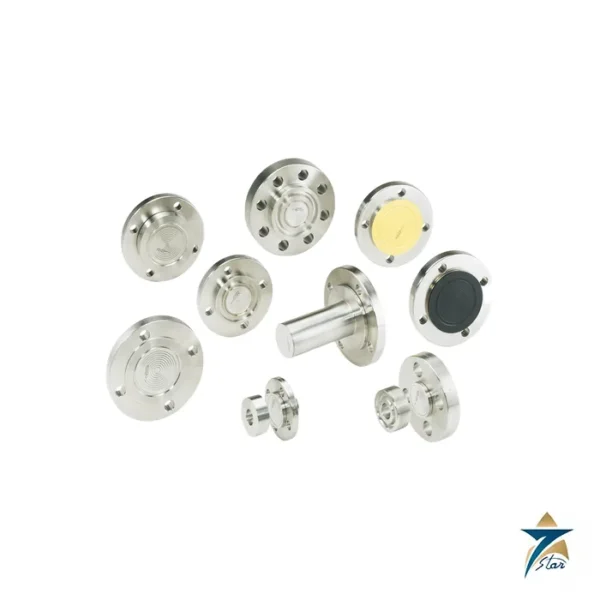
The 990.10 threaded seal is the sibling for general pressure ranges; the 990.27 and other models cover flanged and hygienic connections. A seal is normally ordered as a complete system with a pressure gauge, transmitter or switch, which adds data such as the instrument model, mounting, temperature ranges, vacuum service and fill fluid.
Selection and ordering checklist for the 990.40
- Process connection standard, thread size and nominal pressure.
- Materials for upper body, diaphragm and lower body.
- Sealing material and flushing connections.
- Connection to the measuring instrument and the instrument model.
- Direct mounting, cooling element or capillary.
- Minimum and maximum process and ambient temperatures.
- Vacuum service level and system fill fluid.
- Cleanliness level, origin of wetted parts and certificates.
Installation and maintenance of the 990.40
Fit the seal with a gasket suited to the thread and medium, and keep the height difference to the instrument in the order data because it influences the zero point of a capillary system. Do not open or loosen the screwed seal parts unless the manufacturer instruction allows it, because the fill system is closed. Because the lower body can be replaced, a worn or fouled lower body can be exchanged without changing the diaphragm seal system.
Typical applications in Oman and the GCC
Corrosive chemical dosing, filter differential pressure, low-range tank level on viscous or hot products and process lines that would clog a gauge connection are typical in oil and gas, petrochemical, desalination and wastewater sites across the region.
Information to send with an RFQ for the 990.40
- Thread, rating and wetted materials.
- Instrument and mounting style.
- Temperatures, vacuum duty and fill fluid.
- Quantity and delivery location.
Documents and quotation
The WIKA data sheet DS 99.06 for the 990.40 is attached on this page. Please send your specification and Seven Star LLC will respond as an independent supplier, with no claim to an official WIKA role.
Datasheets & Documents
- Datasheet WIKA 990.40 Threaded Diaphragm Seal for Low Pressure Ranges Datasheet Download
Reviews (0)
How would you rate this product? Cancel reply
About brand
WIKA is the German manufacturer of pressure, temperature, level and flow instruments, best known for its pressure gauges. Alexander Wiegand and Philipp Kachel founded it on 2 January 1946 in Klingenberg am Main, Bavaria. The name comes from the first two letters of their surnames. WIKA is still run by the Wiegand family and is headquartered in Klingenberg.
Seven Star LLC is an independent supplier in Muscat. We list WIKA pressure gauges, diaphragm seals, transmitters, switches, thermometers and thermowells, and supply them to plants, contractors and panel builders in Oman and the GCC by model and order code.
WIKA company profile
| Established | 2 January 1946, Klingenberg am Main, Germany, by Alexander Wiegand and Philipp Kachel |
|---|---|
| First products | Mechanical pressure and temperature gauges |
| Ownership | Family-owned; managed by Alexander Wiegand, grandson of the founder, since 1996 |
| Product families | Pressure gauges, diaphragm seals, pressure transmitters and switches, thermometers, RTDs, thermocouples, thermowells, calibration equipment, level and flow instruments |
Milestones
- 1946: Alexander Wiegand and Philipp Kachel found the company in Klingenberg am Main on 2 January; pressure gauge production starts at the end of the year. The name WIKA comes from the first letters of their surnames.
- 1951: Konrad Wiegand, the founder's son, takes over management.
- 1967: Ursula Wiegand leads the company after her husband's death.
- 1986: The company is reunited with the Kachel thermometer factory, which Philipp Kachel had set up after leaving in 1956.
- 1994: Certification to DIN ISO 9001.
- 1996: Alexander Wiegand, the founder's grandson, becomes head of the company.
WIKA products we list
| Family | Models | Typical use |
|---|---|---|
| Bourdon tube pressure gauges | 111.10, 111.12, 212.20, 213.53, 232.50, 233.50, 232.30/233.30 safety pattern | HVAC and utilities (111 series) to process plants (23x series in stainless steel) |
| Diaphragm and differential pressure gauges | 432.50, 732.51, 700.01, DPGT43 | Low pressures, viscous or dirty media, and filter differential pressure |
| Diaphragm seals | 990.10, 990.27 | Separating the gauge from corrosive, hot or clogging media |
| Transmitters, switches and test gauges | A-10, UPT-20, PSM01, CPG1500 | 4-20 mA pressure signals, switching, and precision calibration checks |
| Thermometers | TG54, Model 55, A52, 73 gas-actuated | Local temperature indication on pipes, vessels and HVAC |
| Temperature sensors and thermowells | TR10, TR12-B, TR33, TC10-B, TW10 flanged, TW15 threaded | RTD and thermocouple measurement in process lines |
The WIKA model number tells you the build. In 232.50, the first digit 2 means stainless steel wetted parts, the second digit 3 means a liquid-fillable case, and ".50" is the case style. The 111 series uses copper alloy wetted parts and suits water and air. Where the medium is corrosive, very hot or would block the gauge, a diaphragm seal such as the 990.27 keeps it away from the Bourdon tube. For temperature, a thermowell like the TW10 lets you remove the sensor without opening the process.
Where WIKA instruments are used
In Oman and the GCC, WIKA gauges, transmitters and thermometers are used in oil and gas, refining and petrochemical plants, power and desalination, water networks, district cooling and HVAC, and on skids and machines from OEMs.
Ordering WIKA instruments: what we need
Send the model, dial size (for example 63, 100 or 160 mm), range and unit, connection size and position (lower or back mount), accuracy class and whether liquid filling is needed. For diaphragm seals and thermowells, add the process connection, materials and insertion length.
Facts checked against WIKA company history, October 2026.
Browse WIKA products by category: Pressure Instrumentation, Temperature Instrumentation.
FAQ
Questions about the WIKA 990.40 Threaded Diaphragm Seal for Low
Answers from our engineering team on installation, compatibility and integration.
01What pressure range does the 990.40 cover?
The data sheet gives 0 to 100 bar (0 to 1,450 psi) or equivalent vacuum or combined pressure and vacuum ranges. The large diaphragm suits low pressure ranges.
02What diaphragm size does the 990.40 have?
The dimension tables show a diaphragm diameter Mb of 90 mm (3.543 in) for all listed threads.
03Which sealing materials are offered?
PTFE up to 260 degrees C is standard. FPM up to 200 degrees C and Statotherm up to 400 degrees C are options.
04Can the lower body be replaced?
Yes. The data sheet states the lower body can be replaced without modification to the diaphragm seal system.
05How can the instrument be mounted?
By direct mounting as standard, or with a cooling element or flexible capillary for high temperatures. Mounting brackets are available for the capillary version.


Reviews
There are no reviews yet.