Fisher MR95 series industrial pressure regulators
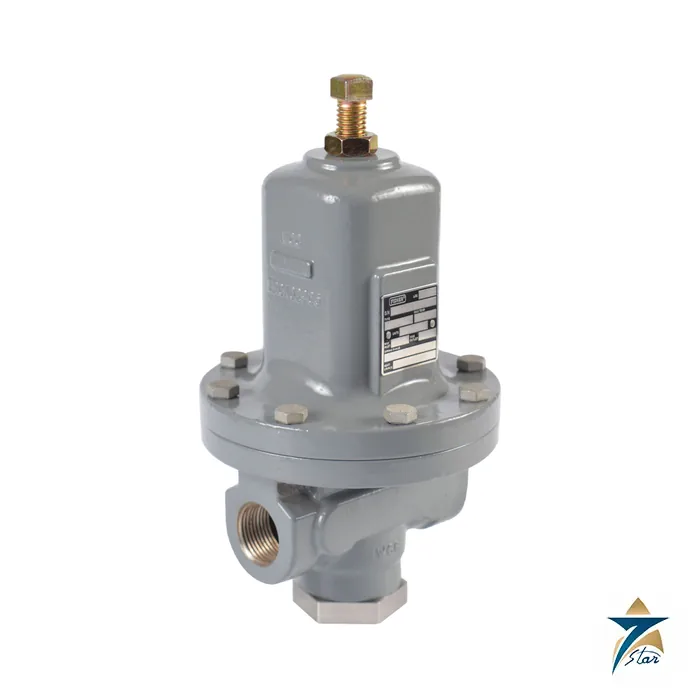
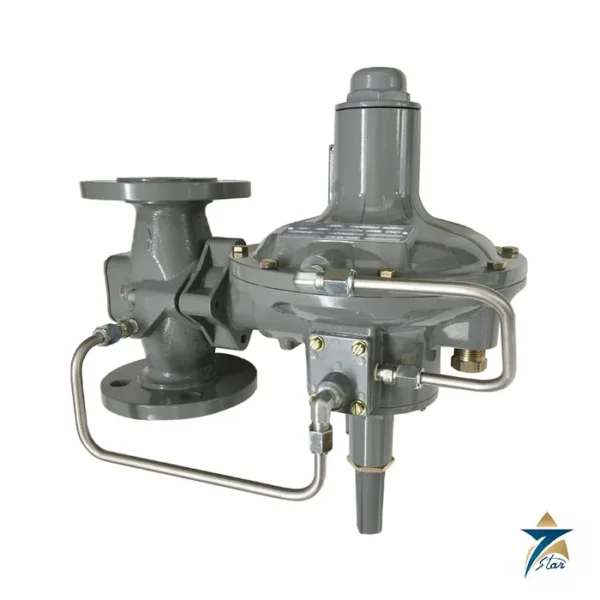
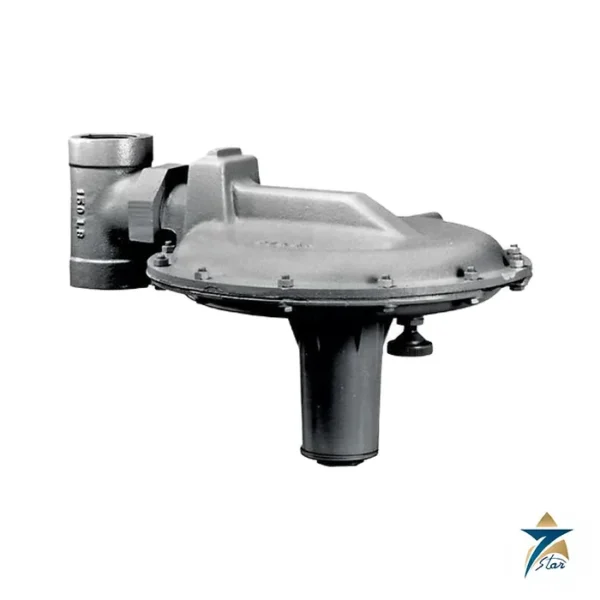
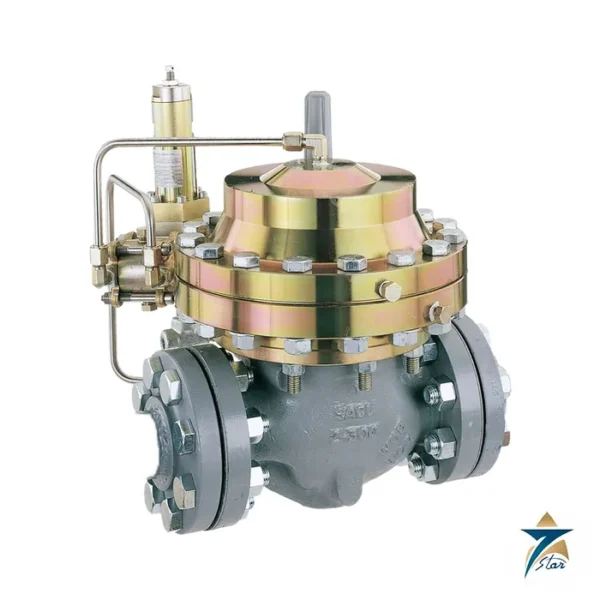
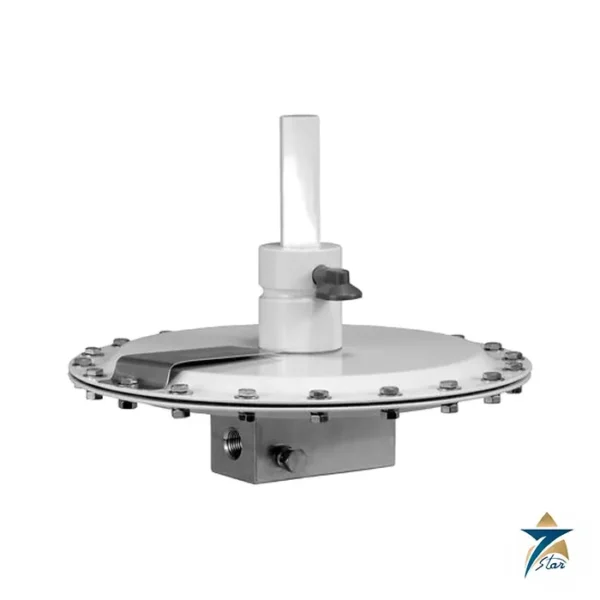
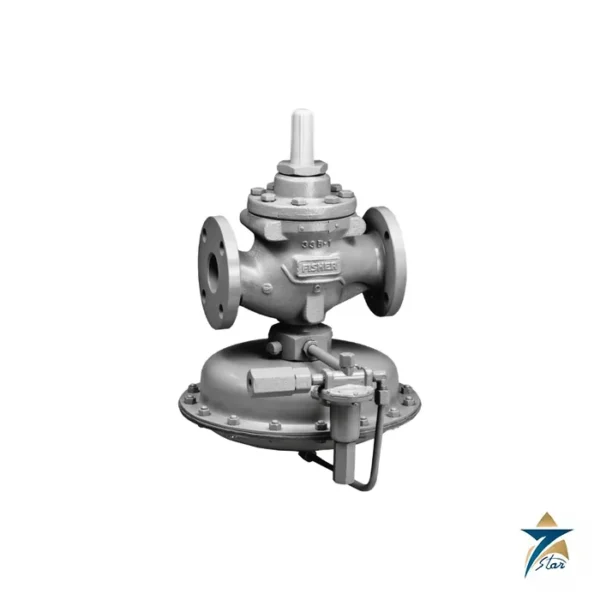
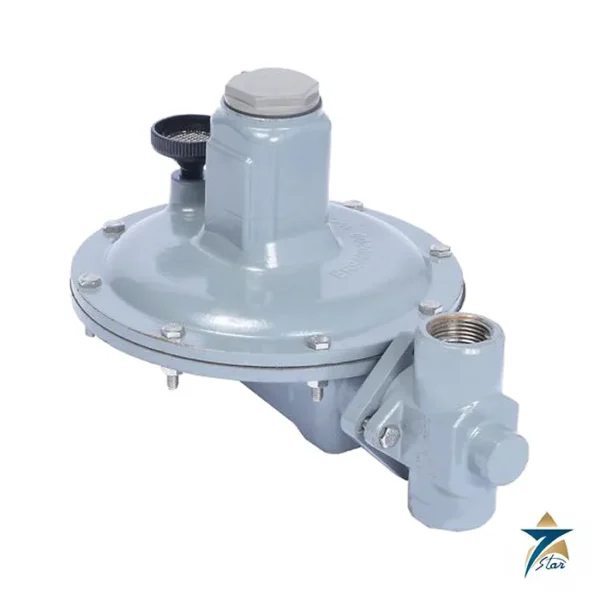
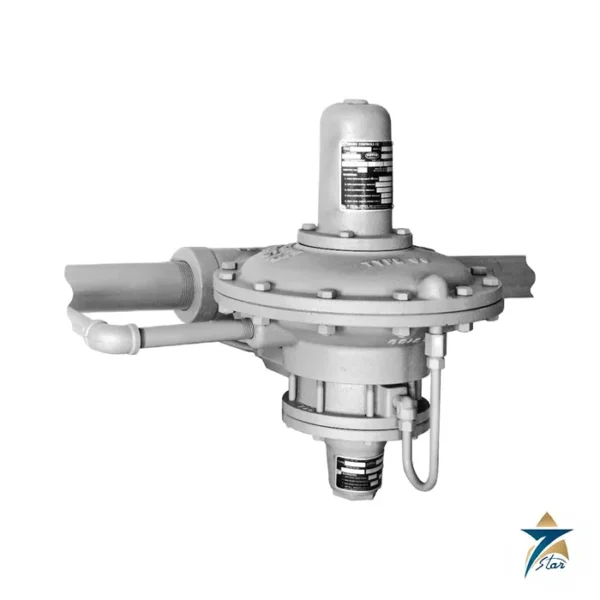
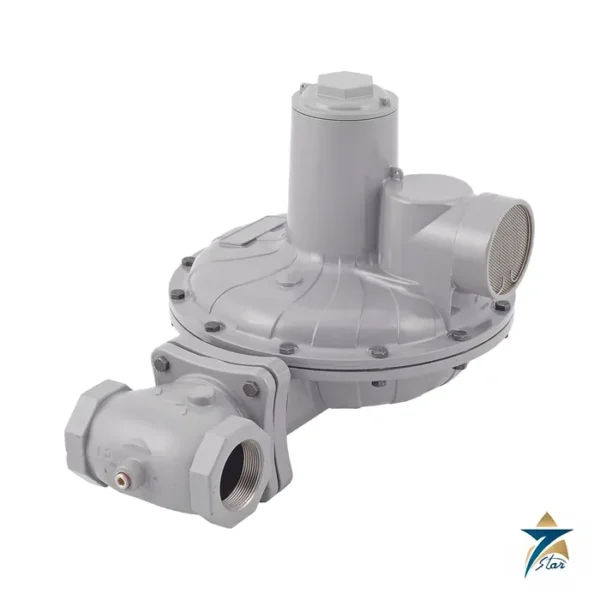
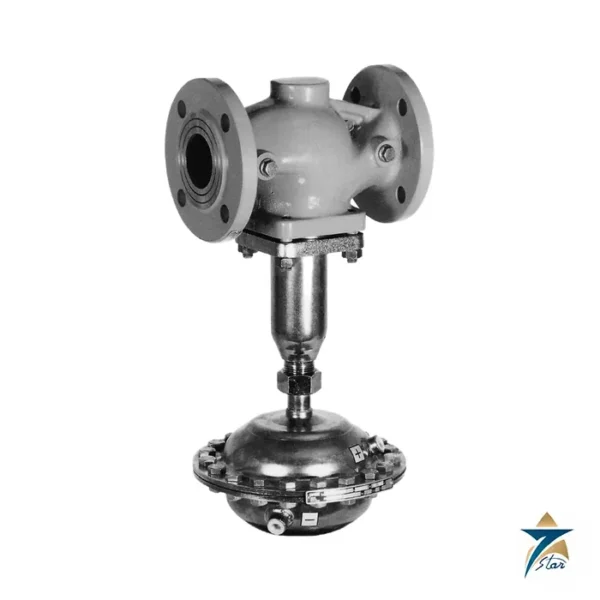
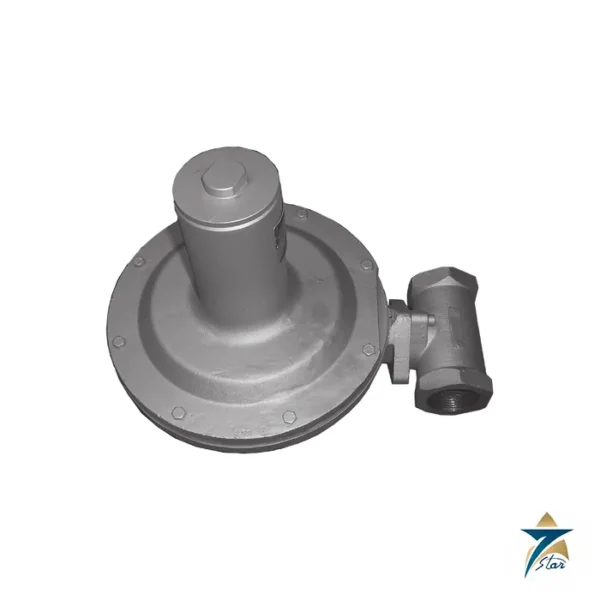
The Fisher MR95 series is a family of compact, large-capacity, direct-operated pressure regulators in sizes from 1/4 NPT up to 2 in. (DN 50). It is the current construction of the long-established 95 series and is built for the awkward jobs: superheated steam, steam injection and tracing, nitrogen purging, boiler feedwater, process chemicals, cooling water, fuel lines and pneumatic supply. One family handles air, steam, gas, water, oils, process chemicals and oxygen, with inlet pressures up to 1000 psig (68.9 bar) and temperatures up to 650 °F (343 °C). Seven Star LLC supplies Fisher MR95 regulators in Oman and the GCC as an independent supplier in Muscat; this page summarises bulletin 71.1 (D103742X012).
MR95 technical specifications
| Parameter |
Specification |
| Manufacturer / part number |
Fisher (Emerson) / MR95 series (MR95L, MR95H, MR95HP, MR95HT, MR95LD, MR95HD, MR95HDP) |
| Operation |
Direct-operated pressure reducing regulator; differential versions for loaded set points |
| Body sizes |
1/4 NPT, 1/2 in. (DN 15), 3/4 and 1 in. (DN 20 and 25), 1-1/2 and 2 in. (DN 40 and 50) |
| Orifice diameters |
7.22 mm (1/4 NPT), 10.56 mm (1/2 in.), 16.02 mm (3/4 and 1 in.), 29 mm (1-1/2 and 2 in.) |
| Maximum inlet pressure |
Up to 1000 psig / 68.9 bar (MR95HP, steel); P1 equal to P2 rating up to 300 psig on MR95H, MR95HD, MR95HDP |
| Maximum temperature |
Up to 650 °F / 343 °C with graphite gaskets and MR95HT; arctic constructions to −76 °F / −60 °C; cryogenic leak tested to −320 °F / −196 °C on request |
| Body materials |
Gray cast iron, WCC and LCC steel, CF8M and CF3M stainless steel, Monel, Hastelloy C, aluminum-bronze (not on 1/4 NPT) |
| Shutoff (ANSI/FCI 70-3) |
Metal seat Class IV; elastomer seat Class VI or better; PTFE Class IV |
| Pressure registration |
Internal or external |
| Weights, MR95H |
1/4 NPT 2.3 kg; 1/2 in. 4.5 kg; 3/4 and 1 in. 10 kg; 1-1/2 and 2 in. 25 kg |
MR95 types and outlet pressure ranges
| Type |
Outlet or differential range |
Notes |
| MR95L |
2 to 30 psig (0.14 to 2.1 bar) |
Low pressure; 1/4 to 1 in. bodies only |
| MR95H |
5 to 150 psig (0.34 to 10.3 bar) |
General-purpose high-pressure reducing |
| MR95HP |
15 to 400 psig (1.0 to 27.6 bar), soft seat |
Highest inlet pressure, up to 1000 psig |
| MR95HT |
15 to 300 psig (1.0 to 20.7 bar), metal seat |
High temperature, up to 650 °F / 343 °C |
| MR95LD |
2 to 30 psi differential |
Inlet to 300 psi, outlet to 125 psi; handwheel standard |
| MR95HD |
5 to 150 psi differential |
Inlet and outlet to 300 psig |
| MR95HDP |
5 to 150 psi differential |
Inlet and outlet to 600 psi (41.4 bar) |
How the MR95 regulator controls pressure
The MR95 is a direct-operated spring-loaded regulator. The downstream pressure acts on a diaphragm against an adjustable spring; if the outlet pressure drops, the spring pushes the diaphragm and the valve plug open, and if it rises the diaphragm closes the plug on its seat. Because there is no pilot, response is fast and the unit is simple. In the differential versions (LD, HD, HDP) spring-loaded PTFE packing and a tapped connection let a loading pressure be piped to the spring case, so the set point is the spring differential added to that loading pressure. This allows the outlet to track a reference such as a vessel pressure. Handwheels are standard on the differential models and optional on others, tee handles optional, and the standard setting method on L, H, HP and HT types is an adjusting screw.
Seats, diaphragms and trim materials
Elastomer choices include nitrile and neoprene (−40 to 82 °C), fluorocarbon (to 149 °C), EPDM (−7 to 135 °C), fluorosilicone down to −60 °C and perfluoroelastomer up to 218 °C. Soft seats give Class VI shutoff, metal seats give Class IV for high-temperature work. Optional EPDM elastomers for sanitary use are FDA, USP Class VI and ADI-free in wetted components. Stainless steel constructions with stainless trim meet API 614 requirements. For sour gas, body materials in Table 1 meet NACE MR0175 and MR0103 requirements, though springs only qualify where they are not exposed to the sour gas. The bulletin also states that MR95 configurations have been evaluated for hydrogen applications.
Selecting a Fisher MR95 regulator
- Outlet pressure range and whether a fixed or loaded (differential) set point is needed, which fixes the type letters.
- Maximum inlet pressure and the body-only cold working pressure for the chosen material, from the bulletin table.
- Fluid and temperature: choose seat and diaphragm elastomers or metal seat and graphite gaskets for steam and hot service.
- Body size, end connection (NPT, socket weld, CL150 or CL300 raised face, PN16/25/40) and optional control line or gauge port.
- Spring range: springs are colour-coded and selected by outlet pressure range and body size.
- Capacity: sizing coefficients and capacity tables cover air, steam and water, with reduced-orifice options.
Installation and maintenance
Seating parts are reached by removing the plug on the bottom of the regulator, so the body can stay in the line. Fit a shutoff valve and a gauge on each side and a strainer upstream where scale or debris is expected. For steam, drain condensate before the regulator and use the high-temperature construction. The nameplate stamps the type, maximum inlet and outlet pressure, spring range, orifice size and seat material, which should be quoted in any spare-parts enquiry.
MR95 regulators in Oman and the GCC
These regulators are widely used on utility services in refineries, power stations and desalination plants: steam tracing and heating headers, nitrogen blanketing and purge, instrument and service air, boiler feedwater and cooling water, fuel gas to burners, and skid-mounted sample and test systems. The wide temperature capability suits hot Gulf conditions and steam duty, and the stainless constructions are chosen for coastal installations.
Related Fisher regulators
Seven Star LLC also lists Fisher regulators such as the 627, 1098-EGR, 67C series, 299H, CS800, EZH, T205, ACE95jr, Y692 and 1190, covering instrument supply, pilot-operated reduction and tank blanketing.
Information to send with an RFQ
- Fluid, minimum and maximum flow, inlet pressure range, set outlet pressure and temperature.
- Body size, end connection and body material, including any NACE or API 614 requirement.
- Seat and diaphragm material, differential or fixed set point and handwheel or tee handle.
- Existing nameplate or part data if replacing a 95 series regulator.
Documents and quotation
The Fisher MR95 series bulletin is attached to this page as a datasheet. Please send your duty data or the nameplate of the unit you wish to replace and we will prepare a quotation.
























Reviews
There are no reviews yet.