Brand:

Lorch MicorMIG 400 MIG/MAG Welding Machine

Description

Compact inverter MIG/MAG machine for steel and aluminium

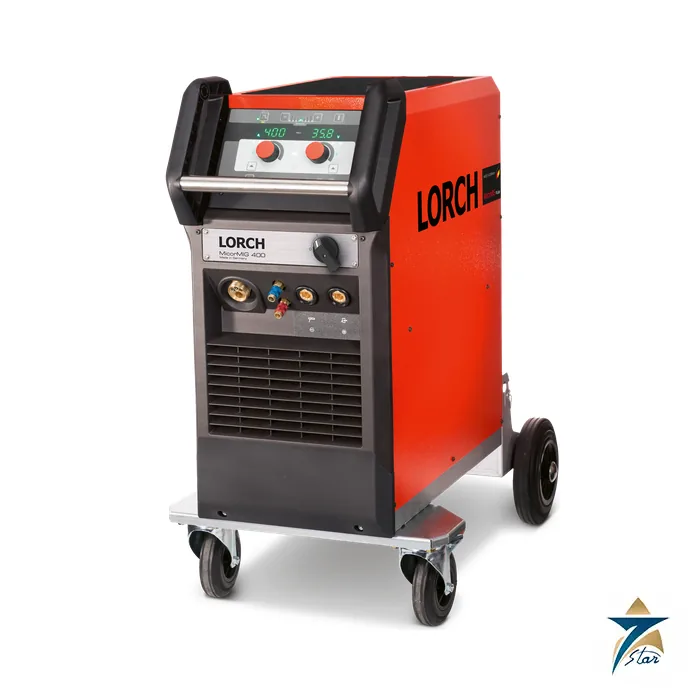
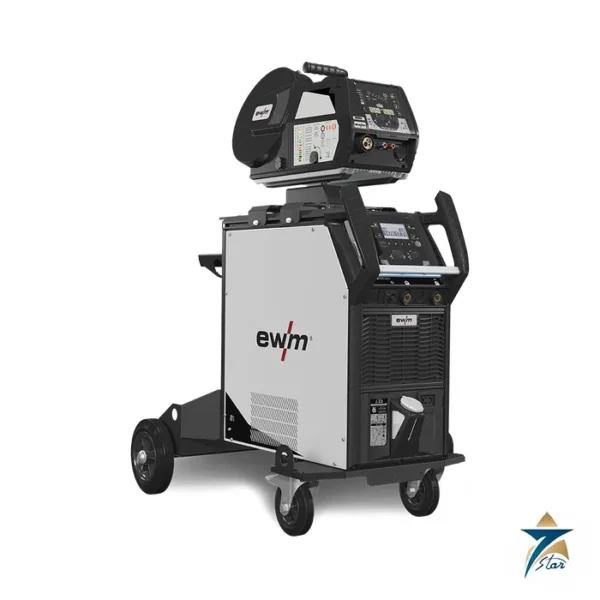
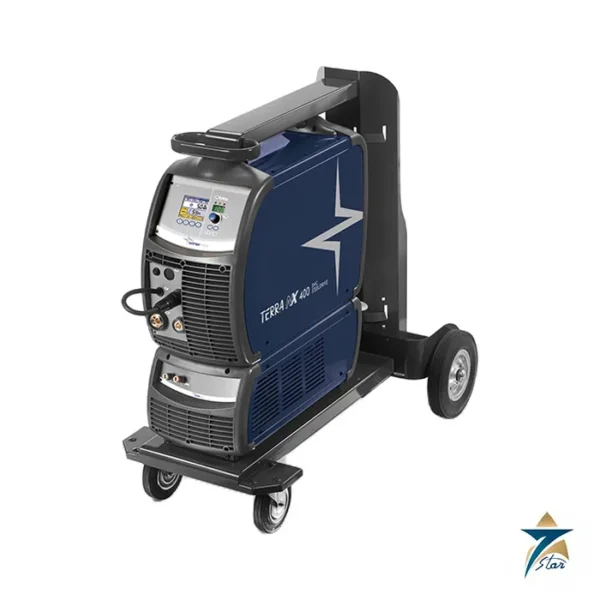
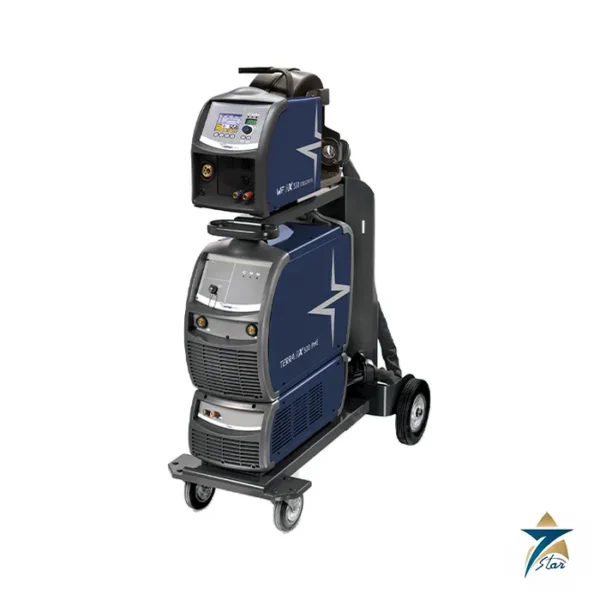
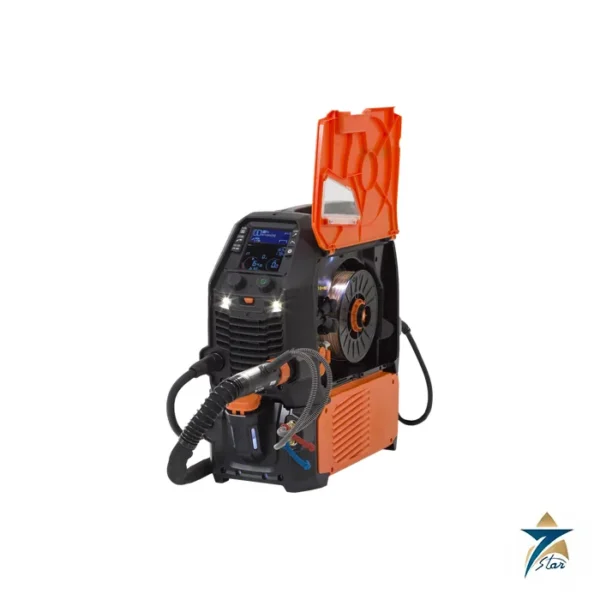
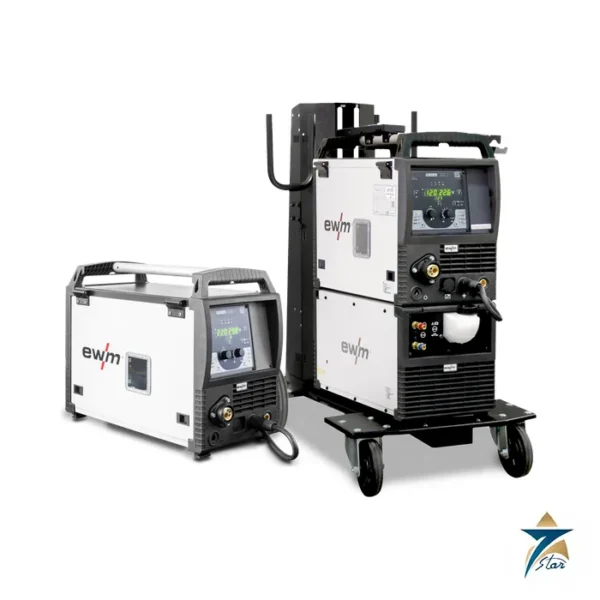
The Lorch MicorMIG 400 is a three-phase inverter MIG/MAG welding machine with a 400 A maximum output. In the A-system version shown here, the wire feeder sits inside the mobile power source, which stands on an elevated chassis with a widened wheel base. The MicorMIG series also covers MMA, TIG and gouging, depending on model and equipment.

Lorch offers the MicorMIG with three control panels. Basic has a digital volt-ampere display and 3-stage arc dynamics. BasicPlus adds synergic automatic setting control, 7-stage arc dynamics, program selection in the feed compartment and 2-stroke, 4-stroke, spot and interval modes. ControlPro adds an OLED display for a third main parameter, 21-stage arc dynamics and the Tiptronic memory for 100 welding jobs. BasicPlus and ControlPro are upgradeable.

Technical specifications

Parameter Specification
Manufacturer Lorch
Model MicorMIG 400
MIG/MAG welding range 30 A to 400 A
Voltage setting Infinitely variable
Duty cycle at 40 °C 300 A at 100%; 370 A at 60%; 400 A at 45%
Wire feed unit 4 rolls (2 driven)
Steel wire 0.6 mm to 1.6 mm
Aluminium wire 1.0 mm to 1.6 mm
Mains voltage 3~ 400 V, 50/60 Hz, ±15% (-30% at reduced output)
Mains fuse / plug 32 A / CEE 32
Dimensions L x W x H A system 880 x 490 x 885 mm; B system 880 x 490 x 955 mm
Weight, A system gas-cooled 61 kg
Wire feed case (B system, workshop version) 10.6 kg
Water cooling, filled 13.0 kg
Standard / protection EN 60974-1 / IP23S
Insulation class / marking F / CE, S

Where the MicorMIG 400 fits

The 400 A size is the first MicorMIG model that feeds 1.6 mm wire, which makes it suitable for heavier structural steel and thicker aluminium than the 300 and 350 models (both limited to 1.2 mm). With 300 A continuous output it handles long fillet welds in fabrication shops without interruption. The 500 A model adds headroom for spray-arc welding with large wire.

For pulse welding of aluminium and stainless steel, Lorch offers the separate MicorMIG Pulse series with the same housing sizes, and the Lorch S8 SpeedPulse XT serves demanding production work.

Configuration and installation

Choose the A system when the machine will mostly stay at one workstation, and the B system when the wire feeder needs to be carried closer to the joint. Add the water-cooling module for water-cooled torches when welding near the upper current range for long periods. The machine needs a 32 A three-phase socket; Lorch allows operation down to 30% undervoltage at reduced output, which helps on weak site supplies.

As a general rule for MIG/MAG, the shielding gas, wire type and wire diameter should be decided before the machine is ordered, because they determine the feed rolls, liner and contact tips that must be fitted. Aluminium wire usually needs U-groove rolls and a plastic liner, while steel wire runs on V-groove rolls with a steel liner.

Documents and quotation

The official datasheet link is given below. For a quotation, state the control panel, A or B system, gas or water cooling, torch type and wire size. Browse more MIG/MAG welding machines.

Lorch MicorMIG 400 technical summary

Item Manufacturer data
Welding current range 30–400 A
Duty cycle at 40 °C 300 A at 100%; 370 A at 60%; 45% at maximum current
Mains supply 3~400 V, CEE 32 plug
Protection class IP23S
Standard EN 60974-1
Wire drive 4-roll drive (2 driven rolls)

Key features of the MicorMIG series

  • MicorBoost, Lorch’s patented inverter technology for a stable arc and strong reserves at full output.
  • SpeedArc and SpeedUp processes; Pulse is available as an upgrade.
  • NFC job cards for storing and transferring jobs, and for activating upgrades.
  • Seven authorisation levels to control which settings each welder can change.
  • WPS booklet supporting EN 1090 production, plus flux-cored wire packages.

How the MicorMIG inverter works

A MIG/MAG inverter rectifies the mains supply, switches it at high frequency and transforms it down to the welding voltage. This allows a lighter transformer and very fast control of the arc. MicorBoost adds energy reserves so the arc stays stable when the stickout or mains voltage changes. SpeedArc focuses the spray arc for deeper penetration at higher travel speed, which can reduce the number of passes on thick plate. SpeedUp is designed for vertical-up welding, alternating between hot and cold phases to give a controlled weld pool and a regular bead without complex weaving.

Selection guide: MicorMIG 400 or MicorMIG 500

  • MicorMIG 400: 30–400 A, 300 A at 100% duty cycle. Suited to general steel fabrication, structures and heavy workshop use.
  • MicorMIG 500: 30–500 A, 370 A at 100% duty cycle. For long welds at high current on thick plate, and for larger wire diameters.
  • Add the Pulse upgrade if you weld aluminium, stainless steel or need low spatter on thin sheet.
  • Choose gas- or water-cooled torches according to the current and duty cycle in use.

Installation and maintenance

  • Connect to a 3-phase 400 V supply with a CEE 32 socket and suitable fuse protection.
  • Use the correct drive rolls and liner for the wire type and diameter; check tension regularly.
  • Keep the air intake free and clean the inside of the unit periodically in dusty environments.
  • Replace contact tips, nozzles and liners on a schedule to keep wire feeding smooth.
  • Check earth and torch connections for heat damage at high current.

Typical applications in Oman and the GCC

Steel structure fabricators, EN 1090 certified workshops, tank and vessel builders, shipyards and heavy equipment repair shops in Oman and the GCC need reliable MIG/MAG power at high duty cycle. The Lorch MicorMIG 400 suits beams, columns, base frames, tanks, trailers and heavy plate assemblies, with fast job recall for repeatable WPS-based production.

Practical tips

Save each qualified procedure as a job on an NFC card so welders can load it in seconds, and use the authorisation levels to protect those settings from accidental changes. For vertical-up welds on structural steel, try SpeedUp before resorting to manual weaving. For long seams, check the duty cycle at the chosen current, especially in hot workshops where ambient temperatures are high.

Why source from Seven Star LLC

Seven Star LLC supplies Lorch welding equipment to fabricators and contractors across Oman and the GCC. Tell us your wire types, torch cooling and feeder requirements to request a quote; our team can help confirm the correct ordering code.

Datasheets & Documents
  • PDF Datasheet Lorch MicorMIG series technical datasheet (EN) Download
Reviews (0)

Reviews

There are no reviews yet.

How would you rate this product?

It takes about 10 seconds — just tap a star. Your email is never published.

About brand

Lorch Schweißtechnik is a German maker of arc welding machines, founded in 1957 by Bruno Lorch in Fellbach near Stuttgart and now based in Auenwald, Baden-Württemberg. Helmut and Wolfgang Grüb took over the company in 1986. Lorch builds MIG-MAG, TIG and MMA welding power sources and automation in Germany and exports to more than 60 countries.

Seven Star LLC is an independent supplier in Muscat. We list Lorch welding machines for fabrication shops and contractors in Oman and the GCC.

Lorch company profile

Founded 1957, Fellbach, Germany, by Bruno Lorch
Headquarters Auenwald, Baden-Württemberg, Germany
Ownership change Taken over by Helmut and Wolfgang Grüb in 1986
Exports More than 60 countries
Product families S-series and MicorMIG MIG-MAG welders with SpeedPulse and SpeedArc processes, V-series AC/DC TIG welders, MicorStick MMA inverters, welding automation and cobot welding systems

Milestones

  • 1957: Bruno Lorch founds the company in Fellbach.
  • 1958: Lorch introduces a portable electrode welder.
  • 1969: A TIG welding system follows.
  • 1986: Helmut and Wolfgang Grüb take over Lorch.

Lorch product series

MIG-MAG machines include the S8 SpeedPulse XT pulse welding machine, the MicorMIG 400 and MicorMIG 500 with wire feeder case and the P 5500.

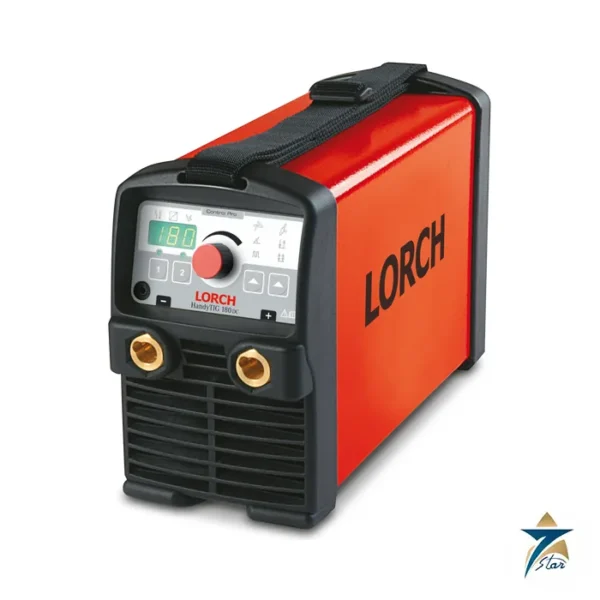
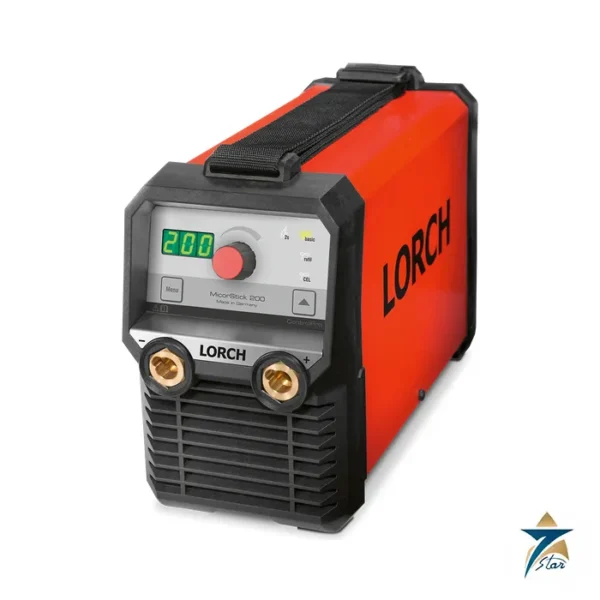
TIG machines include the V 30 and V 50 AC/DC machines, the T 300 AC/DC portable machine and the HandyTIG 180 DC portable machine. The MicorStick 200 is a stick (MMA) inverter.

Pulse MIG machines such as the S8 SpeedPulse XT reduce spatter and heat input on thin and stainless material, while AC/DC TIG machines such as the V 30 and V 50 are needed for aluminium. Portable units like the HandyTIG 180 DC and MicorStick 200 run on a single-phase supply and suit maintenance and site work.

Where Lorch machines are used

Steel fabrication, stainless and aluminium welding, pipe and tank work, maintenance and repair, and site welding.

Lorch products we list

Family Examples
TIG Welding Machines HandyTIG 180 DC Portable TIG Welding Mac…, T 300 AC/DC Portable TIG Welding Machine, V 30 AC/DC TIG Welding Machine, V 50 AC/DC TIG Welding Machine
MIG/MAG Welding Machines MicorMIG 400 MIG/MAG Welding Machine, MicorMIG 500 MIG/MAG Welding Machine wit…, P 5500 MIG/MAG Welding Machine, S8 SpeedPulse XT MIG-MAG Pulse Welding M…
Stick (MMA) Welding Machines MicorStick 200 Stick (MMA) Welding Inver…

Ordering Lorch machines: what we need

Send the model, the welding process and materials, the current needed, supply voltage and the torch, cooling and wire feeder options.

Facts checked against Lorch's own company history (lorch.eu), October 2026.

FAQ

Questions about the Lorch MicorMIG 400 MIG/MAG Welding Machine

Answers from our engineering team on installation, compatibility and integration.

01What is the welding range of the Lorch MicorMIG 400?
MIG/MAG welding from 30 A to 400 A with infinitely variable voltage setting.
02What duty cycle does the MicorMIG 400 achieve?
Lorch rates it at 300 A at 100%, 370 A at 60% and 400 A at 45% duty cycle at 40 °C.
03Which wire sizes can it feed?
Steel wire from 0.6 mm to 1.6 mm and aluminium wire from 1.0 mm to 1.6 mm, using a 4-roll drive with 2 driven rolls.
04What is the difference between the A and B systems?
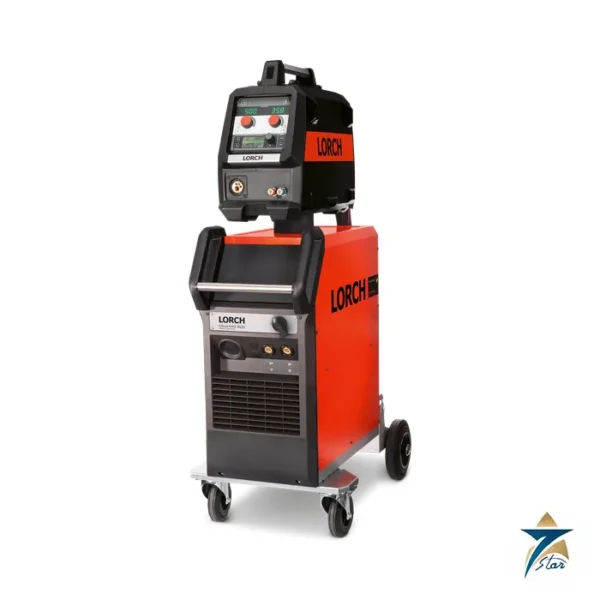
The A system has the wire feeder integrated in the mobile power source; the B system uses a detachable wire feeder case.
05Which mains supply is needed?
Three-phase 400 V, 50/60 Hz, plus/minus 15% (down to minus 30% at reduced output), with a 32 A fuse and CEE 32 plug.