Brand:

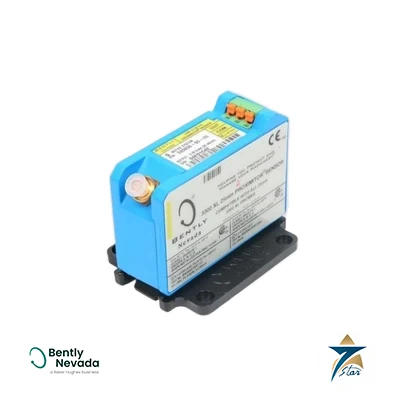
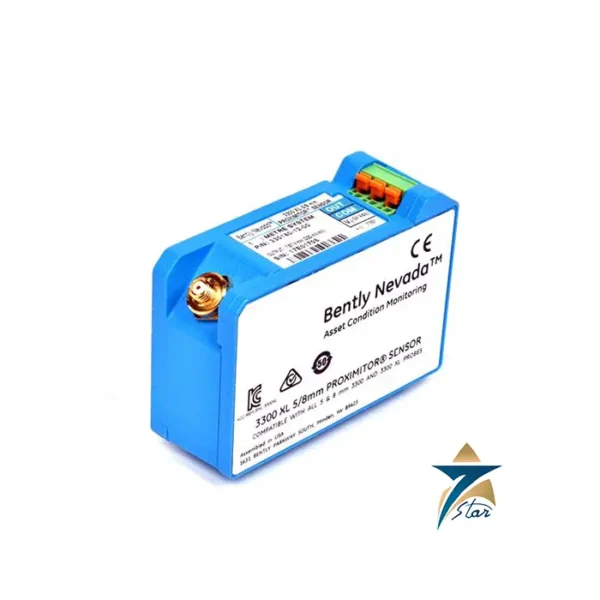
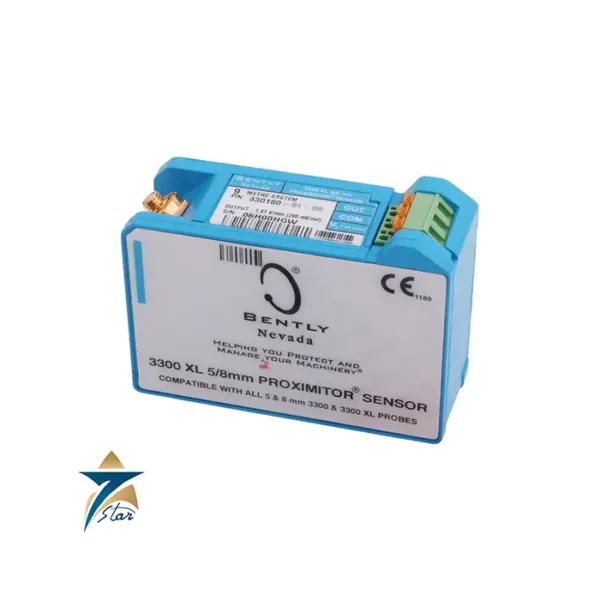
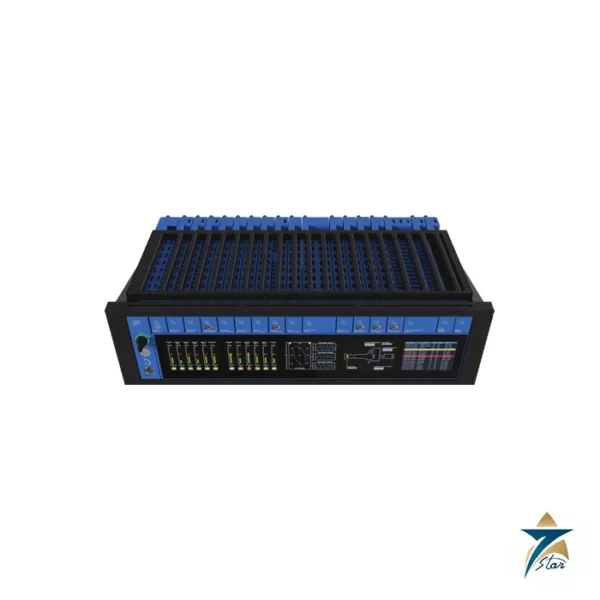
Bently Nevada 330400 Accelerometer Acceleration Transducer

Description

Overview

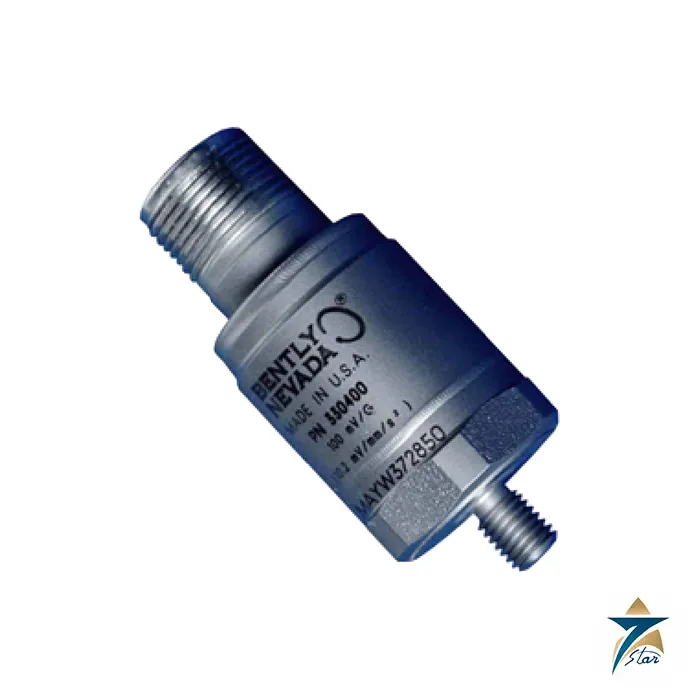
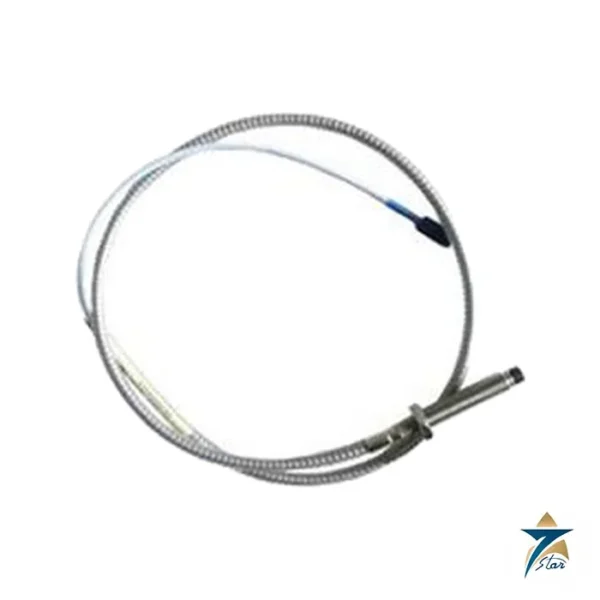
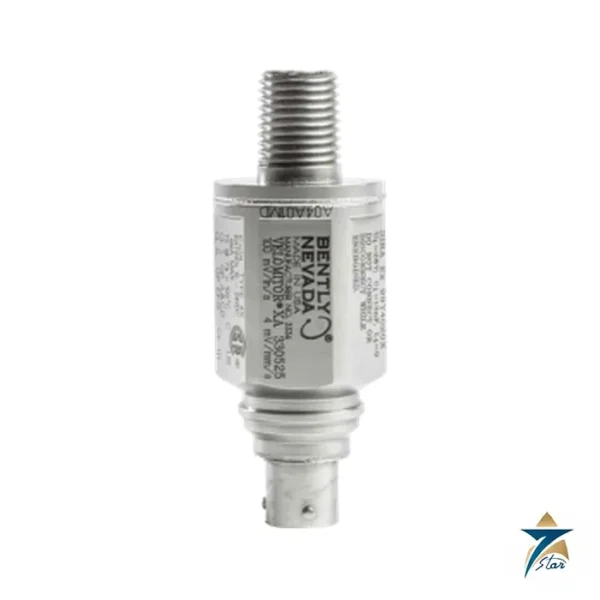
The Bently Nevada 330400 is a casing-mounted acceleration transducer for critical machinery, intended for applications where acceleration is the right measurement, such as gear mesh monitoring on high-speed gearboxes and compressor trains. It is designed to address the requirements of American Petroleum Institute Standard 670 for accelerometers, with an amplitude range of 50 g peak and a sensitivity of 100 mV/g. The Bently Nevada 330400 is powered directly by the monitor, with its electronics inside a hermetically sealed 316L stainless steel case.

Seven Star LLC supplies the Bently Nevada 330400 on request to rotating equipment and reliability teams in the Sultanate of Oman and the wider GCC, with engineering support in Muscat. The Bently Nevada 330400 datasheet (document 141638, shared with the 330425) is attached to this page, and our team can confirm the stud thread, approval option, interconnect cable and mounting base needed for each measurement point.

Operating Principle

The Bently Nevada 330400 works on the piezoelectric principle: casing acceleration produces a proportional charge in the sensing element, and electronics inside the sealed case convert that charge into a low-impedance voltage of 10.2 mV per m/s² (100 mV/g) ±5%. The transducer is powered from a −24 V dc supply at a nominal bias current of 2 mA and sits at an output bias voltage of −8.5 V dc ±0.5 V dc, the same powering arrangement used by Bently Nevada monitors for proximity and seismic inputs.

The frequency response is 10 Hz to 15 kHz (600 to 900,000 cpm) within ±3 dB and 30 Hz to 10 kHz within ±10%, while the mounted resonant frequency is above 30 kHz. That bandwidth is why the Bently Nevada 330400 is the sensor of choice for gear mesh frequencies, blade pass and rolling-element bearing defect frequencies, which sit well above the range a velocity sensor handles comfortably. Amplitude linearity is ±1% up to 490 m/s² (50 g) peak and the broadband noise floor is 0.039 m/s² (0.004 g) rms between 10 Hz and 15 kHz, so the sensor can resolve both low-level early bearing signals and high gear mesh amplitudes.

Engineering Design of the Bently Nevada 330400

The Bently Nevada 330400 body is 23 mm (0.93 in) in diameter and 59 mm (2.3 in) high including the mounting stud, weighs about 100 g (3.5 oz) without cable and is made from 316L stainless steel. The case is hermetically sealed, equivalent to IP68 for the sensor itself, and electrically isolated from the internal circuit. Connection is through a 3-pin MIL-C-5015 receptacle, and the integral stud is ordered as either 1/4-28 UNF or M8 x 1. The datasheet calls for a mounting surface finish of 32 µin rms and a mounting torque of 4.1 N·m (3.0 ft·lb), and the sensor works in any orientation.

The Bently Nevada 330400 operates and can be stored from −55 °C to +121 °C, survives shocks up to 5,000 g peak and tolerates 100% condensing humidity. Signal cables can run up to 305 m (1,000 ft) to the monitor with no degradation of signal. Base strain sensitivity is a practical concern on thin or flexing casings; units with serial numbers starting with “G” have a base strain sensitivity of 49 mm/s²/µstrain (0.005 g/µstrain), and the 37439 mounting bases (1/4-28 or M8) reduce base strain further for older units. The 43217 accelerometer mounting kit is offered where the sensor must be installed inside a housing.

Key Features

The Bently Nevada 330400 combines API 670 performance with a compact stainless steel package. Its main capabilities include:

  • Designed to address the API 670 requirements for accelerometers used in machinery protection systems.
  • Sensitivity of 10.2 mV/m/s² (100 mV/g) ±5% with a 490 m/s² (50 g) peak amplitude range and ±1% linearity.
  • Wide frequency response from 10 Hz to 15 kHz (±3 dB) for gear mesh, blade pass and bearing defect frequencies.
  • Mounted resonant frequency above 30 kHz and transverse sensitivity below 5% of axial.
  • Hermetically sealed 316L stainless steel case, equivalent to IP68 for the sensor, with case isolation.
  • Integral 1/4-28 UNF or M8 x 1 mounting stud and a 3-pin MIL-C-5015 connector.
  • Operating range of −55 °C to +121 °C and shock survivability of 5,000 g peak.
  • Approval option covering CSA, ATEX and IECEx, including Ex ia IIC T3 Ga intrinsically safe and Ex ec IIC Gc ratings, plus ABS marine type approval.

Industrial Applications

In Oman and the GCC the Bently Nevada 330400 is typically found on integrally geared centrifugal compressors for instrument and process air, speed-increasing gearboxes between gas turbines and generators, gas compression trains in the interior oil and gas fields, LNG and refinery machinery in Sur, Sohar and Duqm, and large pump and fan gearboxes at power and desalination plants. On these machines proximity probes cover shaft vibration in fluid-film bearings, while the Bently Nevada 330400 adds the high-frequency casing measurement that reveals gear tooth wear, mesh problems and rolling-element bearing damage.

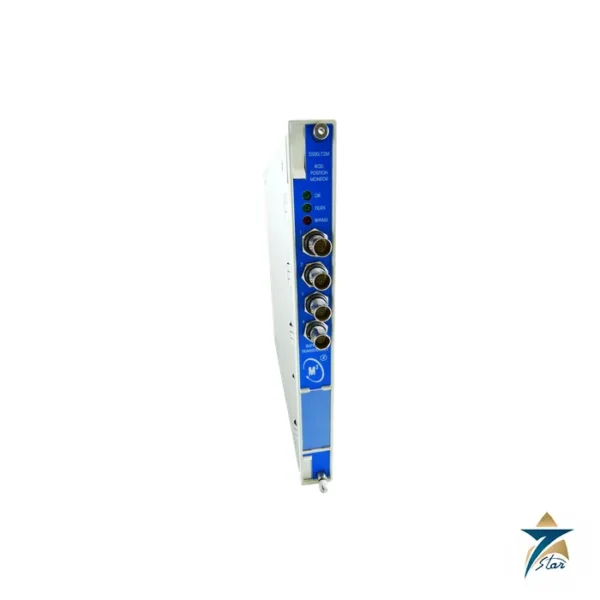
The accelerometer connects to rack monitors such as the Bently Nevada 3500/42M Proximitor Seismic Monitor, which accepts acceleration inputs and can integrate them to velocity, or to the Bently Nevada 1900/65A general purpose equipment monitor for balance-of-plant machines. Where velocity is the preferred parameter, the Bently Nevada 330500 Velomitor piezo-velocity sensor is the alternative in the same family. Seven Star LLC helps engineers in Muscat and across the GCC choose the stud thread, cable type and mounting base for each accelerometer point and plan spare sensors for turnarounds.

Technical Specifications

Key parameters of the Bently Nevada 330400, taken from manufacturer datasheet 141638 Rev. AB (specified at +20 to +30 °C and 100 Hz unless noted):

Parameter Specification
Model Bently Nevada 330400 Accelerometer, order code 330400-AA-BB
Standard Designed to address API 670 requirements for accelerometers
Sensitivity 10.2 mV/m/s² (100 mV/g) ±5%
Acceleration range 490 m/s² (50 g) peak overall, 10 Hz to 15 kHz
Amplitude linearity ±1% to 490 m/s² (50 g) peak
Frequency response 10 Hz to 15 kHz (600 to 900,000 cpm) ±3 dB; 30 Hz to 10 kHz ±10%
Broadband noise floor 0.039 m/s² (0.004 g) rms, 10 Hz to 15 kHz
Mounted resonant frequency Greater than 30 kHz; resonant peak 20 dB maximum
Transverse sensitivity Less than 5% of axial
Temperature sensitivity −11% to +3% typical over the operating range
Power −24 V dc ±0.5 V; bias current 2 mA nominal; output bias −8.5 V dc ±0.5 V
Cable length Up to 305 m (1,000 ft) with no degradation of signal
Operating and storage temperature −55 °C to +121 °C (−67 °F to +250 °F)
Shock survivability 49,050 m/s² (5,000 g) peak
Ingress protection Hermetically sealed, equivalent to IP68 (sensor only, not cable)
Case and connector 316L stainless steel; 3-pin MIL-C-5015 receptacle
Mounting Integral 1/4-28 UNF (option 01) or M8 x 1 (option 02) stud; 4.1 N·m torque; any orientation
Dimensions and weight 23 mm (0.93 in) diameter, 59 mm (2.3 in) high incl. stud; about 100 g
Approvals Option 00 none, option 05 multiple approvals (CSA, ATEX, IECEx); ABS marine
Interconnect cables 130539 (18 AWG with fluorosilicone boot), 16925 (22 AWG), 16710 (22 AWG armored)

Ordering Notes for the Bently Nevada 330400

Neighbouring order codes such as 330400-01-00 are separate variants within the same family. State the exact code you need, together with the quantity, and we confirm the matching variant and its documentation in the quotation.

Request a Quote for Bently Nevada 330400

To request a quotation for the Bently Nevada 330400, check current availability and lead time or download the manufacturer datasheet from the document tab on this page, send the order code or the stud thread, approval option, cable type and length to the Seven Star LLC instrumentation team. We supply the Bently Nevada 330400 with its cables, mating connectors and mounting bases to customers in Oman and the GCC.

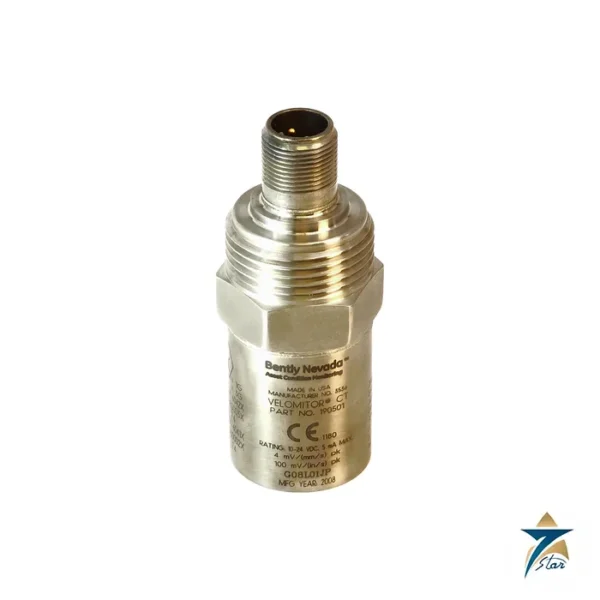
Related Bently Nevada sensor from Seven Star LLC: Bently Nevada 190501 Velomitor CT velocity transducer.

Datasheets & Documents
  • PDF Datasheet Bently Nevada 330400 and 330425 Accelerometer Datasheet (141638 Rev. AB) Download
Reviews (0)

Reviews

There are no reviews yet.

How would you rate this product?

It takes about 10 seconds — just tap a star. Your email is never published.

About brand

Bently Nevada is the American machinery protection and condition monitoring brand behind the 3500 rack, the 3300 XL proximity probe and the System 1 software. It was founded in 1961 in Minden, Nevada, and is today a Baker Hughes business.

Seven Star LLC is an independent supplier in Muscat. We list Bently Nevada monitors, I/O modules, probes, proximitors, velocity transducers and transmitters for rotating equipment in Oman and the GCC, and source them by full part number.

Bently Nevada company profile

Established 1961, Minden, Nevada, USA, by Donald E. Bently. The business started earlier as Bently Scientific in Berkeley, California (1956).
Known for The first commercial eddy-current proximity transducers for measuring shaft vibration and position on high-speed turbomachinery
Ownership Acquired by GE Energy in 2002; part of Baker Hughes since GE Oil & Gas combined with Baker Hughes in 2017
Rack generations 5000 series (from 1965), 3300 series (from 1988), 3500 series (from 1995), Orbit 60 (current platform)
Product families Machinery protection racks, proximity probes and proximitors, Keyphasor sensors, velocity and acceleration transducers, 2-wire vibration transmitters, general-purpose monitors, portable analyzers, wireless sensors and System 1 condition monitoring software
Typical machines Steam and gas turbines, centrifugal and reciprocating compressors, pumps, motors, generators, fans and gearboxes

Milestones

  • 1956: Donald E. Bently starts Bently Scientific in Berkeley, California.
  • 1961: The company moves to Minden, Nevada, as Bently Nevada.
  • 1965: The 5000 series monitoring system is introduced.
  • 1988: The 3300 series follows.
  • 1995: The 3500 machinery protection system is launched.
  • 2002 and 2017: GE Energy acquires Bently Nevada; it becomes part of Baker Hughes in 2017.

Bently Nevada product series

Series Type What it does
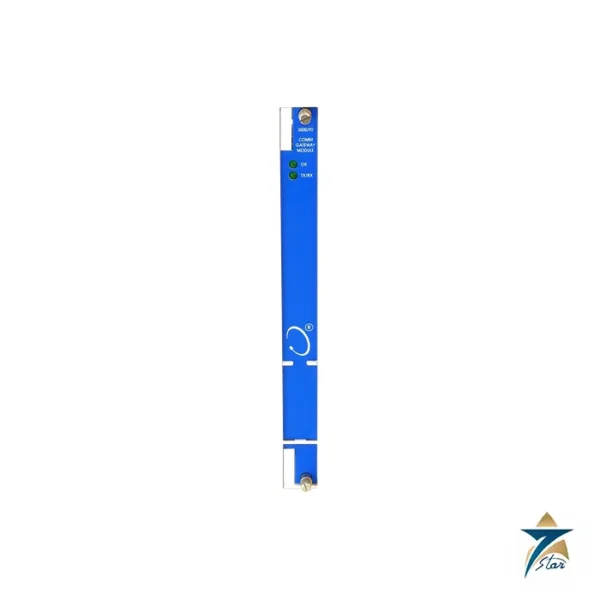
3500 Machinery protection rack Continuous online protection with alarm and danger relays. Modules include the 3500/15 power supply, 3500/20 rack interface, 3500/25 Keyphasor, 3500/42M proximitor/seismic, 3500/50 tachometer, 3500/60 temperature, 3500/33 relay and 3500/92 communication gateway
3500 recip modules Reciprocating compressor monitoring 3500/70M impulse velocity, 3500/72M rod position and 3500/77M cylinder pressure
Orbit 60 Protection and monitoring platform The current Bently Nevada platform for protection, condition monitoring and data integration with System 1
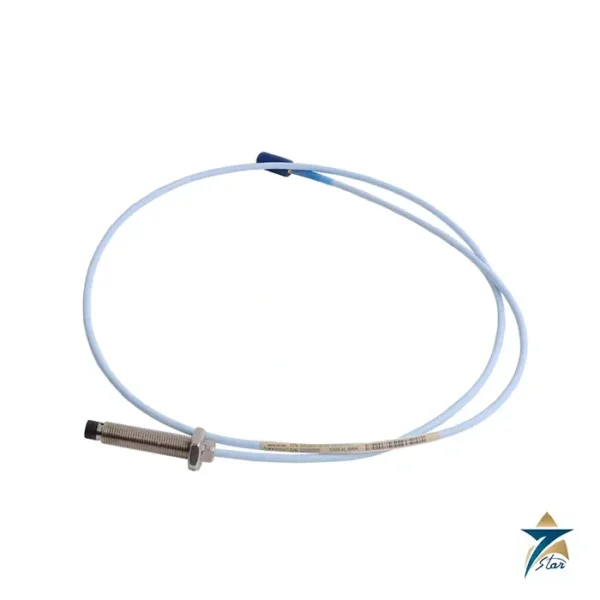
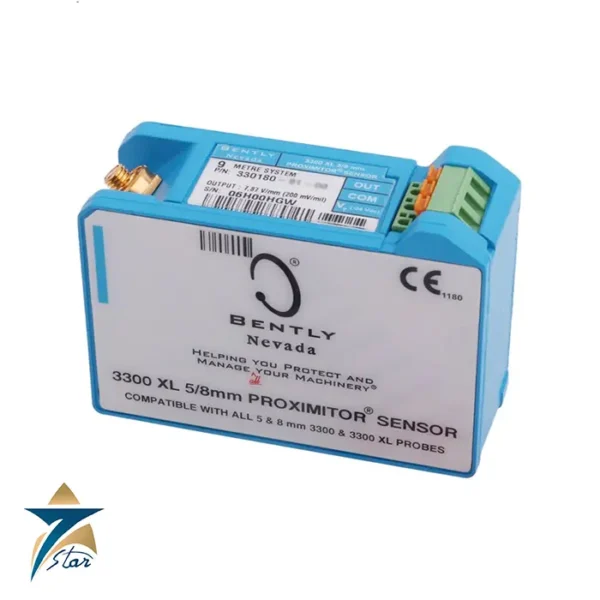
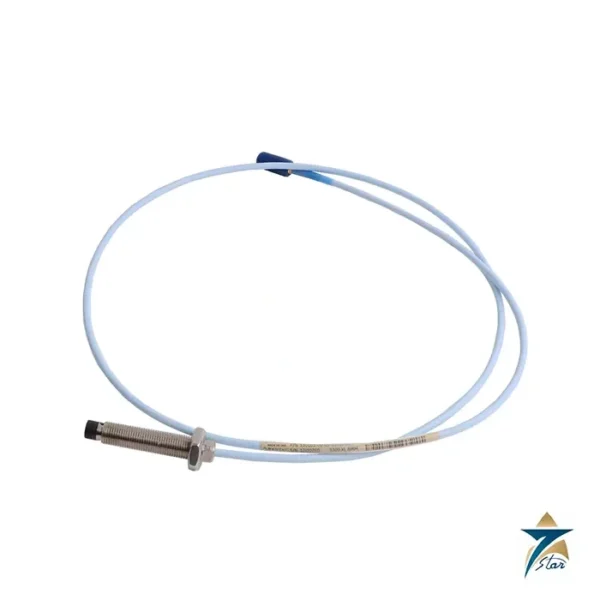
3300 XL 8 mm Proximity transducer system Probe, extension cable and proximitor sensor for radial vibration, thrust position and Keyphasor reference on fluid-film bearing machines; also 5 mm and 25 mm versions
330500 Velomitor, 190501 Velomitor CT Piezo-velocity sensors Casing velocity on rolling-element bearing machines and low-speed cooling tower fans
990 and 991 2-wire transmitters 4-20 mA vibration (990) and thrust position (991) signals straight into a PLC or DCS, without a monitor rack
1900/65A, 2300 Compact monitors Protection for balance-of-plant pumps, fans and motors where a full 3500 rack is not justified

A proximity probe measures the gap to the shaft, so it sees shaft movement inside a fluid-film bearing directly. A velocity or acceleration sensor sits on the casing and suits rolling-element bearing machines. Critical turbomachinery usually carries two X-Y probes per bearing, two axial probes for thrust position and a Keyphasor probe for speed and phase.

Where Bently Nevada systems are used

In Oman and the GCC, Bently Nevada racks and probes protect gas turbines, compressors and steam turbines in gas processing, LNG, refining, petrochemical, power and desalination plants. Many installations are 3500 racks that have run for years, so most requests are for like-for-like module, probe, extension cable and proximitor replacements, plus upgrades to newer monitors.

Ordering and replacement: what we need

For probes and proximitors, send the full part number with all option digits (for example 330101-00-27-10-02-05). The digits set the probe length, cable length, connector and approvals, and the probe, cable and proximitor must match in total system length. For 3500 modules, send the module and I/O part numbers from the rack and say whether the I/O is internal or external termination, or barrier type. If a module is obsolete, we quote the replacement that Bently Nevada names and point out any configuration or firmware change.

Frequently requested Bently Nevada models: Bently Nevada 3300 XL 8mm Proximity Probe, Bently Nevada 125680-01 3500/40M Proximitor I/O Module, Bently Nevada 149369-01 3500/25 Enhanced Keyphasor Module, Bently Nevada 126648-02 Isolated Keyphasor I/O Module, External, Bently Nevada 3500/61 Temperature Monitor with Recorder Outputs, Bently Nevada 3500/50M Tachometer Module.

Facts checked against Baker Hughes Bently Nevada pages and published company history, October 2026.

Planning a 3500 rack upgrade or a module replacement? Our Bently Nevada 3500 modules guide explains what each monitor, relay and communication module does, and the 3500 module replacement checklist lists the details to confirm before you order.

FAQ

Questions about the Bently Nevada 330400 Accelerometer Acceleration

Answers from our engineering team on installation, compatibility and integration.

01What is the Bently Nevada 330400 designed for?
The Bently Nevada 330400 is an accelerometer for critical machinery where casing acceleration is required, such as gear mesh monitoring. It is designed to address the API 670 requirements for accelerometers, with a 50 g peak amplitude range and a sensitivity of 100 mV/g.
02What is the difference between the 330400 and the 330425?
According to the shared datasheet the two are identical except for range and sensitivity. The 330400 provides 100 mV/g and 50 g peak, while the 330425 provides 25 mV/g and a larger 75 g peak range for machines with higher acceleration levels.
03What frequency range does the Bently Nevada 330400 cover?
The datasheet gives 10 Hz to 15 kHz within 3 dB and 30 Hz to 10 kHz within 10 percent, with a mounted resonant frequency above 30 kHz. This covers gear mesh, blade pass and rolling-element bearing defect frequencies.
04How is the 330400 mounted and wired?
It has an integral 1/4-28 UNF or M8 x 1 stud, a 4.1 N.m mounting torque and a 3-pin MIL-C-5015 connector, and it can be mounted in any orientation. It is powered at -24 V dc with a 2 mA bias current, and interconnect cables 130539, 16925 or 16710 can run up to 305 m to the monitor.
05Where can I source the Bently Nevada 330400 in Oman?
Seven Star LLC supplies the Bently Nevada 330400 to customers in Oman and the GCC, with engineering support in Muscat. Please include the stud thread, approval option and cable type and length in your request for quotation.