Overview: The Communication Bridge Between Controller and Field I/O
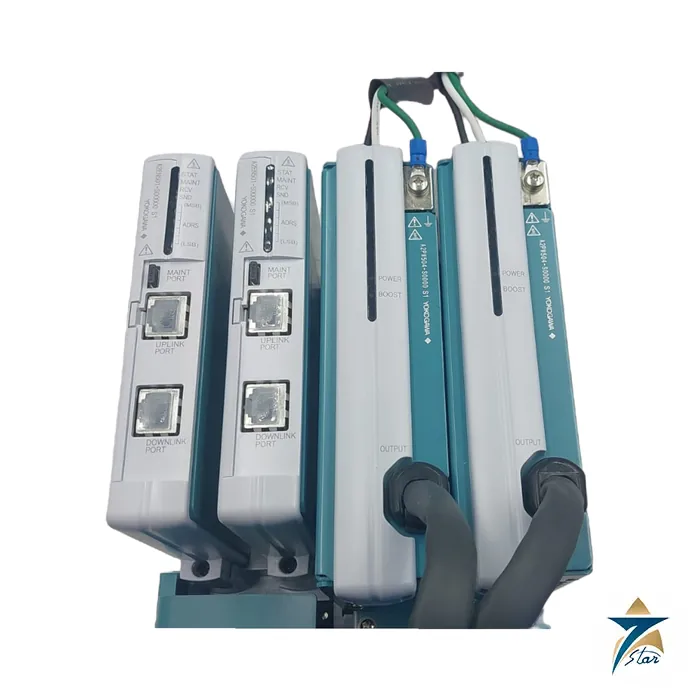
The Yokogawa Node Interface Unit (NIU) is a core hardware component of the Yokogawa CENTUM VP integrated production control system, providing the interface function that allows a Field Control Unit (FCU) to communicate with N-IO or FIO field input/output units, and allowing multiple node interface units to communicate with one another across the plant control network. Beyond communication, the NIU also supplies power to its connected I/O units, making it a central building block of every distributed I/O node in a CENTUM VP architecture.
As a trusted supplier of Yokogawa control system components, Seven Star LLC sources and supplies Yokogawa Node Interface Units to refineries, petrochemical plants, and process facilities across Oman and the wider GCC operating CENTUM VP distributed control systems. Because DCS node hardware must match the exact system release and I/O configuration in service, Seven Star LLC helps plant engineering teams confirm the correct suffix code and configuration for their existing CENTUM VP installation.
Working Principle: Distributed I/O Node Architecture
An N-IO node in the CENTUM VP architecture consists of a Node Interface Unit together with N-IO I/O units, communicating I/O signals to and from field devices with a Field Control Unit via an N-ESB bus or a dual-redundant optical ESB bus. A single Node Interface Unit can connect up to six N-IO I/O units, with the F-SB bus cable for inter-unit communication and the power supply cable for the base plate selected to match the number of connected I/O units. This modular node structure allows a CENTUM VP system to scale its field I/O capacity by adding nodes rather than requiring a single monolithic I/O rack.
The Node Interface Unit itself incorporates redundant power supply units and N-ESB bus modules in its dual-redundant configuration, ensuring that a single power supply or communication module failure does not interrupt the flow of process I/O data between the field and the controller. This redundancy, combined with the NIU’s role as the power source for its connected barrier or I/O base plates, makes it one of the most critical single points in the distributed I/O chain, and a component that plant maintenance teams monitor closely for early signs of degradation.
Engineering Design of the Node Interface Unit
The Node Interface Unit is available in DIN-rail mountable and wall-mountable configurations, with a full model and suffix code system covering redundancy level, power supply input type (100-240 V AC or 24 V DC), uplink and downlink bus type (N-ESB or optical ESB at various distance ranges), explosion protection option, and ambient temperature rating (standard 0 to 60°C, or extended -40 to 70°C with the temperature environment option). Power consumption is approximately 190 VA for AC-input units or 150 W for DC-input units, with a maximum configuration weight of approximately 4.2 kg.
For hazardous-area installations, the NIU supports an explosion protection option code, and when combined with parent products carrying the /ATDOC option, the unit can be configured to meet applicable explosion protection directives. Base plates for barriers (compatible with MTL or P+F barrier types) connect to the Node Interface Unit via a dedicated F-SB bus cable, extending the NIU’s field signal interface capability to intrinsically safe circuits where required.
Key Features
The Yokogawa Node Interface Unit provides the critical communication and power backbone for CENTUM VP distributed I/O nodes. Key characteristics include:
- Interface function connecting a Field Control Unit to N-IO/FIO field I/O units via N-ESB or optical ESB bus.
- Supports up to 6 I/O units per Node Interface Unit.
- Supplies power directly to connected I/O and barrier base plates.
- Dual-redundant power supply and bus module configuration options for high availability.
- DIN-rail or wall-mountable installation.
- Standard (0 to 60°C) or extended temperature environment (-40 to 70°C) options.
- Optional explosion protection for hazardous-area field I/O nodes.
Industrial Applications
The Node Interface Unit is deployed wherever a Yokogawa CENTUM VP distributed control system requires field-mounted or remote I/O nodes, including refinery process units, petrochemical plants, and oil and gas production facilities where field I/O must be located close to the process rather than centralized in a single control room rack. Its dual-redundant configuration options and wide temperature ratings support both standard control room installations and harsher field-mounted enclosure locations.
Seven Star LLC supports refinery instrumentation teams, petrochemical maintenance departments, and DCS system integrators across Oman, Muscat, Sohar, and the broader GCC region with sourcing of Yokogawa CENTUM VP node hardware, helping plants maintain distributed I/O availability and plan system expansions.
Technical Specifications
The table below summarizes the core specifications of the Yokogawa Node Interface Unit as supplied by Seven Star LLC.
| Parameter |
Specification |
| Model |
Yokogawa Node Interface Unit (A2NN30D and related CENTUM VP node models) |
| Function |
Communication interface between FCU and N-IO/FIO field I/O units, plus power supply to I/O units |
| I/O Unit Connections |
Up to 6 per NIU |
| Mounting |
DIN-rail or wall-mountable |
| Power Consumption |
Approx. 190 VA (AC input) or 150 W (DC input) |
| Weight |
Approx. 4.2 kg (max. configuration) |
| Ambient Temperature |
0 to 60°C standard; -40 to 70°C with temperature environment option |
| Explosion Protection |
Optional, via suffix code and /ATDOC parent product option |
| Target Platform |
Yokogawa CENTUM VP Integrated Production Control System |
Request a Quote for Yokogawa Node Interface Unit for CENTUM VP DCS (YS/AZD Reference)
Seven Star LLC supplies the Yokogawa Node Interface Unit with datasheet documentation and regional technical support. Contact our instrumentation and control systems division for a formal B2B quotation, to confirm the correct suffix code and configuration for your existing CENTUM VP installation, or to obtain the complete technical datasheet.Seven Star LLC supplies this item on request with the manufacturer documentation, and availability and lead time are confirmed at quotation.
Related Products


























Reviews
There are no reviews yet.