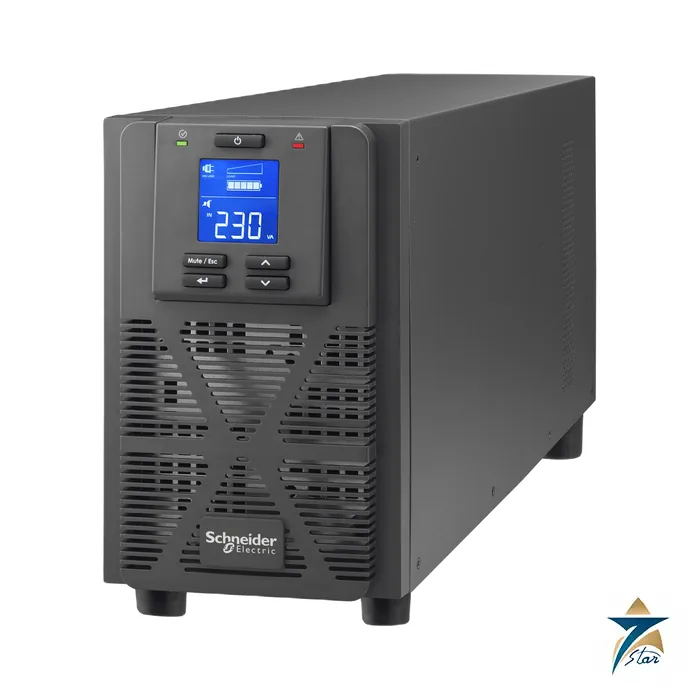
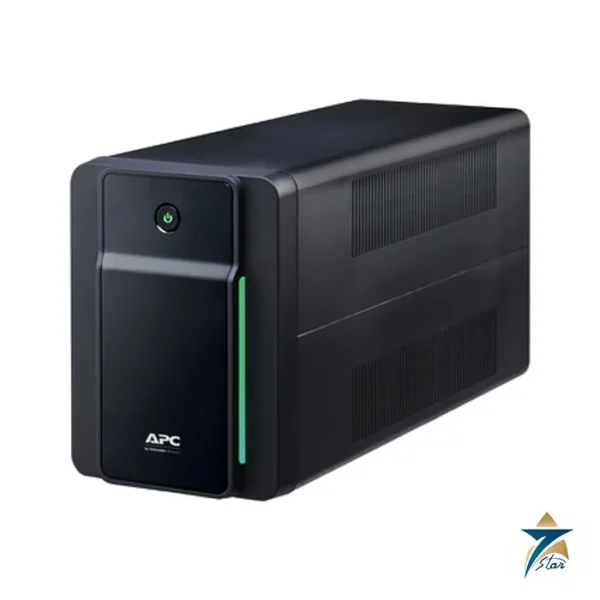
SRVS2KI: 2 kVA tower Easy UPS 1Ph On-Line
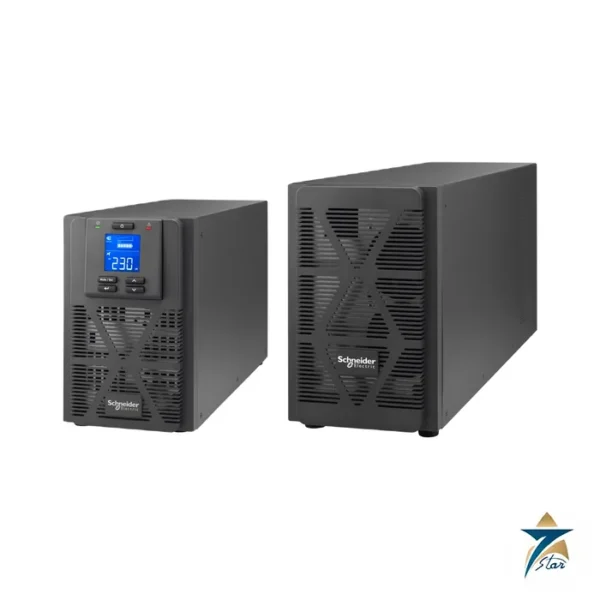
The SRVS2KI is a Schneider Electric Easy UPS 1Ph On-Line unit rated 2000 VA / 1600 W with a sine-wave double-conversion output. It is built as a tower chassis. Seven Star LLC supplies the SRVS2KI in Oman and the GCC as an independent supplier based in Muscat.
The datasheet carries a lifecycle notice: the reference is marked discontinued, with a stated discontinuation date of 31 Oct 2026 and end of service on 30 Aug 2029. Check current availability and ask about replacement options when you enquire. The reading of the reference below is our interpretation of the product title, not a published ordering table: this unit is described as a standard runtime model, in tower form, and a socket-outlet output.
Size, weight and mounting of the SRVS2KI
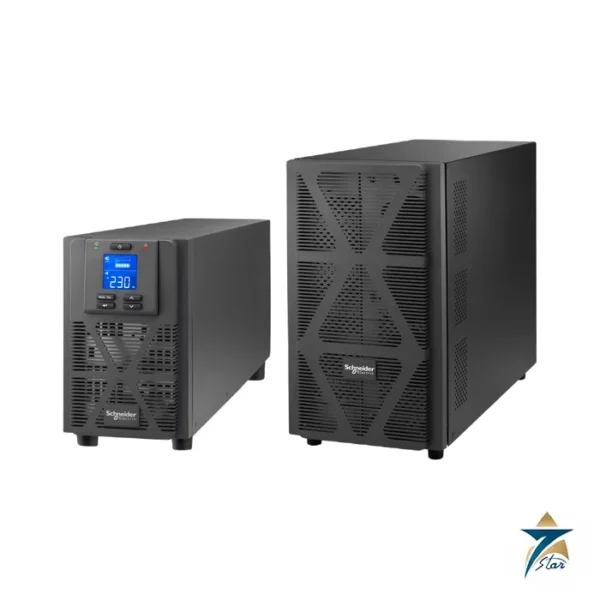
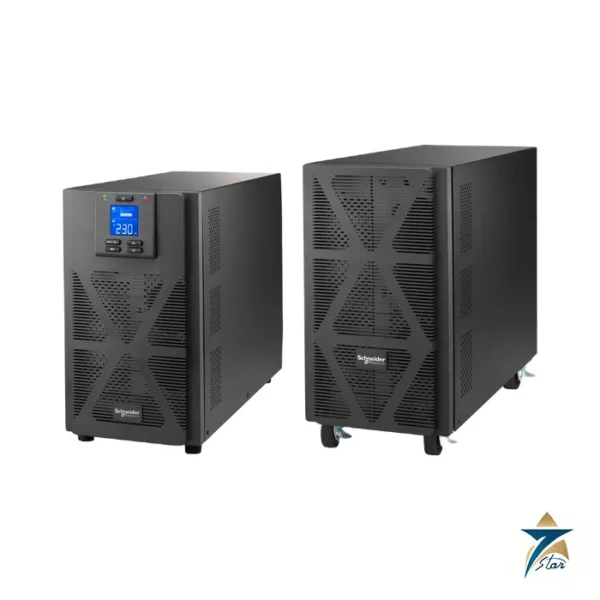
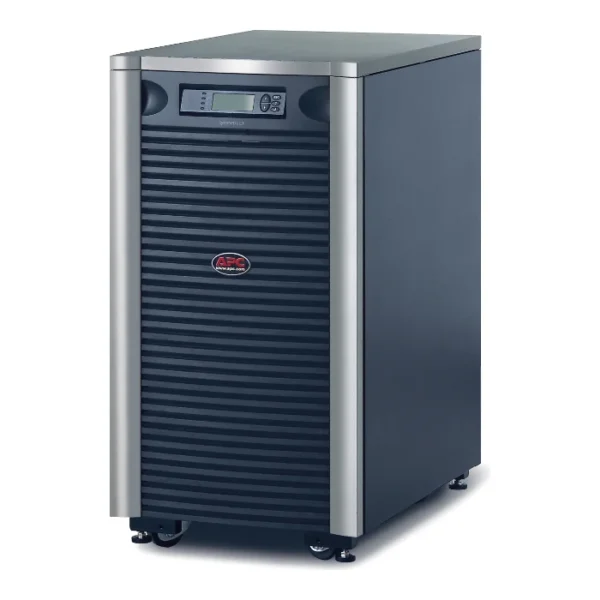
The chassis measures 238 × 145 × 400 mm (H × W × D) and weighs 16.8 kg. It stands vertically as a tower, with the datasheet listing it as not rack-mountable. The floor area needed is small, but the weight is significant and the floor should be level and able to carry it. Leave clear space at the front and rear for airflow.
Acoustic level is 50 dBA and heat dissipation is 745 Btu/h. Include the dissipated heat in any room cooling calculation.
Technical specifications of the SRVS2KI
| Parameter |
Specification |
| Manufacturer / part number |
Schneider Electric / SRVS2KI |
| Range |
Easy UPS 1Ph On-Line |
| Topology / waveform |
On-Line (double conversion), sine wave |
| Rated power |
2000 VA / 1600 W |
| Input voltage |
230 V AC single phase (220 V and 240 V also listed) |
| Input frequency |
40–70 Hz auto sensing |
| Input connection |
IEC 60320 C14 |
| Output connection |
4 IEC 60320 C13 |
| Output voltage |
230 V AC single phase, configurable 220 / 230 / 240 V |
| Output frequency |
50/60 Hz ± 3 Hz sync to mains |
| Bypass |
Internal bypass (automatic and manual) |
| Crest factor |
3:1 |
| Efficiency at full load |
88 % (full load) |
| Input window (half / full load) |
110–285 V half load / 160–280 V full load |
| Battery type |
Lead-acid internal included |
| Battery voltage |
48 V |
| Battery energy |
305 VAh |
| Typical recharge time |
4h |
| Battery charging power |
76 W rated |
| Battery life |
3–5 year(s) |
| Dimensions (H x W x D) |
238 × 145 × 400 mm |
| Product weight |
16.8 kg |
| Acoustic level |
50 dBA |
| Heat dissipation |
745 Btu/h |
| Protection |
IP20 |
| Operating temperature |
0–40 °C |
| Relative humidity |
0–95 % non-condensing |
| Operating altitude |
0–3000 m |
| Certification / standards |
CE, UKCA; EN/IEC 62040-1 and 62040-2 |
| Warranty |
24 months |
| Replacement battery |
APCRBCV204 |
| Maximum runtime |
4 min |
Selection checklist for the SRVS2KI
- Load: connected load must stay within 1600 W as well as 2000 VA; the watt figure is the limiting one when the load has a power factor below the rating.
- Connections: confirm the inlet type and that the sockets match your equipment plugs.
- Form: floor standing with space and a level surface.
- Runtime: standard battery only; check the stated runtime against your needs.
- Lifecycle: the datasheet shows the reference as discontinued, so confirm stock and a replacement before committing a project.
Battery system and runtime of the SRVS2KI
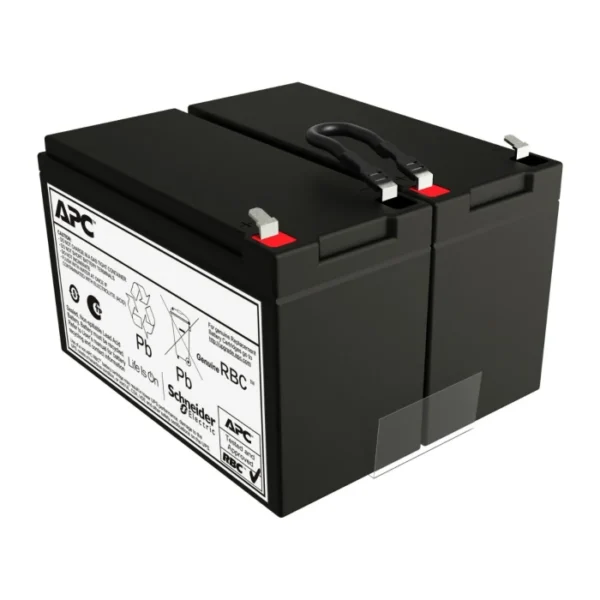
This unit is the standard-runtime variant, with a 48 V lead-acid battery system, a rated charging power of 76 W rated and a typical recharge time of 4h. Battery energy is listed as 305 VAh. The datasheet does not list this reference as runtime-extendable, so if long autonomy is needed a different reference should be selected. The replacement battery reference shown is APCRBCV204. The datasheet states a maximum runtime of 4 min and a half-load figure of 12 minutes at 800 W.
Lead-acid batteries have a datasheet service life of 3–5 year(s) years, and ambient temperature is the main factor that shortens it. In Gulf plant rooms the cooling of the battery space deserves as much attention as the cooling of the UPS. Schedule battery tests and replacement against the figure above and against actual room temperature, not against the date of installation alone.
How the SRVS2KI compares with sibling references
The nearest relatives in the same range, taken from their own datasheets, are listed here. They share the on-line topology, LCD console and card slot but differ in power, chassis and battery arrangement.
| Reference |
Rating |
Chassis |
Runtime |
Battery voltage |
| SRVS2KIL |
2000 VA / 1600 W |
Tower |
Extended |
72 V |
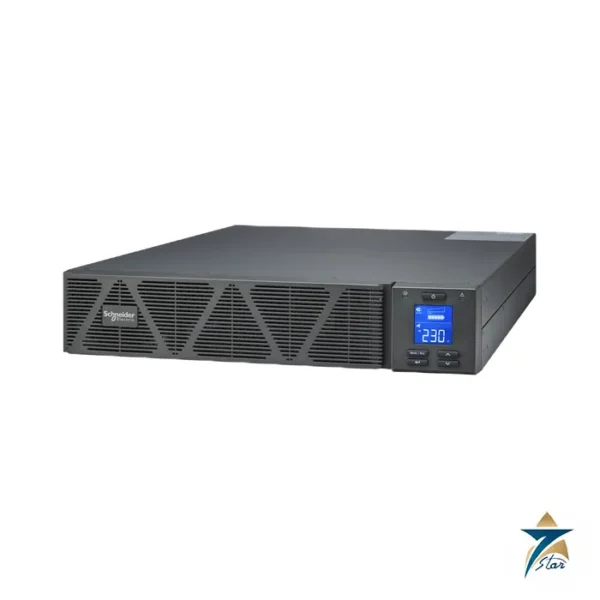
| SRVS2KRIRK |
2000 VA / 1600 W |
Rack 2U |
Standard |
48 V |
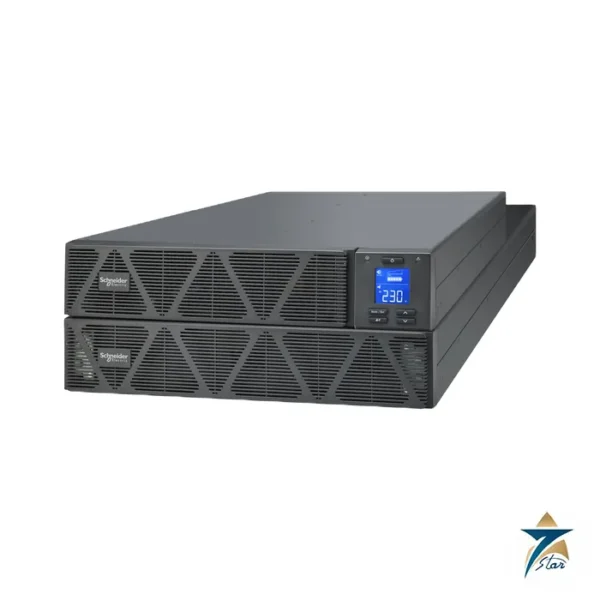
| SRVS2KRILRK |
2000 VA / 1600 W |
Rack 4U |
Extended |
72 V |
| SRVS6KI |
6000 VA / 6000 W |
Tower |
Standard |
192 V |
| SRVS10KIL |
10000 VA / 10000 W |
Tower |
Extended |
240 V |
| SRVS10KRIRK |
10000 VA / 10000 W |
Rack 4U |
Standard |
192 V |
Power path and output behaviour
In on-line operation the load is always fed from the inverter, so the output is isolated from mains disturbances and the datasheet lists a sine waveform at 50/60 Hz ± 3 Hz synchronised to mains. The input accepts 230 V AC single phase with 220 V and 240 V also listed, and an auto-sensing frequency range of 40–70 Hz; the output is configurable for 220, 230 or 240 V nominal. Crest factor is 3:1 and an internal bypass is provided with both automatic and manual operation. This unit lists an efficiency of 88 % (full load) at full load.
The input window is stated as 110–285 V half load and 160–280 V full load, which describes the mains range over which the unit can carry load without going to battery. In practice that is a useful margin on weak or fluctuating supplies, but the figures belong to the datasheet and the unit’s own protection limits apply.
Typical uses of the SRVS2KI in Oman and the GCC
A 2 kVA on-line unit like this unit suits small data closets in commercial buildings, plant instrumentation and PLC panels and security and CCTV systems, where mains dips and short outages cause more damage than a long blackout would. Gulf sites also deal with high ambient temperatures, dust and unstable feeders from generators or weak grids, so the clean sine output and the input window are valuable, but room cooling and a dust-free enclosure matter just as much as the unit rating. Where autonomy is only needed to ride through brief outages or to shut systems down cleanly, the built-in battery arrangement is usually enough.
Information to send with an RFQ for the SRVS2KI
- Exact reference SRVS2KI and the quantity needed.
- Connected load in W and VA, and the required runtime.
- Available supply voltage and frequency, and the earthing arrangement.
- Whether matching battery packs, rail kits or a network card are needed in the same order.
- Delivery location and project timeline, plus any replacement requirement given the lifecycle notice.
Documents and quotation
The manufacturer datasheet for the SRVS2KI is attached on this page. It carries the full specification summarised above and the lifecycle notice; check its revision date against your project.
Send us the reference SRVS2KI, quantity and delivery location and Seven Star LLC will reply to your request. We supply as an independent supplier based in Muscat.
Other Models in the Se Easy Ups Srvs Range
Seven Star LLC supplies models from the Se Easy Ups Srvs range in Oman and the GCC. Compare the related models below and request a quote for the one that matches your application.






















Reviews
There are no reviews yet.