A 16 kN digital pull-off tester for coatings, renders and repairs
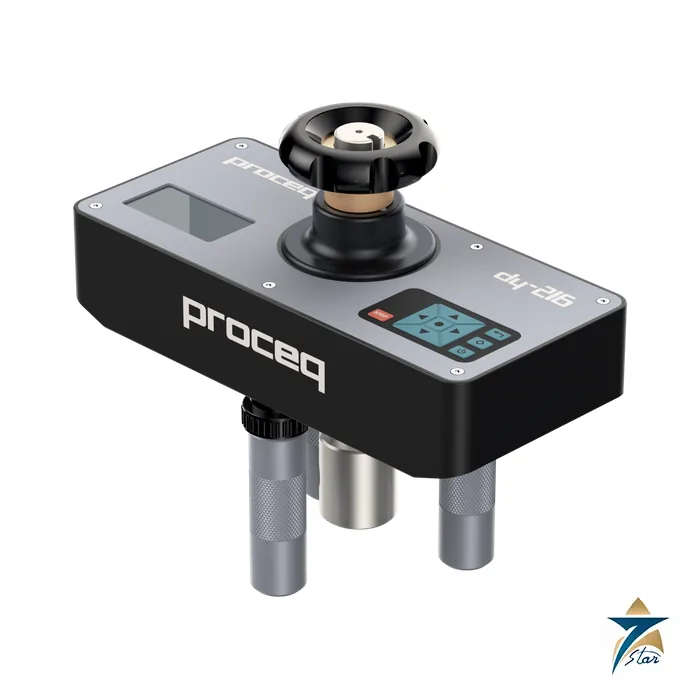
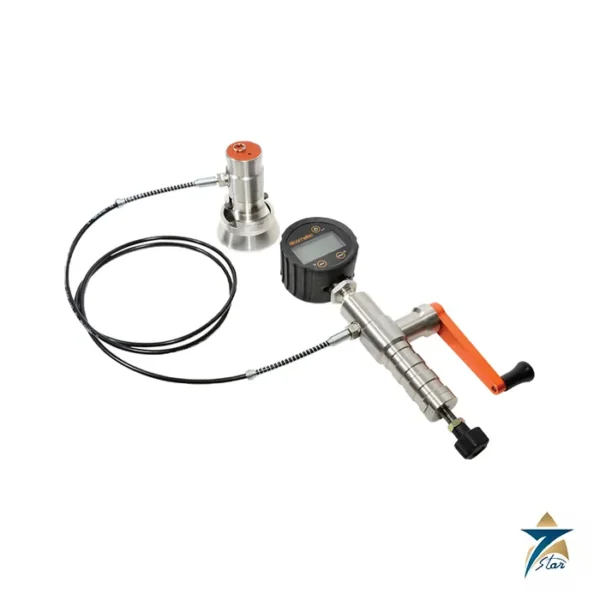
The Proceq DY-216 is an electronic pull-off adhesion tester. A test disc is glued to the surface, the instrument is coupled to the disc through a draw bolt, and a motor pulls at a controlled rate until the bond breaks. The maximum force, the load rate, the test time and the failure mode are stored, so one operator can document the adhesive strength of coatings, tiles, mortar and repair layers.
The DY-2 range has three versions. The DY-206 (6 kN) suits low-strength work, the DY-225 (25 kN) is the model required for ASTM C 1583, and the DY-216 covers most applications with a working range of 1.6 to 16 kN, which is 0.81 to 8.1 MPa on a 50 mm test disc. The manual also recommends the 6 and 16 kN models for elastic surfaces because of their load-rate demands.
What this tester offers
- Controlled load rate with the actual rate shown during the test
- Maximum load, test duration and failure mode stored per test
- Data review on the instrument and complete report in DY-Link software
- Memory for 100 measurements
- Rechargeable battery for at least 80 measurements
- Adapter plate for large test discs and fixing kit for vertical or overhead surfaces
- Supplied with calibration certificate
Technical specifications
| Parameter |
Specification |
| Maximum tensile force |
16 kN (3597 lbf) |
| Working range |
1.6 to 16 kN; 0.81 to 8.1 MPa on a 50 mm disc |
| Maximum pulling speed |
4.65 mm/min (0.183 inch/min) |
| Maximum stroke |
5 mm |
| Calibration |
EN ISO 7500-1 Class 1, +/-1 % from 20 % of maximum force |
| Memory |
100 measurements |
| Battery |
1500 mAh, 3.7 V, at least 80 measurements |
| Charger connection |
USB type A, 5 V, 500 mA |
| Dimensions of housing |
109 x 240 x 205.5 mm |
| Weight |
4.5 kg |
| Operating temperature |
-10 to 50°C |
| Protection |
IP54 |
| Warranty |
24 months electronics, 6 months mechanics |
Ordering code and discs
The ordering section of the 2018 manual gives the part numbers below. Proceq discs use an M10 draw bolt.
| Code position |
Options |
| 346 20 000 |
DY-216 with battery pack, charger and USB cable, aluminium disc 50 mm/M10, draw bolt M10, torx screwdriver, software, instructions, calibration certificate and case |
| Discs |
Steel 50 mm 346 10 500S; aluminium 50 mm 346 10 501S, 20 mm 346 10 502S, 50×50 mm 346 10 503S, 75 mm 346 10 507S, 100 mm 346 10 505S |
| Other parts |
Adapter plate 346 10 530; fixing kit 346 10 550; spare battery pack 346 10 220; M8 and M12 draw bolts 346 10 520 and 346 10 521 |
Installation and operating notes
Roughen and degrease the surface, glue the disc with an adhesive suited to the material, and isolate the test area by partial coring where the standard requires. The manual lists epoxies such as Sikadur and Araldite as typical choices.
Wait for the adhesive to cure, fit the M10 draw bolt, couple the instrument and select the load rate from the standard in force. On perfectly horizontal or vertical surfaces a spirit level helps alignment.
Pre-load by turning the hand wheel until a blinking force above zero appears, then start the test. A nominal load rate applies up to 250 N, after which the programmed rate is held, and the motor winds back after the break. The effective load rate is calculated from 250 N to 80 % of peak load. A blinking load graph means the programmed rate could not be reached, which often points to a deformable substrate. The instrument warns at start-up after 1500 complete test cycles and Proceq recommends yearly service and recalibration.
Standards and typical jobs
Pull-off tests are used for repair mortars, screeds, tile adhesive, waterproofing and protective coatings on concrete. The product page names ASTM C1857, ASTM D4541, ASTM D7234, EN 1015-12, EN 1348, EN 1542 and ISO 4624 among others.
The 16 kN size will not satisfy ASTM C 1583 on its own; that standard calls for the DY-225. General guidance.
The housing measures 109 x 240 x 205.5 mm and the unit weighs 4.5 kg, so it is carried in its case to the test location. Test results are transferred to a PC with the DY-Link software over USB, where the load graph, peak load, test duration and failure mode can be reviewed on the PC.
Information to send with an RFQ for the Proceq DY-216
Please provide these items so we can price the DY-216 correctly.
- Standard set or extra discs of a given size and shape
- Vertical or overhead use, which needs the fixing kit
- Spare battery and adapter plate
- Applicable test standard and load rate
- Calibration certificate and quantity
Related items and documents
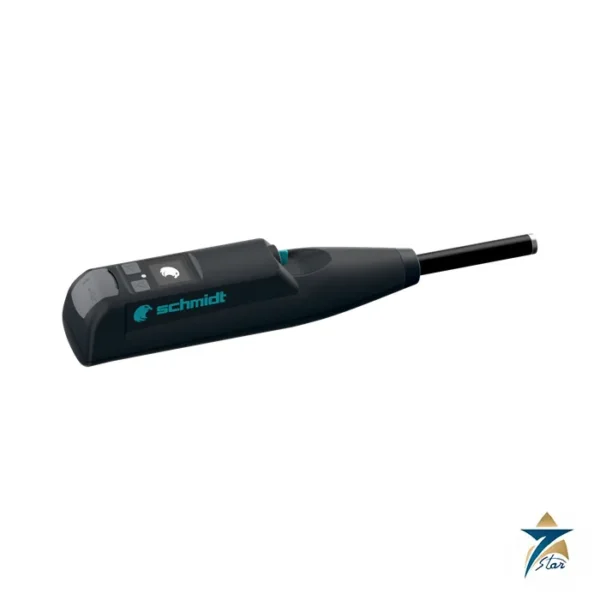
Surface strength can be screened with the Silver Schmidt OS8200 before pull-off tests. Visit the portable test and measurement category for other instruments. The datasheet is linked above. Seven Star LLC answers DY-216 requests when you supply the ordering code and the quantity.
Calibration and field notes
Pull-off testing is used in the region to check the adhesion of protective coatings on steel and concrete, repair mortars, renders, tiles and screeds, and is often part of quality control on infrastructure, marine and oil and gas projects. Prepare the test surface and glue the discs as described in the manual and the applicable standard, and allow the adhesive to cure fully before testing. High temperatures shorten adhesive working time, so plan gluing for cooler hours in summer.
Choose the disc size to match the expected strength and the instrument force, and record the failure mode after each test. Arrange calibration of the instrument at regular intervals.
Clean and store the discs and draw bolts after use, keep spare discs and adhesive at site for larger projects, and store the instrument in its case away from heat and dust.
Record the age of the coating or repair at the time of each test, as adhesion can change with curing time.
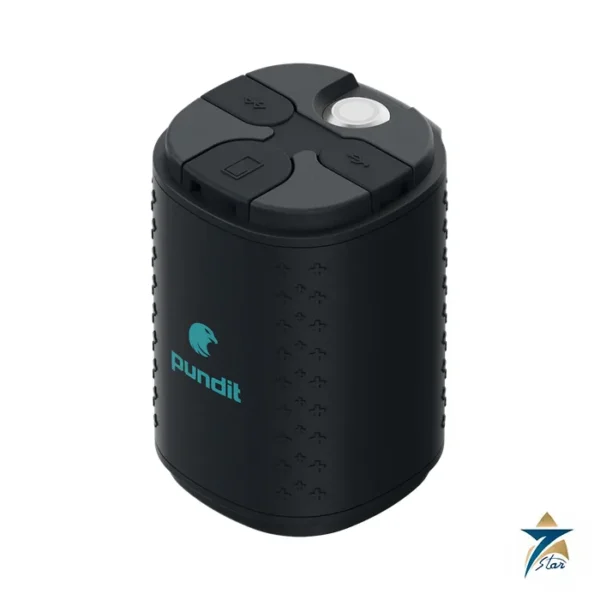
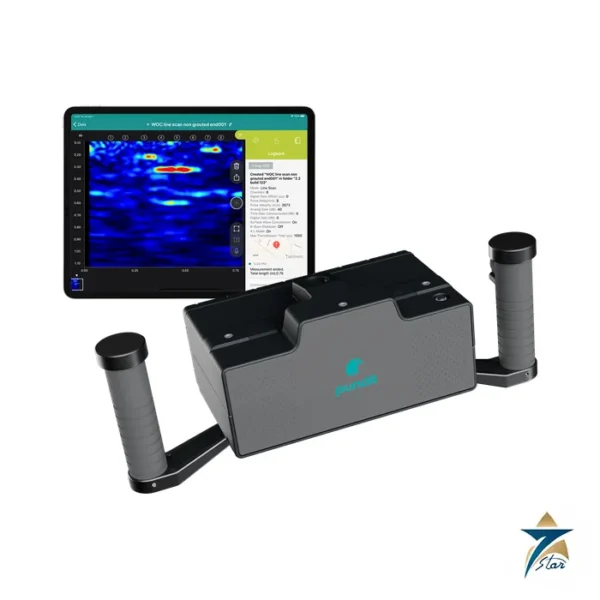
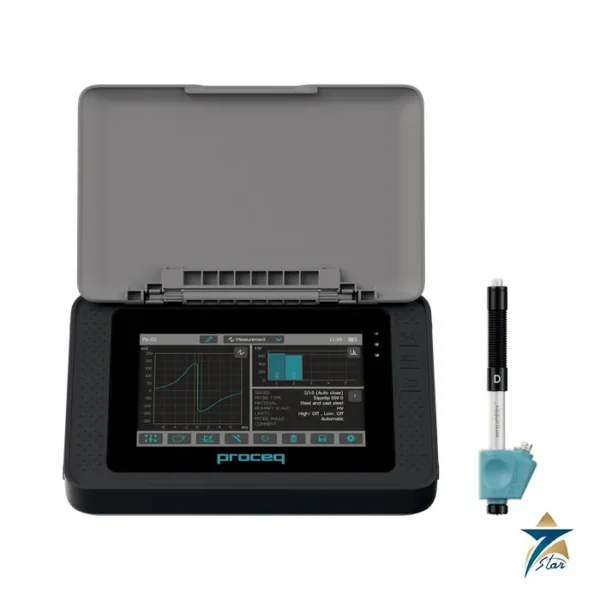
Related Proceq products: Proceq Pundit 200 Ultrasonic Pulse Velocity Tester, Proceq Pundit PD8050 Ultrasonic Pulse Echo Tester, Proceq Equotip 550 UCI Portable Hardness Tester HV1 to HV10, Proceq Equotip Piccolo 2 Pocket Leeb Hardness Tester, Proceq Equotip 550 Leeb Portable Hardness Tester and Proceq Pundit PI8000 Pile Integrity and Impact Echo Tester.


















Reviews
There are no reviews yet.