A multi-channel pulse echo array for imaging inside concrete from one side
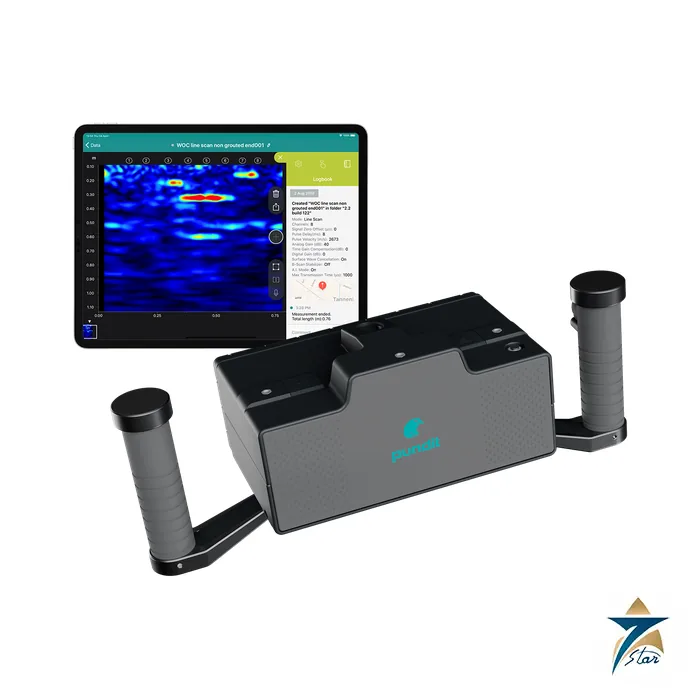
The Pundit PD8050 is a handheld ultrasonic pulse echo instrument for looking inside concrete from a single accessible face. Its sensor carries three rows of eight dry-point transducers, 24 in all, wired as eight channels. One channel transmits while the other seven receive, and each channel takes its turn, so a single press records a set of A-scans that the Pundit Array app on an Apple iPad turns into B-scan, C-scan and heat-map views.
The manual describes the intended uses as void and delamination detection, bonding assessment, thickness measurement, honeycombing detection, fibre concrete, concrete-hit prevention and imaging of closely spaced rebars. The stated measuring range is up to 2 m depending on concrete quality. Two PD8050 units can be joined with a connection kit for 16 channels, which the manual says multiplies the data of a single acquisition by more than four.
Principal characteristics
- 8 channels at 3 cm spacing, expandable to 16
- Line scan, grid scan and full 3D matrix scan
- A-scan with envelope, B-scan, C-scan and heat maps of depth and velocity
- Encrypted Wi-Fi link to an iPad, with a USB-C option for Wi-Fi restricted areas
- Pulse velocity calibration on a known thickness or on the surface
- Cloud logbook, raw data export and report generation
- Pundit Vision post-processing software included with purchase
Technical specifications
| Parameter |
Specification |
| Technology |
Multi-channel ultrasonic pulse echo, dry point contact |
| Channels |
8 (16 with a second unit and connection kit) |
| Channel spacing |
3 cm |
| Bandwidth (manual) |
20 to 80 kHz |
| Measuring resolution (manual) |
1 us |
| Pulse voltage |
+/-50 to +/-150 V (UPE) |
| Receiver gain |
1 to 10000 (0 to 80 dB) |
| Measuring range |
Up to 2 m (6.6 ft), depending on concrete quality |
| Measurement modes |
Line scan, grid scan, full 3D matrix scan |
| Display unit |
Compatible Apple iPad running the Pundit Array app |
| Connections |
Encrypted Wi-Fi; USB port for Wi-Fi module; USB-C |
| Battery |
Pack of 6 x AA NiMH, flight-safe |
| Operating temperature |
-10 to 50°C |
Handle options and 16-channel parts
The manual lists these part numbers for the sensor and its expansion options; the iPad is not supplied.
| Code position |
Options |
| 32540500 |
PD8050 with dual handle, supplied as standard; also the transducer for 16-channel use |
| 32540455 |
Single-handle kit accessory for the single-handle configuration |
| 32540434 |
Connection kit to 16 channels |
| 32550001 |
Dual handle kit (normally not needed as the dual handle is now standard) |
Installation and operating notes
Register an Eagle ID to use the Pundit Array app. Check that firmware and app are current, because the manual notes that functions can change with each update.
Calibrate the pulse velocity in the concrete under test, from the thickness of the member using one or two back-wall echoes or from the surface wave. The manual stresses that velocity should be calibrated in each specific element.
For deep members the manual recommends the 16-channel set-up. Switching between 8 and 16 channels is done on site by connecting the second sensor as shown in the quick start guide. With 16 channels one acquisition yields 120 signals (15 x 16 / 2) against 28 with eight channels, which is why the manual says the data volume rises by more than four times.
Typical inspection tasks
Pulse echo arrays are used on slabs, walls, tunnel linings and bridge decks to find voids, delaminations and the position of the back wall. Where only one face is reachable, a transmission instrument cannot be used and this one can.
Results depend on aggregate, reinforcement density and moisture, and interpretation should be done by a trained inspector. General guidance only.
The instrument links to the tablet over an encrypted Wi-Fi connection through a USB Wi-Fi module, with a USB-C option for Wi-Fi restricted areas, and the manual advises keeping firmware and app updated. Data can be reviewed on site, shared by URL and exported as raw data or HTML, and Pundit Vision allows further post-processing on a computer.
Information to send with an RFQ for the Proceq PD8050
To prepare a clear quotation for the PD8050 please tell us:
- 8-channel set or 16-channel combination
- Dual or single handle
- Whether an iPad is needed for the project
- Training or software requirements
- Calibration or service documents needed
Related items and documents
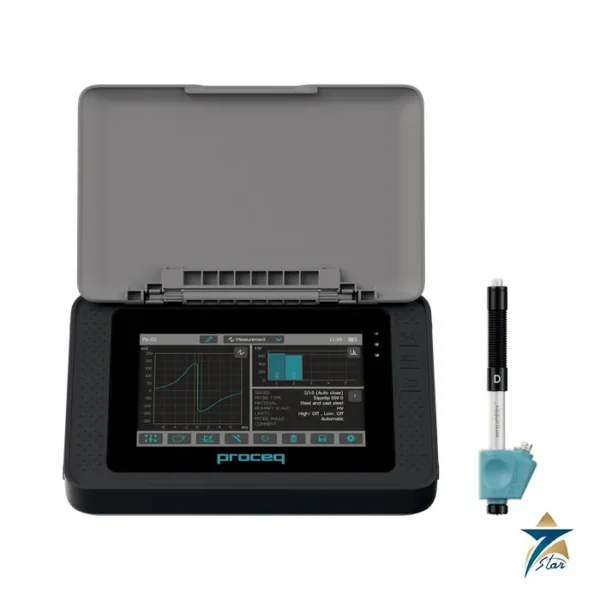
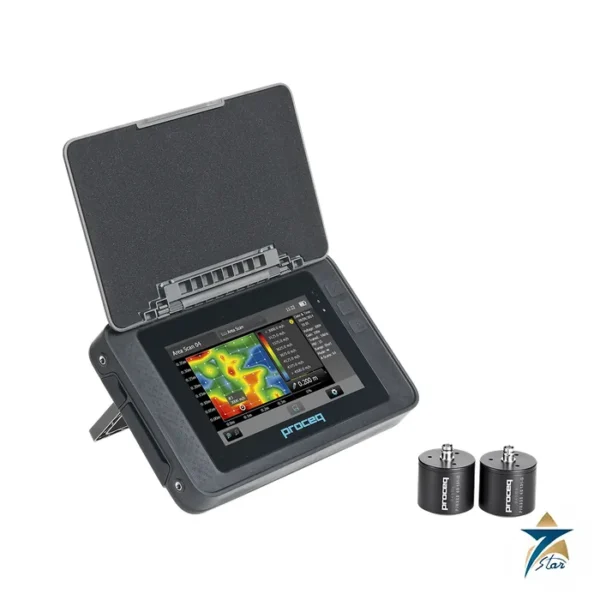
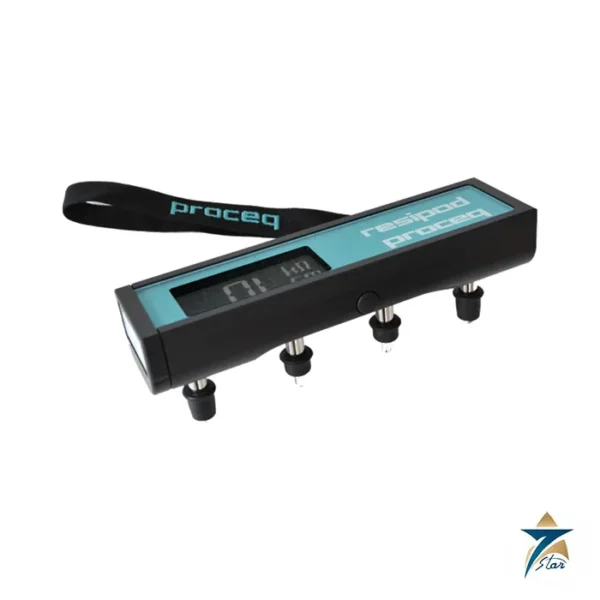
Other Proceq test methods for the same structures include the Pundit PI8000. Compare other devices through the portable test and measurement category. Datasheet included. Seven Star LLC responds to enquiries for PD8050 once the model and accessory list are confirmed.
Calibration and field notes
Pulse echo imaging is used in the region to locate voids, honeycombing and delaminations in concrete, to measure the thickness of slabs and walls from one side, and to inspect tunnels, bridges, car parks and marine structures. The results depend on good contact between the dry-point transducers and the surface, so remove loose material and hold the probe firmly as described in the manual. Plan the scan grid before starting.
Check the instrument at regular intervals as described in the manual, and keep it out of direct sun in summer.
Record the scan positions and settings used, so later surveys can be compared directly, and confirm important findings by coring or other methods where needed. Store the instrument in its case, away from heat and dust.
Frequently asked questions
How many channels does the PD8050 have?
Eight channels in one unit, or 16 when two units are joined with the connection kit.
What is the range?
Up to 2 m, depending on concrete quality.
What display does it use?
A compatible Apple iPad running the Pundit Array app; the iPad is not part of the instrument.
Which scan modes are listed in the manual?
Line scan, grid scan and full 3D matrix scan.
Is the manual and web data identical?
Not entirely; the 2024 manual lists a bandwidth of 20 to 80 kHz and 1 us resolution, so this page follows the manual.










Reviews
There are no reviews yet.