Pulsed DC holiday detection for damp, dirty or slightly conductive coatings
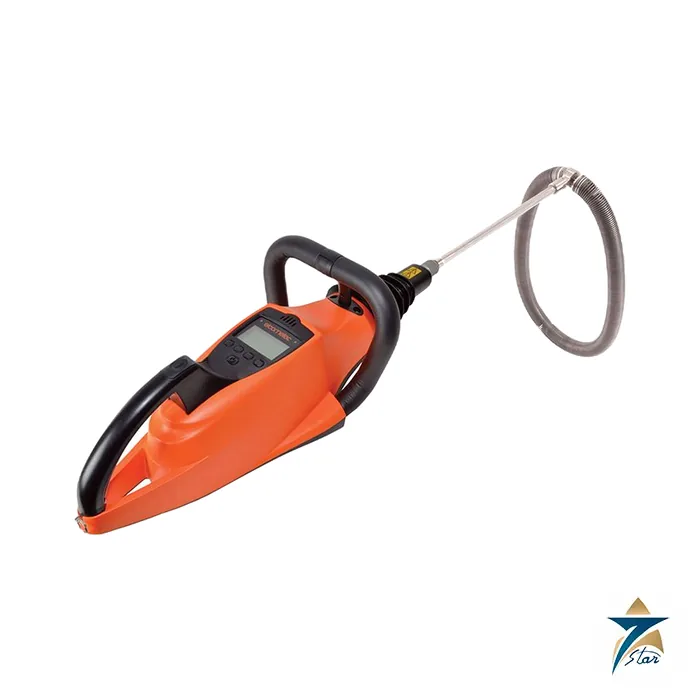
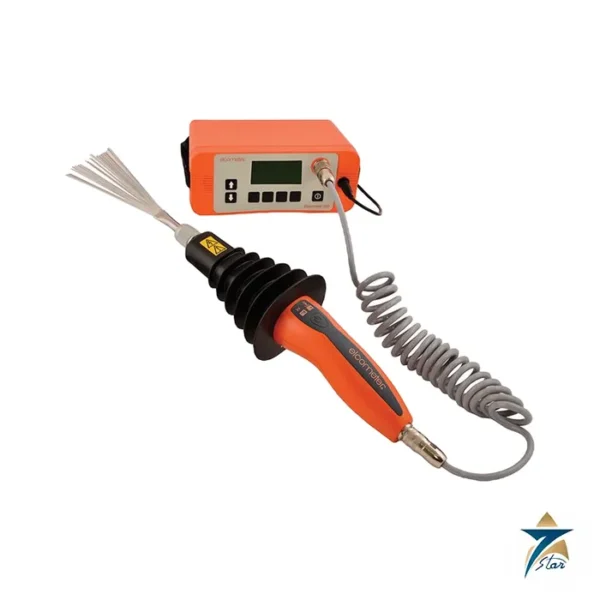
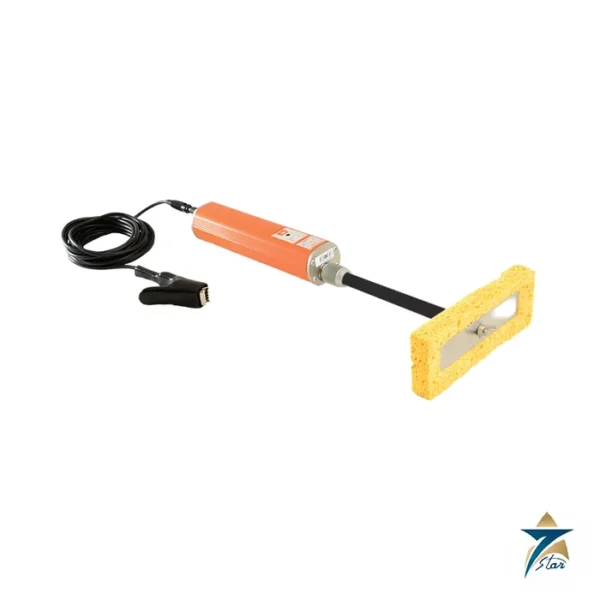
The Elcometer 280 is a stick-type pulsed DC holiday detector. Elcometer states that it allows users to inspect coatings without connecting the earth return lead to the component substrate, which suits large surfaces and pipelines, and that the pulsed DC technique can detect holidays even when the coating is damp, dirty or slightly conductive. The user-selectable range is 0.5 to 35 kV for porosity in coatings up to 25 mm (1 in) thick. A two-stage safety system, a safety trigger inside the handle that cuts power if released, bright LEDs and screen icons show when the high voltage is on.
Technical specifications
| Parameter |
Specification |
| Pulsed DC high voltage range |
0.5 to 35 kV |
| Voltage adjustment |
0.5 to 1 kV in 10 V steps; 1 to 35 kV in 100 V steps |
| High voltage output accuracy |
+/-5 % or +/-50 V below 1000 V |
| Pulse repetition rate |
About 30 Hz |
| Coating thickness |
Up to 25 mm (1 in) |
| Operating temperature |
0 to 50 C (32 to 120 F) |
| Power |
Rechargeable battery pack, fully charged within 4 hours; quick-release pack |
| Typical battery life |
12 in (DN305) rolling spring: 30 h at 10 kV, 12 h at 35 kV; 40 in (DN1016) rolling spring: 22 h at 10 kV, 8 h at 35 kV |
| Case dimensions |
PC ABS case, 603 x 219 x 193 mm (23.7 x 8.6 x 7.6 in) |
| Weight |
3.0 kg (6.6 lb) with battery pack, no probes attached |
| Standards listed |
AS 3894.1, ANSI/AWWA C203, ANSI/AWWA C214, ASTM D4787, ASTM D5162, ISO 2746, ISO 29601, JIS G 3491, JIS G 3492, NACE SP0188, NACE SP0490, NACE TM0186, NACE TM0384 and others as printed |
Models and kits
| Part number |
Version |
Notes |
| D280-S—- |
Model S |
Gauge only |
| D280-T—- |
Model T |
Gauge only |
| D280-S-KIT |
Model S kit |
Gauge in wheeled transit case with probe extension shaft |
| D280-T-KIT |
Model T kit |
Two battery packs, stainless steel rolling spring holder, extension shaft, wheeled transit case |
The datasheet lists an integrated voltage calculator that sets the correct voltage from the coating thickness value (check which model carries it when ordering), and an internal jeep tester checks that the selected voltage equals the test voltage. Controls include large waterproof buttons usable with gloves, a separate high-voltage ON/OFF button, a rubberised second hand grip, a shoulder harness point and extended ribbing designed to standard EN 61010. The standard packing list includes a 5 m (16 ft) trailing signal return lead, battery pack, charger with UK, EU, US and AU plugs and shoulder strap.
Probes and selection
Probes are ordered separately: band brushes, right-angled wire brushes, external C-type wire brushes, internal circular pipe brushes, right-angled rubber probes and rolling springs. Grounding mats for ungrounded pipes are listed in lengths for pipe up to 9, 18, 30 and 42 in NPS. Choose the voltage from the coating thickness and the standard that governs the job, and confirm whether Model T features are needed. For a continuous-DC alternative see the high-voltage Elcometer 266; related instruments are listed under Portable Test and Measurement.
How the Elcometer 280 works
A holiday detector looks for pinholes and thin spots in a coating on a conductive surface. The unit makes a pulsed high-voltage DC signal at the probe. When the probe passes over a flaw, the voltage can jump through the gap to the metal under the coating, and the detector gives an alarm. With the pulsed DC method, the earth return lead need not be attached to the metal, which saves time on pipelines and large tanks. The method also works on coatings that are damp, dirty or slightly conductive.
Where the Elcometer 280 is used
- Coated pipelines and pipe sections
- Storage tanks and vessels with linings
- Ship hulls and offshore structures
- Concrete and steel water infrastructure
- Inspection of coatings to standards such as NACE and ASTM
Selection checklist for the Elcometer 280
- Coating thickness, up to 25 mm
- Test voltage, from 0.5 to 35 kV
- Model S or Model T
- Gauge only or the kit with a transit case
- Number of battery packs
- Probe type and the rolling spring size
- Standard used for the inspection
- Operating temperature of 0 to 50 degrees C
Installation, commissioning and maintenance notes
Charge the battery pack fully before the shift, which takes about 4 hours. Set the test voltage from the coating thickness and the standard in use, using the voltage calculator where fitted. Check the unit on a known flaw before starting the work. Hold the safety trigger while testing, and keep other people clear of the probe. Clean the probe after use, and keep the case dry and the leads in good condition.
Requesting a quotation for the Elcometer 280
Please send the model, the kit type, the probe size and the test standard needed. Seven Star LLC serves industrial customers in Oman and the GCC and replies with a quotation based on the information provided.
Elcometer 280 voltage control
The voltage steps are 10 V from 0.5 to 1 kV and 100 V from 1 to 35 kV. The accuracy is 5 percent or 50 V below 1000 V.
Elcometer 280 safety
A trigger inside the handle cuts the power if it is released, and LEDs and screen icons show when the high voltage is on.
Elcometer 280 battery life
With a 12 inch rolling spring the battery lasts about 30 hours at 10 kV and 12 hours at 35 kV.
Elcometer 280 case and weight
The PC ABS case measures 603 x 219 x 193 mm and the unit weighs 3.0 kg with the battery.
Inspection records for Elcometer 280
Keep the test voltage, the standard and the location of every flaw found with the coating inspection report.
Choosing the right Elcometer 280 kit
The gauge-only version suits teams that already have probes and a case. The kit versions add a wheeled case, an extension shaft and a stainless steel rolling spring holder, which helps on long pipe runs and large surfaces.
Documents and quotation
The attached Elcometer pinhole and porosity detection catalogue includes the 280 specification table and probe accessories. Send the coating type and thickness, the test standard, the pipe diameter or surface and the probe type, and confirm Model S or T and the differences between them, kit or gauge only, and any calibration certificate requirement before ordering.









Reviews
There are no reviews yet.