Brand:

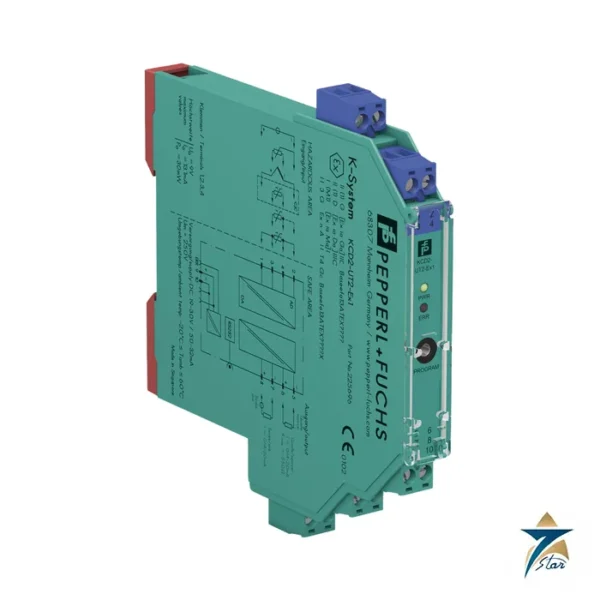
Pepperl+Fuchs KFA6-DU-Ex1.D Timer Relay 230 V AC

Description

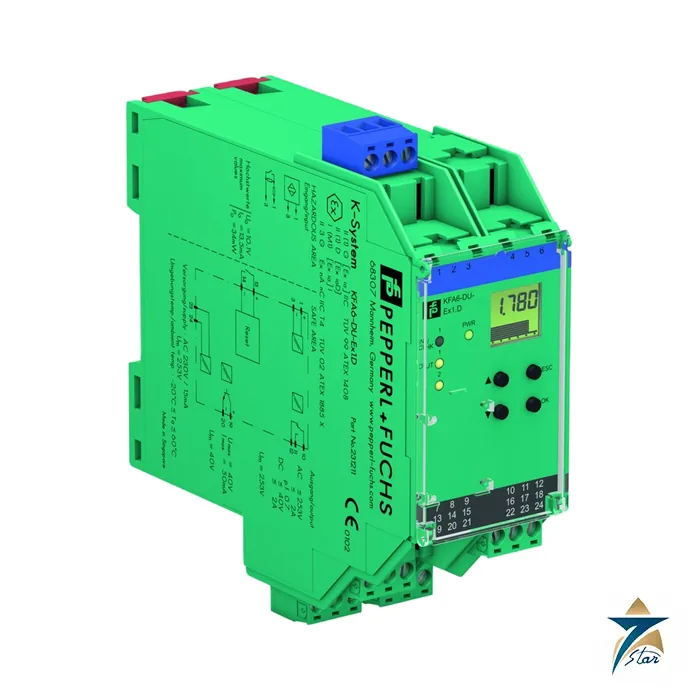
Mains-powered timer: KFA6-DU-Ex1.D

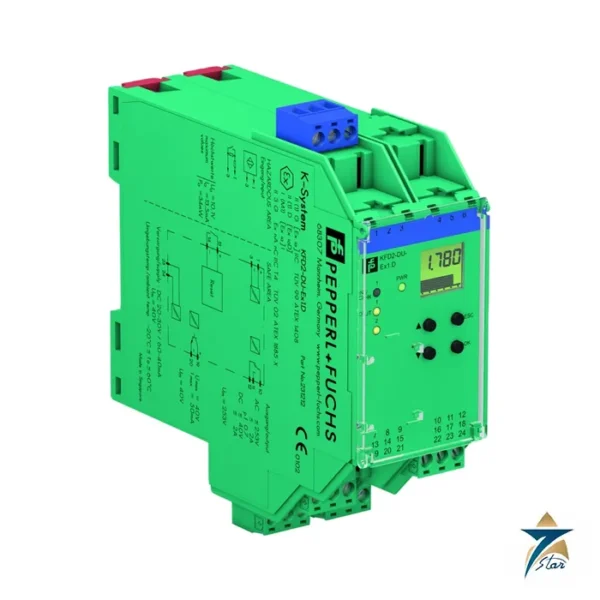
Where a cabinet has 230 V AC but no 24 V DC distribution, the Pepperl+Fuchs KFA6-DU-Ex1.D supplies the same keypad-programmed timing logic as its DC sibling, directly from the mains. The module sits between an intrinsically safe NAMUR sensor or dry contact and the control side, converting the field signal into a relay switch and a short-circuit-proof electronic output that can be delayed, stretched, triggered once or divided.

Rated current from the mains is 15 mA and consumption is 4 VA, so even a long row of modules places a modest load on a lighting-type circuit.

Capabilities in brief

  • Supply 230 V AC plus or minus 10 percent on terminals 23 and 24
  • Timer functions from 10 ms to 60 minutes: on-delay, off-delay, one-shot, pulse lengthening
  • Pulse divider from 1:1 up to 9999:1, input pulses up to 1 kHz before division, input frequency 0 to 80 Hz
  • Relay on terminals 10-11-12 and electronic output on 19+ and 20-
  • Reset input with 12 V open-circuit voltage and 3.5 mA short-circuit current

Data for KFA6-DU-Ex1.D

Parameter Value
Rated voltage 230 V AC plus or minus 10 percent
Rated current / power 15 mA / 4 VA
Maximum safe voltage Um 253 V AC
Input I NAMUR to EN 60947-5-6; 8.2 V / 10 mA; switching point 1.2 to 2.1 mA
Reset input II active above 3 mA, passive below 1.5 mA, pulse at least 10 ms
Line fault limits breakage 0.15 mA or less; short circuit above 6.5 mA
Relay output 253 V AC / 2 A / cos phi 0.7 or better; 40 V DC / 2 A; 5 x 10 to the power 7 cycles
Output II 40 V, 50 mA, isolated electronic, 1-signal about L+ minus 2.5 V
Timing accuracy 2 ms; resolution better than 0.1 percent of setting
Insulation reinforced, 300 Veff, between input, outputs, supply and reset
Approvals TUV 99 ATEX 1408, TUV 02 ATEX 1885 X, IECEx TUN 03.0000, FM 16-538FM-12, UL E223772
Mechanical 40 x 119 x 115 mm, type C2, about 300 g, IP20, -20 to 60 degrees C

What separates KFA6-DU-Ex1.D from KFD2-DU-Ex1.D

The electrical interface is where the two diverge. The AC build has no Power Rail, no collective error output and a different reset circuit (12 V, 3.5 mA, active above 3 mA) while the DC version uses 18 V, 5 mA with an active threshold above 4 mA. Insulation also differs: on the AC module, output II is reinforced-isolated from the supply, whereas on the DC module only basic insulation with 50 Veff is quoted. Both modules share the housing, the keypad and the time ranges.

Field situations

Water treatment plants with older MCC rooms, tank farms with 230 V instrument panels and small compressor skids frequently rely on AC auxiliaries. A typical use is delaying the alarm output of a vibration or level contact by a few seconds so that waves in a tank do not trigger a nuisance alarm.

Wiring and earthing

Mains terminals 23 and 24 must be fed via a suitably rated fuse and disconnect. Route the intrinsically safe pair from terminals 1+ and 3- in a separate duct, labelled as blue-coded intrinsically safe cabling. Observe the permitted cable parameters against Uo 10.1 V, Io 13.5 mA and Po 34 mW.

Periodic checks

Verify delays and divider ratios during turnarounds with a pulse generator. Replace the unit if the display or keypad no longer responds, then reprogram it from the stored loop sheet.

Replacement and ordering

When replacing an older timer, check the mains voltage on site, since KFA6-DU-Ex1.D is built only for 230 V AC. Matching units for 115 V AC and 24 V DC exist under different part numbers, and mixing them up leads to an unpowered or damaged module.

Planning for spares

Plants running many timed alarm channels usually keep one programmed spare of each supply variant, labelled with its settings. The unit is 40 mm wide, so spares occupy little shelf space and can be fitted in minutes.

Choosing time functions sensibly

On-delay suits signals that must persist before being accepted, such as a pressure contact that bounces during pump start. Off-delay holds an alarm after the contact releases, useful when a downstream logic card samples slowly. One-shot generates a fixed pulse regardless of how long the input stays active, which prevents a stuck contact from keeping a counter input high. Pulse lengthening guarantees a minimum output width. The divider is the right tool when a flow or rotation pulse train would otherwise flood a PLC counter. Always test the chosen function with the real sensor, because a contact that bounces longer than the minimum pulse duration of 75 microseconds or 1 ms in the slower mode will be seen as several pulses.

Document the behaviour in operator language, for example that the alarm lamp lights five seconds after the level switch closes, so that shift crews understand the delay and do not assume a fault.

Compatibility with field devices

Any simple apparatus contact or a NAMUR proximity sensor to EN 60947-5-6 can be connected. The sensor circuit needs the resistor combination of 400 ohm to 2 kilohm drawn in the connection diagram when a dry contact is used, so that line-fault detection can distinguish open and short states. Sensors with entity values that accept Uo 10.1 V, Io 13.5 mA and Po 34 mW are suitable; confirm the maximum permissible external capacitance and inductance from the certificate for the gas group present.

Questions buyers ask about KFA6-DU-Ex1.D

What mains voltage does KFA6-DU-Ex1.D require? It is designed for 230 V AC plus or minus 10 percent, with a rated current of 15 mA and 4 VA consumption.

Does KFA6-DU-Ex1.D have the same timer range as KFD2-DU-Ex1.D? Yes. Both provide timer functions from 10 ms to 60 minutes and a pulse divider of 1:1 to 9999:1.

Can KFA6-DU-Ex1.D be fed from a Power Rail? No. It is supplied from mains on terminals 23 and 24, and the datasheet lists no Power Rail or collective error output for this version.

What outputs are available on KFA6-DU-Ex1.D? A relay on terminals 10, 11 and 12 and an isolated electronic output on terminals 19+ and 20- rated 40 V and 50 mA.

What intrinsically safe values apply to the input of KFA6-DU-Ex1.D? Terminals 1+ and 3- are Ex ia with Uo 10.1 V, Io 13.5 mA and Po 34 mW.

Documents and quotation

The manufacturer datasheet for KFA6-DU-Ex1.D accompanies this listing as a PDF so your engineers can verify terminals, ratings and approvals before purchase. State the mains voltage at your site in the enquiry. To request a quotation, send the RFQ with the exact part number KFA6-DU-Ex1.D, the quantity, the delivery location in Oman or the GCC and any project reference. Seven Star LLC is an independent supplier serving Oman and the GCC and is not affiliated with the manufacturer.

Other Models in the Du Timer Range

Seven Star LLC supplies models from the Du Timer range in Oman and the GCC. Compare the related models below and request a quote for the one that matches your application.

ModelCategory
Pepperl+Fuchs KFA5-DU-Ex1.D Timer Relay 115 V ACIsolator & BarrierView details
Pepperl+Fuchs KFD2-DU-Ex1.D Timer Relay Switch AmplifierIsolator & BarrierView details
Pepperl+Fuchs KFA6-DU-Ex1.D Timer Relay 230 V ACIsolator & BarrierYou are viewing this model
Datasheets & Documents
  • PDF Datasheet Pepperl+Fuchs KFA6-DU-Ex1.D Timer Relay 230 V AC Datasheet Download
Reviews (0)

Reviews

There are no reviews yet.

How would you rate this product?

It takes about 10 seconds — just tap a star. Your email is never published.

About brand

Pepperl+Fuchs is a German manufacturer of industrial sensors and explosion protection equipment, founded in 1945 in Mannheim by Walter Pepperl and Ludwig Fuchs as a radio repair shop. Defective transformers led them into manufacturing, and the company developed its first proximity switch in the late 1950s. Pepperl+Fuchs is headquartered in Mannheim and is a pioneer of intrinsically safe electrical equipment for hazardous areas.

Seven Star LLC lists Pepperl+Fuchs sensors, isolated barriers, power supplies and hazardous-area mobile devices, and supplies them to instrument and automation teams in Oman by exact model designation.

Pepperl+Fuchs company profile

Founded 1945, Mannheim-Sandhofen, Germany, by Walter Pepperl and Ludwig Fuchs
Headquarters Mannheim, Germany
Ownership Privately owned (Pepperl+Fuchs SE)
Origins Radio repair workshop that began making replacement transformers
Product families Inductive, capacitive, ultrasonic and photoelectric sensors, rotary encoders, R2000 LiDAR scanners, KFD and HiC isolated barriers, Zener barriers, remote I/O, purge and pressurization systems, Ex-rated enclosures

Milestones

  • 1945: Walter Pepperl and Ludwig Fuchs open their radio repair shop in Mannheim.
  • 1958: The first proximity switch is developed (some company sources say 1959).

Pepperl+Fuchs product families on this page

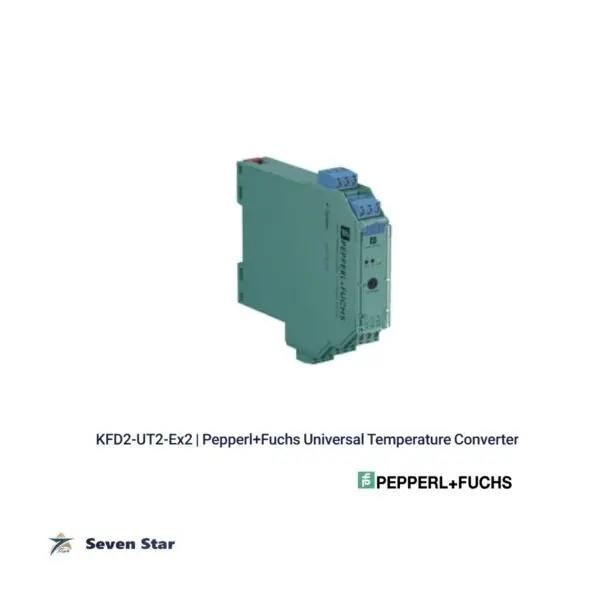
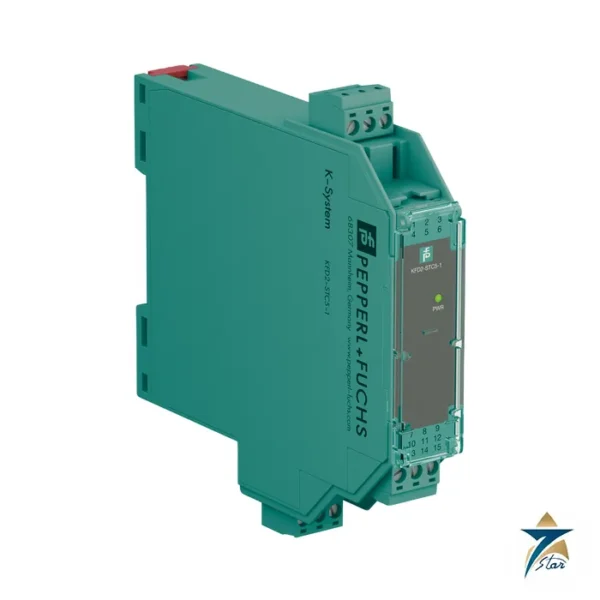
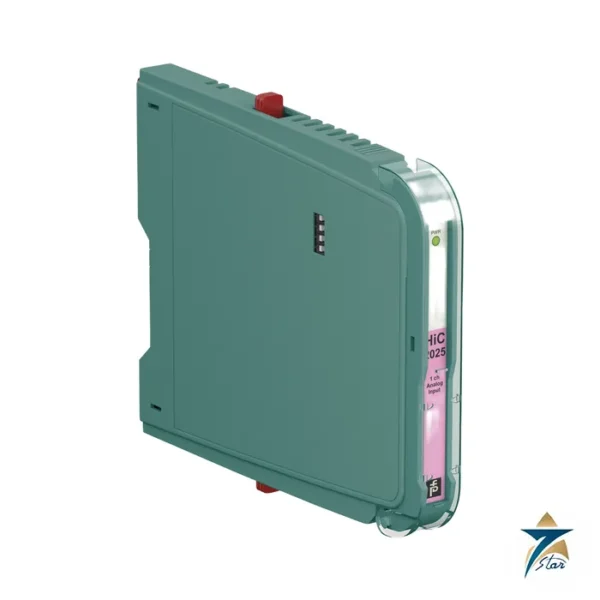
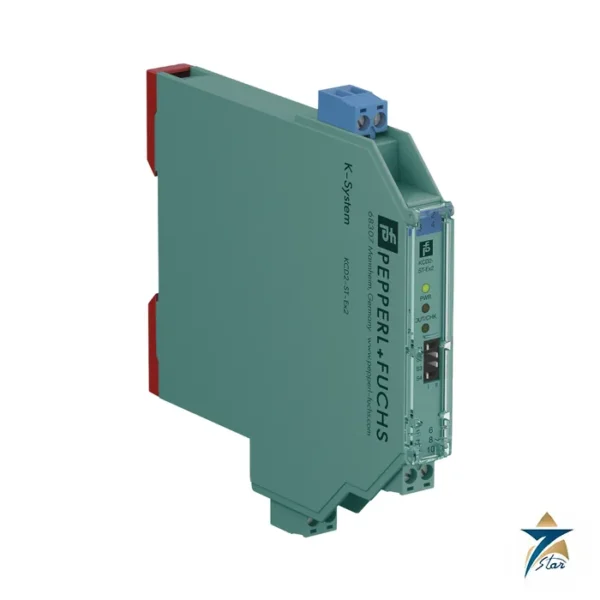
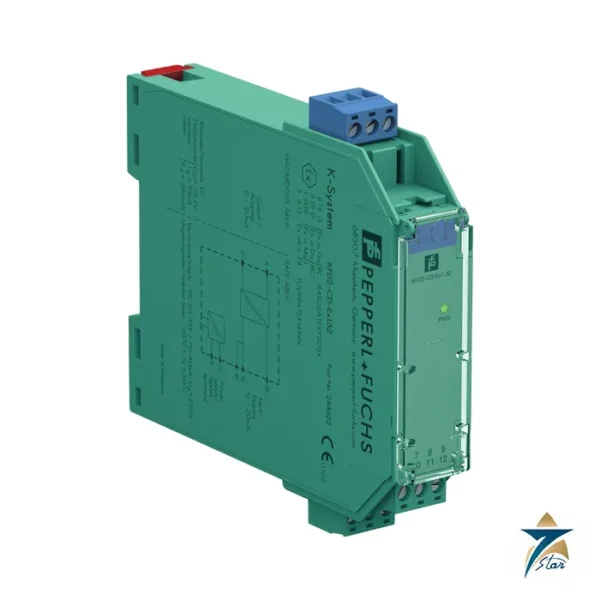
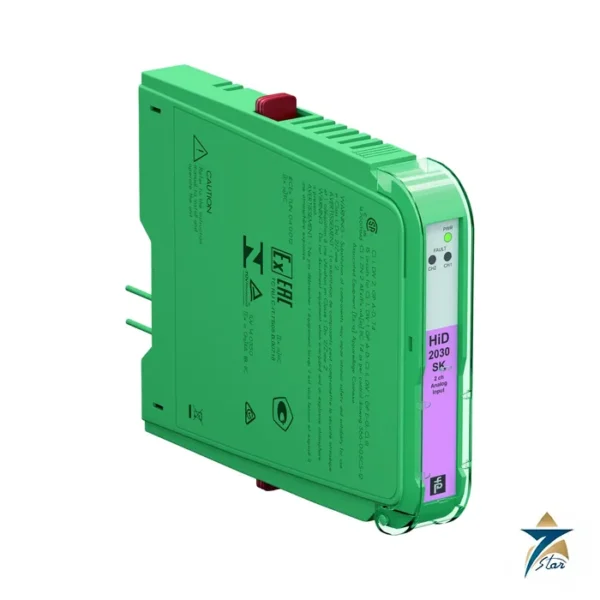
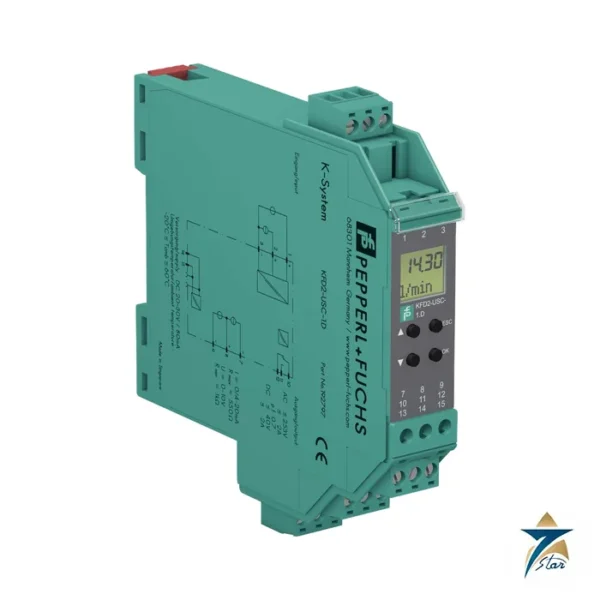
On the interface side there are two systems. The K-System mounts on DIN rail and is represented here by the KFD2-UT2-Ex2 universal temperature converter. The H-System plugs into termination boards and is represented by the HiD2030 SMART transmitter power supply with HART. The PS1000-A6-24.20 is a 24 VDC, 20 A power supply for cabinets. Sensors listed include the NJ2-12GK-SN NAMUR inductive sensor, the R101 retro-reflective photoelectric sensor and the R2000 2-D LiDAR scanner. For field staff there are the Tab-Ex 05 DZ1 tablet for Zone 1/21 areas and the Smart-Ex 03 DZ2 smartphone for Zone 2/22 and Division 2 areas.

Where Pepperl+Fuchs equipment is used

Isolated barriers sit between field instruments in Zone 0 or Zone 1 and the DCS or safety system in refineries, gas plants and chemical works. NAMUR sensors report valve position and machine states in classified areas. Photoelectric sensors and LiDAR scanners work in conveying, packaging, warehousing and vehicle guidance. Ex-rated tablets and phones are carried on operator rounds and maintenance jobs.

Pepperl+Fuchs products we list

Family Examples
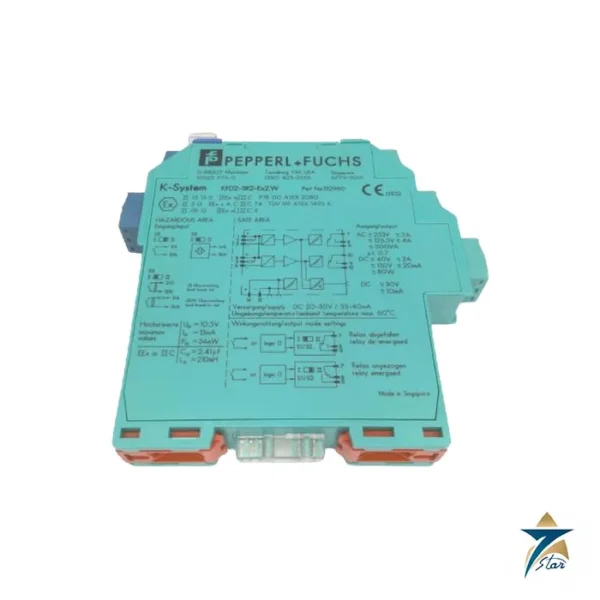
Isolator & Barrier HiD2030 SMART Transmitter Power Supply w…, KFD2-SR2-Ex2.W K-System Isolated Switch…, KFD2-UT2-Ex2 Universal Temperature Conve…
Industrial Computers Tab-Ex 05 DZ1 WWAN Hazardous Area Tablet, Smart-Ex® 03 DZ2 smartphone for Zone 2/2…
Inductive Proximity Sensors NJ2-12GK-SN NAMUR Inductive Sensor
Power Modules PS1000-A6-24.20 Power Supply 24 VDC 20 A
Photoelectric Sensors R101 Retro-Reflective Photoelectric Sensor
Laser Distance, LiDAR & Radar Sensors R2000 2-D LiDAR Laser Scanner

Ordering Pepperl+Fuchs parts: what we need

Send the complete model designation as printed on the device, including every suffix; a single letter can change the supply voltage or the output type. Add the part number if the label shows one. For barriers, tell us the field device and signal type, the number of channels and whether the safety loop needs a SIL-assessed module. For mobile devices, state the zone or division and the regional radio version.

Facts checked against Pepperl+Fuchs's own chronicle pages, October 2026.

FAQ

Questions about the Pepperl+Fuchs KFA6-DU-Ex1.D Timer Relay 230 V AC

Answers from our engineering team on installation, compatibility and integration.

01What mains voltage does KFA6-DU-Ex1.D require?
It is designed for 230 V AC plus or minus 10 percent, with a rated current of 15 mA and 4 VA consumption.
02Does KFA6-DU-Ex1.D have the same timer range as KFD2-DU-Ex1.D?
Yes. Both provide timer functions from 10 ms to 60 minutes and a pulse divider of 1:1 to 9999:1.
03Can KFA6-DU-Ex1.D be fed from a Power Rail?
No. It is supplied from mains on terminals 23 and 24, and the datasheet lists no Power Rail or collective error output for this version.
04What outputs are available on KFA6-DU-Ex1.D?
A relay on terminals 10, 11 and 12 and an isolated electronic output on terminals 19+ and 20- rated 40 V and 50 mA.
05What intrinsically safe values apply to the input of KFA6-DU-Ex1.D?
Terminals 1+ and 3- are Ex ia with Uo 10.1 V, Io 13.5 mA and Po 34 mW.