E2E-X5E1 2M inductive proximity sensor: what the code means
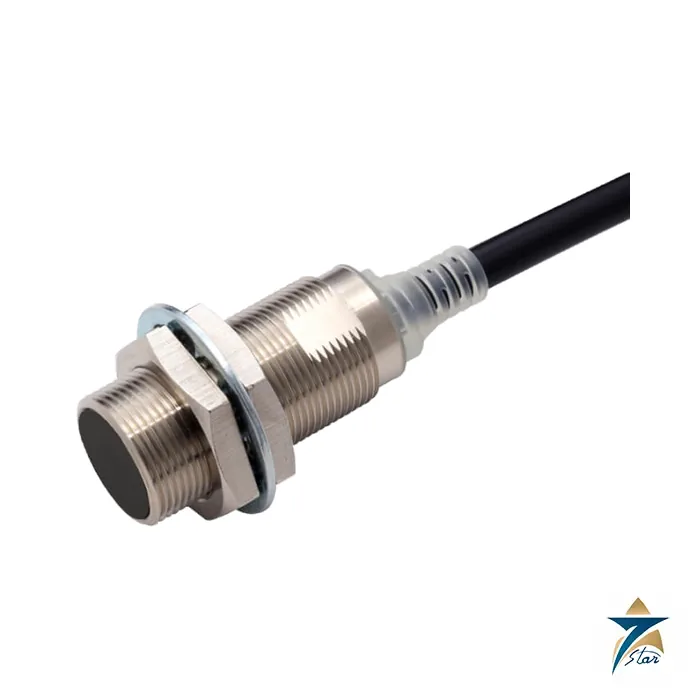
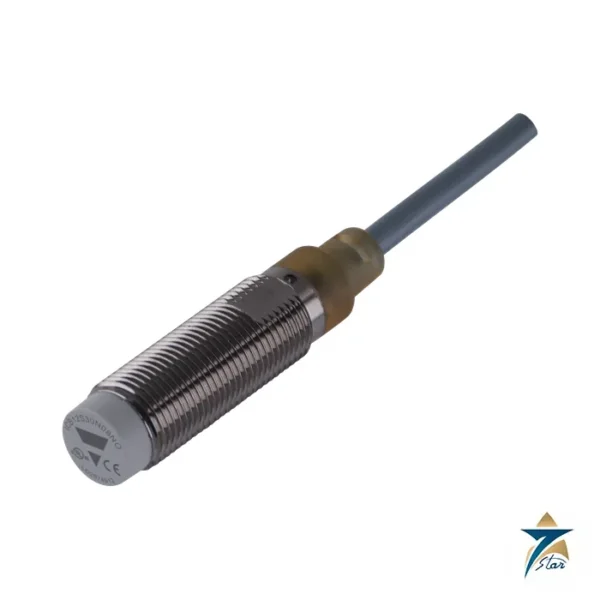
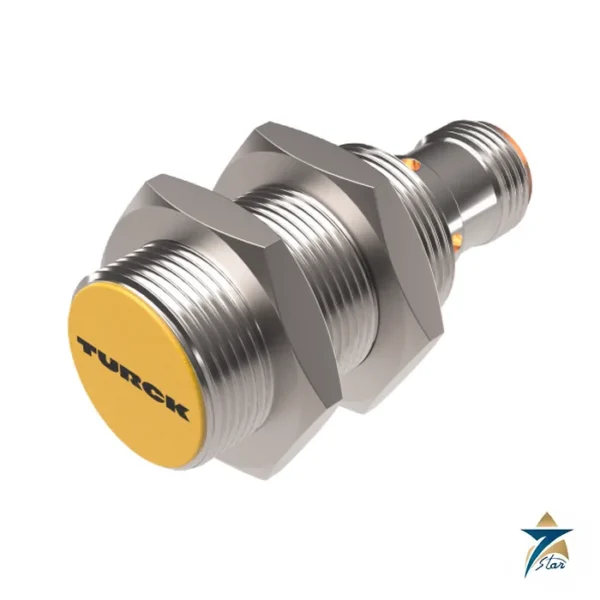
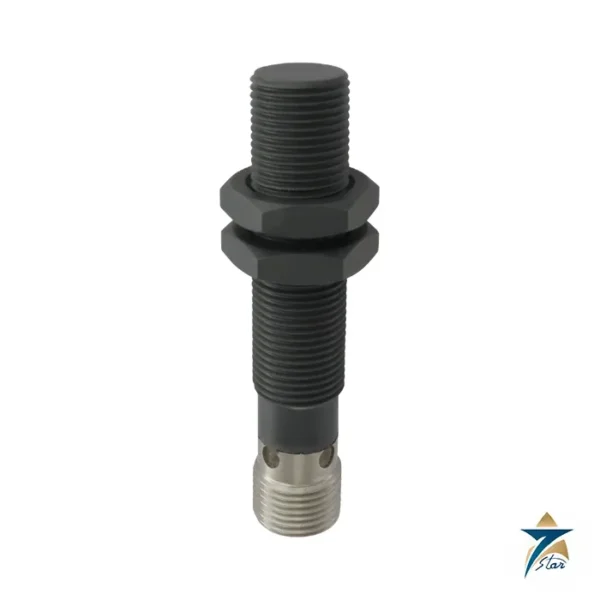
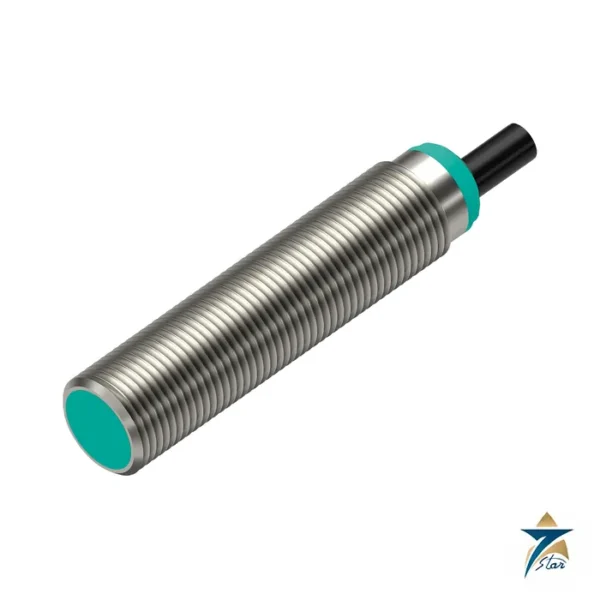
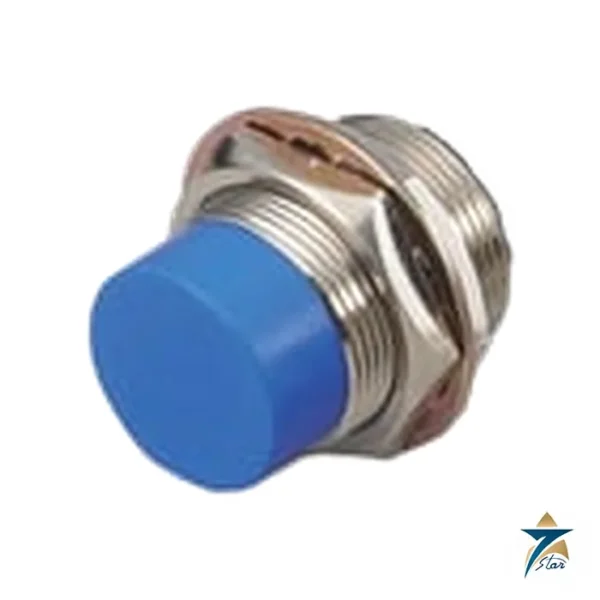
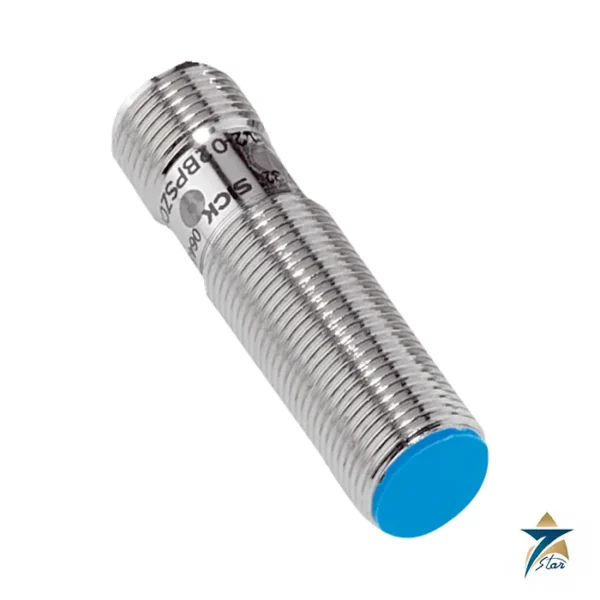
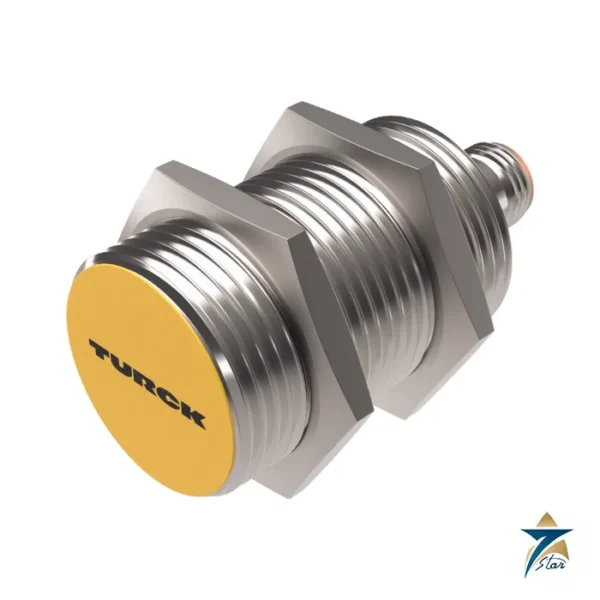
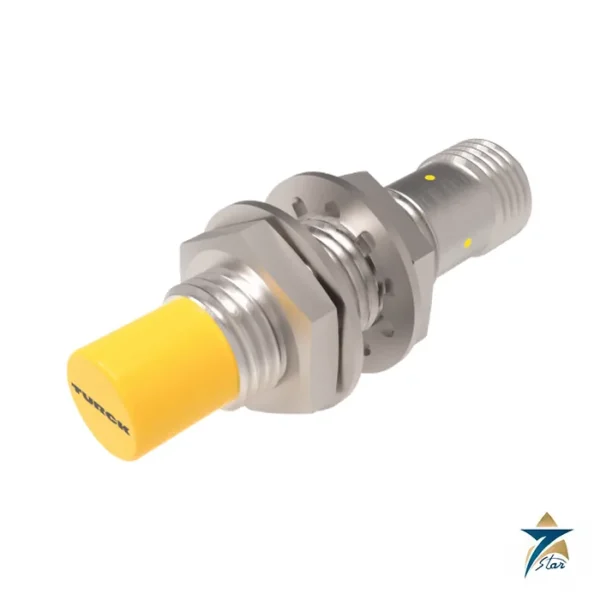
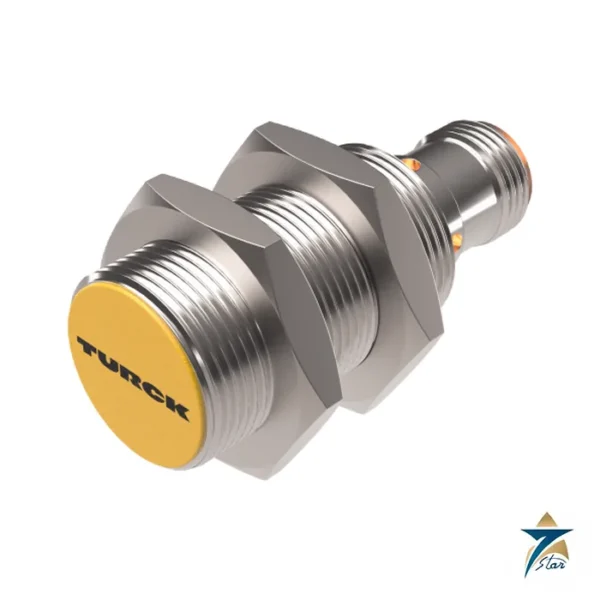
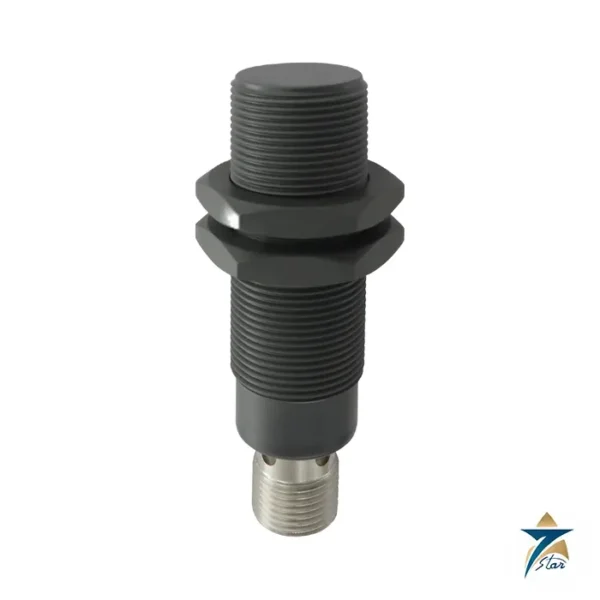
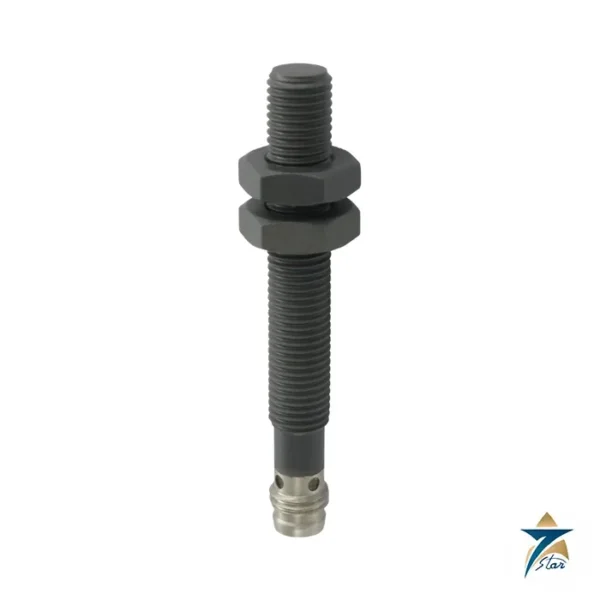
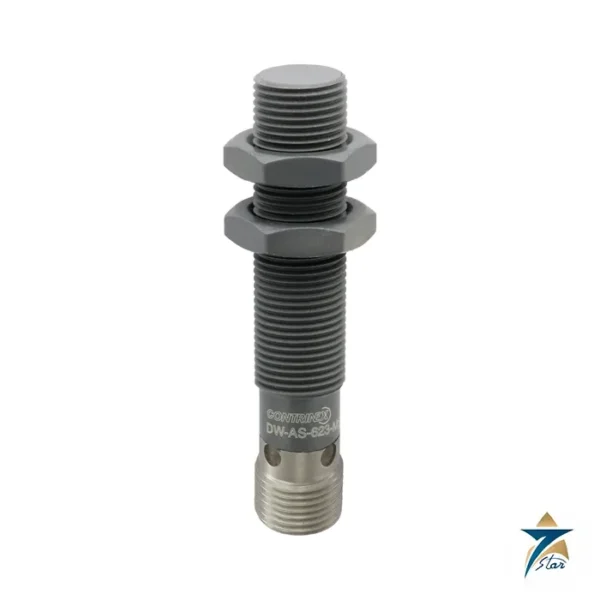
The Omron E2E-X5E1 2M is a M18 shielded (flush-mountable) DC 3-wire inductive proximity sensor with a 5 mm sensing distance and a NPN output. It detects ferrous metal without contact, and A shielded M18 body is the most common size for conveyor and machine-frame detection where the sensor can be flush-mounted in a steel bracket. Seven Star LLC supplies the E2E-X5E1 2M in Oman and the GCC as an independent supplier in Muscat, not affiliated with the manufacturer.
Reading the model code helps you order the correct variant:
- E2E is the standard inductive proximity sensor family.
- X5 gives the nominal sensing distance of 5 mm in this body size.
- No M: the code has no M after the distance, which means shielded construction.
- E is the NPN open-collector type, 3-wire DC output, normally open (operates when ferrous metal approaches).
- 1 selects the normally open operation mode; a 2 would be normally closed.
- 2M is the pre-wired version with a 2 m oil-resistant PVC cable.
It sits between the compact M12 shielded type and the 10 mm M30 type, so it is chosen when the M12 range is marginal but a M30 body is too large for the bracket.
E2E-X5E1 2M technical specifications
| Parameter |
Specification |
| Manufacturer / part number |
Omron / E2E-X5E1 2M |
| Type |
Inductive proximity sensor, DC 3-wire, shielded (flush-mountable) |
| Body size |
M18 |
| Sensing distance |
5 mm ±10% |
| Set distance |
0 to 4 mm |
| Differential travel |
10%% max. of sensing distance |
| Detectable object |
Ferrous metal; sensing distance falls with non-ferrous metals |
| Response frequency (average) |
0.6 kHz |
| Supply voltage |
12 to 24 VDC (operating range 10 to 40 VDC), ripple 10% max. |
| Current consumption |
13 mA max. |
| Control output |
NPN open collector, 200 mA max. load, residual voltage 2 V max. at 200 mA with 2 m cable |
| Operation mode |
Normally open (operates when the target approaches) |
| Indicator |
Operation indicator (red) |
| Protection circuits |
Load short-circuit protection, surge suppressor, reverse polarity protection |
| Ambient temperature |
Operating and storage −40 to 85°C, no icing or condensation (M8 models have a lower limit at the top end, see datasheet) |
| Ambient humidity |
35% to 95% with no condensation |
| Degree of protection |
IEC 60529 IP67 and oil-resistant to in-house standard for pre-wired models |
| Connection |
Pre-wired, standard cable length 2 m |
| Weight (packed, pre-wired) |
Approx. 150 g |
Figures are taken from the manufacturer datasheet for the E2E-X series. Confirm the exact limits for your application against the datasheet before final selection.
How the E2E-X5E1 detects metal
Inside the sensing head an oscillator drives a coil to create a high-frequency magnetic field in front of the face. When ferrous metal enters that field, eddy currents form in the target and draw energy from the oscillator, so the amplitude drops. A level detector turns that change into a clean switching signal.
The NPN output stage of the E2E-X5E1 2M switches the load to 0 V. With a shielded (flush-mountable) construction the field is contained so the face can sit flush with surrounding metal, which is why it can be mounted flush in steel.
The sensing distance is rated on a standard ferrous target. Stainless steel, brass, copper and aluminium reduce the range, so use the manufacturer reduction factors when the target is not mild steel. Set the working gap to about half the rated distance, which is the ratio used in the datasheet response figures.
Where the E2E-X5E1 2M fits and related part numbers
The E2E-X5E1 2M is one step of a ladder of DC 3-wire sensors that keep the same supply and output specification and change only size, range and shielding. Neighbouring models in the same series include E2E-X5ME1 (unshielded, same 5 mm range in M12), E2E-X10E1, E2E-X5F1. Moving between them does not change wiring practice, only the mounting hole and the available gap.
Connector versions of the same sensors are listed with the suffixes -M1 (M12 connector) and -M3 (M8 connector), and the datasheet also lists NC variants with a 2 in the code. This page covers the pre-wired 2 m version. If your application needs a plug-in version, send the full code with your RFQ so the correct variant is quoted.
Typical companion items are a matching mounting bracket or nuts, a straight or right-angle M12 cable, and a PLC input card whose polarity matches the sensor output. For a NPN output the card must be a sinking (NPN) input.
Selection and ordering checklist for E2E-X5E1 2M
- Confirm the target is ferrous and note its thickness and size against the standard object in the datasheet.
- Confirm the real working gap is no more than about 80% of the rated 5 mm after allowing for mounting tolerance and temperature drift.
- Check the mounting space: a shielded M18 body can be flush mounted, with the face level with the surrounding metal.
- Match PLC input polarity to the NPN output.
- Check the supply is in the 10 to 40 VDC operating range and that the load stays below 200 mA.
- Verify the response frequency of 0.6 kHz against the speed of your target and the number of pulses you need.
- State cable length and connection type (2 m pre-wired for this code) when ordering.
Installation, commissioning and maintenance of the E2E-X5E1 2M
Mount the sensor with the supplied nuts and toothed washer and tighten to the torque recommended by the manufacturer without twisting the cable. Keep the cable away from power cables to reduce induced noise, and support it so that it is not under tension at the gland.
At commissioning, move the target to its closest and furthest positions and watch the red operation indicator. The output should switch cleanly at the closest point and release at the furthest point with the margin you planned. Because differential travel is up to 10% of the sensing distance, allow for hysteresis when you set limit positions.
Maintenance is light. Inspect the face for dents or metal swarf build-up, check the cable jacket for cuts, and verify the nuts stay tight on vibrating machines. A spare sensor of the same code can be swapped without recalibration because there is no adjuster. In dusty or oily environments, wipe the plastic face periodically so that deposits do not change the gap.
Typical applications in Oman and the GCC
Plants in Oman and the wider GCC place sensors in harsh conditions: high ambient temperature, dust and sand, wash-down, and oil mist around rotating equipment. The wide temperature range and IP67, oil-resistant pre-wired construction of the E2E-X5E1 2M suit these conditions, particularly on outdoor skids and in packing and fabrication workshops.
Typical uses of this specific code include:
- Gearbox and coupling guard position checks on pump skids.
- Valve actuator limit confirmation where a steel flag moves past the face.
- Counting steel pallets or fixtures on a roller conveyor in a fabrication yard.
Panel builders and maintenance teams often stock one NPN and one PNP code per size so that a failed sensor can be swapped quickly during shutdowns.
E2E-X 3-wire family comparison
| Model (2 m cable) |
Size |
Sensing distance |
Construction |
Output |
Response |
| E2E-X5E1 |
M18 |
5 mm |
Shielded |
NPN |
0.6 kHz |
| E2E-X5F1 |
M18 |
5 mm |
Shielded |
PNP |
0.6 kHz |
| E2E-X5ME1 |
M12 |
5 mm |
Unshielded |
NPN |
0.4 kHz |
| E2E-X10E1 |
M30 |
10 mm |
Shielded |
NPN |
0.4 kHz |
| E2E-X10ME1 |
M18 |
10 mm |
Unshielded |
NPN |
0.2 kHz |
| E2E-X18ME1 |
M30 |
18 mm |
Unshielded |
NPN |
0.1 kHz |
| E2E-X2E1 |
M12 |
2 mm |
Shielded |
NPN |
1.5 kHz |
The row for E2E-X5E1 2M is the one to quote against; the neighbouring rows show the next-best alternatives if the gap, size or polarity needs to change.
Information to send with an RFQ for E2E-X5E1 2M
- Full part number E2E-X5E1 2M and required quantity.
- NPN or PNP input type of the PLC card or relay interface.
- Target material, size and working gap.
- Required cable length and whether a connector version is preferred.
- Operating voltage and ambient temperature range.
- Any datasheet or manual you want confirmed with the quotation.
Documents and quotation
The manufacturer datasheet for the E2E-X series is attached on this page, including dimensions, wiring and engineering data for E2E-X5E1 2M.
Send the part number, quantity and delivery location in Oman or the GCC and Seven Star LLC will reply with availability and lead time. We are an independent supplier and not affiliated with the manufacturer.






















Reviews
There are no reviews yet.